


AI solutions for Healthcare: 10 Real-world Examples to Watch
Hospitals are turning to AI solutions for healthcare to ease staff overload, speed up diagnosis, and improve patient outcomes. Many leaders now search for tools that can solve real workflow pain points and support care teams in practical ways. This MOR Software’s guide will walk you through ten real world examples that show how smart technology is reshaping modern healthcare.
What Are AI Solutions For Healthcare?
AI solutions for healthcare describe how machine learning, natural language processing, deep learning, and similar techniques support medical teams and patients in practical ways. These technologies work with large volumes of data and help health professionals understand patterns, make predictions, and manage their daily tasks with more confidence. With this type of AI-powered healthcare solutions, hospitals can handle information faster and improve many parts of care delivery.
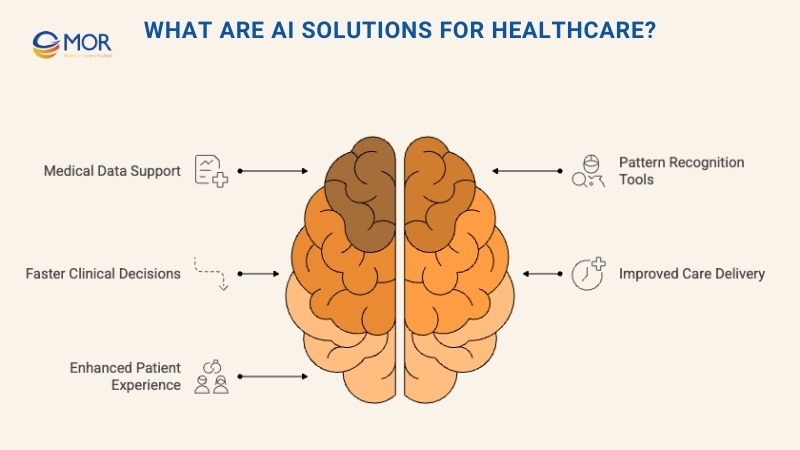
When these tools are in place, doctors can make decisions with greater speed and accuracy. Administrators can find electronic health records without delay, and patients can receive care that feels more timely and more personal. This approach helps raise the overall quality of treatment and creates a smoother experience for everyone involved in the system.
10 Real World Examples Of AI Solutions For Healthcare
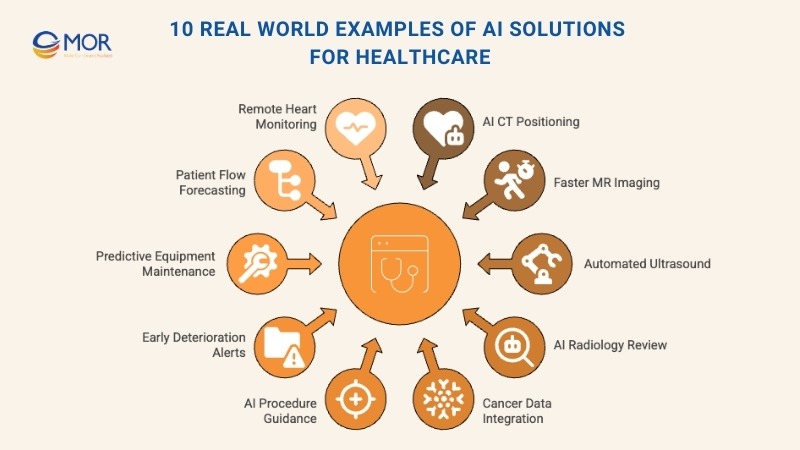
Artificial Intelligence has moved quickly in the medical field in recent years. It has opened the door for new ideas that help improve patient outcomes and daily workflows. From early checks to full treatment and home support, AI solutions for healthcare now play an important part in helping medical teams and patients throughout the entire care journey. Below are 10 real world examples that show how these tools can improve the experience for both staff and patients.
Enhancing CT Scans With Precise Positioning And Image Reconstruction
Radiology teams still deal with rising scan volumes and the need to maintain steady image quality while keeping operations smooth. CT scans remain one of the most common imaging methods, so departments can benefit from AI solutions for healthcare that make CT steps easier and help maintain strong image results.
The process begins with placing the patient in the correct position before the scan. Misalignment during CT exams happens often and can cause higher radiation levels or extra image noise. AI camera systems can spot key points on the body and support quick, accurate, and steady positioning for each patient. These systems can also support reconstruction tools that lower radiation levels and strengthen CT image clarity to give doctors more confidence when they make decisions.
Accelerating MR Imaging For Higher Throughput
Magnetic resonance imaging continues to grow in importance for accurate diagnosis of many health conditions. As more patients require MR scans, teams feel greater pressure to handle higher volumes and shorten the time between the first scan and the final diagnosis. MR units also want to raise satisfaction for both patients and the physicians who depend on the results.
AI-driven reconstruction tools step in as one of the most helpful AI solutions for healthcare in this area. They can speed up MR exams, raise overall productivity, and lower the cost of each scan while still giving clear, high-quality images that support strong clinical decisions. These systems also help more patients access MR services, even those who feel nervous, tired, or uncomfortable. Exams take less time, and the scanner often captures the right images on the first try, so patients can finish their visit sooner and feel more at ease.
Simplifying Ultrasound Measurement Workflows
In heart care, ultrasound has become a key method for checking and understanding how the heart is working. It is now one of the first tools doctors use when they need to diagnose a patient. The challenge comes from the fact that ultrasound depends heavily on the skill of the operator. Many standard measurements take time and can vary from one user to another.
AI automation helps remove much of this manual and repetitive work. With AI solutions for healthcare, automatic measurement tools can produce fast and consistent echo results, which improves the experience for both patients and medical staff. Clinicians can review these measurements and adjust them when needed, so they keep full control of their diagnostic choices while using a tool that supports their expertise.
Supporting Radiologists With Faster More Precise Image Reviews
AI also helps with tasks like image segmentation and measurement in radiology, which allows radiologists to spend more time on the deeper meaning of each scan. It can work like an extra set of eyes that highlights areas worth checking or small findings that might not be noticed right away. This type of support fits well with how AI for medical professionals is growing in daily practice.
For instance, algorithms that review MR brain images and track small changes over time have shown a 44% improvement in accuracy for diagnosing multiple sclerosis, while also cutting reading time. In the same way, AI detectors for lung nodules can scan 26 percent faster and uncover 29% of nodules that may be missed during a manual check. For radiologists dealing with heavy workloads and tight schedules, this kind of help can make a real difference and lead to better outcomes for patients.
Connecting Data Sources To Improve Cancer Treatment Decisions
AI does more than study one type of data. Many AI solutions for healthcare now help link different patient records that were once stored in separate systems. When this information comes together, it can give medical teams clearer insights that support stronger decisions.
In cancer treatment, this type of AI application in healthcare can combine details from radiology, pathology, electronic health records, and genomic data. The result is a simple and complete view of a patient’s condition. Tumor boards can use this combined picture to make timely treatment choices that aim for the best possible outcomes.
Looking ahead, smarter data connection may also help predict how a patient might respond to certain treatments. This can guide teams in choosing the most suitable care path based on results from patients with similar conditions.
Assisting Physicians During Minimally Invasive Procedures
Interventional doctors who work with minimally invasive treatments for heart and other conditions also benefit from AI solutions for healthcare. These tools support their workflows and provide guidance that helps improve decision making during complex procedures.
In stroke cases, cloud-based systems can study CT images and spot a large vessel blockage, which is one of the main causes of severe stroke. The system can also locate the blockage and share the findings with teams at both the first treatment site and the center where the procedure will take place. The same cloud technology can support planning and navigation during endovascular surgery, giving physicians clearer guidance so they can work with more accuracy and better efficiency.
Identifying Patient Deterioration Early In General Wards
In both acute and recovery units, many AI solutions for healthcare are used to improve the experience for patients and care teams. Nearly one in five patients in surgical wards may face serious complications after surgery. Manual checks of vital signs take time and can sometimes miss small changes.
AI diversity systems that track vital signs automatically and calculate early warning scores can help nurses notice early signs of trouble, including breathing issues or sudden heart problems. When teams receive these alerts quickly, they can act faster. One hospital reported a 35% drop in serious events and an 86% drop in cardiac arrests in its general ward after using this type of support.
Predicting Equipment Issues Before They Interrupt Care
Along with supporting clinical teams, AI solutions for healthcare can also help hospitals keep their equipment running without unexpected stops. Predictive tools can spot early signs of technical problems, which protects the continuity of care.
With remote monitoring, more than 500 different parameters on an MR system can be checked and analyzed. This makes it possible to see when a part might need repair or replacement before it causes trouble. Thanks to this approach, around 30% of service cases can be handled before the machine breaks down, which helps avoid delays for both staff and patients. Looking ahead, a complete digital twin of an entire imaging fleet could provide even stronger predictive maintenance and smoother performance across all devices.
Forecasting Patient Flow To Improve Hospital Operations
Across the whole hospital system, AI solutions for healthcare help leaders understand how to use equipment, beds, and staff more effectively. As resources become more stretched, the ability to predict changes and adjust quickly is more important than ever.
AI can study large sets of real-time data and older records to spot patterns that help forecast demand and guide patient flow. These insights can answer practical questions such as which patient should receive an intensive care bed first or who is ready to move to a lower acuity unit. This type of support works much like some of the best AI agent solutions for healthcare providers, giving teams the information they need the moment they need it.
With clear insights available right away, hospitals can use their limited resources more wisely and handle each step of care more smoothly, from admission through discharge. This helps make sure every patient receives the right level of care at the right time.
Monitoring Heart Health Remotely With AI Assisted Wearables
As more healthcare activities shift from hospitals into homes and local communities, AI solutions for healthcare are no longer limited to clinical settings. Many tools now work with data collected through medical wearables, giving patients steady support wherever they are.
In heart care, cloud-based systems can review remote ECG recordings and detect signs of atrial fibrillation or other rhythm problems. Millions of people live with this condition, yet many cases remain unnoticed. When the system flags readings that need quick attention, doctors can act sooner and treat patients more effectively. This type of support aligns closely with growing interest in conversational AI solutions for healthcare, especially for remote monitoring and timely guidance.
As these tools improve, heart care may become more predictive and more proactive. One study showed that a deep learning model could estimate short term risk of atrial fibrillation through a single 24 hour Holter recording. This is another clear example of how smart technology can help patients receive the care they need without delay.
Companies Advancing AI Solutions For Healthcare
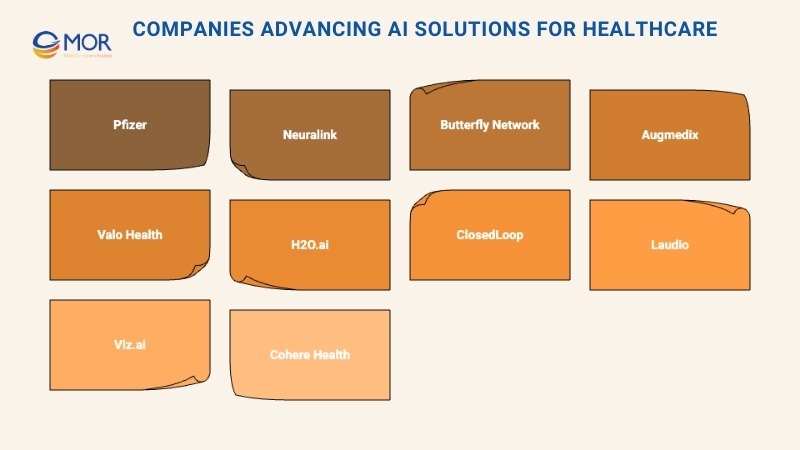
Many organizations are shaping the future of care with smart tools and modern technology. We’ll introduce some of the leading companies applying AI solutions for healthcare in practical and effective ways.
Pfizer
Location: New York
Pfizer uses advanced systems to support its research on new drug options for a wide range of health conditions. One example is its work on the Covid 19 treatment PAXLOVID, which relied on multimodal AI models and machine learning development services to study large data sets. These tools helped scientists understand which compounds showed the most promise so they could focus on the ones most likely to succeed.
Neuralink
Location: Fremont, California
Neuralink is a medical device company created by Elon Musk. The team is building a brain computer interface that can read brain signals and help restore movement for people living with quadriplegia. This implant uses AI and machine learning to study electrical activity in the brain and translate it into actions. Neuralink received approval for human trials in 2023 and soon after began working with its first trial participant.
Butterfly Network, Inc.
Location: Burlington, Massachusetts
Butterfly Network creates smart ultrasound probes that connect directly to a mobile phone. These devices use AI solutions for healthcare to support quick and accurate scans in many clinical settings. The company’s iQ3 and iQ+ models deliver clear images and extract key data to help clinicians make faster assessments. With built in tools that create and study 3D views, the technology can support anesthesiology, primary care, emergency medicine, and several other specialties.
Augmedix
Location: San Francisco, California
Augmedix provides a set of AI supported documentation tools for hospitals, clinics, individual doctors, and group practices. The platform uses natural language processing and automated speech recognition to reduce manual record keeping, improve productivity, and create a smoother experience for patients. These capabilities align well with growing demand for AI customer service solutions for healthcare industry, especially in busy clinical environments.
Valo Health
Location: Boston, Massachusetts
Valo applies advanced technology to change how new medicines are discovered and developed. Through its Opal Computational Platform, the company gathers human centered data to spot patterns across phenotype, genotype, and related factors, which helps reduce the need for animal testing. This AI platform for healthcare then supports molecule design and guides the steps required for clinical development.
H2O.ai
Location: Mountain View, California
H2O.ai builds tools that study data across entire health systems to automate tasks and support predictions. Hospitals use its technology to forecast ICU transfers, improve daily workflows, and identify risks tied to hospital acquired infections. With this approach, teams can spot early signs of sepsis and act sooner, which helps lower mortality rates. These capabilities reflect a strong AI use case in healthcare focused on prevention and early action.
ClosedLoop
Location: Austin, Texas
ClosedLoop is an end to end system that uses advanced models to find patients who may be at higher risk and suggest suitable care options. The platform gives healthcare groups personalized insights into patient needs while supporting feedback loops, outreach efforts, engagement plans, and digital therapeutic tools. It serves providers, payers, pharmaceutical teams, and life science organizations, making it a flexible AI solutions for healthcare resource across the industry.
Laudio
Location: Boston, Massachusetts
Laudio helps frontline managers support stronger and more engaged teams. Its technology uses AI driven recommendations to guide leaders toward actions that improve daily workflows for nurses and other clinical staff. The platform aims to raise efficiency, strengthen employee engagement, and create better patient experiences. These capabilities are often evaluated when organizations look for the best AI solutions for healthcare staffing 2026, especially in busy hospital environments.
Viz.ai
Location: San Francisco, California
Viz.ai focuses on reducing delays that can affect patient survival. Its tools use advanced models to spot urgent issues and send rapid alerts to clinical teams. This quick notification process helps doctors review options and make treatment decisions sooner. The company’s work highlights how AI-powered healthcare solutions can support faster and safer care.
Cohere Health
Location: Boston, Massachusetts
Cohere Health uses advanced models and machine learning to improve the prior authorization process so patients can receive care faster. Through its Cohere Unify Platform, health plans can create data guided care paths that support quicker approval for needed services. With real time analytics, clinical intelligence, and responsible AI practices, the platform brings patients, providers, and payers together. Its goal is to deliver smoother, more affordable care experiences. This approach reflects what many groups look for when seeking the best AI consulting firms for healthcare solutions 2026 to improve coordination and access.
Challenges Of AI Solutions For Healthcare
Even with many clear benefits, AI solutions for healthcare must follow strict rules set by major regulations such as HIPAA. Any organization planning to use these systems needs to think carefully about how data is collected, stored, protected, and used. Teams also need to think about how to choose AI solution for healthcare operations so every tool meets legal expectations and supports safe patient care.
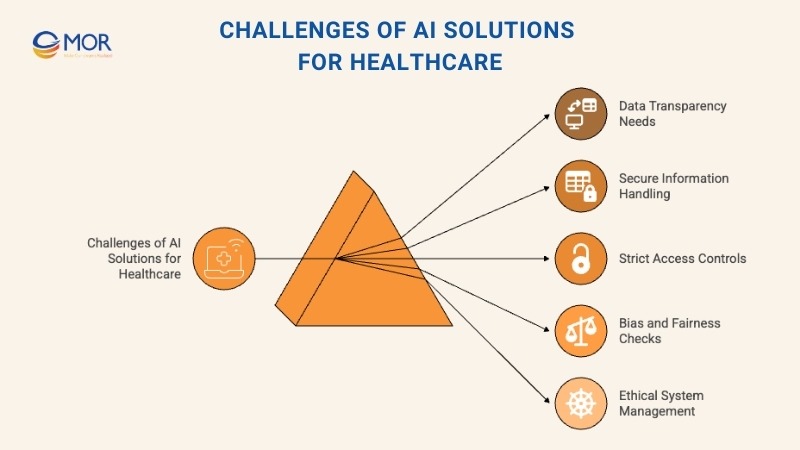
Healthcare providers must pay close attention to several key areas:
Data transparency and governance
This means organizations need to understand how each system handles data, which machine learning algorithms were used to build it, and how results are generated. Clear oversight helps providers stay accountable and allows patients to know how their information is being used.
Secure data lifecycle management
Medical data moves through many stages, from collection to storage to analysis. Each step must be protected through strong security methods. This prevents information from being changed, lost, or accessed in the wrong way during any point of its lifecycle.
Protection against unauthorized access
Hospitals and clinics must make sure only approved staff and systems can open or use sensitive medical records. Strong controls, user permissions, and continuous monitoring help reduce the risk of breaches and keep patient information safe.
Algorithmic fairness to prevent biases
AI systems must treat every patient fairly. If a model is trained on limited or unbalanced data, it may create biased results. Teams need to check how each model performs across different patient groups to avoid unfair treatment or wrong predictions.
Building trust between patients and healthcare providers requires a careful balance between innovation and ethics. While AI can improve speed, accuracy, and efficiency, systems need to be managed in a responsible way. When these requirements are met, organizations can bring reliable and equitable AI driven care to more people.
What The Future Holds For AI Solutions In Healthcare
The next stage of AI solutions for healthcare is expected to bring even stronger progress as models grow more flexible and more IoMT devices enter everyday medical use. These improvements will help raise accuracy in diagnosis, support faster decision making, and create smoother experiences for patients and care teams. As systems learn to work with larger data sets and stronger computing tools, hospitals will gain new ways to manage care with greater precision than before. This shift reflects how fast AI healthcare technology is expanding across the industry.
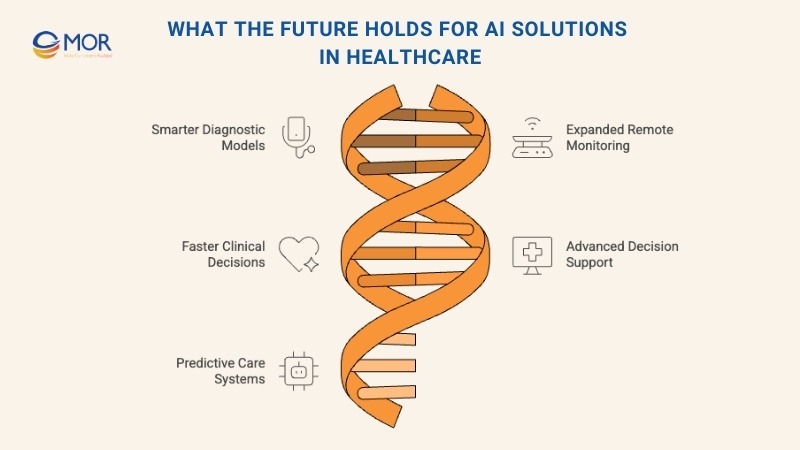
The MedTech field is also moving forward with tools that blend automated diagnostic support and advanced clinical decision systems. These platforms help doctors interpret complex information quickly and guide them toward treatment plans that match the needs of each patient. As these tools continue to improve, medical teams will be able to rely on digital assistance for more routine tasks, which gives them more time to focus on patient interaction and critical choices.
Several well known solutions show how far this technology has come. IBM Watson Health offers advanced data interpretation for complex cases. Huna AI supports early breast cancer detection with strong image analysis. Neomed helps automate medical report processing so clinicians can spend less time on paperwork and more time on patient care. These examples show how new technology can reshape clinical management, support better outcomes, and open the door for new businesses built around smart, reliable AI for the healthcare sector.
Partner With MOR Software For Scalable Healthcare AI Solutions
Hospitals, clinics, and healthcare organizations are eager to bring AI into their workflows. They want faster diagnostics, cleaner data processes, and better patient experiences. But healthcare AI is complex. It must handle sensitive data, work with legacy systems, stay reliable in clinical environments, and scale without breaking patient safety rules. That is why many providers turn to technology partners with hands-on experience in real healthcare projects.
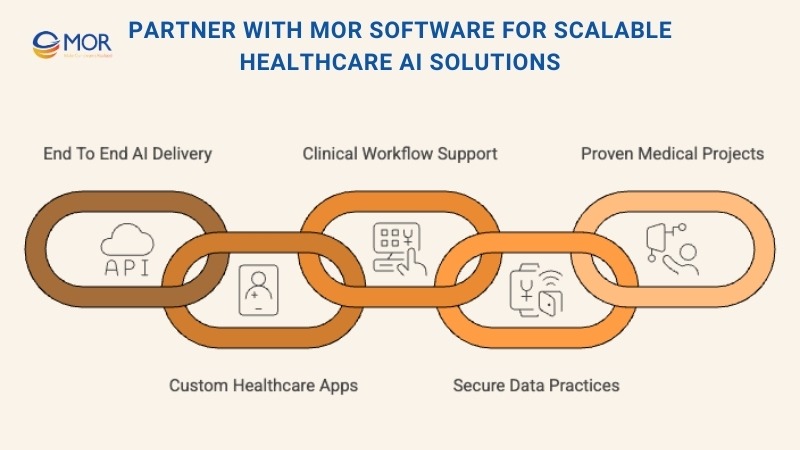
MOR Software supports healthcare teams in three key ways.
We build AI outsourcing applications for hospitals and clinics, from online consultation platforms to advanced data analysis tools. We provide AI consulting that helps organizations integrate AI into diagnostics, operations, and patient management. We also handle full project execution, covering business analysis, UX design, development, testing, and long-term maintenance.
In-depth Healthcare System
A large healthcare organization needed an all-in-one system to automate daily operations, manage patient and staff records, connect with medical devices, and reduce manual errors. MOR Software built the platform using Java Spring, ReactJS, and AWS to guarantee scalability and performance. The system now synchronizes clinical data in real time, supports flexible workflows, and helps doctors make quicker, more accurate decisions.
Online Healthcare Consultation
A major clinic group in Japan wanted to launch a telehealth service that connects patients, doctors, and pharmacies. MOR Software developed a mobile app for patients and a web interface for medical staff. AI-powered analysis was integrated to support system reliability and reduce errors. Patients can book appointments, join video calls, view records, and receive prescriptions directly through the platform.
Creating a Better Working Environment for Healthcare
A Japanese healthcare company required an app that allows nurses to evaluate hospital working conditions and find new job opportunities. MOR Software implemented AI-driven spam detection to filter low-quality reviews and used AWS to support future growth. The result is a trusted, scalable platform that maintains clean, reliable data for thousands of users.
These projects highlight one point clearly. AI solutions for healthcare only succeed when they are built by teams that understand medical workflows, know how to handle sensitive data, and can deliver stable, long-term technology. MOR Software plays that role by combining technical skill with strong development processes to create healthcare AI solutions that are safe, reliable, and genuinely useful to medical professionals.
Conclusion
AI solutions for healthcare are moving fast, and the organizations that act now will gain the strongest results in diagnostics, operations, and patient care. The examples above show how real hospitals use smart tools to solve real problems. If your team wants to build reliable, scalable healthcare AI, MOR Software can guide every step, from strategy to full development. Contact us to start creating solutions that support doctors, ease workloads, and improve patient outcomes.
"Evolution is not a destination, it is a disciplined journey of innovation."
Phung Van Tu


CEO MOR AI
MOR SOFTWARE
Frequently Asked Questions (FAQs)
What are AI solutions in healthcare?
AI solutions in healthcare use machine learning, automation, and data analysis to help medical teams work more efficiently and support clinical decision making.
How is AI used in medical diagnosis?
AI tools can scan medical images, highlight unusual findings, and compare patterns across large datasets to help doctors identify conditions more quickly and accurately.
Can AI improve patient care?
Yes. AI can monitor patient data, flag early warning signs, and support personalized treatment plans. This leads to faster response times and better patient outcomes.
What are the benefits of AI in hospitals?
AI reduces paperwork, predicts patient volume, automates routine tasks, and improves accuracy in areas like imaging and data management.
Is AI safe to use in healthcare?
AI can be safe when it is trained with reliable data, tested thoroughly, and used under proper security and privacy controls to protect sensitive patient information.
How does AI help doctors and nurses?
AI assists medical staff by analyzing records, tracking changes in patient conditions, suggesting possible diagnoses, and reducing time spent on repetitive work.
Can AI detect diseases early?
Many AI systems can identify early signs of diseases using imaging, lab data, or wearable device information. Early detection helps guide timely treatment.
What challenges come with AI in healthcare?
Challenges include data protection, compatibility with existing hospital systems, potential bias in model training, and the need for clear regulatory guidance.
Will AI replace healthcare workers?
AI is not meant to replace medical professionals. It supports them by handling repetitive tasks and offering insights so they can focus more on patient care.
How does AI help with medical imaging?
AI enhances image clarity, speeds up scan processing, detects subtle patterns, and reduces reading time for radiologists, which improves workflow and accuracy.
Share


Make Our-Dreams Realized


© 2023 . MOR Software. All Rights Reserved
Sitemap
Privacy Policy
Terms of Use

Rate this article
0
over 5.0 based on 0 reviews
Your rating on this news:
Name
*Email
*Write your comment
*Send your comment
1