


Generative AI in Banking: Shaping Financial Services 2026
Generative AI in banking is changing how financial institutions work, from risk checks to customer support. Many teams still struggle with slow processes, rising fraud threats, and limits in old systems. This generative AI financial services shift creates new ways to work smarter and move faster. In this guide, MOR Software will show how these changes reshape modern banking.
What Is Generative AI in Banking?
Generative AI in banking explains how advanced artificial intelligence tools support daily work in financial institutions. This technology helps automate tasks, improve customer support, strengthen fraud detection, provide tailored financial guidance, and raise overall safety and productivity. These improvements align with wider generative AI use cases in financial services, where smart algorithms help create faster and more accurate results for teams and customers.
McKinsey estimates that generative AI could create between $200 billion and $340 billion in extra value for banks every year. This is about 9% to 15% of their current operating profits and shows how large the impact of these tools can be.
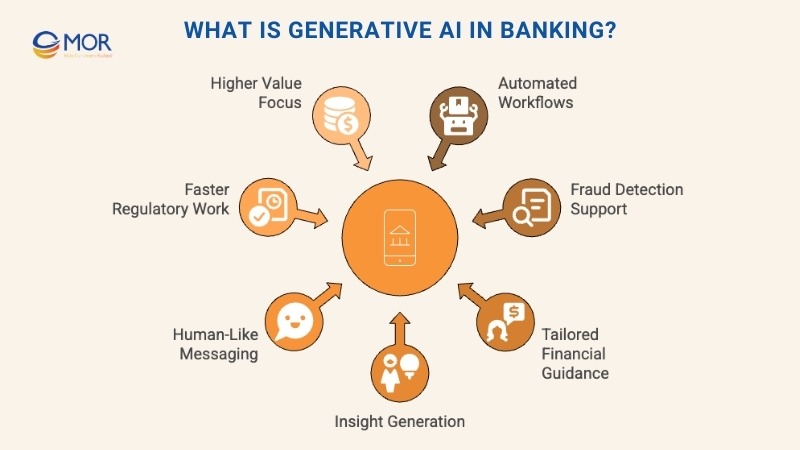
These models are changing how the industry works. Modern systems such as large language models and machine learning models can produce new content, surface insights, and generate ideas that fit the needs of financial teams. These tools write financial summaries, scan large datasets for fraud risks, and complete simple tasks like checking documents or confirming details. These workflows help reduce manual steps and keep processes consistent.
They also create natural and human-like messages. With the help of natural language processing, these systems understand questions and respond clearly. Many banks, including Morgan Stanley, apply these tools to strengthen their fintech products and customer chatbots. The chatbot experience now covers many topics, from general account details to tailored suggestions, which makes the assistant feel more like an AI banker during conversations. Capgemini reports that 75% of banks name customer service as the main process where they plan to deploy AI agents, ahead of tasks like fraud detection, loan processing, and onboarding.
The speed of generative AI continues to grow as it handles tasks like summarizing regulatory materials, drafting pitchbook content, or supporting software updates. These abilities cut down the time needed for routine work and free teams to focus on higher value activities. Teams can work with fewer delays, lower manual effort, and better accuracy.
How Banks Apply Generative AI for Operations, Risk & Decision-Making
Beyond customer support, generative AI in banking also changes how the industry handles fraud detection and daily risk work. These systems scan large sets of transaction data and use smart models to spot activity that looks unusual or unsafe. A 2025 fraud report from Feedzai shows that 90% of financial institutions now use AI to speed up fraud investigations and detect new tactics in real time. This makes these systems a core part of daily risk work.
This early warning approach helps banks limit danger faster and protect customer funds. During these processes, data privacy rules and strict compliance standards still matter, because they keep trust strong across all services. This area reflects broader AI for banking needs, where security and accuracy remain top priorities.
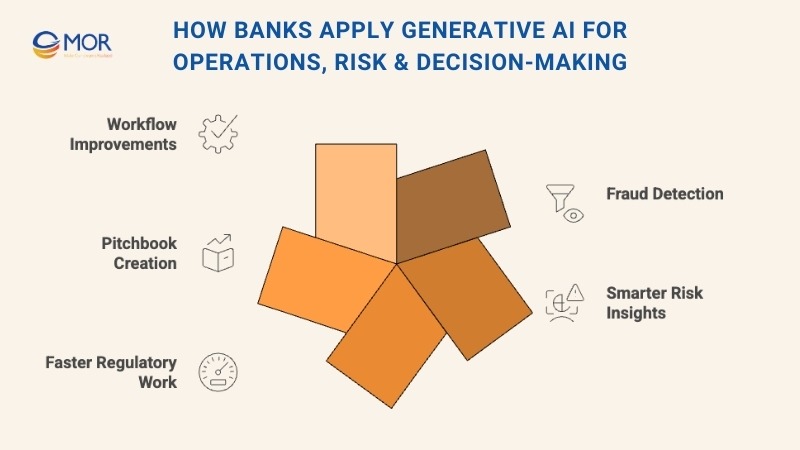
Tools powered by generative AI study older records, market shifts, and financial signals in real time. These insights help create clear risk assessments that support smarter choices on loans, investments, and other activities that affect the bank’s position. With this support, financial teams improve their strategies and keep both the organization and its customers safer.
AI solutions in finance also lowers the time needed for tasks like regulatory work, reviewing credit files, or handling loan underwriting. The system can read and summarize large sets of financial information in a short time and prepare draft reports or credit documents that would normally take much longer to finish.
Inside investment banking, application of generative AI in banking helps gather and study financial information to build complete pitchbooks quickly. This speed gives teams a strong advantage and helps deals move forward without long delays.
More banks continue to use these capabilities to raise service quality, improve workflows, and create smoother operations. This change supports steady digital growth across the sector and keeps teams ready for new demands in the market.
Why Is Generative AI in Banking Important?
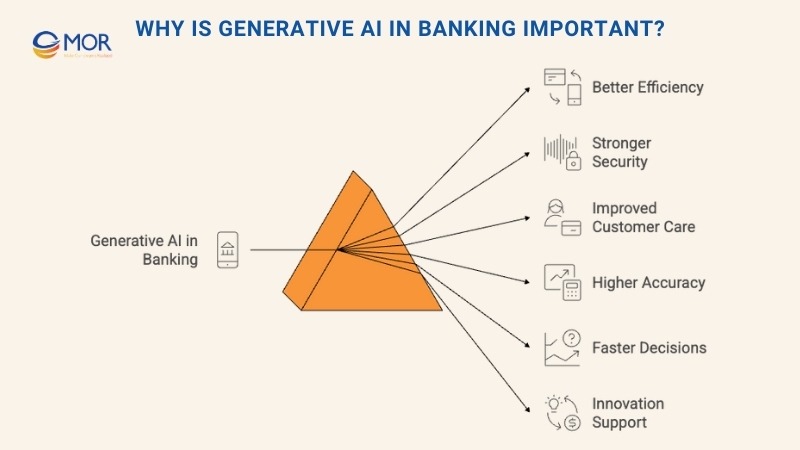
The use of generative AI in banking is important for better efficiency, stronger security, smoother customer support, and steady innovation. These improvements help banks grow in a fast-changing market and reflect the wider use of this technology across modern financial work.
In a recent Deloitte survey of financial services AI users, 86% said that AI will be very or critically important for their business success in the next two years. This is why many banks see generative AI as a service of their future plans.
This shift reshapes how financial institutions run their services and support their customers.
- When banks apply advanced AI automation tools, they improve customer care with round-the-clock help and more tailored financial guidance through smart chatbots and virtual assistants.
- This technology also supports fraud detection and prevention. It reviews large sets of transaction data to spot unusual patterns and protect both the bank and its users from possible losses.
Generative AI also raises the level of operational efficiency.
- It handles routine tasks like document checks, data entry, and compliance reviews, which lowers manual effort, reduces errors, and cuts operational expenses. Teams can then move resources to higher value goals.
- It strengthens risk management through accurate assessments that use market signals and financial trends, helping banks make better decisions and manage risk with more confidence.
This approach speeds up key processes such as credit checks and loan underwriting.
- The system evaluates creditworthiness and prepares needed files in less time, which leads to faster loan decisions and a better customer experience.
- It also shortens the work needed to create or summarize reports, which supports banks in meeting regulatory rules on time.
Generative AI encourages new ideas and fresh solutions across the sector.
Gen AI spots gaps in the market and understands customer needs, helping teams design new products and services that support growth and keep financial institutions competitive. Research from the IBM Institute for Business Value cited in FinTech Magazine shows that AI investment in financial services is set to grow from about $35 billion in 2023 to $97 billion by 2027. This underlines how strongly banks are backing new enterprise AI platforms such as generative models.
Operating Models For Generative AI In Banking
A centralized structure is commonly used when running generative AI in banking, because this setup brings clear strategic value. With a central model, financial institutions can place their skilled AI teams in one group, which helps them work together and stay updated with new developments around these tools. This setup supports wider generative AI applications in banking, especially when teams need shared knowledge and consistent planning.
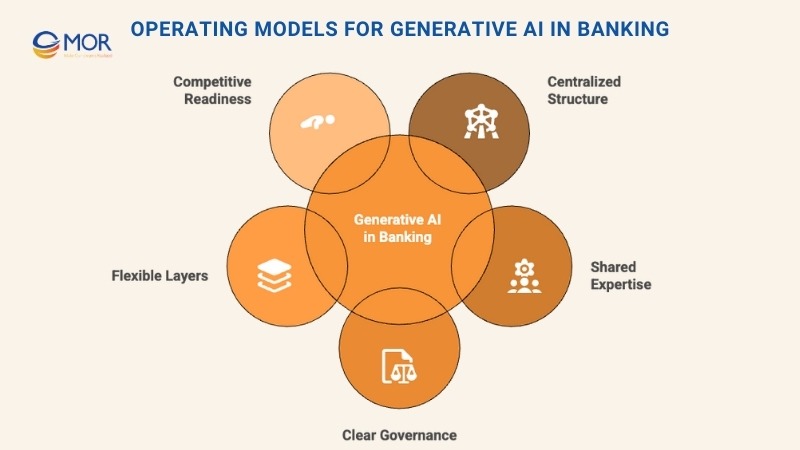
This type of model also helps leaders make key choices about funding, new technologies, cloud providers, and long-term partnerships with more clarity. It simplifies risk control and compliance activities, giving banks a single plan for handling legal and security demands that may affect their services.
Even with a central structure, banks still keep a level of flexibility. Some important choices can happen at different layers inside the organization. This mix of shared direction and local freedom supports the needs and culture of each bank, helping it stay active and competitive as the fintech market grows.
Real-World Use Cases Of AI In Banking
Common generative AI use cases in banking cover many areas of financial work.
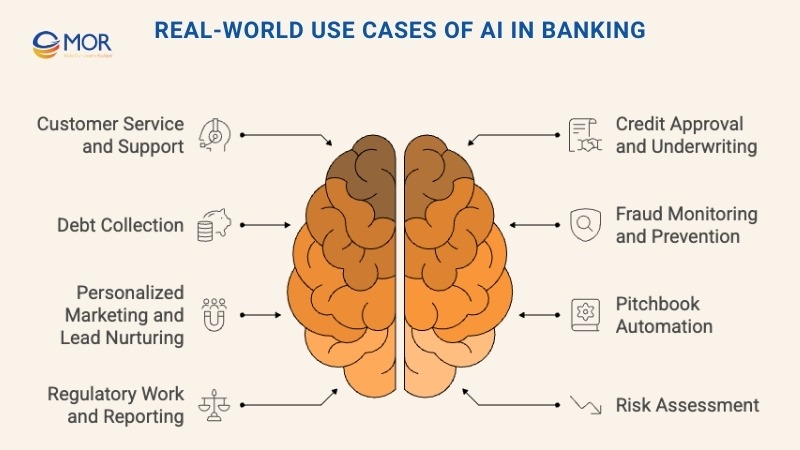
Customer Service And Support
Chatbots and virtual assistants powered by generative AI in banking can manage large volumes of customer questions with quick and tailored responses. These systems guide users through tasks such as checking balances, reviewing past transactions, or getting simple financial advice. They help raise customer satisfaction and reduce pressure on human service teams. This area especially aligns with gen AI in banking use cases, where smart automation supports everyday interactions.
Credit Approval And Underwriting
AI plays an important role in credit scoring and risk checks. It reviews credit data and risk signals with high accuracy, which supports better decisions for loan applications and credit card reviews. In underwriting, generative AI prepares credit memos, complete with summaries and sector notes, which helps teams finish this work faster and with less manual effort.
Debt Collection
AI also supports debt collection tasks. It can speak with borrowers to suggest suitable repayment options, identify signs of delayed payments, and recommend helpful recovery actions. This approach raises collection success rates and supports healthier relationships with customers.
Fraud Monitoring And Prevention
AI solutions for banking can study large sets of transaction data to spot strange activity or signs of fraud. It learns from new information over time, which makes the system more accurate and more reliable. This early detection helps banks block risks like account takeover and money laundering before they grow into major problems. These abilities match broader AI use cases in banking, where safety and fast action are important.
Personalized Marketing And Lead Nurturing
AI DevOps tools can communicate with potential customers to learn their interests and habits, then suggest products that fit their needs. This level of personalization makes campaigns run better and supports stronger lead growth. It also helps teams reach the right people with the right message, which improves overall marketing performance.
Pitchbook Automation
Pitchbooks are sales materials that help a bank show its value to clients or possible partners. With generative AI, the system collects data from many sources, organizes it, and creates these documents quickly. This process helps teams work faster and present clear and complete information without long manual preparation.
Regulatory Work And Reporting
Generative AI in banking supports teams with tasks related to regulatory reports and compliance checks. It can read, extract, and organize important data automatically, which helps banks prepare the reports they need to meet industry rules. This process reduces manual work and lowers the time needed to complete these tasks, improving accuracy and consistency across the entire workflow. These steps align with broader applications of generative AI in banking, where automation helps teams stay on track with strict standards.
Risk Assessment
These multimodal AI models can study market movements, financial signals, and credit histories to create clearer risk assessments. This information helps banks make stronger choices about lending, investment plans, and other important financial decisions. With better data and more reliable analysis, teams gain more confidence when reviewing risk across different activities.
Benefits Of Applying Generative AI In Banking
Generative AI in banking brings many advantages that improve daily operations and create better experiences for customers.
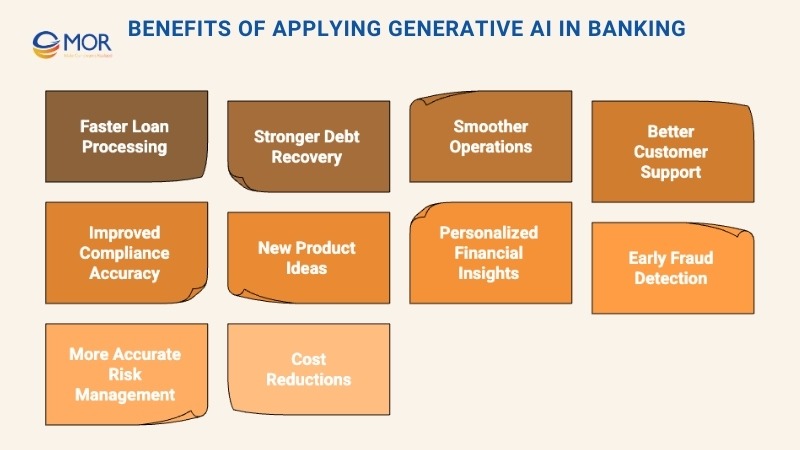
Faster Loan Processing
They speed up credit checks and underwriting. It reviews credit information quickly and prepares needed documents, which helps teams finish loan decisions in less time.
Stronger Debt Recovery
These systems can speak with borrowers, suggest repayment choices, spot signs of late payments, and guide teams toward helpful collection methods. This approach raises recovery rates and strengthens customer relationships.
Smoother Operations
With routine tasks handled automatically, generative AI lowers manual effort across document reviews, data entry, and compliance work. This shift reduces mistakes and cuts operational costs, helping teams focus on more important work.
Better Customer Support
Chatbots and virtual assistants powered by generative AI in banking offer support at any time of day. They can respond to many types of customer questions right away, which leads to faster replies and higher customer satisfaction.
Improved Compliance Accuracy
AI helps teams prepare and summarize regulatory documents so banks can meet industry rules with more ease. This support lowers the time and effort needed to complete compliance tasks.
New Product Ideas
AI reviews market signals and understands customer needs. This insight helps banks design new financial products and services that match what users want.
Personalized Financial Insights
AI studies customer data to deliver tailored financial advice and product suggestions. These personalized experiences build stronger engagement and loyalty among customers.
Early Fraud Detection
AI reviews large sets of transaction data to spot unusual actions or signs of fraud. This early detection improves security and helps lower the chance of financial loss.
More Accurate Risk Management
These tools study market signals and financial trends to deliver clearer risk assessments. These insights support better decisions and help banks manage risk with more confidence.
Cost Reductions
Through automation and smoother workflows, generative AI lowers operational expenses and allows teams to use their resources in smarter ways.
Generative AI in Banking Challenges
Working with generative AI in banking brings several obstacles and limits. One major concern is data privacy and security. These systems process large amounts of financial information, so banks must follow rules like GDPR and CCPA to keep customer data safe.
As banks add more data-driven tools, the chance of data leaks grows. This situation requires constant checks and updates to protect sensitive details. AI models also need clean and current data to give reliable results. When information is missing or incorrect, the system may produce weak outputs that harm decision-making and reduce customer trust.
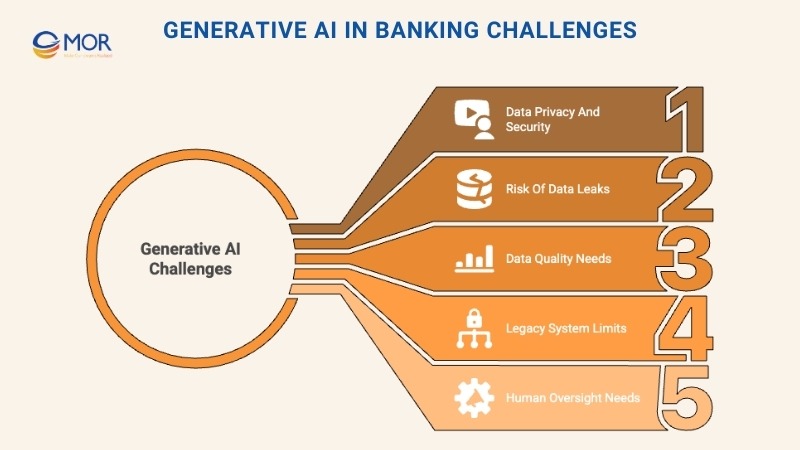
Another challenge comes from connecting new AI tools to older banking systems. Many banks still use legacy setups that do not work well with modern AI frameworks. This gap can lead to long and costly integration work.
AI can support and automate many workflows, but it should not make final decisions on important matters like loan approvals. These systems should focus on analysis and early reviews, while trained financial teams make the last judgment. This balance helps AI improve banking operations without going beyond its role.
Case Studies Of Generative AI In Banking Adoption
The strong influence of generative AI in banking has encouraged many financial leaders to study and apply this technology to improve operations and customer support. At the same time, vendors that help large enterprises adopt AI continue to build new tools and design better system structures to remove barriers that slow adoption. The case studies below show how major banks and partners around the world are putting these ideas into real use. These real examples highlight broader generative AI examples in banking across different regions.
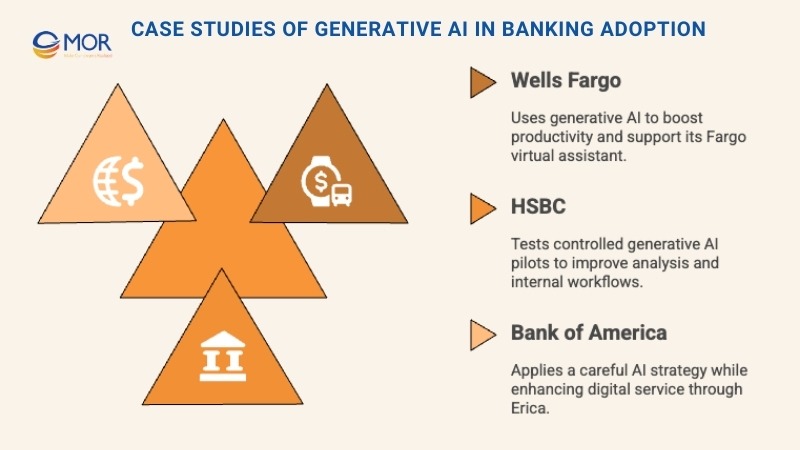
Case Study 1: Wells Fargo’s Path Toward A Digital First Bank
Wells Fargo is a global bank with 115.3 billion dollars in revenue, around 70 million customer accounts, and 226,000 employees. In 2021, the bank shared its plan to become a digital first institution and already shows strong progress with around 30 million mobile banking users.
The company has long used traditional AI, including solutions for fraud checks and credit scoring. For work related to generative AI in banking, the bank focuses first on internal productivity gains, since this area carries lower risk and allows careful testing. It takes a slow and careful approach for tools that affect customers, since the bank wants a full and clear understanding of any possible issues such as hallucinations. Even so, the bank continues to invest in proofs of concept. From these tests, Wells Fargo aims to move fast with new deployments while watching key factors such as hallucination controls, RAG improvements, and updated regulatory expectations.
One clear example appears in the rollout of its virtual assistant called Fargo, which uses Google’s PaLM2 LLM. This assistant launched in March 2023.
The assistant can help with daily requests, display credit scores, open accounts, stop payments, and report fraud. The bank stated that within one year, Fargo supported 15 million users and reached 117 million interactions.
In October 2023, the bank also introduced a financial management tool called LifeSync. This tool uses LLMs and will reach all 70 million customers. Through Fargo, LifeSync can deliver insights and practical financial guidance to help customers reach their goals.
Wells Fargo is also exploring open-source models like Meta’s Llama 2. These models support internal tasks such as writing report drafts and producing internal documents.
The bank is considering more automation for customer service, including options that support automated call centers.
Case Study 2: HSBC’s Cautious Approach To Generative AI
HSBC is a global financial group with 134.9 billion dollars in revenue, about 41 million customer accounts, and 221,000 employees. The bank has worked with traditional machine learning models for almost ten years and now runs around one thousand applications that include some form of AI technology.
HSBC takes a careful but open view toward generative AI in banking. As a regulated organization, it needs strong accuracy and clear reliability before putting new tools into full use. The bank is currently testing hundreds of generative AI ideas through proofs of concept. A few early projects, such as coding helpers and chatbot tools, have reached the pilot phase. There are still no public updates confirming full-scale deployment for these pilots.
In June 2024, HSBC joined the Lighthouse program for early adopters created by Quantexa. Through this program, the bank expects strong gains in productivity within a year, supported by faster analysis and more efficient processes.
Quantexa’s clients can use generative AI with the Q Assist technology suite. This setup helps companies move forward without heavy investments in new systems, extra tools, or large numbers of specialized staff.
With this direction, HSBC is building a wider network of trusted third-party partners. This includes fintech firms and other external providers, instead of relying only on internal programs for generative AI.
Case Study 3: Bank Of America And Its Controlled AI Strategy
Bank of America is a major global bank with 71.7 billion dollars in revenue, about 67 million customer accounts, and nearly 57 million digital users. The organization has around 213,000 employees across its network.
The bank has invested in digital tools for more than ten years, and AI has become a central part of its long-term strategy. More than 90 percent of customer interactions now take place through digital channels, and users have grown comfortable with these experiences.
A key driver of efficiency and customer loyalty is the bank’s virtual assistant named Erica. It launched in June 2018. By the end of 2023, Erica had grown to 42 million users and delivered over two billion interactions.
Erica uses natural language processing and predictive analytics, but it does not rely on LLM-based generative AI in banking. Since launch, the assistant has received more than 50,000 updates, including new features, expanded functions, and performance tuning. These updates help Erica stay helpful, fast, and accurate for customer requests.
Bank of America follows a “controlled AI” strategy. It reviews each possible use case with care because the bank wants to avoid risks such as hallucinations or errors. The organization is testing generative AI in areas like customer service, internal productivity, and coding tasks. So far, there have been no public signs of full deployment for these early pilots.
The Future Of Generative AI In Banking
Generative AI in banking will continue to drive growth across the financial sector. Digital tools give banks new ways to sell products, improve daily performance, use data more wisely, and deliver personal and relationship-focused customer experiences at scale. AI also helps create safer and more accurate product suggestions and builds trust through helpful support services that customers can access during important moments. These changes connect closely with wider trends in generative AI financial services.
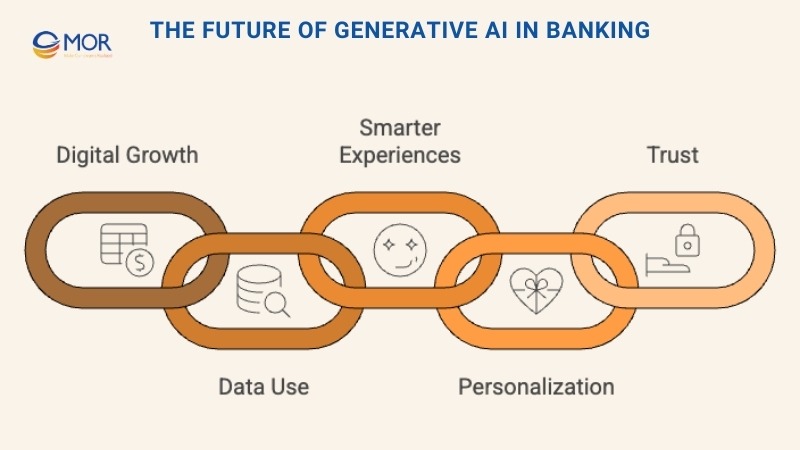
Banks will also need strong digital customer profiles that follow permission rules. The challenge is that important data often sits in separate systems. When banks remove these silos and connect AI with human support in a smooth way, they can create experiences that match each customer’s needs while still expanding their services with confidence.
How MOR Software Supports Generative AI In Banking Projects
MOR Software strengthens banking teams by providing the engineering skills and development experience needed to apply generative AI inside financial organisations. Our teams understand how banks work, from data flows and risk checks to compliance demands, which lets us design solutions that match strict industry rules while still supporting innovation.
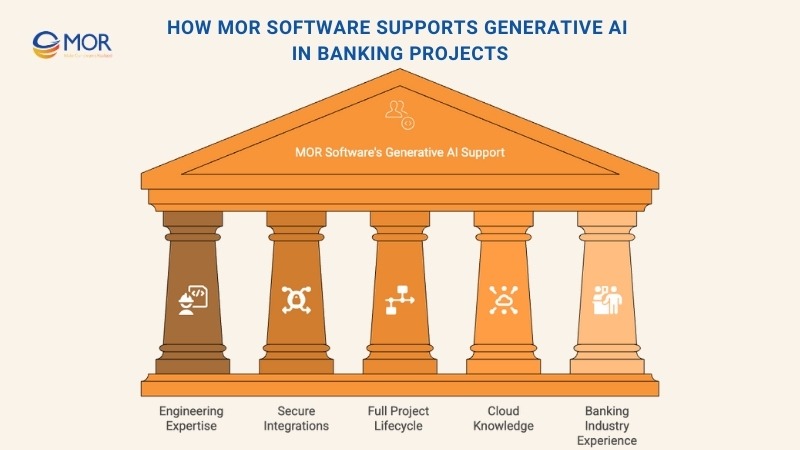
We help banks build AI systems that handle real workloads, from document processing and customer interactions to credit analysis. Our engineers are familiar with cloud environments, modern integration tools, and secure architectures, so we can connect new AI features with existing banking platforms without disrupting daily operations.
Our work goes beyond development. We support the entire lifecycle, including technical consulting, UI/UX design, backend and frontend development, QA testing, security reviews, and ongoing optimisation. This gives banks a stable way to run and scale generative AI solutions.
MOR Software has delivered many financial and banking projects, including mobile banking apps, digital onboarding tools, cloud-based services, and workforce automation systems. These experiences give us the practical insights needed to help banks use generative AI safely and effectively.
Conclusion
Generative AI in banking is reshaping how financial institutions manage risk, serve customers, and scale their operations. It gives banks faster processes, clearer insights, and smarter decision support. As this technology grows, the banks that act early will gain the strongest advantage. MOR Software helps financial teams apply AI safely, match compliance needs, and turn complex ideas into working systems. If you want to explore AI solutions for your organisation, contact us and start your journey today.
MOR SOFTWARE
Frequently Asked Questions (FAQs)
How is generative AI used in banks?
Banks use generative AI to scan large sets of transaction data, detect unusual activity, and support fraud prevention. It also helps create summaries, automate checks, and speed up internal work.
What is generative AI in banking?
Generative AI in banking describes AI models that can produce text, insights, recommendations, or reports based on financial data. These tools support customer service, fraud monitoring, documentation, and advisory tasks.
How does JPMorgan use generative AI?
JPMorgan applies generative AI to help employees with writing, reporting, document review, and idea generation. It reduces routine work so teams can focus on higher-value tasks.
How is AI used in everyday banking operations?
AI helps with document processing, onboarding, analytics, customer interactions, and data validation. It minimizes manual errors by following consistent automated steps.
Which bank has launched a generative AI platform?
HDFC Bank introduced a centralized generative AI platform to support its digital transformation and enable broader production-level AI use.
What will AI in banking look like by 2026?
AI in 2026 aims to improve slow, document-heavy processes in lending, onboarding, and operational reviews. The focus is no longer on cutting staff but on removing delays.
Can AI replace human roles in banking?
AI won’t replace banking jobs but will change how they function. Automation handles repetitive work while people oversee complex cases and decision-making.
What challenges come with using AI in banking?
Banks must manage concerns about data privacy, security, bias, and transparency. Handling personal information responsibly is one of the biggest challenges.
How can banks apply generative AI safely?
Banks can use generative AI to analyze transactions, review customer profiles, detect irregular activity, and strengthen compliance processes. These systems adjust as new risks appear.
Which banks are known for leading in AI adoption?
JPMorgan Chase, Capital One, RBC, CommBank, and Morgan Stanley are recognized for advanced AI capabilities, strong research efforts, and transparent reporting.
How are banks using AI today?
Banks use AI to automate manual processes, track regulatory updates, reduce compliance risks, and improve accuracy in operations. These tools help streamline tasks and save time.
Share


Make Our-Dreams Realized


© 2023 . MOR Software. All Rights Reserved
Sitemap
Privacy Policy
Terms of Use

Rate this article
0
over 5.0 based on 0 reviews
Your rating on this news:
Name
*Email
*Write your comment
*Send your comment
1