


10 Best HR Case Management Tools Reviewed in 2026
Managing employee issues manually often leads to delays, miscommunication, and lost data. That’s where HR case management tools come in, helping HR teams handle requests, complaints, and workplace investigations with structure and speed. This MOR Software’s guide compares the top HR case management software in 2026 to help you choose a solution that improves transparency, compliance, and employee satisfaction.
What Are HR Case Management Tools?
HR case management tools are digital platforms built to help HR teams track, manage, and resolve employee-related cases quickly and consistently. These include everything from workplace complaints and payroll inquiries to leave requests or performance concerns. With all case data stored in one secure system, HR teams can respond faster, maintain better records, and avoid missing important follow-ups.
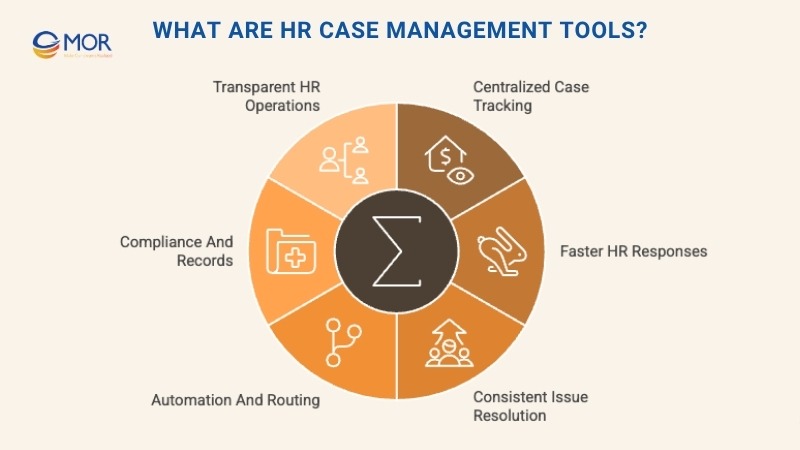
Modern HR case management software supports automated workflow, smart categorization, and communication tracking so every issue moves smoothly through its resolution process. It also helps organizations stay compliant with internal policies and labor laws while improving response times and employee satisfaction. In short, these tools make daily HR operations more structured and transparent, setting a strong foundation for better team support and long-term trust across the organization.
Key Benefits Of Using HR Case Management Tools
Every department works toward delivering a positive experience, but HR focuses on the people inside the company. Managing employee concerns can be just as complex as managing customer relations, which is why structured HR case management tools are so valuable. They help HR teams organize and resolve employee issues with consistency and clarity.
That consistency is important in a time when only about 31% of U.S. employees were actively engaged at work in 2024. This marks the lowest level in ten years and puts even more pressure on HR to act fast and communicate clearly.
The benefits of an HR case management system go beyond simple ticket tracking, they strengthen trust, speed up resolution, and improve employee satisfaction across the organization.
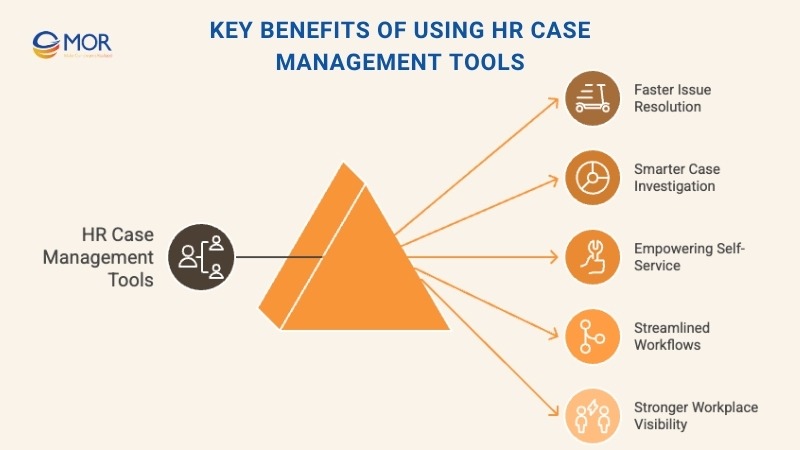
Faster Issue Resolution For Employees
Delays often happen when employee cases move between HR staff or departments. Different people may handle different parts of a case, leading to lost details and slower responses. With a centralized HR case management software, all employee data, updates, and communication are stored in one secure system.
In practice, companies that started using a modern HR service delivery platform found that their HR teams spent up to 45% less time handling basic requests and helped new employees reach full productivity about two weeks sooner.
Every HR specialist who takes over can see the full picture immediately, resolve cases faster, and provide a smoother experience for employees. This kind of system reduces back-and-forth handoffs and ensures nothing gets overlooked.
Smarter Case Investigation With Centralized Data
Effective case handling requires a complete understanding of what’s happening behind each issue. A strong HR competency model gives HR teams a single place to collect, review, and analyze data, from emails and notes to attachments and timelines. Through keeping everything connected, HR professionals can easily identify patterns, verify facts, and make fair, informed decisions.
Centralization also helps increase HR risk management, especially now that the EEOC reported recovering nearly $700 million for victims of workplace discrimination in fiscal year 2024. This shows how costly unresolved issues can become.
Centralized insights also support long-term analysis, helping HR improve processes and policies over time through structured data and evidence-based evaluations.
Self-Service Options That Empower Staff
When employees contact HR, it’s usually because they’re facing a problem that feels urgent. Waiting for updates without knowing what’s happening can add to their stress. Well-designed self-service matches how people behave today, with around 81% of employees trying to fix issues on their own before reaching out for help.
A modern HR case management system with self-service capabilities gives employees their own secure space to check progress, add comments, or view resolutions in real time. Many platforms also include searchable knowledge bases, FAQs, and learning materials so people can find quick answers to common questions without waiting for HR responses. This transparency builds trust and helps employees feel more in control of their concerns.
Streamlined Workflows For Better Efficiency
Even simple HR cases often involve several manual steps, from logging details to collecting approvals or documenting outcomes. Over time, these repetitive tasks can slow teams down. Advanced HR case management tools use automation to handle those routine actions in the background.
Research from McKinsey & Company shows that similar back-office automations can cut processing time by around 50%. This highlights how much faster HR operations can become when routine tasks are automated.
Case routing, notifications, and updates happen automatically, freeing HR teams to spend more time supporting people and less time on admin work. This shift not only saves hours each week but also improves accuracy and consistency across every process, a result backed by many HR management case study findings.
Stronger Visibility Into Workplace Concerns
A well-structured HR case management system doesn’t just track individual issues, it helps HR see the bigger picture. Every case, comment, and resolution builds a common HR metrics trail that reveals patterns across teams or departments. With this visibility, HR leaders can spot recurring problems early, measure employee sentiment, and identify areas that need improvement.
That kind of visibility also helps build engagement, as research from SHRM shows that about 85% of employees feel more connected and motivated when leaders communicate openly and transparently.
These HR case management examples give companies a clear snapshot of workplace health, allowing them to act before small issues grow into major concerns. Over time, this insight supports proactive planning, fairer policies, and a more positive employee experience overall.
Top 10 HR Case Management Tools Reviewed
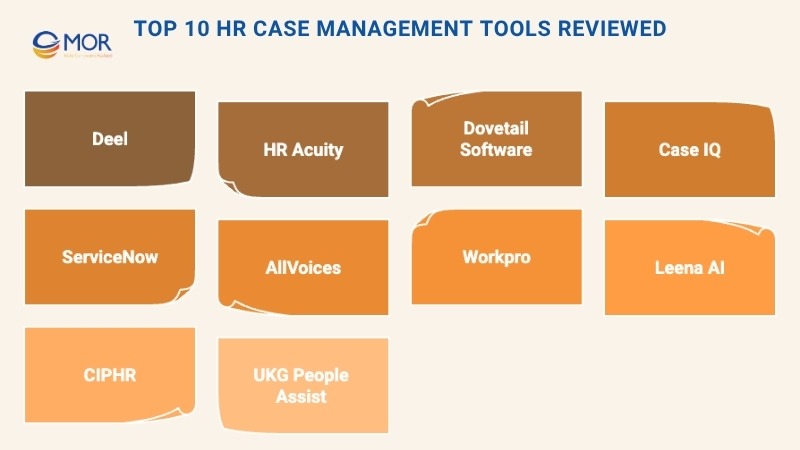
We’ve gathered the leading HR case management tools trusted by organizations worldwide. Each solution offers different strengths, from compliance and automation to analytics and employee support. Below are detailed reviews of the top ten systems, highlighting key functions, integrations, and ideal use cases to help you choose the right platform for your team.
Deel
Best for: International teams
Free trial: Yes
Starting price: From $29/month
Rating: 4.8/5
Deel is a global HR platform designed to simplify management for distributed teams. While it’s not a traditional HR case management software, Deel plays a major role in preventing HR issues before they happen. Its powerful compliance management system ensures alignment with local labor laws and keeps employee records consistent across countries. This helps businesses reduce disputes and maintain transparency when working across borders.
Why We Chose Deel: Deel stands out because it centralizes everything related to workforce compliance and documentation. It gives teams a single space for creating, signing, and storing policies, handbooks, and contracts, helping organizations avoid confusion or miscommunication.
Key Features and Integrations:
Deel provides global payroll audit in multiple currencies, benefits management, and contractor tracking. It also includes service request handling for equipment or benefits and even visa and immigration support for relocating employees.
Integrations: Xero, Bob, Okta, Expensify, BambooHR, Slack, QuickBooks, Google Workspace, and NetSuite.
Pros:
- Supports policy creation and handbook management
- Strong compliance and documentation control
- Great for international, remote, or hybrid teams
Cons:
- Limited value for local-only operations
- Lacks deep case tracking features found in full HR case management systems
HR Acuity
Best for: End-to-end HR case management
Free demo: Available
Pricing: Upon request
Rating: 4.6/5
HR Acuity is one of the most complete HR case management tools for handling employee relations and workplace investigations. It allows HR teams to document, track, and analyze every stage of an employee issue with precision, helping organizations maintain fairness and compliance across all cases.
Why We Chose HR Acuity: This platform delivers a structured approach to case handling through built-in templates and consistent documentation standards. Each case follows a clear process, ensuring transparency and equal treatment for all employees. Its hr analytics tools also provides a high-level view of trends and risks, allowing leaders to identify recurring problems early and take preventive action, a strong example of case management skills in practice.
Key Features and Integrations:
HR Acuity includes AI-driven analysis, confidentiality protection, and an integrated ethics hotline. These tools give HR teams confidence when managing sensitive cases, supporting ethical and compliant decision-making.
Integrations: Workday, Oracle, ADP, Ultipro, ComplianceLine, and other HRIS systems. It also provides a REST-based API for connecting with compliance or ticketing systems.
Pros:
- Advanced analytics and detailed reporting
- Ready-to-use templates for consistent case handling
- End-to-end process visibility and documentation control
Cons:
- Lacks built-in exit interview support
- Setup may require time for full customization
Dovetail Software
Best for: Complete caseload visibility
Free demo: Available
Pricing: Upon request
Rating: 5/5
Dovetail Software transforms how organizations manage, track, and resolve employee-related cases. This modern HR case management software gives HR teams full visibility into all open and closed cases, helping them make faster and better-informed decisions. Its intuitive interface and detailed reporting system support proactive management, from investigation to resolution.
Why We Chose Dovetail Software: Dovetail stands out for its ability to provide total transparency across every HR case. The platform’s employee self-service portal, analytics dashboard, and customizable workflows allow HR departments to maintain full control of caseloads without losing efficiency. It’s particularly useful for large organizations that need consistent communication and real-time monitoring across departments.
Key Features and Integrations:
Core features include automate workflows that route cases to the right people, custom templates for uniform communication, and a full audit trail that logs every action taken. These elements ensure accuracy, accountability, and compliance throughout the case lifecycle.
Integrations: Workday, SAP, Microsoft Dynamics, BambooHR, ADP, Google Sheets, Slack, Gmail, and Intercom.
Pros:
- Real-time visibility across all HR cases
- Full audit trail and GDPR-compliant records
- Customizable workflows and templates for flexibility
Cons:
- Mobile functionality is weaker than the desktop version
- No permanent free trial available for evaluation
Case IQ
Best for: Multi-channel case intake
Free demo: Available
Pricing: Upon request
Rating: 4.5/5
Case IQ is a cloud-based platform built to simplify investigative and compliance-related processes across HR departments. This flexible HR case management software allows organizations to manage cases related to employee relations, ethics, and workplace safety in one centralized system. It’s particularly useful for companies that need a secure, transparent, and compliant way to manage sensitive reports.
Why We Chose Case IQ: One of Case IQ’s biggest strengths is its multi-channel intake system. Employees can report incidents through different communication methods, including anonymous forms, giving them the freedom to speak up without fear of exposure. The intake forms are fully customizable, helping HR teams gather accurate and relevant information right from the start, a best practice seen in many HR case management tools focused on trust and inclusivity.
Key Features and Integrations:
The platform includes advanced analytics dashboards and automated reporting that help HR identify recurring issues before they escalate. Case IQ also complies with data protection standards such as HIPAA, PIPEDA, GLB, and GDPR, ensuring every investigation meets privacy and legal requirements.
Integrations: Connects securely with various enterprise tools through APIs for smooth data flow.
Pros:
- Supports multiple channels for reporting cases
- Robust analytics for detecting patterns and trends
- Automation improves investigation accuracy and response time
Cons:
- Limited built-in integrations
- Occasional performance delays during heavy usage
ServiceNow
Best for: Standardizing employee documentation
Free demo: Available
Pricing: Upon request
Rating: 4.3/5
ServiceNow is a comprehensive digital workflow solution that helps organizations streamline business operations, including HR services. Its HR Service Delivery (HRSD) suite is purpose-built to automated payroll system processes, manage employee requests, and handle cases within a single, structured platform. This makes it one of the most widely recognized HR case management tools used by large enterprises worldwide.
Why We Chose ServiceNow: The HRSD module combines case management and knowledge management in a way that simplifies every HR interaction. It standardizes documentation, automates repetitive requests, and ensures that each employee query follows a consistent path to resolution. With its self-service portal, employees can access resources, track their cases, or find quick answers without waiting for HR assistance. This structured approach aligns perfectly with ServiceNow case management, known for improving speed, accuracy, and accountability in HR operations.
Key Features and Integrations:
Core features include the Employee Center, a unified workspace that connects multiple departments and provides a single access point for staff support. The built-in virtual agent uses natural language understanding to resolve common requests instantly.
Integrations: Works with systems like Altiris, Google Maps, Microsoft SMS/SCCM, and Verizon Bonding, along with mobile apps for Android and iOS, ensuring flexibility and accessibility for remote teams.
Pros:
- Reduces HR workload with self-service options
- Centralized workspace and knowledge base for employees
- Highly customizable workflows for various HR functions
Cons:
- Integration setup may require expert configuration
- Deep customization can be complex for smaller HR teams
AllVoices
Best for: Automatic case routing
Free demo: Available
Pricing: Upon request
Rating: 4.4/5
AllVoices is a workplace feedback and HR case management software designed to help organizations capture, track, and resolve employee concerns quickly. It provides a single platform where HR teams can manage reports of harassment, discrimination, policy breaches, or general workplace culture issues with full transparency and documentation.
Why We Chose AllVoices: The platform’s biggest strength lies in its automatic case routing and structured workflows. Every report is instantly directed to the right HR representative or manager, ensuring that cases are handled promptly and by the right people. The centralized dashboard keeps all details, conversations, and outcomes in one place, supported by a complete audit trail that maintains compliance and accountability.
Key Features and Integrations:
AllVoices includes built-in HR analytics tools to reveal organization-wide trends and benchmark performance against aggregated, anonymous industry data. The system’s guided workflows ensure consistent case documentation and adherence to compliance standards. This makes it particularly strong for companies focusing on transparency and ethical culture building, values seen across many modern HR case management tools.
Integrations: ADP, BambooHR, Bob, Ceridian, Google Suite, Namely, Okta, Paylocity, Sage, SAP SuccessFactors, Slack, TriNet, UKG, Workday, and Zenefits.
Pros:
- Built-in templates and guided workflows for consistent case handling
- Two-way messaging maintains open communication with reporters
- Visual dashboard provides a clear overview of every ongoing case
Cons:
- Some users experience minor delays when loading dashboards
- Limited customization for case categories and reporting options
Workpro
Best for: Structured case workflows
Free demo: Available
Pricing: Upon request
Rating: 4/5
Workpro is a cloud-based HR case management software that helps HR teams manage everything from straightforward disciplinary matters to complex employee relations cases. Its structured design supports consistent and compliant handling of grievances, absences, and performance issues, making it ideal for organizations that need a clear, repeatable process for every case type.
Why We Chose Workpro: Workpro stands out for its pre-built structure and guided workflows. The platform includes 20 configurable case types, each with its own recommended steps and resolution paths. This structure helps HR professionals follow internal policies, avoid bias, and maintain fairness across all employee interactions. Built-in alerts and task tracking also help teams meet deadlines and address potential risks early, key qualities found in strong HR service delivery software.
Key Features and Integrations:
The software includes a document management system where all case-related materials, from emails and meeting notes to letters and attachments, are securely stored. It supports case intake through various channels like email, phone, text, and an optional web portal for employee submissions.
Integrations: Compatible with Microsoft Word for document generation and editing.
Pros:
- Automated notifications keep cases on track
- Centralized document repository for easy access
- Ready-to-use workflows for common HR case types
Cons:
- No dedicated mobile app at this time
- Limited integration options beyond Microsoft Word
Leena AI
Best for: Conversational AI functionality
Free demo: Available
Pricing: Upon request
Leena AI is an intelligent HR case management software that uses artificial intelligence in HR to automate employee support and streamline HR operations. The platform functions like a virtual HR assistant, answering common employee queries instantly and routing more complex issues to human agents when needed. Its AI-driven design helps companies cut response times, improve accuracy, and deliver a faster, more engaging employee experience.
Why We Chose Leena AI: Leena AI stands out for its conversational automation and self-learning capabilities. The system continuously refines its knowledge base by analyzing interactions and adding new, verified information through a smart commenting feature. This allows HR teams to build a dynamic support hub where both employees and managers get real-time, accurate guidance. Its design also aligns with workplace investigation software standards, helping organizations handle inquiries and requests transparently.
Key Features and Integrations:
Leena AI includes a unified dashboard summarizing all HR cases, with tools to filter by category, priority, or resolution time. Built-in analytics track trends, ticket volumes, and response metrics, helping teams pinpoint common issues and improve internal processes.
Integrations: Works seamlessly with ADP, Microsoft Teams, Oracle Fusion, Oracle PeopleSoft, SAP SuccessFactors, Slack, Twilio, WhatsApp, Workday, and more. The platform also offers mobile apps for Android and iOS devices.
Pros:
- Highly customizable and user-friendly interface
- AI assistant reduces delays and repetitive tasks
- Works across multiple communication platforms
Cons:
- Less suited for sensitive compliance or misconduct cases
- Initial configuration may take time for large enterprises
CIPHR
Best for: Managing high volumes of employee issues
Free demo: Available
Pricing: Upon request
Rating: 4.5/5
CIPHR is a comprehensive HR case management software built to handle large volumes of employee requests, inquiries, and investigations efficiently. It allows HR teams to record, track, and resolve cases securely while maintaining a detailed history for every interaction. With its configurable workflows and automation tools, CIPHR helps organizations stay compliant and consistent even when managing complex workloads.
Why We Chose CIPHR: CIPHR is ideal for organizations dealing with numerous cases daily. Its automation features assign the right case owners, send reminders, and maintain complete audit trails. This helps HR teams close cases on time while ensuring all communications and actions are documented for future reference. The searchable case history also makes it easy to revisit previous resolutions when similar issues arise, a hallmark of well-designed HR case management systems.
Key Features and Integrations:
The platform supports default case owners and contributors, making collaboration across departments seamless. User roles can be customized for different groups such as employees, managers, and HR administrators, ensuring proper access levels. CIPHR also enforces GDPR-compliant data management to protect sensitive employee information.
Integrations: Available through the CIPHR API for linking with other HR and business systems.
Pros:
- Efficiently manages high-volume and complex employee cases
- GDPR-compliant record-keeping for better data protection
- Secure and centralized document storage for all case materials
Cons:
- No option for anonymous employee reporting
- Limited native integration options without custom API setup
UKG People Assist
Best for: Quick answers to employee queries
Pricing: Upon request
UKG People Assist is a digital HR case management tool that streamlines how HR teams handle everyday employee requests. It provides a centralized HRIS integration platform where staff can find information, submit inquiries, and track responses, all without needing constant HR intervention. The system’s design encourages employee self-service, helping HR teams save time while maintaining consistency in how requests are managed and resolved.
Why We Chose UKG People Assist: What makes this platform stand out is its personalized knowledge base. Employees get instant access to relevant articles tailored to their department, job role, or location. This feature empowers employees to find accurate answers on demand, reducing repetitive questions that would otherwise flood HR inboxes. It’s a great example of how HR case management tools improve service quality and efficiency across the employee experience.
Key Features and Integrations:
The platform automates request routing, ensuring complex issues reach the right HR representative quickly. Its configurable workflows adapt easily to different employee life events, such as onboarding, promotions, or leave requests. Together, these features simplify case resolution and make HR processes more responsive and structured.
Integrations: Compatible with a range of enterprise applications to enhance workflow connectivity.
Pros:
- Personalized knowledge base supports employee self-service
- Automated routing of requests to relevant HR staff
- Flexible workflows for managing multiple HR processes
Cons:
- Fewer specialized features for advanced case tracking
- Setup and customization may require additional time for large teams
Comparison Table: Top 10 HR Case Management Tools in 2026
This table below highlights how each HR case management software differs in focus, functionality, and usability. Whether you need AI-powered automation, high-volume management, or structured workflows, these platforms offer proven ways to improve HR efficiency and employee experience.
Tool | Best For | Trial Info | Price | Key Feature |
Deel | International teams | Free trial available | From $29/month | Global payroll, compliance management, and document centralization |
HR Acuity | End-to-end HR case management | Free demo available | Pricing upon request | Built-in templates, ethics hotline, and advanced analytics |
Dovetail Software | Complete caseload visibility | Free demo available | Pricing upon request | Real-time dashboards, payroll audit trails, and automated workflows |
Case IQ | Multi-channel case intake | Free demo available | Pricing upon request | Anonymous reporting, custom forms, and data compliance (GDPR, HIPAA) |
ServiceNow | Standardizing employee documentation | Free demo available | Pricing upon request | Self-service portal, virtual agent, and centralized knowledge base |
AllVoices | Automatic case routing | Free demo available | Pricing upon request | Guided workflows, auto-routing, and analytics dashboard |
Workpro | Structured case workflows | Free demo available | Pricing upon request | 20 pre-configured case types and centralized document storage |
Leena AI | Conversational AI functionality | Free demo available | Pricing upon request | AI-powered virtual assistant and self-learning knowledge base |
CIPHR | Managing high volumes of employee issues | Free demo available | Pricing upon request | Workflow automation, GDPR compliance, and audit trail tracking |
UKG People Assist | Quick answers to employee queries | – | Pricing upon request | Personalized knowledge base and automated request routing |
Core Features To Look For In HR Case Management Tools
When evaluating HR case management tools, it helps to know which features truly make a difference in daily operations. The best systems combine automation, analytics, and collaboration to help HR teams manage cases faster and more accurately. Below are the key features every modern best HR case management software should include for smooth, compliant, and transparent employee support.
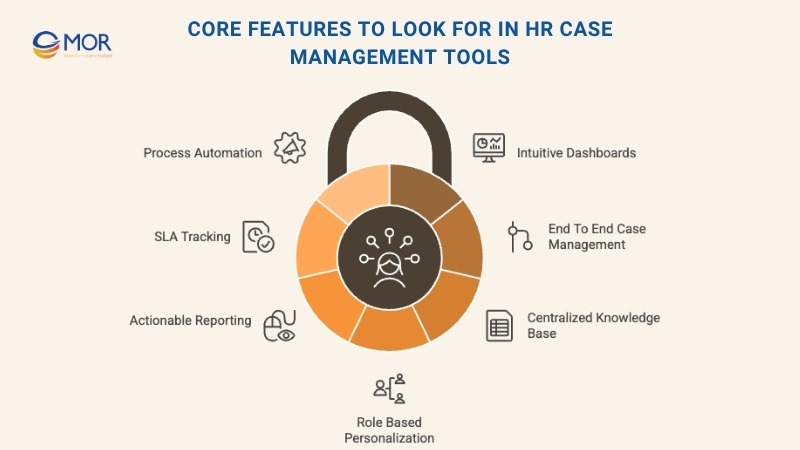
- Dashboards: A clear and intuitive overview that highlights priority cases and gives HR leaders visibility into open issues, performance metrics, and employee activity. Some systems also include a self-service portal so employees can check case updates directly.
- Case Management Tools: Core functionality that allows HR teams to log, track, and manage every case through to resolution, with escalation paths for complex or time-sensitive matters.
- Knowledge Base: A searchable, centralized library of case system HRIS software integration. This helps employees find answers independently while keeping HR policies consistent.
- Personalization: Dynamic content tailored to each employee’s role, department, or location to keep communication relevant and improve engagement.
- Reporting: Built-in analytics that turn case data into actionable insights, helping HR identify trends, measure performance, and strengthen policies.
- SLA Management: Real-time alerts and visual indicators that track service levels, keeping every case on schedule and preventing overdue resolutions.
- Business Process Automation: Smart automation that removes repetitive, manual tasks so HR teams can focus on people, not paperwork.
- Email Management: Ready-made templates and auto-responses for frequent HR inquiries, ensuring consistent and professional communication.
- Survey Analytics: Tools to measure employee satisfaction and evaluate how effectively cases are being resolved.
- Confidential Collaboration: Secure communication channels that allow HR to work with other departments on sensitive matters without compromising privacy or compliance, a clear mark of HR case management best practices.
How To Choose The Right HR Case Management Tools
The right HR case management tools can transform how your team handles employee requests, feedback, and internal cases. But with so many options available, it’s important to define what your organization truly needs before making a choice. Start by identifying your main users, their challenges, and how a new system can simplify their daily workload.
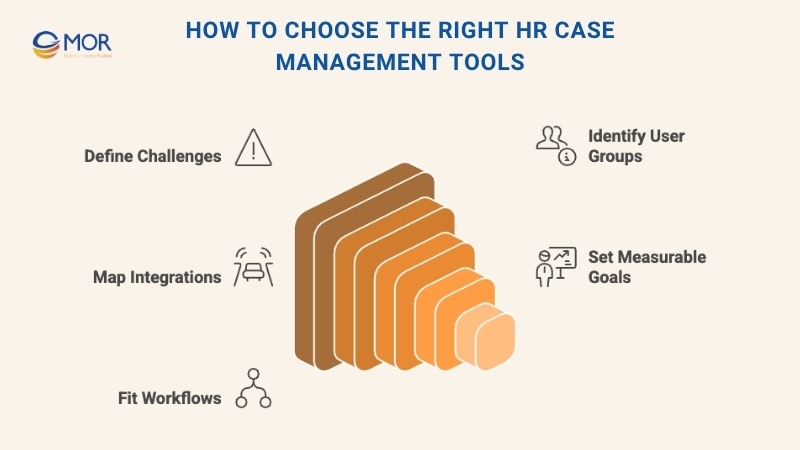
When comparing HR case management systems, keep the following points in mind:
- Clarify the main problem you want to solve: Outline the specific challenges your HR team faces, whether it’s inconsistent tracking, delayed responses, or lack of visibility. This helps you focus on the features your chosen HR case management software must deliver.
- Define who will use it: Estimate how many users and departments need access. Decide whether the platform will serve only senior HR leaders or the entire HR function, and identify what each group needs most to make their work easier.
- Check tool compatibility: Determine which existing HR system integration to merge with, such as your payroll software, communication apps, or existing HR management case study systems. Decide if you need a standalone tool or an all-in-one solution that can replace multiple platforms.
- Set clear outcomes: Identify what success looks like. You might want to reduce resolution times, improve employee satisfaction, or enable smart routing for incoming cases. Having measurable goals keeps your evaluation grounded.
- Assess how it fits your workflows: Look at your current HR processes and find gaps that the software should fill. The goal is to complement what’s working while fixing inefficiencies.
Every business has different needs, so choose a system that fits your size, structure, and growth plans, not just the one that’s most popular.
Work With MOR Software For Smarter HR Case Management
At MOR Software, we build custom HR case management tools that help companies handle employee requests, employee performance template, and internal communication with accuracy and speed. Our team combines strong technical expertise with real-world HR understanding to design tools that fit each organization’s structure and workflow.
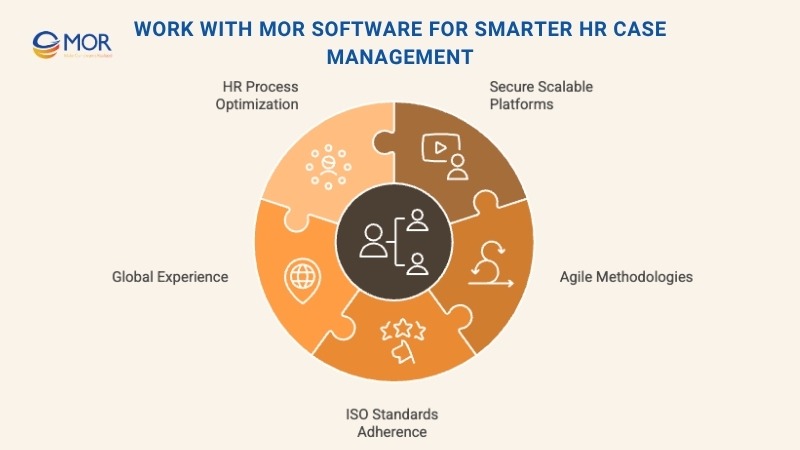
From system consulting and UI/UX design to full-scale development and cloud deployment, we manage every stage of delivery. Using technologies like salesforce, React, and AWS, our engineers create secure, scalable, and user-friendly platforms. Each project follows Agile and ISO-certified standards to guarantee efficiency, compliance, and long-term stability.
With over 850 global projects and recognition as one of Vietnam’s Top 10 IT outsourcing companies, we’ve helped businesses across healthcare, finance, manufacturing, and more modernize their HR operations. Partnering with MOR means gaining a dedicated team that turns complex HR processes into simple, automated workflows designed to empower both managers and employees.
Contact us to start building your smarter HR case management solution today.
Conclusion
Choosing the right HR case management tools can redefine how your organization handles employee relations and internal communication. The best systems bring structure, visibility, and consistency to every HR process while empowering employees through transparency and faster support. As a trusted development partner, MOR Software builds scalable and secure HR solutions tailored to your business goals. Contact us today to start creating a smarter, data-driven HR case management system for your team.
"Solutions Director at MOR Software, has extensive expertise in software development and management. He leads innovative projects and provides strategic solutions to enhance business operations, helping clients achieve digital transformation goals."
Pham Huu Canh


Solutions Director
MOR SOFTWARE
Frequently Asked Questions (FAQs)
What are HR case management tools?
HR case management tools are software solutions that help HR teams manage employee requests, complaints, and inquiries in one centralized system. They streamline case tracking, communication, and resolution.
How do HR case management tools improve employee experience?
They give employees faster answers, transparent updates on their requests, and access to self-service portals. This builds trust and reduces frustration in workplace communication.
What types of cases can HR teams handle with these tools?
Typical cases include employee relations issues, payroll or benefits inquiries, policy violations, leave requests, grievances, and compliance investigations.
Who should use HR case management software?
These tools are ideal for HR departments in medium to large organizations, especially those dealing with high volumes of employee inquiries or managing multiple locations.
What are the must-have features of HR case management tools?
Key features include automated workflows, analytics dashboards, SLA tracking, confidential case records, role-based access control, and integration with HRIS and payroll systems.
Can small businesses benefit from HR case management tools?
Yes. Even small teams can use lightweight systems to organize HR requests, maintain compliance, and improve response times without needing complex infrastructure.
How do HR case management systems ensure data security?
Most tools use encryption, access controls, and audit logs to protect sensitive employee information. Some also comply with regulations like GDPR or HIPAA.
Do HR case management tools integrate with existing HR software?
Yes. Many systems integrate with platforms such as Workday, BambooHR, ADP, or Slack, allowing seamless data flow between HR processes and communication tools.
What’s the difference between HR case management and ticketing systems?
While ticketing tools handle basic requests, HR case management systems include deeper capabilities for employee relations, compliance tracking, and confidential case documentation.
How do analytics in HR case management tools help organizations?
Analytics reveal patterns in employee issues, resolution times, and compliance risks, helping HR leaders make data-driven improvements to processes and policies.
Can HR case management software help with compliance?
Yes. It maintains detailed case records, audit trails, and timelines that support internal audits and compliance with labor laws and company policies.
What’s the average cost of HR case management tools?
Pricing varies widely. Basic plans may start around $25–$50 per user per month, while enterprise-grade solutions with automation and analytics can cost several hundred dollars monthly.
How long does it take to implement HR case management software?
Implementation typically takes between two weeks and three months, depending on company size, data migration needs, and integration complexity.
Are cloud-based HR case management systems better than on-premise ones?
Cloud-based systems are generally preferred for their flexibility, lower maintenance costs, and remote access. On-premise solutions may suit organizations with strict data control policies.
How can HR case management tools support remote or hybrid teams?
They centralize communication, track digital interactions, and allow employees to submit cases from anywhere. This ensures consistent HR support across remote or distributed teams.
Share


Make Our-Dreams Realized


© 2023 . MOR Software. All Rights Reserved
Sitemap
Privacy Policy
Terms of Use

Rate this article
0
over 5.0 based on 0 reviews
Your rating on this news:
Name
*Email
*Write your comment
*Send your comment
1