


Top 15+ IT Outsourcing Trends Impacting 2026 and Beyond
The rise of IT outsourcing trends is reshaping how businesses scale, cut risks, and access specialized talent. Many companies now face fast tech shifts and growing demands that internal teams cannot handle alone. This MOR Software’s guide will help you understand these changes and see how the right outsourcing approach can support long term growth.
Top 15+ IT Outsourcing Trends Businesses Must Track
As companies move toward 2026, outsourcing is shifting from a simple way to cut costs into a method that strengthens innovation, growth, and stability. These trends show how the market is changing and why enterprises need to monitor the direction of IT outsourcing trends closely.
AI And Automation Accelerate Software Delivery
What It Delivers
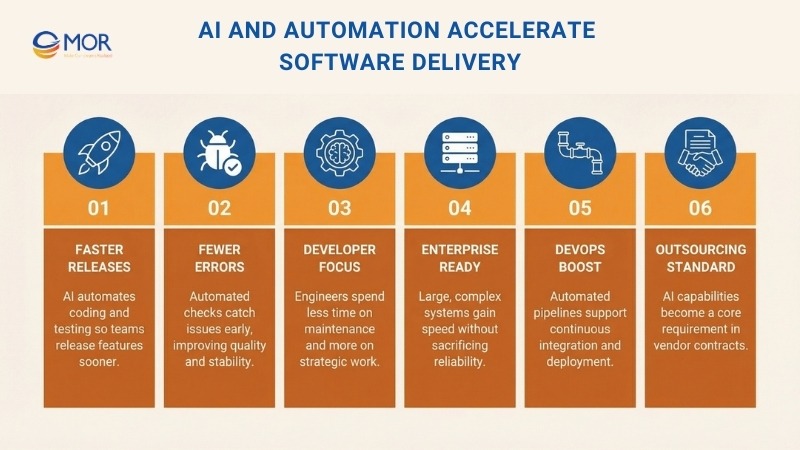
AI automation tools and automated workflows raise productivity because they handle repeated coding tasks, shorten testing cycles, and lower the chance of mistakes. Smart code generation and automated quality checks support smoother pipelines that help teams release updates faster with stronger accuracy. This gives developers more space to focus on new ideas, real problem solving, and long term work instead of daily maintenance tasks.
Where It Applies
This approach is useful for enterprises that run large or complicated systems where small delays can turn into bigger losses. Startups wanting quicker product releases also gain an advantage when automation shortens the entire build process. In DevOps settings where speed and reliability must stay consistent, outsourced automation supports steady integration and deployment without heavy blockers. This is also one of the most visible trends in IT outsourcing, shaping how teams improve delivery across many environments.
What Comes Next
As generative AI coding assistants become more advanced, automation will move from a nice extra to a normal part of most outsourcing agreements. Companies that do not adapt may fall behind competitors with stronger delivery speed and efficiency. Meanwhile, service providers with proven AI knowledge will continue to grow as reliable partners who help clients stay aligned with fast moving IT outsourcing trends.
Cloud Outsourcing Strengthens Scalability And Performance
What It Delivers
Cloud outsourcing helps lower infrastructure spending, improve system growth, and support stronger uptime compared to on-premise setups. It allows companies to react to demand changes quickly, balance workloads, and connect smoothly with new tools like AI, IoT, and large data systems. When cloud services move to external partners, organizations receive skilled guidance with migration, protection, and stable performance. This shift aligns well with IT infrastructure outsourcing trends, where cloud solutions now play a central role in supporting modern operations.
Where It Applies
This model supports enterprises that aim for digital change, global reach, or faster movement in markets that shift often. It also helps teams that do not have enough technical staff but still need stable availability, full compliance, and strong data safety. These benefits match what many companies look for in IT outsourcing trends, especially when they must keep services running without interruption.
What Comes Next
Cloud computing will stay a key part of most IT strategies, and many companies will choose hybrid or multi-cloud setups to improve flexibility, control, and system speed. External partners with solid cloud knowledge will guide organizations through complex cloud structures so they can keep strong uptime and maintain an edge in competitive markets. This reflects one growing IT outsourcing trend that will continue to shape how businesses plan long term.
Cybersecurity Outsourcing Becomes A Strategic Priority
What It Delivers
Outsourced cybersecurity gives companies strong shields against attacks, protects important data, and helps them follow global compliance rules. Security teams from external partners provide advanced monitoring tools, real time threat insights, and skills that most internal departments cannot build easily. This lowers the chance of major breaches, keeps customer confidence steady, and supports long term growth as IT outsourcing trends continue to rise across many industries.
Where It Applies
This model is important for sectors that manage large volumes of private information, including banking, healthcare, and online retail, where even one security issue can create serious damage. Smaller companies also gain from outsourced protection because they receive enterprise grade security without running a full in house team. Many healthcare organizations follow healthcare IT outsourcing trends, which focus on strengthened cybersecurity due to strict rules and higher risks.
What Comes Next
As attacks become more advanced, outsourced cybersecurity will shift from simple reaction to steady prevention, clear risk control, and planned incident response. Partners that provide complete protection systems with AI powered detection tools will guide the direction of the market. This makes outsourced security not only a protective measure but also an important part of lasting business strength.
Data Analytics Outsourcing Creates Competitive Advantages
What It Delivers
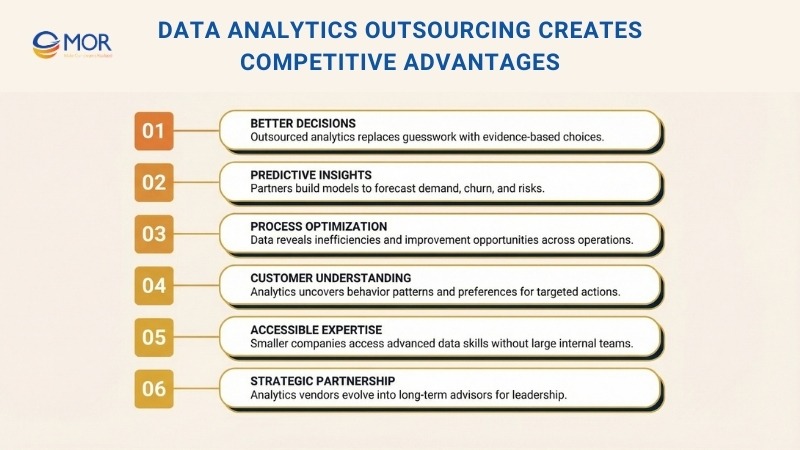
Outsourced analytics helps companies make decisions based on clear data instead of assumptions. External teams provide strong tools, including predictive models and machine learning systems, so organizations can spot key patterns, refine workflows, and understand customer actions earlier. This leads to better market strength, lower risks, and new ways to grow, especially as IT outsourcing trends continue to shape how businesses use data.
Where It Applies
This approach works well for sectors like retail, finance, and logistics, where huge amounts of information move quickly. Younger companies and smaller firms also rely on outside analytics support because it lets them access high quality insights without investing in large internal data teams. The demand in these industries shows how IT services outsourcing trends support smarter decision making.
What Comes Next
As real time insights become more common, analytics partners will act more like long term advisors who guide strategic choices. Organizations that keep using strong data tools will move ahead of competitors, turning outsourced data science into an important part of long term leadership.
Iot Solutions Expand Across Industries
What It Delivers
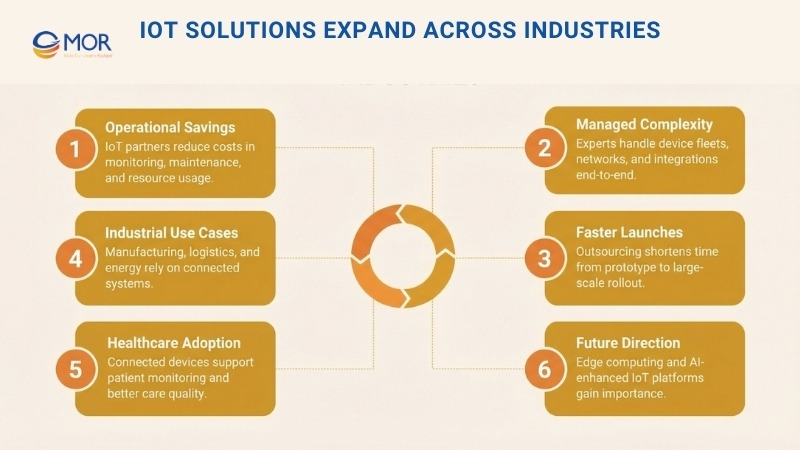
IoT outsourcing helps companies save costs in areas like hardware setup, network control, and device protection. External experts manage complex groups of sensors and connected systems while keeping everything working smoothly together. This support shortens the launch timeline and lowers risks during daily operations, which fits well with growing IT outsourcing trends across many sectors.
Where It Applies
IoT outsourcing plays an important role in smart factories, healthcare tracking, supply chain improvement, and energy management. Businesses that work on smart devices or connected systems also gain value when they move from small prototypes to large scale rollouts. Many groups following healthcare IT outsourcing trends rely on connected tools to monitor patients and improve service quality.
What Comes Next
As billions of new devices come online, IoT development services will shift toward edge computing, AI supported monitoring, and specialized platforms built for each industry. Partners that understand both technology and rules will be key to keeping IoT systems stable, safe, and ready to grow.
Blockchain Adoption Spreads Beyond Finance
What It Delivers
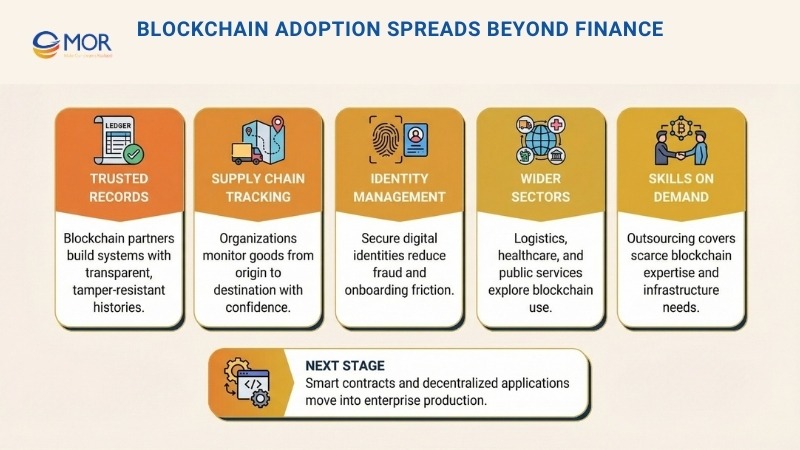
Blockchain software development outsourcing gives companies access to secure and transparent systems without needing rare in house skills. Common uses include tracking goods in supply chains, managing digital identities, and handling protected transactions that strengthen trust and lower fraud risks. This area continues to grow as part of broader IT outsourcing trends that support safer digital processes.
Where It Applies
Blockchain tools are important in fields where trust, compliance, and clear records matter the most, including finance, logistics, and healthcare. Government groups and nonprofits also turn to outsourced blockchain services to manage public records and support programs that require strong security.
What Comes Next
Blockchain outsourcing will move from small tests to full enterprise use, with a strong push toward smart contracts and decentralized apps. Partners that mix blockchain with AI and IoT technology will guide the next stage of secure and automated digital ecosystems.
Distributed Remote Teams Remain A Long Term Standard
What It Delivers
Outsourced remote teams give companies access to global talent, help lower hiring costs, and keep work moving at any hour. This setup also improves flexibility because organizations can expand or shrink their teams without long commitments or heavy overhead.
Where It Applies
This model is effective for startups, SaaS businesses, and enterprises that create digital products and need teamwork across different time zones. Many traditional companies also adopt distributed outsourcing to fill skill gaps and speed up delivery. These shifts reflect how IT outsourcing trends continue to reshape team structures.
What Comes Next
Remote team outsourcing will stay as a long term approach rather than a short term response to global events. Companies will focus on building teams that work well together across borders, supported by strong collaboration tools and AI powered project management systems. This direction shows how one IT outsourcing trend now shapes the future of global teamwork.
Customer Experience Outsourcing Gains Momentum
What It Delivers
Outsourced CX services that use tools like AI chatbots, support centers, and tailored assistance help companies improve customer satisfaction while lowering daily operating costs. These services give users quick, steady, and thoughtful interactions across every channel, which aligns with fast growing IT outsourcing trends in service driven industries.
Where It Applies
CX outsourcing is important for e commerce, telecom, and finance because customer loyalty affects overall revenue. Smaller businesses also rely on external CX teams so they can provide high quality support without building large internal departments. Many groups in healthcare follow healthcare IT outsourcing trends as they aim to improve patient support and maintain steady communication.
What Comes Next
As customer expectations continue to rise, CX outsourcing will shift from simple cost control to a clear way for brands to stand out. Providers that blend human support with AI systems and offer predictive journey insights will guide the next level of outsourced CX performance.
Green IT And Sustainability Enter Outsourcing Requirements
What It Delivers
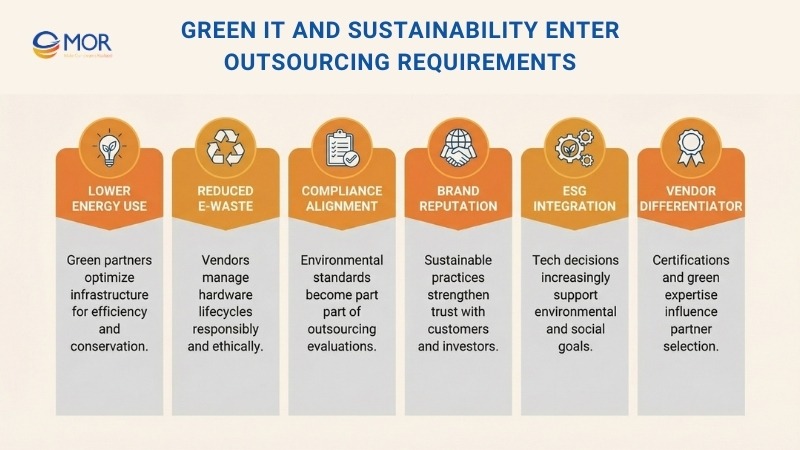
Sustainability focused outsourcing helps companies lower energy use, cut electronic waste, and follow environmental rules more easily. Green IT also strengthens brand image and appeals to investors and customers who care about eco friendly practices. These shifts continue to appear across modern IT outsourcing trends as more organizations aim for cleaner operations.
Where It Applies
This approach matters for sectors that face higher pressure to show environmental responsibility, including manufacturing, logistics, and consumer goods. Tech centered companies also choose green outsourcing so their work stays aligned with ESG targets and long term responsibility goals.
What Comes Next
Sustainability will move from a choice to a requirement. Outsourcing partners with proven green certifications and knowledge in energy saving systems will lead the market. Companies will look for eco friendly solutions that support growth and long term value without harming the environment.
Custom Software Outsourcing Rises In Importance
What It Delivers
Outsourced custom software development gives companies solutions built to match their exact goals, unlike ready made tools. These projects support smooth scaling, easier integration, and quicker delivery through teams with strong technical skills. This growth reflects wider software outsourcing trends that focus on tailored digital systems.
Where It Applies
This approach matters for enterprises with detailed workflows, startups that need unique products to stand out, and sectors that require very specific tools such as fintech, healthcare, or education. These groups rely on personalized builds to support daily operations and long term growth.
What Comes Next
Custom software outsourcing will keep rising as companies look for digital advantages that help them compete. Partners with agile methods and deep industry knowledge will guide this shift and support businesses that aim for stronger digital differentiation.
AR/VR Adoption Grows In Training And Operations
What It Delivers
Outsourced AR and VR development gives companies access to rich training tools, lifelike simulations, and interactive customer experiences without needing large internal teams. These solutions help improve safety, lower training expenses, and raise overall engagement across different use cases.
Where It Applies
This approach fits well in manufacturing, healthcare, aviation, and retail, where simulation based training or immersive customer journeys produce clear returns. Many organizations in these fields rely on advanced tools to support daily operations and long term growth.
What Comes Next
As AR and VR devices become easier to access, outsourced development will move into wider enterprise use. Partners who connect AR or VR with AI and analytics will guide the next stage of immersive business solutions. This shift also aligns with broader IT outsourcing trends that shape how companies adopt new digital experiences.
Quantum Technology Readiness Initiatives Emerge
What It Delivers
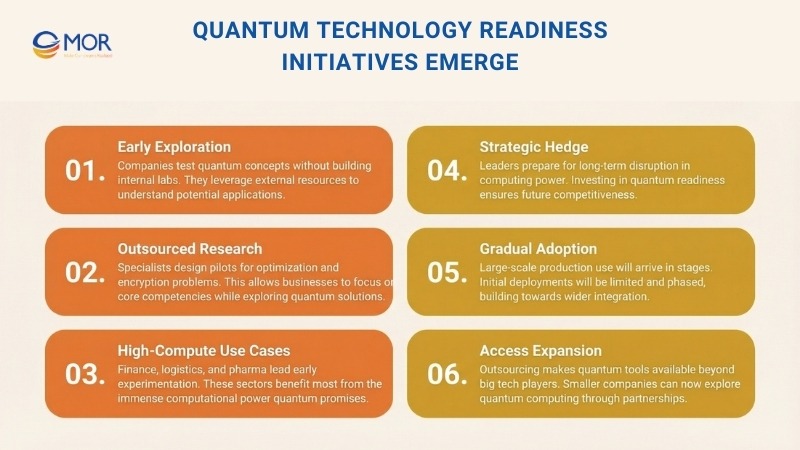
Outsourcing research and early testing helps companies explore quantum computing without carrying the high cost of building internal teams. This gives them access to advanced processing power that supports optimization work, secure encryption, and faster AI performance as part of emerging IT outsourcing trends.
Where It Applies
Quantum solutions suit industries that need very strong computing power, including pharmaceuticals, finance, and logistics. Organizations with long term innovation plans gain the most value from external quantum specialists who guide early experiments and pilot programs.
What Comes Next
Large scale quantum use may take time, yet companies that start early with outsourced support will hold a clear strategic edge. Over the years, outsourcing will help more businesses access quantum technology, making it easier for organizations of all sizes to explore these advanced tools.
Outcome Based Contracts Replace Traditional Billing
What It Delivers
Outcome based agreements move outsourcing from a cost first setup to a value focused partnership. Instead of paying for hours or team size, companies connect success to clear results like faster releases, less downtime, or better customer satisfaction. This structure encourages providers to improve, automate, and refine processes that create real business value. These changes reflect major IT outsourcing trends that push companies toward impact driven delivery models.
Where It Applies
This contract style works well for companies upgrading old systems or growing digital products where speed, stability, and user experience have a direct effect on revenue. Organizations that want stable returns also choose outcome centered contracts because spending aligns with proven results instead of general effort.
What Comes Next
As AI and automation improve productivity, older time based models will continue to fade. Value driven contracts will become the common choice in outsourcing, building stronger partnerships and aligning incentives around shared goals and long term growth. The shift also mirrors broader trends in IT outsourcing as companies look for measurable outcomes.
Immediate Access To Specialized Talent
What It Delivers
Outsourcing lets companies reach skilled experts in areas like generative AI integration services, machine learning, cybersecurity, data engineering, and blockchain, all of which are hard to find in the global job market. Instead of spending long periods on hiring or training, businesses can work with specialists right away through external partners. This pattern continues to grow across many IT outsourcing trends where advanced skills are in high demand.
Where It Applies
Access to niche talent is especially useful for enterprises that are modernizing large systems or building new digital solutions. Organizations creating AI or ML models, zero trust security models, predictive analytics tools, or blockchain based systems often depend on outsourcing to fill high level roles that are costly or slow to build internally.
What Comes Next
As technology changes faster than the workforce can adapt, outsourcing for specialized talent will become a core strategy for many companies. More organizations will treat outsourcing as a way to gain strong knowledge and speed up transformation rather than just save costs.
Outsourced Digital Transformation Services Expand
What It Delivers
Outsourcing teams now act as key partners in digital transformation efforts. They update legacy systems, support smooth cloud moves, add AI and IoT tools, and set up agile delivery methods. These services help companies keep up with fast technology changes without putting too much pressure on internal teams. This shift aligns with many IT outsourcing trends that focus on long term modernization.
Where It Applies
Digital transformation outsourcing is important for companies held back by old systems that limit growth or innovation. Organizations moving to cloud native setups, using automation on a large scale, or redesigning customer journeys depend on external teams for strong architecture design, integration work, and steady development cycles.
What Comes Next
Since many business leaders worry about losing their place in the market without faster digital adoption, outsourcing partners will become long term advisors who guide ongoing transformation. Digital ready capabilities will turn into a basic requirement rather than an optional upgrade as part of modern IT services outsourcing trends.
More Agile And Adaptive Outsourcing Models
What It Delivers
Flexible outsourcing approaches let companies adjust team size, budgets, and resources as needs change. Agile delivery supports closer teamwork, constant improvement, quicker feedback, and fast responses to shifting business goals. This turns outsourcing into a strong engine for growth instead of a fixed contract service and continues to shape major IT outsourcing trends today.
Where It Applies
Agile outsourcing fits well for companies that change product plans often or work in fast moving fields like cloud engineering, fintech, AI or ML development, and digital commerce. It becomes especially useful when speed and quick reactions have a direct impact on customer satisfaction and overall market position.
What Comes Next
As more enterprises move away from long term fixed contracts, modular engagement models will become the common choice. Providers will operate as close partners who share responsibility for new ideas, risk control, and delivery quality. This shift highlights one important IT outsourcing trend that supports stronger collaboration.
Devops Adoption Improves Delivery Speed And Team Alignment
What It Delivers
DevOps methods strengthen cooperation between outsourced teams and internal staff, helping companies release updates faster and remove delays in development pipelines. Groups that adopt DevOps often see higher productivity, clearer visibility, and more reliable releases. This shift reflects a growing IT outsourcing trend focused on smoother collaboration.
Where It Applies
DevOps practices are especially useful for organizations that run constant development cycles or manage large systems with many teams. Communication tools like Slack and project platforms like Jira support real time updates and cleaner workflows among distributed units, making teamwork more coordinated.
What Comes Next
As nearly all companies using DevOps report strong results, DevOps based outsourcing will turn into a common standard. Partnerships that use CI or CD pipelines, shared dashboards, and automated testing will enjoy faster delivery and more stable iteration cycles as part of modern IT outsourcing trends across the industry.
Key IT Outsourcing Statistics To Watch In 2026
The global market for outsourcing continues to expand as companies search for smarter ways to manage technology and reduce risk. Many organizations also follow IT outsourcing trends to improve speed, access new skills, and support long term digital goals. These numbers show how fast the market is growing and why leaders consider outsourcing a core part of their strategy. The rise of IT outsourcing statistics also highlights how organizations rely on external teams to stay competitive in a changing environment. Some of these patterns began in earlier years, including IT outsourcing trends 2025, and they continue to influence decisions today.
Global Demand For IT Outsourcing Continues To Surge
The Global IT Outsourcing Market is expected to rise from USD 471.1 Billion in 2023 to nearly USD 1,094.9 Billion by 2033, reflecting a CAGR of 8.80% from 2024 to 2033.
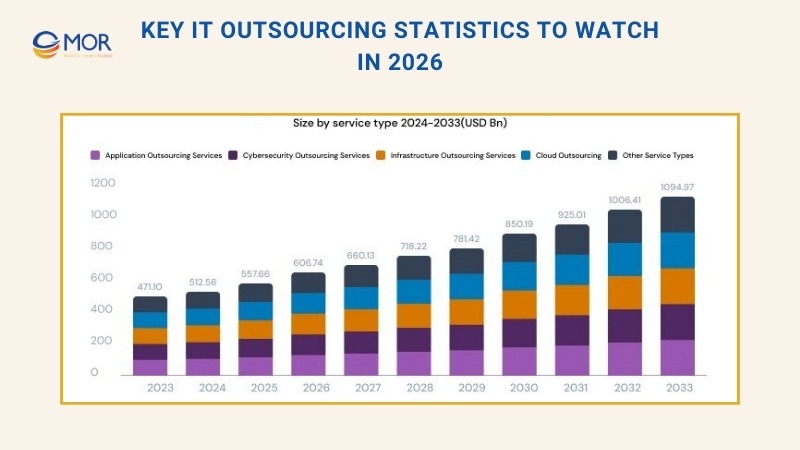
Much of this increase comes from companies seeking extra savings during financially uncertain periods. This shows a stronger shift toward outsourcing as a way to improve IT operations and support faster digital change so businesses can reach modern objectives. These numbers also point to steady IT outsourcing growth across global markets.
Cost Savings Drive 70% Of Outsourcing Decisions
70% of companies report that outsourcing is more cost effective when compared to hiring and managing full internal teams.
This makes sense because outsourcing helps smaller and medium sized organizations scale without high operational spending, which often slows growth.
Working with external partners, especially for software development, increases financial flexibility and lets businesses use saved resources for innovation and new product plans.
Post Pandemic Reassessment Prompts New Outsourcing Strategies
The pandemic pushed many organizations to rethink how flexibility and agility support daily business operations. Gartner reports that 83% of global IT leaders plan to review their current outsourcing models so they can strengthen resilience and respond more effectively to sudden changes.
This new direction highlights the importance of scalable and efficient outsourcing setups that adjust quickly to shifting business demands and help companies maintain steady, long term growth.
India Maintains Its Position As A Leading Outsourcing Hub
India remains a dominant force in IT outsourcing thanks to its large pool of skilled professionals and affordable service options. The country has more than five million software developers, giving companies in the United States and Europe easy access to strong technical expertise.
Beyond cost advantages, outsourcing to India offers specialized knowledge in project management and software engineering. Many Indian offshore IT outsourcing firms also perform well in fast growing areas like artificial intelligence, blockchain development, and custom software builds, which keeps India ahead in global outsourcing markets.
IT Outsourcing Remains Standard Among G2000 Enterprises
A 2024 report from Exploding Topics shows that 92% of Global 2000 companies use IT outsourcing services. This highlights how important outsourcing has become for large enterprises that want to streamline operations, strengthen their competitive position, and gain access to specialized support.
A separate report from Digital Minds BPO notes that IT services make up about 72% of outsourcing contract value worldwide. This clearly shows how central IT functions are in the global outsourcing space.
Hybrid outsourcing models, including onshore, nearshore, and offshore setups, give these large companies more control over costs and customization so they can match solutions to their specific needs.
Growing Demand For Custom Built Software
Many companies now turn to custom software development solutions to meet their unique operational needs. According to The Business Research Company, the global custom software market is expected to grow from 44.52 billion dollars in 2024 to 54.26 billion dollars in 2025, which reflects a 21.9% CAGR. This growth helps organizations build systems designed around their own workflows, giving them a strong advantage in the market.
Outsourcing allows businesses to reach specific goals in control, performance, and scalability across their digital systems, including specialized CRMs or AI powered analytics tools. These patterns connect closely with several IT outsourcing trends that focus on building advanced, industry ready software.
Cybersecurity Capabilities Influence Vendor Selection
IT outsourcing provides many advantages, yet it also brings a stronger focus on choosing the right vendor because security risks continue to rise. Research shows that 60% of companies plan to prioritize cybersecurity strength when selecting an outsourcing partner.
Working with a provider that delivers managed services can lower operating costs and improve overall efficiency. Still, this number makes it clear that selecting a partner with solid data protection practices is essential for keeping sensitive information safe and maintaining trust.
The Evolving Benefits Of IT Outsourcing Trends
IT outsourcing trends continue to shift as new technologies, flexible delivery models, and global talent networks change the way companies run their digital operations. Outsourcing is no longer used only to cut costs. Many organizations now rely on external partners to increase speed, reach advanced skills, improve stability, and support long term transformation. These changes give companies advantages that were not common in older outsourcing setups and reflect the growing future of IT outsourcing.
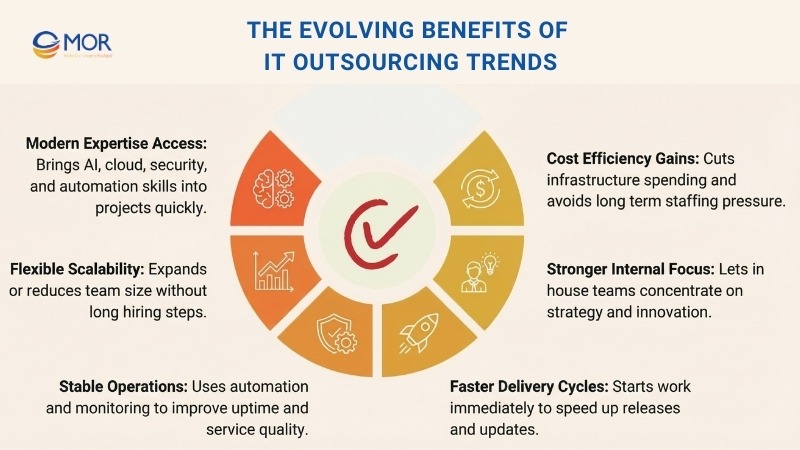
- Access to modern expertise: Companies can reach experts in AI, cloud engineering, cybersecurity, and automation. This reduces long learning periods and brings advanced skills into projects much faster.
- Stronger scalability: Teams can grow or shrink without slow internal hiring steps. This flexibility helps businesses react quickly to new chances or changes in demand.
- Higher operational stability: Providers use automation, monitoring systems, and steady workflows that lower the chance of downtime. This leads to smoother operations and stronger service quality.
- Faster delivery cycles: Experienced outsourcing teams start work right away. This removes delays and helps companies release new products or updates sooner.
- Better focus for in house teams: External partners handle routine work so internal staff can focus on strategy, innovation, and customer experience.
- Improved cost efficiency: Outsourcing reduces infrastructure spending and lowers the pressure of long term staffing. Companies pay only for the skills and capacity they need at the moment.
These growing advantages show how outsourcing has evolved from simple task support into a strategic force that helps businesses innovate and stay competitive in a fast moving digital market.
Global Leaders In The IT Outsourcing Sector
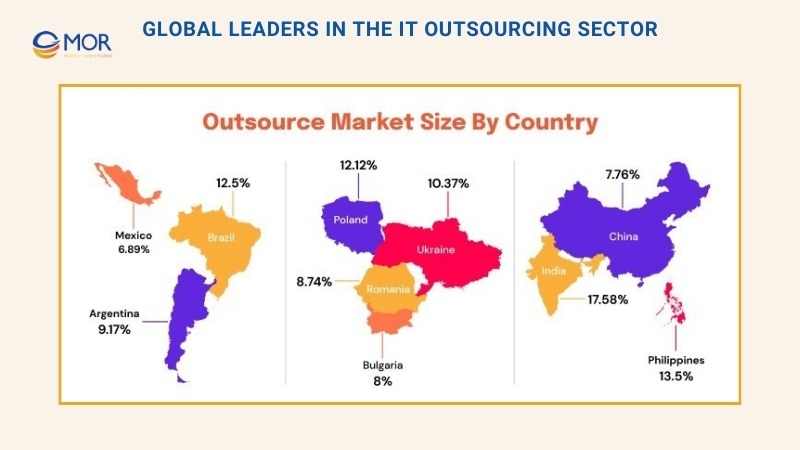
The worldwide software outsourcing market in 2025 is experiencing major movement, with countries in Eastern Europe gaining strong traction while long established centers like India and China continue to lead in overall scale. Below is a look at the regions shaping the outsourcing landscape as global IT outsourcing trends expand further.
India
In 2025, India’s share of the global software outsourcing market is projected to reach 10.51 billion dollars, equal to roughly 17.58% of the worldwide total, positioning India as the clear leader in this space. The country also shows an impressive CAGR of 17.58%.
Large talent pools in cities like Bangalore, Hyderabad, and Pune make India a central hub for IT services. The country’s wide workforce, strong English skills, and low infrastructure costs support rapid outsourcing growth. India also benefits from high demand for AI, analytics, and cloud transformation expertise, making it a key partner in ongoing IT outsourcing trends across industries.
Philippines
The Philippines holds 13.5% of the global software outsourcing market, valued at 686 million dollars, with a matching 13.5% CAGR. Growth has been driven by strong English and Spanish language skills, affordable service rates, and education programs designed for global IT requirements.
The country has become a leading choice for companies in the United States, United Kingdom, and Australia due to time zone alignment and cultural fit. Customer service, backend support, and IT maintenance roles continue to grow as the Philippines strengthens its position in the outsourcing market.
Brazil
In 2024, Brazil reached an estimated 6.13 billion dollars in software outsourcing value, representing around 12.5% of the global market. Its 12.5% CAGR shows steady and continued growth for the country.
Brazil’s strength comes from strong language skills in Spanish, Portuguese, and English, along with convenient time zone alignment with both the United States and Europe. The country has a diverse outsourcing model and is home to more than 750,000 IT professionals, the largest talent base in Latin America.
Poland
Poland holds about 12.12% of the global market and reached more than 3 billion dollars in software outsourcing value in 2024. It remains one of the fastest growing outsourcing hubs in Europe with a 12.12% CAGR.
Located in the EU, Poland benefits from a highly educated workforce skilled in STEM and technical fields. With over 400,000 IT specialists, the country supports strong value and quality while fully meeting EU compliance standards, which makes it an attractive partner for European outsourcing needs.
Ukraine
Even with ongoing geopolitical difficulties, Ukraine’s share of the global outsourcing market in 2024 is estimated at 3.7 billion dollars, supported by a strong CAGR of 10.37%. This shows how resilient the country’s outsourcing sector remains.
An impressive 96% of clients continued working with Ukrainian providers during the conflict, highlighting the industry's commitment and ability to operate during major disruptions. Ukraine also remains well regarded for its engineering talent, especially in fintech, AI, and cybersecurity services.
Romania
Romania represents 8.74% of the global outsourcing market, with a total value of around 415.2 million dollars. Its CAGR of 8.74% signals consistent and steady expansion.
The country has more than 200,000 IT professionals working across over 440 tech companies. Romania also supports the sector through tax incentives for software developers and improvements in digital infrastructure, making it a strong choice for nearshore outsourcing within Europe.
Bulgaria
Bulgaria holds an 8% share of the global outsourcing market, which is notable for a country with a population of just over 6.5 million. In 2024, the market value reached 144.7 million dollars and is projected to approach 500 million dollars by 2028, supported by steady growth and a CAGR of about 8%.
The capital city, Sofia, is becoming a strong IT hub, helping the country build a solid digital infrastructure and attract skilled tech professionals. Bulgaria’s location also makes it a convenient choice for European countries seeking affordable, high quality offshore services.
China
China maintains a leading position with a market size of 28.76 billion dollars in 2024, although its CAGR of 7.76% reflects a more moderate growth rate. Rising labor costs and economic changes are pushing China toward more advanced and higher margin IT services.
Even with this shift, China’s large technology infrastructure and deep engineering talent ensure that it remains a major player in software outsourcing, especially in complex enterprise systems and embedded solutions for hardware and software integration.
Mexico
Mexico’s outsourcing market reached about 5.06 billion dollars in 2024, placing it just behind Brazil in global share, with a steady CAGR of 6.89%.
Its strong position is supported by close geographic ties to the United States and Canada, which allow real time communication and lower latency. Mexico serves both North American and Latin American markets and offers a range of IT services from cost effective solutions to premium technical support.
Argentina
Argentina’s IT outsourcing market is smaller compared to others in the region, but it still holds an important role in Latin America. The market reached 417.2 million dollars in 2024, supported by a 9.17% CAGR.
The country stands out for having the highest English proficiency in Latin America and a strong pool of STEM graduates. However, economic instability and currency fluctuations limit its growth. With improved stability, Argentina could take on a much larger role in the global outsourcing market.
Preparing For The Future With IT Outsourcing Trends
IT outsourcing trends continue to guide how companies plan, build, and scale their digital systems. Modern outsourcing is no longer focused only on reducing expenses. It now supports innovation, long term stability, and smarter decision making. These points highlight what organizations should think about when planning ahead and reflect the growing future of IT outsourcing.
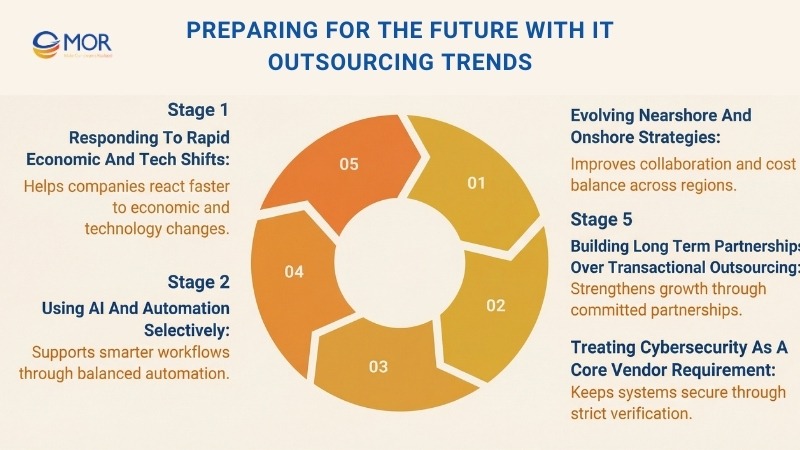
Responding To Rapid Economic And Tech Shifts
Outsourcing patterns change as the economy and technology move quickly. In this situation, you should:
- Choose flexible models that help you manage inflation, supply shortages, or sudden business disruptions. Your outsourcing partner must be ready to adjust to new costs and resource limits.
- Use modern technologies so your business can stay competitive and react faster to market changes.
Using AI And Automation Selectively
AI supported software development continues to reshape how teams work. Here are actions that can help:
- Prioritize human in the loop setups where AI tools and people support each other. This leads to stronger decisions and more reliable outcomes.
- Look at RPA tools that improve workflows while still keeping human staff involved in essential steps.
Treating Cybersecurity As A Core Vendor Requirement
More businesses now expect zero trust security from their outsourcing partners. To stay protected, you should:
- Follow strict security practices and avoid trusting any system or device without verification.
- Treat security as a priority from the beginning so you can prevent data breaches and keep your environment safe.
Evolving Nearshore And Onshore Strategies
As you follow modern IT outsourcing trends, it helps to:
- Review cultural fit and legal compatibility to lower geopolitical risks and improve collaboration.
- Combine nearshore and offshore teams so you can reduce costs while still improving communication and real time coordination.
Building Long Term Partnerships Over Transactional Outsourcing
Strong outsourcing partners support real business growth. To get better outcomes, you should:
- Work with a team that understands your goals and stays aligned with your vision.
- Select partners that bring skill, adaptability, and a steady focus on long term improvement.
MOR Software: A Trusted IT Outsourcing Partner For Your Business
MOR Software gives you a stable, skilled, and long-term partner for IT outsourcing. We focus on clear communication and predictable delivery so your product roadmap always stays on track. Our teams in Vietnam and Japan understand the pace of real projects, which helps you move forward without slowdowns or confusion. You get flexible team models, strong engineering habits, and support that adapts as your business grows.
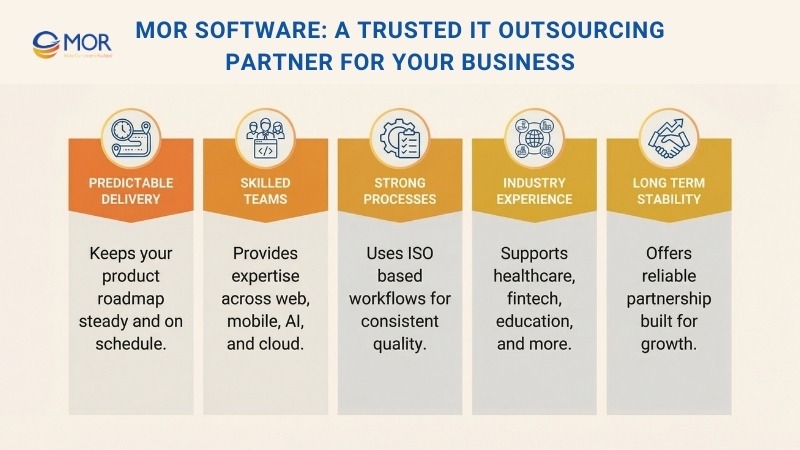
We work across offshore web development, mobile, AI, Salesforce consulting, cloud, and enterprise platforms, backed by ISO-based processes that keep quality consistent. Companies in healthcare, fintech, education, media, and manufacturing trust us because we combine technical depth with practical project management. Our case studies show results across large systems, high user volumes, and fast release cycles.
If you need an outsourcing partner that values stability, collaboration, and long-term success, MOR Software brings the experience and reliability to help your business grow with confidence.
Conclusion
Staying ahead of IT outsourcing trends helps your business move faster, stay flexible, and access the right expertise at the right time. As technology demands rise, choosing the right partner becomes even more important for long term growth. MOR Software is ready to support your roadmap with reliable teams and practical solutions that match your goals. Contact us today to explore how we can help you scale with confidence and build stronger digital outcomes.
MOR SOFTWARE
Frequently Asked Questions (FAQs)
What are the biggest IT outsourcing trends shaping businesses in 2026?
Companies are prioritizing automation, cloud migration, cybersecurity, remote engineering teams, and outcome-based contracts. These areas help them cut costs, improve delivery speed, and stay competitive as technology evolves.
Why are more companies using AI in IT outsourcing?
AI speeds up development, strengthens QA, improves support workflows, and helps teams work more efficiently. It turns slow, manual tasks into faster and more accurate automated steps.
Is outsourcing still cost-effective in 2026?
Yes. Outsourcing remains cheaper than hiring full in-house teams in most regions. It reduces recruitment time, training costs, and long-term overhead, which makes budgeting easier for growing companies.
Why are businesses shifting toward outcome-based outsourcing?
Outcome-driven agreements tie payments to results instead of hours. This gives companies more control and encourages partners to deliver measurable improvements.
How does remote work influence IT outsourcing trends?
Remote work opened access to global talent and made distributed teams normal. Companies now outsource to fill skill gaps quickly while keeping operations flexible.
What skills are most in demand in IT outsourcing today?
Organizations are looking for expertise in AI, machine learning, cybersecurity, cloud engineering, blockchain, data analytics, DevOps, and full-stack development.
Why is cybersecurity gaining more attention in outsourcing decisions?
Cyberattacks keep rising, so companies need partners with stronger security practices, safe development workflows, and reliable compliance standards to protect sensitive systems.
What factors should companies consider before choosing an outsourcing location?
Businesses often compare talent availability, costs, time zone differences, language skills, political stability, and the maturity of the local tech ecosystem.
Will IT outsourcing continue to grow in the future?
Yes. Digital transformation, AI adoption, cloud expansion, and talent shortages all point to steady outsourcing growth. Companies rely on external partners to scale quickly and adopt new technologies faster.
Share


Make Our-Dreams Realized


© 2023 . MOR Software. All Rights Reserved
Sitemap
Privacy Policy
Terms of Use

Rate this article
0
over 5.0 based on 0 reviews
Your rating on this news:
Name
*Email
*Write your comment
*Send your comment
1