


Office Space Planning Strategies: Essential Guide for Businesses
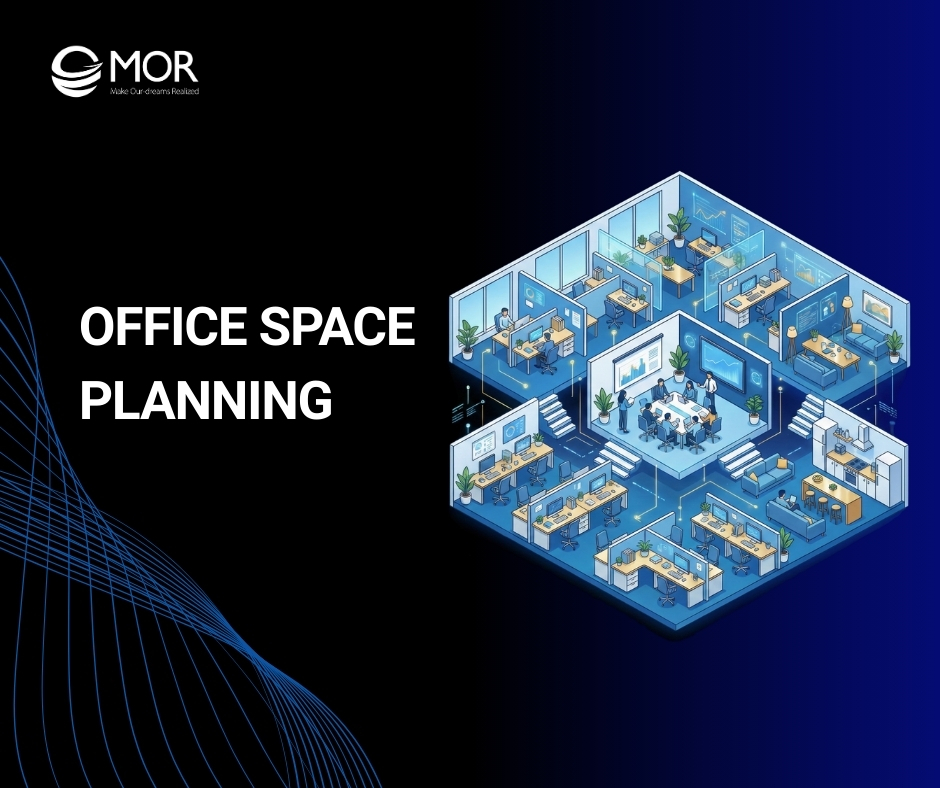
A smart approach to office space planning helps teams save time, cut stress, and work with more focus each day. Many businesses struggle with layouts that waste space or fail to support real workflows, which slows everyone down. This guide from MOR Software will show you clear steps and practical ideas to build a workspace that feels modern, flexible, and ready for growth.
What Is Office Space Planning?
Office space planning is the process of organising and shaping a workplace so teams can use every part of the office in a smart way. This work includes placing desks, conference room technology, and shared zones in positions that help daily tasks run smoothly and support strong performance. It is more than arranging furniture. It focuses on how people move, communicate, and complete tasks inside the space. This is important because research by workplace benchmarking firm Leesman found that 43% of employees globally feel their workplace does not let them work productively. Many teams also start planning to plan office space early to avoid wasted time later.
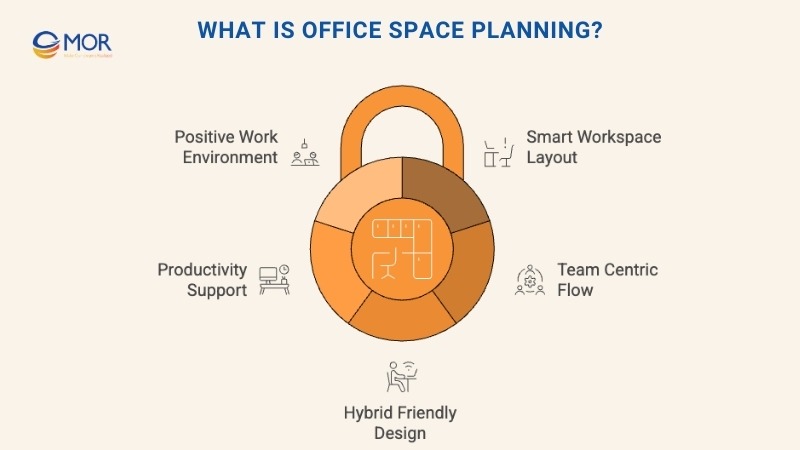
Good planning helps the layout match how teams work, talk, and develop over time. It supports deep focus, teamwork, and rest. Offices that support hybrid work also need flexible areas that welcome employees who switch between remote and on-site schedules. A global hybrid work report by Owl Labs found that 81% of workers now prefer to work in a hybrid or remote format, so this kind of choice has become a basic need rather than just a nice perk.
When this process is handled well, it raises efficiency while also lifting confidence and morale. A thoughtful layout creates a positive environment where people feel supported, respected, and ready to do their best.
Why Isn’t Traditional Office Design Working Anymore?
Traditional office layouts that gave each person a fixed desk for a typical 9 to 5 schedule are no longer a good match for how people work today. Flexible work styles have changed how teams use the office, and most workers now want setups that adjust to different tasks and routines. A 2025 survey by professional body CIPD showed that 74% of organisations already have hybrid working in place. These changes also push many organisations to review their commercial office space planning so the workplace can match new expectations.
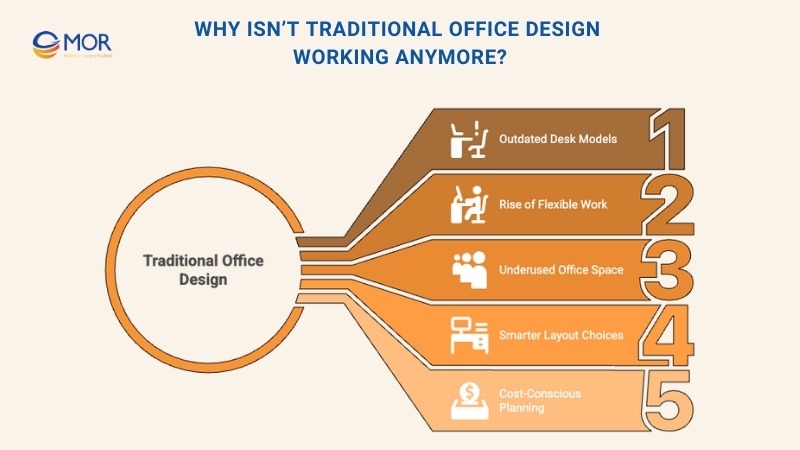
Many companies are taking a fresh look at how they handle office space planning. The goal is not only to lower rental expenses caused by empty corners but also to build spaces that support flexible work in a better way. Instead of keeping large areas that stay unused, teams arrange their layouts in smarter ways or choose smaller spaces that fit their real needs. A practical answer to swipe-card data from Kastle Systems reported by Axios showing that office attendance on the busiest weekday is still only 62% of its February 2020 level in major US cities.
>>> Explore the best meeting room software and choose a system that fits your workplace today.
How To Plan Office Space Effectively
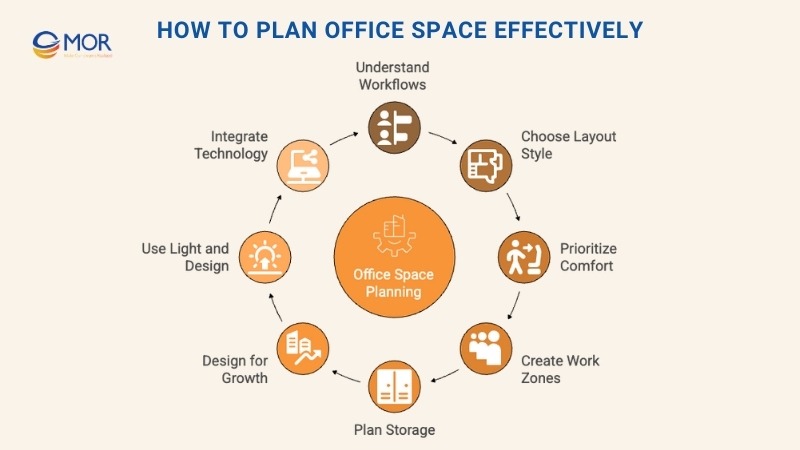
Designing an efficient layout plays a key role in helping a business raise output, protect staff wellbeing, and improve how the workplace functions each day. A setup shaped with care does more than improve the look of the office. It helps daily tasks flow better, supports teamwork, and shows the values and style of your organisation. Many teams use this stage to learn how to plan office space in a way that also reflects strong workspace planning ideas.
Whether you are opening a new location or updating the space you already have, this guide shares practical steps, useful advice, and real examples to help you build a layout that performs well.
Know Your Team’s Workflows
Before you shift furniture or look for new items, take time to understand how your team works. Think about the tasks your staff handle each day. Some people need quiet spots for heavy focus, while others work better in open areas where group discussions feel natural. Creative teams and tech groups often choose open layouts to make teamwork easier. In comparison, legal or finance teams usually prefer private rooms or enclosed meeting areas to protect sensitive work.
Studying your workflows can also show where your current setup slows people down. Staff may spend too much time walking to printers or meeting rooms. Teams that need to talk often might sit too far apart. A quick audit or survey can point out these problems. When your layout matches how your business functions, you create a space that supports strong performance from the first day. This also helps with better office desk booking system management, letting teams work with less friction.
Pick The Right Layout Style
There is no single layout that works for every team or workplace. The right choice depends on how your staff prefer to work, the type of business you run, and even the style you want your brand to show. A few common layout options can help guide your workspace planning decisions.
- Open plan offices work well for teams that need frequent communication and group work. These layouts remove most barriers and create a lively setting that suits fast-moving companies and growing startups. They can also lead to noise or visual distractions, so it helps to add quiet corners or acoustic pods where staff can focus.
- Private offices give individuals or small teams their own enclosed rooms. This setup supports organisations that deal with sensitive information or tasks that need silence, including legal groups, consultants, and research teams. These spaces offer more control over noise and privacy, although they can sometimes feel less connected to the rest of the workplace.
- Hybrid layouts mix open areas with meeting rooms, breakout zones, and flexible hot-desking spots. This approach has become a common choice in workplaces that support different work styles and more flexible schedules.
- Activity based working (ABW) gives employees the freedom to choose the best spot for each task. This setup helps people work with more control over their day and makes good use of the space. These layouts can include casual teamwork areas, quiet pods for deep focus, and relaxed lounge spaces within one connected plan.
Put Comfort First With Ergonomic Furniture
An effective workspace is not only about how it is arranged but also about how it feels for the people who use it each day. Choosing ergonomic furniture can make a clear difference to comfort, health, and overall satisfaction. Items like adjustable chairs, sit-stand desks, good lighting, and workstations that support natural hand and arm positions help reduce strain and tiredness. This support leads to better focus and stronger morale.
Pick desks and chairs that help staff sit with good posture and move with ease during the day. Add footrests, monitor stands, and lumbar supports when needed. A strong layout always cares for physical comfort as much as the look of the space.
Example: A tech company in Dublin updated its office layout with sit-stand desks and ergonomic task chairs, which led to higher satisfaction scores in its survey after the move.
Create Zones For Focus And Collaboration
A common issue in office space planning is missing the right mix between teamwork and quiet work. Group discussions and creative sessions matter, but long periods of focus matter as well. Your layout should support both needs in a clear and simple way.
Set up different areas for different types of work. Open spaces with whiteboards, lounge seats, and display screens work well for shared tasks. At the same time, enclosed meeting rooms, silent corners, or soundproof booths give people a place to handle work that needs privacy or full concentration. Tools like modular furniture and movable panels make it easy to change the layout when space is tight.
Tip: Acoustic panels or sound softening items help cut noise in shared zones. Lower noise levels make it easier for staff to concentrate, especially in open offices.
Keep Storage And Organization In Mind
A messy workspace often leads to messy thinking. Smart storage ideas help keep the office clean and easy to use. Place storage areas where people need them most, like file cabinets beside desks, supply cupboards near printers, and lockers for staff who use shared seating.
Use tall storage units to save floor space and choose cable tools that hide cords and wires. Try to limit paper when you can and move files to cloud storage to cut down on physical documents. A tidy office looks better and also helps daily tasks run with less effort.
Example: A facilities management company added under desk pedestals with lockable drawers across its office. This change cut desk clutter by seventy percent and raised staff satisfaction in its survey after the move.
Design With Flexibility For Future Growth
Your team’s needs will change over time, so your layout should be ready to shift with them. Modular furniture, open zones that can take on new roles, and tech setups that grow with the company make it easier to adjust without major costs.
Keep enough room for extra desks or new groups. Pick furniture that you can move or rearrange without trouble. Flexible layouts support growth and make it easier to adjust when work patterns change or when the team expands.
Use Light And Interior Design Wisely
Natural light has a strong effect on mood, focus, and general wellbeing. When shaping your layout, give as many workstations as possible clear access to windows. Keep tall furniture or solid panels away from these areas so the light can spread across the room. Add adjustable LED lights for darker corners or enclosed rooms where daylight cannot reach.
For décor, choose soft colours, indoor plants, and simple art to create a calm and pleasant space. Adding elements that reflect your brand, like your logo, main colours, or core values, helps build a sense of identity and pride among employees.
Integrate Technology Smoothly
Modern workplaces depend on reliable technology, so your layout needs to support easy access and strong connections. Place power outlets and charging points where people can reach them without trouble. Make sure your wireless network covers the whole office and include tools like smartboards or video meeting systems in shared rooms.
Set up clear tech zones for printers, AV rooms, and IT support desks. These spots should be close enough for quick use but far enough from busy paths to avoid disruption. In hot desking areas, use dockable screens and simple tech standards to help staff settle in fast. Many teams also rely on office space planning software, office planning software, and other workplace space planning solutions to keep layouts and daily tasks running smoothly.
MOR Software often builds workplace platforms that include room booking, visitor check in, and real time occupancy data, helping teams handle office space planning with more clarity and control.
The Importance Of Office Space Planning
Below are key benefits that come from a well organised workplace.
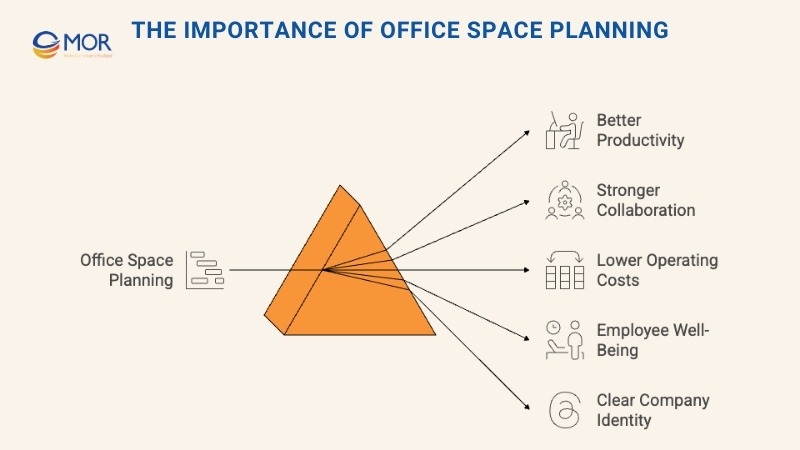
Better Productivity
The way your space is arranged shapes how people connect with their work, support each other, and complete daily tasks. For example:
- Dedicated work areas give employees a quiet place to focus and finish their tasks without interruptions.
- Keeping key facilities like bathrooms and break areas close reduces time wasted walking around the office.
- Small and mid sized meeting rooms help hybrid teams meet with ease, no matter who is in the office and who is working remotely.
Stronger Team Collaboration
Areas designed for group work help employees connect and support each other more effectively. These spaces also help teams feel closer on a social level and on a practical level.
The World Economic Forum notes that one major reason people stay in their jobs is the simple fact that they enjoy working with their coworkers.
A workplace that helps people build strong relationships can lift the quality of work and also raise overall retention levels.
Lower Operating Costs
Workplaces with empty corners, unused lounges, or extra workstations can waste more money than many teams realise. Bigger offices cost more in rent and also need more utilities, including extra lighting and stronger air conditioning, which leads to higher energy bills.
Good office space planning helps cut these costs and makes sure every part of the space is used in a smart and valuable way.
Supports Employee Well Being
A well planned office helps the business, but it also supports the people inside it. Giving employees access to natural light, quiet spots, and clean air can shape their mood, improve their attitude at work, and support their long term wellbeing.
Shows Company Identity
A workplace designed with care reflects a company’s values, style, and level of professionalism. When the space matches your mission and brand identity through design, colours, and layout choices, it builds an environment that motivates your team and makes a strong impression on visitors. A tech focused company may choose modern tools and simple design, while a creative agency may prefer bright colours and open, social spaces that spark new ideas.
Core Principles Of Office Space Planning
Clear office space planning depends on a few simple ideas that shape how your workplace feels and functions each day. These core principles help you build a space that stays flexible, comfortable, and ready for your team’s real needs.
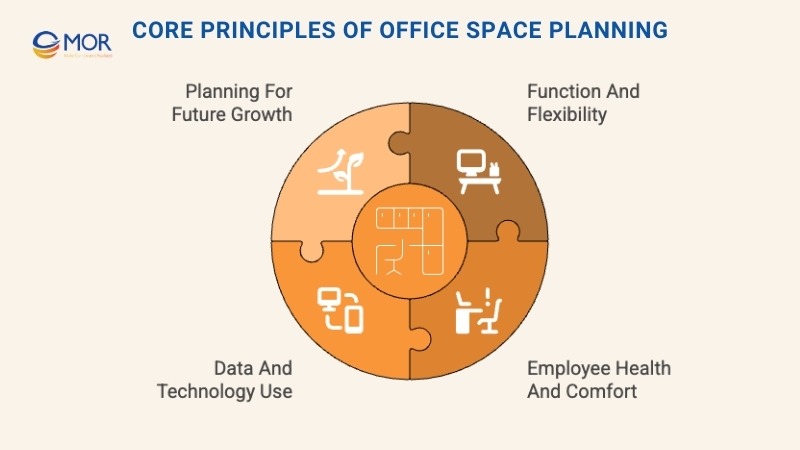
Function And Flexibility
Every part of an office should have a clear role. Each zone needs to support the task it is meant for, whether it involves quiet, focused work, teamwork, or casual conversations. The kind of workplace you run, such as a hybrid setup, a coworking space, or an activity based environment, also shapes how desks, meeting areas, and shared rooms should be arranged. Each model has its own needs that guide the layout.
Flexibility matters in today’s workplaces. Modular furniture and movable layouts make it simple to adjust the space as your team grows or changes direction. Hybrid offices often use hot desking and meeting rooms that fit different group sizes. Multipurpose areas help the office stay useful and efficient as needs shift. This approach also supports strong corporate office space planning, where layouts must adapt to new teams and new goals.
Employee Health And Comfort
A strong office layout always puts staff health and comfort first. This includes:
- Making sure there is plenty of natural light to lift mood and support energy.
- Choosing ergonomic chairs, desks, and tools that help prevent discomfort.
- Adding plants or green walls to improve air quality and create a calm feeling.
- Setting up quiet zones, like office booths, where people can rest or focus without noise.
Employee wellbeing has a direct effect on performance. When office space planning includes simple upgrades that improve comfort and design, it can lift morale and help employees stay engaged.
Using Data And Workplace Technology
Technology plays a key role in improving how a workplace is planned and managed. Tools like room booking systems and desk reservation platforms help teams use space in a more organised way. Sensors and occupancy data reveal how each area is used, and this information can show where the layout needs changes. These insights also support stronger office space planning metrics, which help leaders make better decisions.
If the data shows that some meeting rooms stay empty most of the time, those rooms can be turned into collaboration zones or quiet areas for focused work. Adding the right technology to the workplace also keeps daily tasks smoother, including scheduling, resource sharing, and general operations.
Planning For Future Growth
Companies change over time, so your workspace should be able to change with them. Pick furniture and layouts that can scale as you add more people or new tools. Modular desks, for example, can be rearranged easily when the team becomes larger.
Think ahead and shape spaces that can shift without the need for a full office relocation. Movable panels, multipurpose rooms, and zones that switch smoothly between solo work and group work make the office more adaptable. This approach keeps the space practical and cost friendly as your needs evolve. This also supports long term corporate office space planning, where flexibility is key for steady growth.
Factors That Influence Office Space Planning
Choosing the right office location and layout depends on many practical and strategic needs. Each organisation must consider how the space will support growth, daily work, and long term goals.
Several points can affect decisions when setting up a new office or updating an old one:
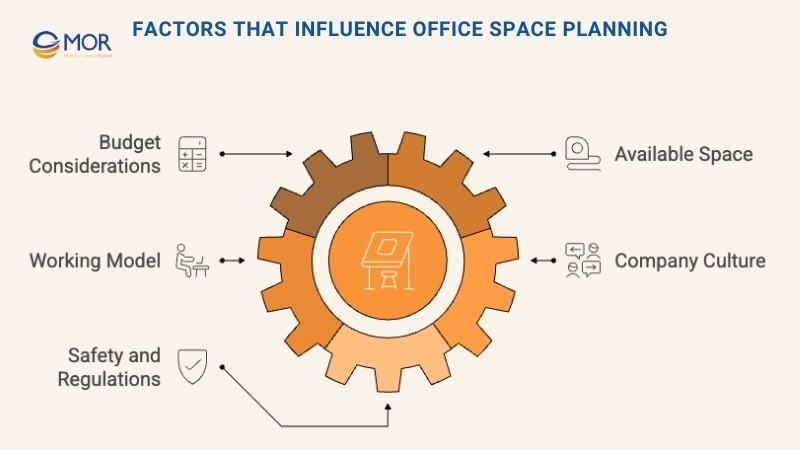
- Budget considerations: You want a useful and motivating space without spending more than you should or wasting resources.
- Available space: You need to understand how much room you truly have and how to use it in a way that supports the team’s daily work.
- Working model: Whether people work full time on site, remotely, or on hybrid schedules, this will shape the planning process and the layout you choose.
- Your culture: Every organisation’s culture influences how the workspace looks and feels. Some companies even add special features that reflect their roots or values.
- Safety and regulations: The office must be safe, easy to access, and follow all legal and building requirements.
These points also tie into broader office space planning considerations. Some companies work with professional office space planning services or experienced office space planners to make smarter decisions for long term needs.
Creative Office Space Inspiration
Here are five inspiring examples of unique and memorable workplaces:
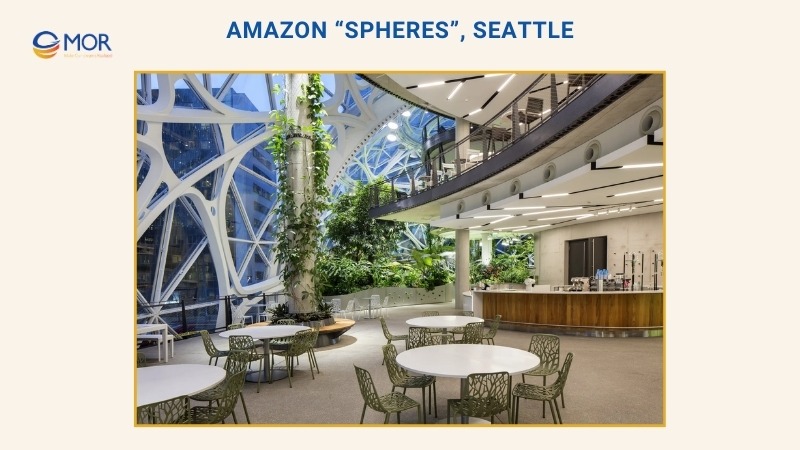
Amazon “Spheres”, Seattle
Inside Amazon’s Seattle campus, the Spheres hold more than forty thousand plants gathered from cloud forest regions across more than thirty countries. The aim is to give employees a place where they can connect with nature, reduce stress, and enjoy a peaceful break from daily tasks. This nature focused design helps create a calm, refreshing experience for everyone who visits the space.
Airbnb’s Customer Experience Offices, Portland
Airbnb put a lot of effort into rethinking the usual call center model. The design team spent months studying how people work and asked employees for ideas, which helped them build a space that feels fresh and unique.
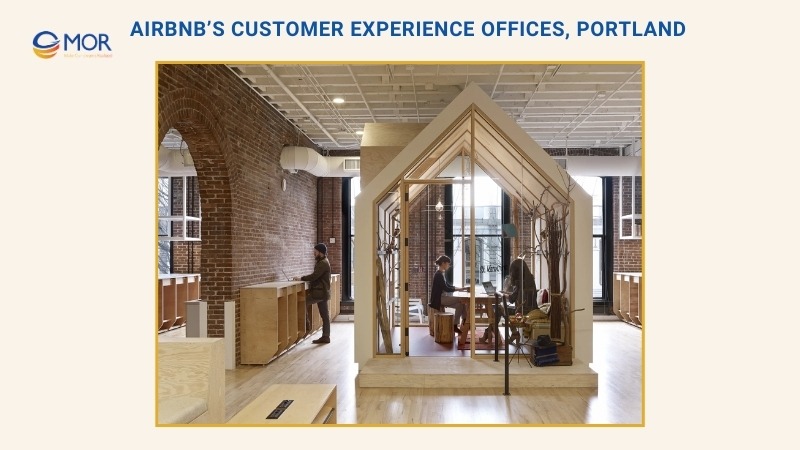
Many meeting rooms are inspired by real listings on the platform, including one themed like a captain’s quarters called the SS Clementine.
Microsoft, Sydney
Microsoft’s main ANZ office is known as a leading example of a modern hybrid workspace. The goal is to let people work at the time and place that fits them best. The office supports this with smart lighting, robotics, sensors, digital whiteboards, a range of work zones, and a custom app that helps staff move through their day with ease.
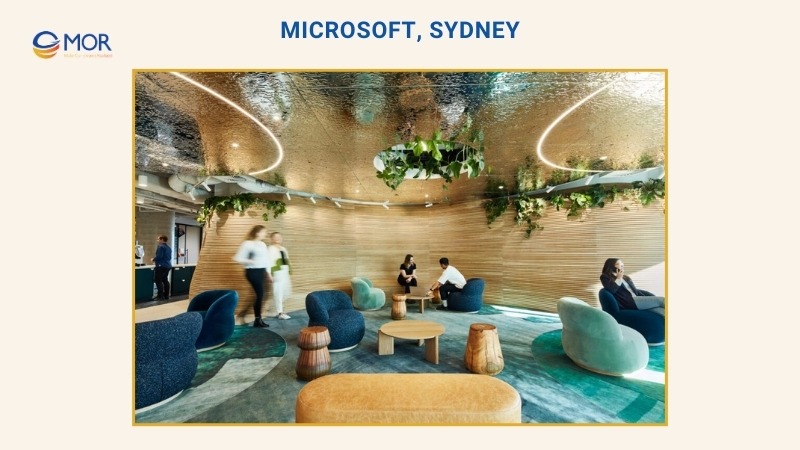
The space also uses a biophilic style, which brings in natural elements that echo rock pools and create a calm, nature connected feeling.
Adidas HQ, Herzogenaurach
Adidas built its main office in Germany outside the big cities of Munich, Berlin, and Frankfurt. To attract talent and support a large global team, they created the “My Arena” concept, which follows design thinking methods to understand the needs of more than three thousand eight hundred employees from eighty different countries.
Each part of the building reflects one of Adidas’ six “key cities”, including Los Angeles, New York, London, Paris, Shanghai, and Tokyo. The campus also includes canteens, restaurants, and spaces for sports and leisure.
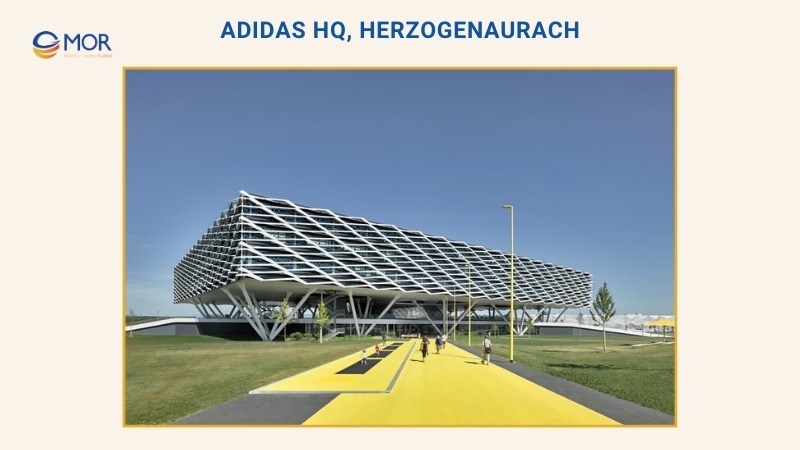
The outside of the building is shaped to look like a football stadium.
Lego, Billund
Lego’s main office in Denmark was created together with employees so the space could reflect key company values like imagination, fun, creativity, caring, learning, and quality. The campus is built to give staff and their families a playful, open, and collaborative place to spend their time.
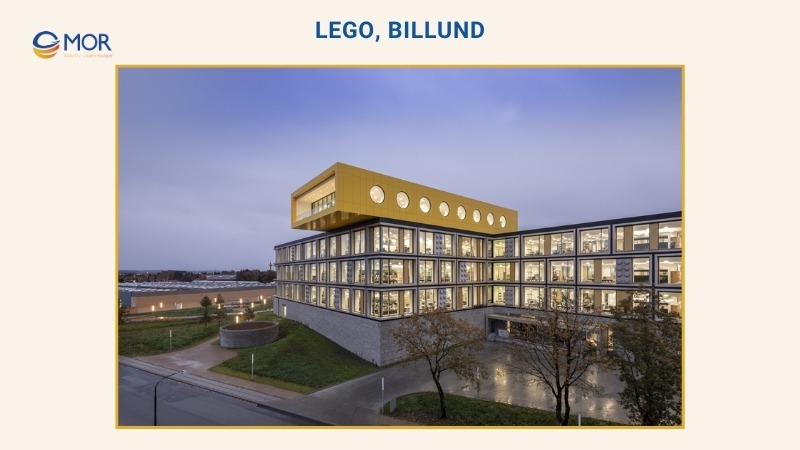
The design even includes patterns and shapes inspired by the brand’s well known blocks.
Best Practices For Smarter Office Space Planning
Strong office space planning depends on simple habits that keep the workplace clear, comfortable, and ready to support daily work. These practices help teams shape a space that grows with them and stays useful over time.
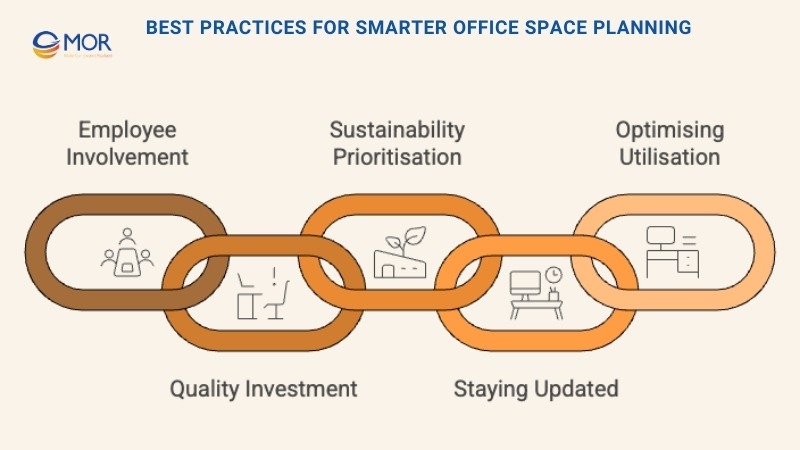
- Involve Employees: Listen to staff during the planning stage to learn what supports their work and what slows them down. Their real experiences often point to the changes that matter most.
- Invest in Quality: Choose durable, ergonomic furniture and materials that last. This improves comfort and reduces the need for constant replacements.
- Prioritise Sustainability: Pick eco friendly materials, energy saving lights, and green design choices. This helps the environment and strengthens your company image.
- Stay Updated: Follow workplace trends like biophilic design and wellness based layouts. A fresh and adaptable office helps attract and keep strong talent.
- Optimise Space Utilisation: Review your layout regularly and make changes when needed. Use occupancy data to spot areas that are not used well and reshape them to fit current needs.
Common Challenges In Office Space Planning And How To Solve Them
Even with strong office space planning, many teams face obstacles that slow down progress. These challenges often come from daily habits, tight budgets, or limited room to grow. Understanding these issues early helps your team shape a workspace that feels practical and supportive.
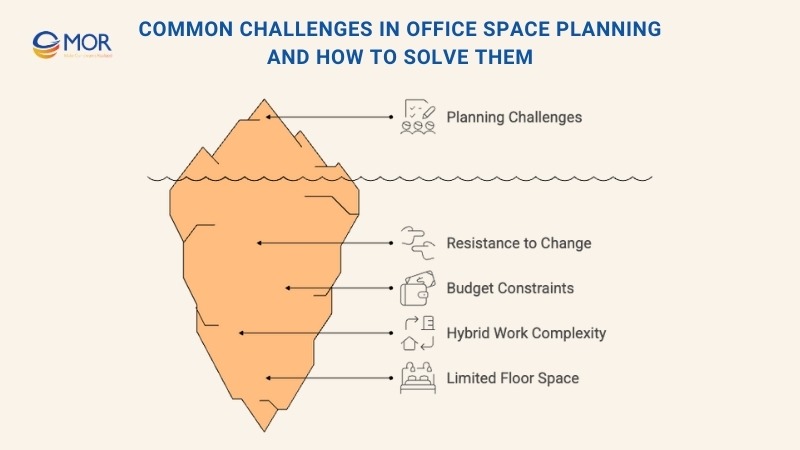
Resistance to Change
Employees may push back when the workspace changes, especially if the new layout affects their usual routine. To ease this:
- Explain the purpose behind the changes in simple, clear terms.
- Point out the benefits, like better comfort or easier teamwork.
- Involve employees in the process so they feel part of the decision and more open to the results.
Budget Constraints
Designing or updating an office can cost more than expected. To control spending:
- Start with small, high value updates like moving furniture or adding plants.
- Choose long lasting investments, such as ergonomic chairs or energy saving lights.
- Break the project into phases so you can spread the cost over time.
Hybrid Work Difficulties
Hybrid teams often have different needs than full time on site staff. Balancing space for both can be tough. To manage this:
- Make sure there are enough desks and meeting rooms on busy days.
- Use flexible seating setups like hot desking or hoteling stations to support changing attendance.
- Build multipurpose zones that shift easily between teamwork and quiet work.
Limited Floor Space
Small offices or expensive real estate can limit your options. To get more from the room you have:
- Use vertical shelves and tall storage to free up floor space.
- Pick compact furniture that can serve more than one purpose.
- Add space saving ideas like foldable desks or wall mounted workstations.
Strong visitor management system plays a key role in helping modern businesses raise productivity, support teamwork, and keep people happier at work. Start with small steps, listen to feedback, and adjust your layout as your team grows. With the right approach, your workspace becomes a tool that helps your business succeed.
Conclusion
Strong office space planning helps your team work better, feel more supported, and use every part of the workplace with real purpose. A clear layout also guides future growth and keeps daily work simple and smooth. If your organization is planning a new workplace layout or upgrading digital workplace systems, MOR Software can support you with custom office management apps, booking platforms, and technology solutions designed for modern teams. You can reach our team through the contact us page.
MOR SOFTWARE
Frequently Asked Questions (FAQs)
How to space plan an office?
A strong office layout begins with understanding what your team needs. Set clear goals, review daily workflows, and balance shared areas with quiet zones. Keep pathways open, maximize natural light, and plan for power outlets and tech from the start.
What is the meaning of office space planning?
Office space planning is the process of arranging work areas so space is used well and supports how a company operates. It includes organizing desks, meeting rooms, shared zones, and equipment to help employees work more comfortably and efficiently.
Why is office space planning important?
It improves productivity by reducing distractions, supporting teamwork, and creating a more comfortable environment. A well-planned layout helps people move easily and work without unnecessary interruptions.
How much space do employees usually need?
Most offices allocate around 70 to 120 square feet per person, depending on the type of work, whether desks are shared, and how many meeting rooms or collaborative zones the team needs.
What should a modern office layout include?
Modern workspaces often combine open areas, focus rooms, meeting spaces, flexible seating, and easy access to technology. They also include quiet corners, collaboration tools, and spots where employees can take short breaks.
How do you plan office space for hybrid teams?
Hybrid teams benefit from hot desks, video-ready meeting rooms, reliable WiFi, and flexible spaces that can handle different numbers of people each day. The goal is to support both remote coordination and on-site work.
How can small offices be planned effectively?
Use multi-purpose furniture, vertical shelves, and foldable desks. Keep pathways clear, limit clutter, and use glass or open shelving to help the space feel larger and easier to move through.
What mistakes should be avoided in office space planning?
Avoid overcrowding desks, ignoring noise levels, and placing printers or supplies too far from users. Poor lighting, a lack of focus areas, and unclear traffic flow patterns also reduce productivity.
How often should an office layout be reviewed?
Most organizations review their layout every one to two years, or when team size, work style, or technology needs change. Regular reviews make sure the space continues to support daily work.
How does lighting affect office space planning?
Lighting influences comfort and focus. Natural light boosts mood and energy, while task lights reduce eye strain. Positioning desks near windows and adding adjustable lighting helps create a better work environment.
Share


Make Our-Dreams Realized


© 2023 . MOR Software. All Rights Reserved
Sitemap
Privacy Policy
Terms of Use

Rate this article
0
over 5.0 based on 0 reviews
Your rating on this news:
Name
*Email
*Write your comment
*Send your comment
1