


When to Outsource Contract Management Services [Complete Guide]
Many organizations struggle with rising legal workload, missed deadlines, and growing compliance pressure. Outsource contract management services help reduce internal strain while keeping contracts accurate, visible, and under control. In this guide, MOR Software will explain how contract management outsourcing works, when it makes sense, and how businesses can regain control, reduce risk, and manage costs more effectively with the right approach.
What Is Contract Management Outsourcing?
Contract management outsourcing refers to assigning contract-related responsibilities to an outside specialist. This work often covers drafting, reviewing, and negotiating agreements, along with compliance checks and renewal oversight. It plays a central role in contract lifecycle management software, supporting each phase from initial creation through expiration or extension.
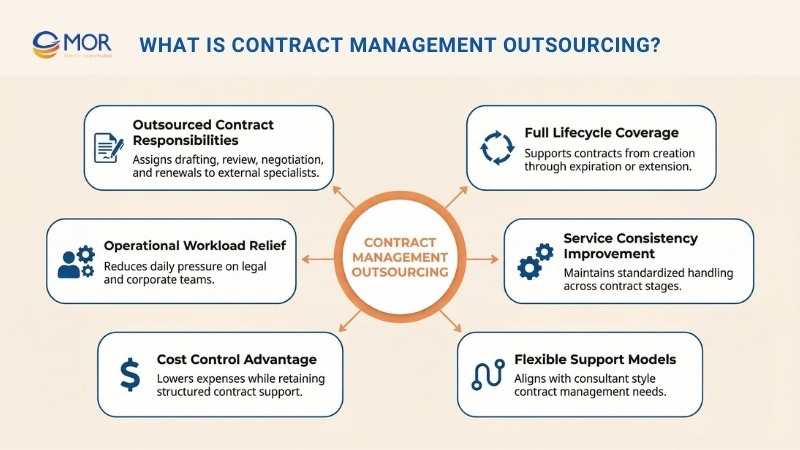
For law firms and corporate teams, this approach helps ease day-to-day workload, improve service consistency, and limit financial exposure. One of the strongest reasons many organizations choose to outsource contract management services is the ability to control costs while still receiving structured support, including options similar to consultant contract management models.
Why Contract Management Plays A Critical Role In Business Operations
Contracts shape nearly all business relationships, covering partnerships, employment terms, sales deals, and service arrangements. Weak contract oversight can create serious issues, including compliance gaps, revenue loss, and overlooked deadlines, especially for organizations working with contractor management companies.
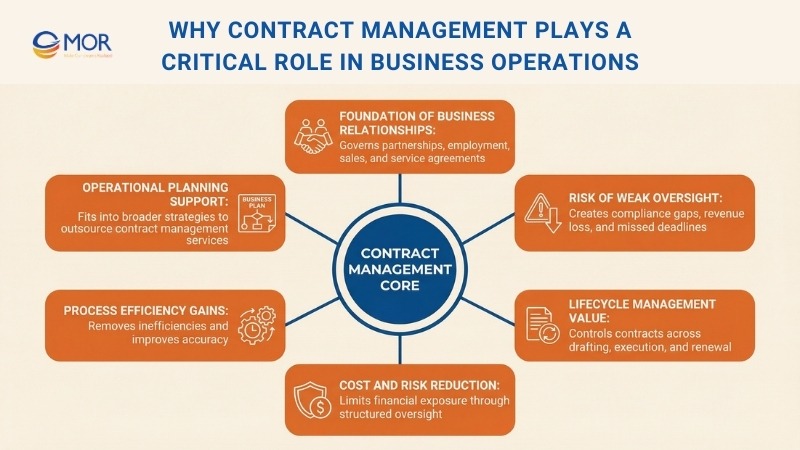
Strong contract lifecycle management helps reduce these risks and supports better cost control. Clear processes and consistent oversight allow teams to remove inefficiencies, improve accuracy, and protect financial outcomes while continuing to outsource contract management services as part of broader operational planning.
Main Benefits When You Outsource Contract Management Services
Contract work often involves repeated steps and ongoing checks. Research from World Contracting and Commerce shows that around 32% of an organization’s workforce takes part in contract-related activities in some form. Using internal teams for this volume of work often leads to inefficiency and rising operational costs.
Lower Internal Staffing And Training Costs
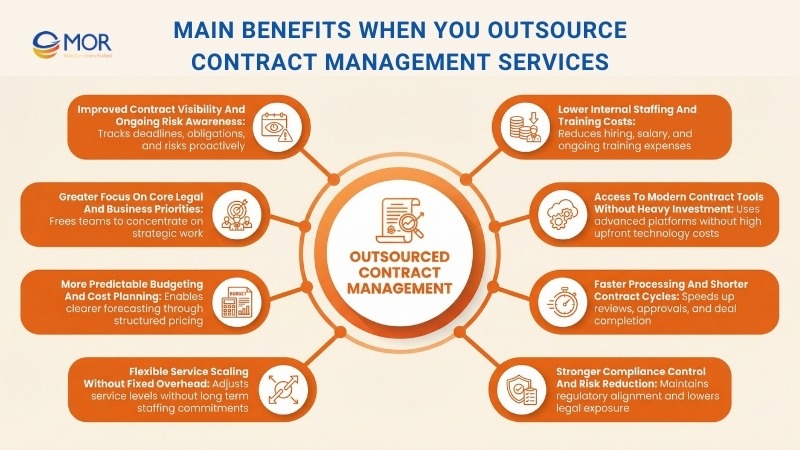
Building an in-house team to handle contracts can become costly over time. Law firms and businesses usually need to hire contract specialists, cover salaries and benefits, and invest in regular training to stay aligned with regulatory updates. Outsourcing contract management allows organizations to limit these expenses by paying only for the services they actually need.
This approach gives teams the freedom to adjust service levels based on workload changes, without the long-term cost burden that comes with full-time roles.
- Example for Law Firms: Law firms often rely on external providers for complex contract work, which reduces the need to bring in extra paralegals or lawyers dedicated only to contract tasks.
- Example for Businesses: Companies that handle large contract volumes can lower payroll costs by avoiding the need to hire and retain a permanent group of contract managers.
Access To Modern Contract Tools Without Heavy Investment
Contract service providers commonly rely on modern technology, including contract platforms, AI automation analysis, and automated workflows. These systems improve speed, accuracy, and compliance during contract handling, yet they often require high costs for direct purchase, setup, and upkeep.
When teams choose to outsource contract management services, law firms and companies can use these tools without committing large upfront budgets.
- Example for Law Firms: Legal technology continues to change how contracts are managed, but buying and rolling out these systems can strain budgets. External support gives firms access to modern tools without absorbing high software expenses.
- Example for Businesses: Organizations that use outsourced contract management for lifecycle support can rely on automated tracking, risk controls, and compliance checks without investing in a separate in-house platform.
Faster Processing And Shorter Contract Cycles
Working with external specialists allows law firms and businesses to rely on teams that focus only on contract operations. These providers use structured workflows and dedicated resources to manage contract tasks efficiently, which helps shorten review and approval timelines.
For organizations, this leads to fewer delays, quicker deal completion, and stronger operational flexibility, all of which support better cost control when they outsource contract management services.
- Example for Law Firms: Using outsourced contract management helps law firms complete contract reviews and updates more quickly, so legal teams can focus on priority legal work while clients face shorter waiting periods.
- Example for Businesses: Companies can finalize agreements sooner through efficient review and approval flows, which improves cash movement and shortens the path to revenue.
Stronger Compliance Control And Risk Reduction
Failure to follow contract terms or regulatory rules can result in disputes, penalties, and damage to a company’s reputation. Providers delivering AI-driven contract management and compliance outsourcing bring focused knowledge of legal standards and regulatory requirements, helping contracts stay properly managed throughout their full lifecycle.
This approach lowers the chance of mistakes, missed obligations, and compliance gaps, which helps limit the financial exposure tied to legal conflicts, especially when organizations outsource contract management services across complex operations.
- Example for Law Firms: Law firms can lower malpractice risk linked to poorly handled client contracts by working with providers that understand compliance rules and established legal practices.
- Example for Businesses: Companies working with external partners can manage obligations, renewals, and terms more effectively, even when dealing with a global contractor, which reduces the likelihood of disputes with suppliers, customers, or partners.
Flexible Service Scaling Without Fixed Overhead
A key advantage of contract management outsourcing is service flexibility. Law firms and businesses with changing contract workloads can adjust service levels as needed, without long-term commitments or fixed operational costs tied to internal teams.
This level of adaptability proves valuable during high-activity periods, including mergers and acquisitions, vendor changes, or onboarding new clients, allowing organizations to avoid paying for unused resources while they outsource contract management services.
- Example for Law Firms: Law firms can increase or reduce support from outsourced contract management services based on client demand, without the burden of hiring or retaining extra staff.
- Example for Businesses: Companies facing seasonal contract spikes can address workload changes without permanent spending on additional employees or infrastructure.
More Predictable Budgeting And Cost Planning
Contract management outsourcing helps law firms and businesses forecast and control contract-related spending with greater accuracy. Service providers usually work with clear pricing structures, which supports consistent budgeting and reliable cost planning.
This level of cost clarity improves financial planning and allows organizations to assign resources more efficiently while they outsource contract management services across teams.
- Example for Law Firms: Law firms that rely on outsourced contract lifecycle management can build more accurate budgets and avoid surprise costs linked to internal staffing or urgent software purchases.
- Example for Businesses: Companies can lower financial risk by agreeing on fixed monthly fees with external providers, which simplifies expense tracking and long-term forecasting.
Greater Focus On Core Legal And Business Priorities
When organizations choose to outsource contract management services, internal teams gain time to focus on their primary responsibilities. Law firms can spend more effort on client service and legal strategy, while businesses can redirect attention toward activities that drive revenue and growth, including areas connected to payroll contract management.
This clearer focus on priority work supports higher productivity and helps reduce unnecessary operating costs over time.
- Example for Law Firms: Shifting contract administration to external specialists allows attorneys to concentrate on complex legal matters and strengthen client relationships.
- Example for Businesses: Removing contract handling from internal teams enables management and sales leaders to focus on expansion plans instead of routine contract administration.
Improved Contract Visibility And Ongoing Risk Awareness
Strong contract management goes beyond simple storage or basic tracking. It requires clear insight into contract terms, key milestones, and renewal schedules to reduce financial risk. Providers delivering outsourced support rely on advanced tracking systems to prevent missed deadlines, which helps avoid unwanted auto-renewals, penalties, and compliance charges when teams outsource contract management services.
Better visibility into obligations and potential risks supports more informed decisions and helps organizations protect long-term financial value.
- Example for Law Firms: Law firms can depend on external providers to monitor deadlines and obligations closely, which supports compliance and lowers overall risk exposure.
- Example for Businesses: Companies benefit from proactive oversight that helps prevent financial penalties and lost revenue caused by poor contract control.
Key Parts Of Contract Management That Can Be Outsourced
You do not need to hand over every contract task at once. Many organizations begin by shifting specific activities that consume too much time or call for legal expertise, making it easier to outsource contract management in stages.
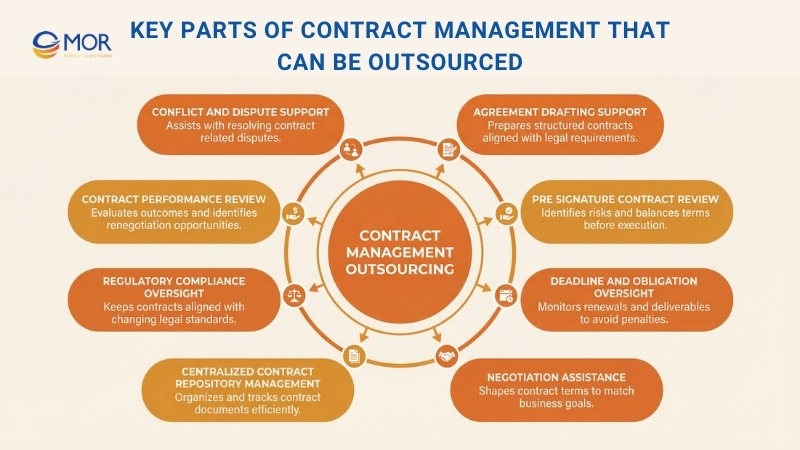
- Agreement drafting support: Legal professionals can prepare clear and structured agreements that follow regulations and protect your business interests.
- Pre-signature contract review: Specialists can examine agreements before you sign, highlight potential risks, and confirm that terms remain balanced and fair.
- Deadline and obligation oversight: Staying on top of deadlines, renewals, and key deliverables helps you avoid missed commitments and unnecessary penalties.
- Negotiation assistance: Experienced teams can help shape deal terms and make sure agreements align with your goals.
- Centralized contract repository management: An organized storage system makes it easier for you to access, manage, and track important contract documents.
- Regulatory compliance oversight: Legal experts ensure your contracts stay aligned with regulatory updates, which helps lower legal exposure through a structured legal outsource approach.
- Contract performance review: Reviewing contract outcomes allows you to identify gaps, inefficiencies, and chances for renegotiation.
- Conflict and dispute support: Skilled professionals can support contract-related disputes, reducing the likelihood of costly legal conflicts.
If you plan to begin outsourcing, it helps to choose tasks that require high effort, carry lower risk, and create the biggest drain on time and budget.
How Much Does It Cost To Outsource Contract Management Services?
Earlier, we explained why many teams see external support as a more cost-friendly option than keeping everything in house. A common follow-up question is simple. How much should you expect to pay when you outsource contract management services?
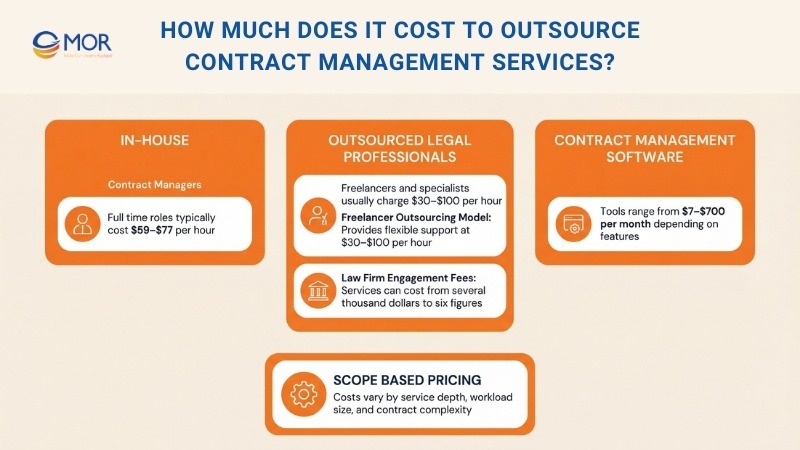
Data from Salary.com shows that hiring a full-time contract manager costs about $59 to $77 per hour. At the same time, Upwork reports that contract lawyers and legal professionals on its platform typically charge between $30 and $100 per hour.
The table below compares three common approaches: internal legal teams, external service support, and contract software tools.
Solution | Cost Range | Key Benefits | Challenges |
Outsourcing | $30–$100/hr (freelancers) | Access to global experts | Limited control over processes |
In-House Team | $59–$77/hr (Salary.com) | Full control, in-depth knowledge | High recruitment and overhead costs |
Software | $7–$700/month (Capterra) | Affordable, automated, and scalable | Requires initial setup and training |
When working with legal firms, pricing often depends on service scope, location, and engagement model. Fees can range from several thousand dollars to six-figure amounts, depending on how much support you need and how complex your contract environment is.
How To Choose The Right Provider To Outsource Contract Management Services?
Below is a clear, step-by-step approach you can follow to identify and select a legal partner for contract operations. Many organizations use this process when they plan to work with legal outsourcing providers and external specialists.
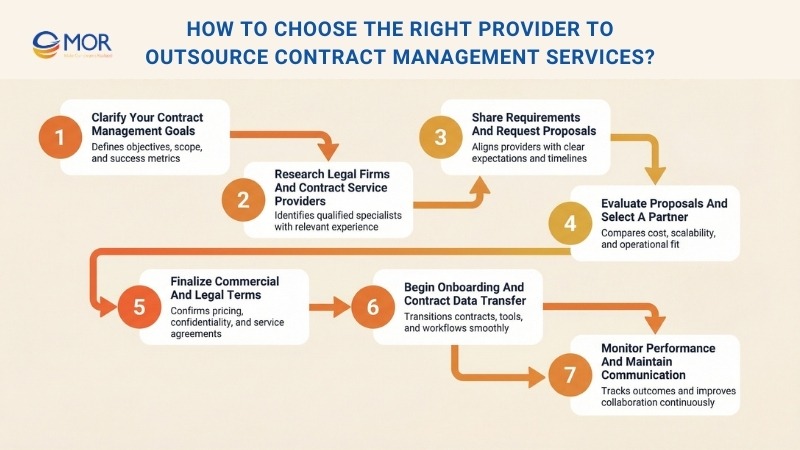
Clarify Your Contract Management Goals
Start by defining what you want to achieve through outsourcing. Common goals include lowering costs, strengthening compliance, improving efficiency, or supporting business growth.
Next, decide which stages of the contract lifecycle you want to delegate. This may include drafting, review, negotiation, analysis, or ongoing tracking.
You should also set clear boundaries around scope. This includes contract types, expected volume, and overall complexity.
Finally, identify the key performance indicators that matter most to you, such as average turnaround time, review duration, or negotiation timelines.
Research Legal Firms And Contract Service Providers
Begin by identifying legal firms that focus on contract management within your industry.
Directories like Legal500 and Best Law Firms publish detailed lists of professional providers operating across different regions.
Review each firm based on service scope, client feedback, case experience, and overall reputation.
Pay close attention to providers that have handled contracts similar to yours, including NDAs, vendor agreements, or service-level agreements.
You should also give priority to firms that specialize in contract services and maintain compliance certifications for relevant laws and jurisdictions.
Share Requirements And Request Proposals
Prepare a clear Request for Proposal that explains your objectives, scope of work, and expected timelines.
Provide sample contracts and outline performance expectations so potential partners understand your standards.
You can then send these requirements to selected firms and ask them to submit a proposal along with pricing details.
Evaluate Proposals And Select A Partner
Review each proposal to check how well the provider understands your needs and whether their approach is practical.
Compare proposals based on cost structure, experience level, ability to scale, and expected turnaround times.
Schedule interviews or discussions to evaluate communication style and confirm their understanding of your contract environment.
After reviewing all proposals, you can shortlist one provider and move forward to finalize the partnership.
Finalize Commercial And Legal Terms
Discuss pricing structures such as fixed fees, hourly rates, or retainers, and agree on terms that align with your budget.
Review key areas including data protection, confidentiality obligations, and service level agreements.
Confirm that the contract covers performance reviews, dispute handling, and clear termination conditions.
Set the final terms that govern how the outsource contract management services engagement will operate.
Begin Onboarding And Contract Data Transfer
The onboarding stage covers knowledge sharing and the formal handover of your contract portfolio.
Hold an onboarding session to align the provider with your internal processes, expectations, and goals.
Share all required materials, including active contracts, templates, and existing workflows.
A well-managed transition helps the new partner adapt quickly to your needs and operating style.
This phase also includes training on systems, tools, processes, and internal protocols to support smooth delivery.
Monitor Performance And Maintain Communication
Once onboarding is complete, the legal firm assumes responsibility for daily contract operations under the agreed scope.
You should track provider performance to confirm that business goals defined in the first stage are being met through the selected contract management outsourcing services.
Plan regular check-ins to review progress, resolve issues, and identify areas for improvement.
Open and consistent communication with the legal outsource partner helps you share feedback, clarify challenges, and remove process bottlenecks as they arise.
Following this approach helps you select and manage the right partner to outsource contract management services. One final factor to review carefully during this process is the total cost structure and long-term value of the services provided.
Manage Contracts Faster With MOR Software’s Contract Management Solutions
We help organizations move faster by building contract management systems that match how legal and business teams actually work. Instead of forcing teams into rigid tools, we design workflows around drafting, review, approvals, renewals, and compliance tracking.
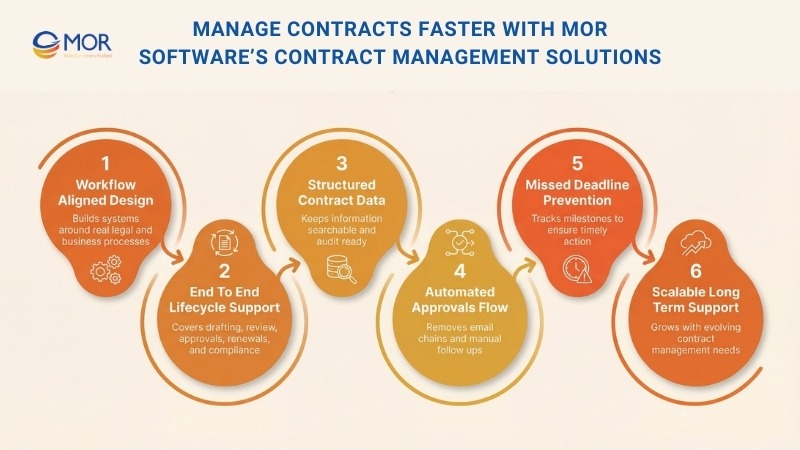
Our teams focus on clarity, automation, and control. Contract data stays structured, searchable, and audit-ready. Approvals move without email chains. Deadlines do not get missed.
If you are planning to outsource contract management services or modernize internal contract workflows, MOR Software supports you from system design to long-term scaling.
Contact us to discuss your contract management goals and see how a tailored solution can fit your operations.
Conclusion
Outsourcing contract operations gives organizations better control, lower risk, and clearer cost planning when handled the right way. With the right structure and technology, contracts stop slowing teams down and start supporting growth. Outsource contract management services with MOR Software to gain visibility, consistency, and workflows built around how your teams actually work. Contact us to discuss your contract management goals and see how a tailored solution can support your operations today.
MOR SOFTWARE
Frequently Asked Questions (FAQs)
What is contract management outsourcing?
It means assigning contract-related work to an external provider instead of handling everything internally. This can include drafting, reviewing, tracking deadlines, managing renewals, and monitoring compliance across contracts.
Which contract tasks are usually outsourced first?
Most organizations start with repeatable and time-heavy tasks. These often include contract review, obligation tracking, document organization, and renewal reminders. Strategic negotiations are usually kept in-house at the beginning.
Is outsourcing contract management suitable for small businesses?
Yes. Smaller teams often outsource to avoid hiring dedicated legal staff. External support helps them manage contracts consistently without the cost of full-time specialists or complex internal systems.
How does outsourcing contract management reduce risk?
Specialized providers follow structured processes to track deadlines, obligations, and compliance requirements. This lowers the chance of missed renewals, overlooked clauses, or regulatory issues that lead to disputes or penalties.
Will I lose control over my contracts if I outsource them?
Control depends on how the engagement is set up. Most providers work under clear guidelines and reporting rules. Businesses still approve key decisions while external teams handle execution and tracking.
How much does it cost to outsource contract management services?
Costs vary based on scope, volume, and provider location. Some services charge hourly rates, while others use monthly or project-based pricing. This often costs less than maintaining an in-house contract team.
Is contract data secure when handled by an external provider?
Reputable providers use access controls, confidentiality agreements, and secure systems. Businesses should confirm data protection practices, permissions, and audit options before signing any outsourcing agreement.
How long does it take to onboard an outsourcing provider?
Initial onboarding usually takes a few weeks. This includes sharing contract data, aligning workflows, and setting communication rules. A phased transition helps avoid disruption to ongoing contract work.
When should a company avoid outsourcing contract management?
Outsourcing may not be ideal when contracts involve highly sensitive matters, frequent executive negotiation, or strict regulatory constraints that require constant internal oversight.
Share


Make Our-Dreams Realized


© 2023 . MOR Software. All Rights Reserved
Sitemap
Privacy Policy
Terms of Use

Rate this article
0
over 5.0 based on 0 reviews
Your rating on this news:
Name
*Email
*Write your comment
*Send your comment
1