


Is Python for AI Development Still the Best Choice in 2026?
Python continues to lead modern AI work as companies search for faster, smarter ways to build real machine learning products. Many teams choose python for AI development because it supports quick testing, clear code, and flexible tools that fit real business needs. This MOR Software’s guide will show how Python keeps its edge and why it remains a trusted path for AI success.
How AI And Machine Learning Continue To Expand
AI and ML have grown at a fast pace in recent years, and many industries now depend on them to handle complex tasks or support new digital products. This shift shows how strong the demand for modern automation has become while tools like AI in python continue to support this expansion.
It is useful to review current figures and the main trends shaping this growth.
According to market studies, the global Artificial Intelligence market reached USD 196.63 billion in 2023. Analysts expect it to rise with a compound annual growth rate of 37.3% from 2023 to 2030, showing how quickly companies are adopting these technologies.
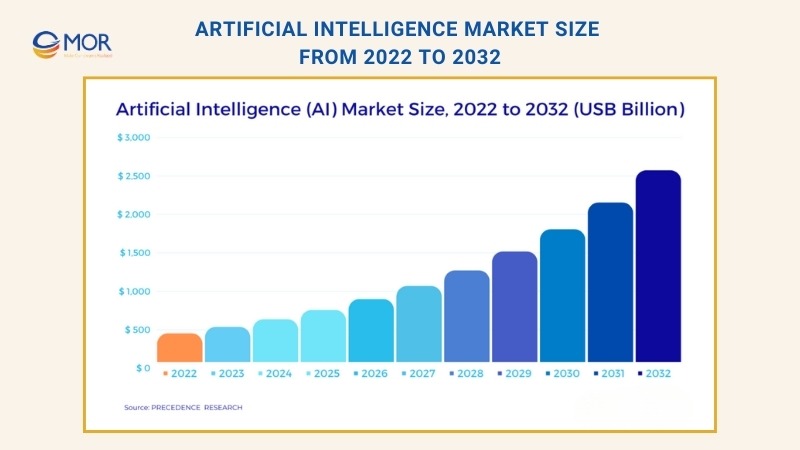
North America held the largest share of the global AI market in 2023 and is expected to stay in the lead for the rest of the forecast period. The region has a high number of AI and ML startups along with well-known technology companies that continue to add AI automation capabilities to their products. The United States accounts for most of the revenue because major firms like Apple, Google, IBM, and Microsoft help push new AI adoption across many sectors.
The US also supports a wide base of startups that create AI tools and platforms. Government programs encourage new research, and steady investment from public and private groups keeps new ideas moving from labs to real business use cases. This strong flow of funding helps AI products grow faster in the US market.
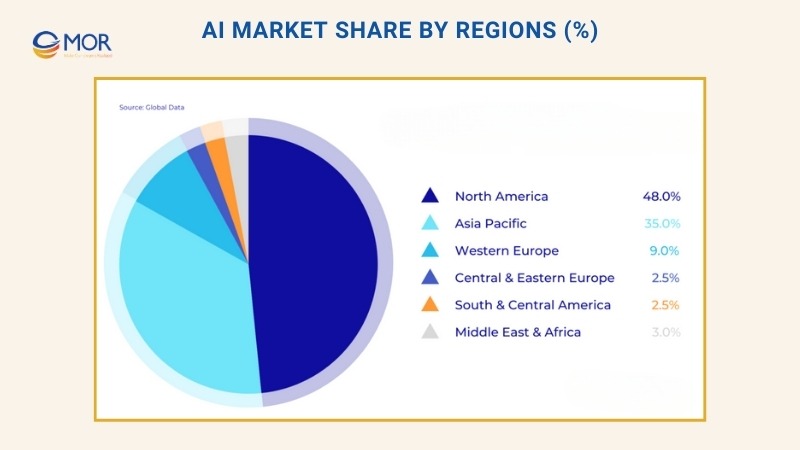
Several mature industries in the US have increased their use of AI. Banking, financial services, insurance, automotive, and healthcare companies use these systems to automate processes, improve customer service, and manage operations more effectively. Many leading BFSI, automotive, and pharmaceutical firms already rely on AI to support daily work and improve results.
Asia Pacific remains the second largest and one of the most attractive regions for new agentic AI development solution. Countries like China, South Korea, and India continue to invest heavily in commercialization efforts, which helps local companies bring AI ideas to the market faster.
More organizations are increasing their investment in digital systems, and this trend has raised the demand for AI and ML solutions across sectors. As companies expand their use of automation, interest in python for AI development continues to grow because it supports fast prototyping and reliable model building.
Key AI Statistics And Market Trends
AI continues to reshape global industries as more companies explore smarter tools, automation, and new digital products. The strong rise of python for AI development also supports this growth because many teams choose it for flexible model training and fast experimentation across business use cases.
- AI is expected to create 133 million new jobs by 2030
- AI will contribute over 15 trillion dollars to the global economy by 2030
- Deployed AI adoption is over 40% in China and India
- 33% of all AI adoption cases focus on the automation of IT processes
- AI startup funding has increased on average by 66% between 2021 and 2023
- The demand for AI skills is growing faster than the talent pool
- Banking, financial services, insurance, and healthcare sectors hold the largest AI market share
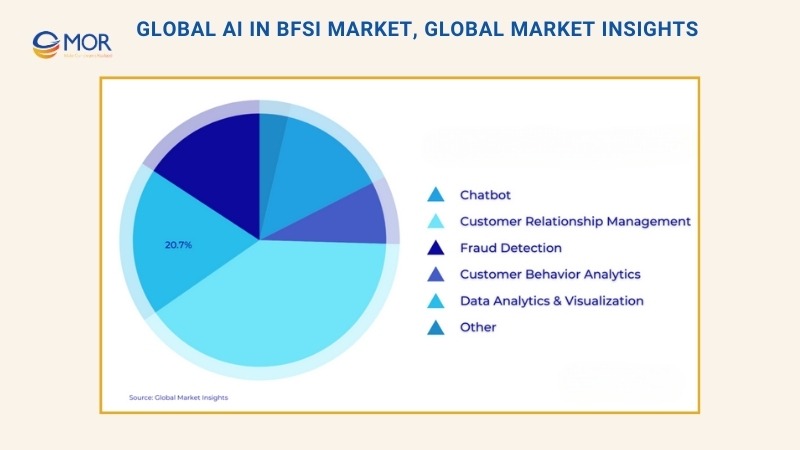
Major technology companies continue to invest in research and development, which helps accelerate progress across many fields. New life-saving medical tools and advanced features in modern electric vehicles also play a key role in driving global AI growth. The wider move toward digital services supports even faster adoption as organizations replace older systems with smarter solutions. Leading technology firms like Google, Microsoft, IBM, Amazon, and Apple keep increasing investments in new AI applications, and this steady focus pushes the market toward more innovation each year.
What Python Brings To Modern Software Development
Python is a flexible, high-level programming language first introduced in 1991. It is known for clear and readable syntax, which makes learning and writing code easier for many users. This simple style helps new developers get started faster while still giving experienced teams enough power to handle complex systems with confidence. Its wide use across web projects, automation tasks, data work, and artificial intelligence shows how well it adapts to many needs.
One important detail is that Python runs as an interpreted language. It processes each line one at a time, which helps developers locate errors quickly and fix them without long compile steps found in languages like C++ or Java. Many engineers also value its open-source nature. Anyone can use it at no cost, and a large group of contributors improves the language and its tools over time.
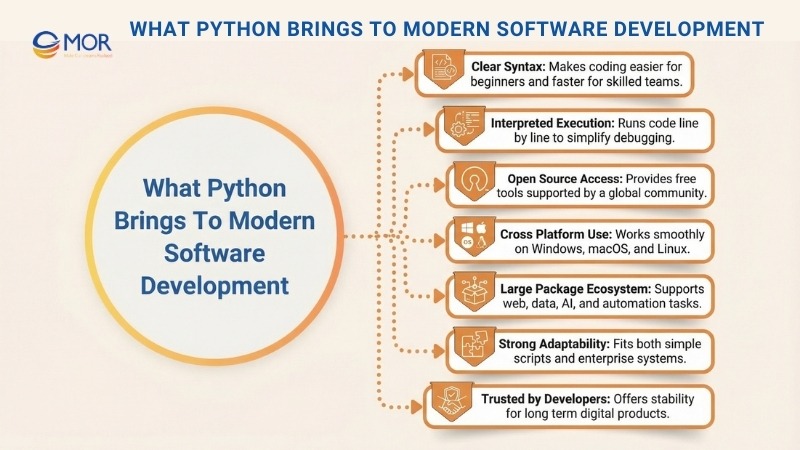
Python also works across major operating systems. It runs smoothly on Windows, macOS, and Linux without requiring changes to the code. This level of compatibility helps teams build products that reach more users and stay easy to maintain.
The language has thousands of packages and modules, which give developers strong support for tasks like web scraping, image analysis, scientific research, and artificial intelligence projects. This wide ecosystem is one reason many companies choose it as one of the best platforms for python AI development, especially when building long-term digital products. Its mix of simplicity and strong features makes Python a trusted option for beginners and skilled programmers who want stable tools that support modern workloads.
Why Python For AI Development Has Become The Optimal Option
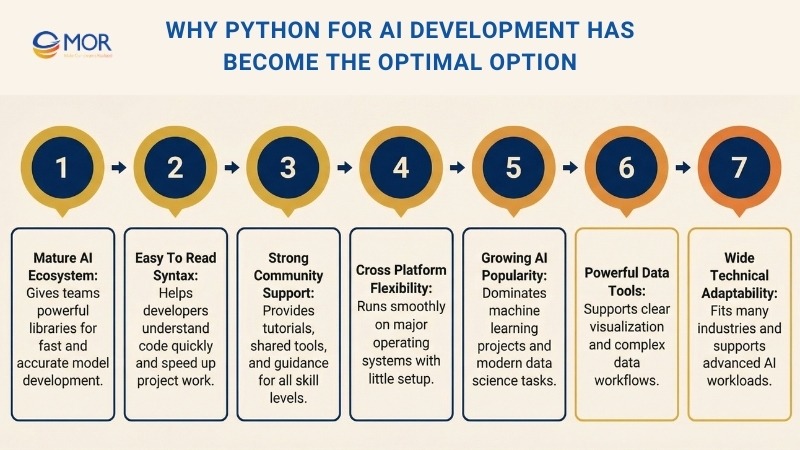
Python has grown into a top choice for many AI teams because it supports fast testing, simple code structures, and a wide range of tools that help developers build smarter solutions with less effort. Its clear syntax and strong support community make it easier for teams to work together and scale their projects without slowing down. This foundation explains why many companies selecting python for AI development continue to prefer it for both small experiments and large enterprise systems.
A Mature Ecosystem Of AI Libraries And Frameworks
Python offers a broad collection of libraries that give developers ready-made functions for machine learning, data tasks, or automation work. A library contains prepared code from many trusted sources, which means teams can focus on solving problems instead of writing every component from scratch. These tools support fast data handling, smooth model training, and easier testing. This strong ecosystem makes python libraries for AI development a reliable choice for anyone building models that need steady data processing.
Libraries | Usage |
Scikit-learn | Used for core machine learning tasks like clustering, linear and logistic regression, classification, and similar methods. |
Scikit-image | Supports important steps in image processing. |
Pandas | Helps manage structured data, merge sources, filter values, and collect information from files like Excel. |
Keras | Used to build and test machine learning models, including clustering and many basic algorithm types. |
TensorFlow | Useful for deep learning work, where large datasets and neural networks are involved. |
Matplotlib | Creates charts, histograms, plots, and other visual outputs for analysis. |
NLTK | Helps developers handle text tasks, natural language recognition, and linguistic processing. |
PyBrain | Supports neural networks, unsupervised learning, and reinforcement learning tasks. |
PyTorch | Used widely for computer vision work and natural language processing tasks. |
This strong set of tools gives Python users a complete base to build multimodal AI models with confidence, and it helps many teams work faster and with better accuracy when handling real projects.
Easy-To-Read Syntax That Speeds Up Projects
Python is often viewed as more intuitive than many other languages, which makes it friendly for new and experienced developers. Its clean style helps teams understand code faster and gives them a simple path to learn core machine learning ideas. Since it works as a general-purpose language, developers can handle complex ML tasks, test ideas quickly, and build early prototypes without slowing down the process. This clarity also helps those who want to learn AI with python, since the language removes many barriers that appear in more complex programming environments.
Strong Community And Knowledge Resources
Developers also value Python for its wide access to tutorials, guides, and shared resources. Because the language is open source, the community creates a steady stream of documentation that supports everyday work. Many online groups and forums allow engineers to share solutions, fix errors, and refine their skills together. This strong support system gives confidence to teams of all sizes, especially python for AI beginners who need simple instructions and reliable learning paths. The open nature of the ecosystem also means anyone can use helpful tools, libraries, and learning materials without extra cost.
Flexibility Across Platforms
Python is considered platform independent because it runs smoothly on major operating systems without special changes.
- It works on Linux, Windows, and macOS.
- Developers can turn Python code into standalone executable files.
- Programs created with Python can be shared and used on these systems even when a Python interpreter is not installed.
This flexibility supports many teams that rely on python for AI development, since they can move projects across devices and environments with very little setup.
Rising Popularity In AI And Data Science
Python continues to grow in popularity due to its strong support for new technologies, its leading role in ML and data science, and its practical benefits for web and automation work. These strengths help it stand out from many other languages.
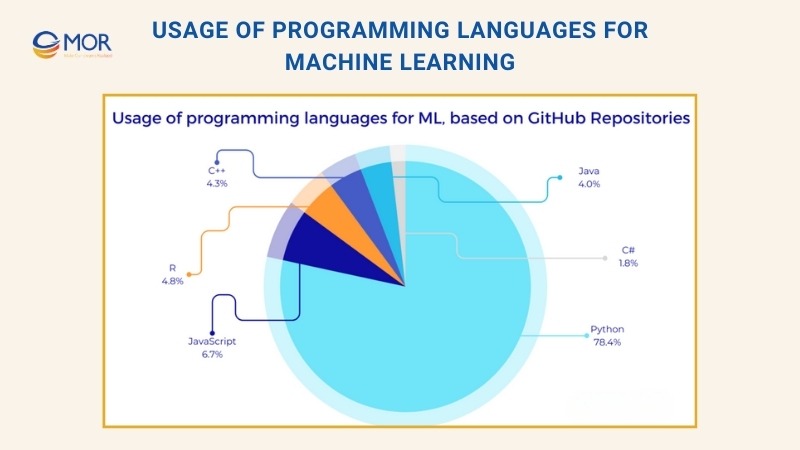
Public data on GitHub also shows how often Python appears in machine learning projects. The number of mentions highlights how widely the community uses python for data science AI & development to power research and production systems.
Language | Public repositories |
Python | 34,766 times |
JavaScript | 2,998 times |
R | 2,105 times |
C++ | 1,926 times |
MATLAB | 1,881 times |
Java | 1,783 times |
C# | 808 times |
Strong Tools For Data Analysis And Visualization
Python includes many libraries that help teams work with data, and several of them focus on clear visual output. Good visualization is important because offshore AI developers need to show patterns and results in a simple way. Tools like Matplotlib help create charts, plots, and histograms that make it easier to explain findings to others. These options support smoother workflows for teams working with python for AI development, especially when they need to turn large datasets into useful insights.
Adaptable Across Many Tech Fields
Python also fits well across many technical areas. Teams can use it to build machine learning models, automate systems, control devices, or run data studies. It is also a strong choice for web platforms, analytics tools, and advanced AI or ML workloads. This wide range of use cases shows why many companies continue to trust Python for long-term innovation across different domains.
Practical Uses Of Python In Real AI Projects
Python supports a wide range of real applications, and many companies use it to build smarter systems that process data, automate tasks, and train advanced models. Teams working with AI for python developers often rely on these tools to speed up experiments, improve accuracy, and turn ideas into working solutions.
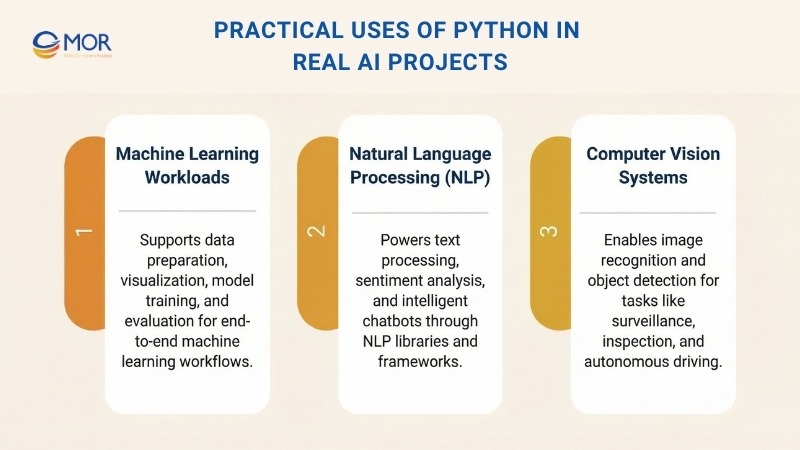
Machine Learning Workloads
Data Analysis and Visualization
Python delivers strong support for data-focused tasks, which play an important role in machine learning. Libraries like Pandas and Matplotlib give developers reliable ways to clean data, shape it for training, and turn it into clear visuals. Pandas helps handle large datasets and manage preprocessing, while Matplotlib creates plots, charts, and other visuals that make results easier to understand. These tools help teams working with python programming AI build models that rely on precise and readable insights.
Model Training and Evaluation
Training and testing ML models are central to any machine learning workflow. Python supports these steps well through Scikit-learn, a library that offers a large collection of ready-to-use algorithms. Developers can train models for tasks like regression, classification, or clustering with simple commands. Scikit-learn also provides evaluation metrics that help measure accuracy and guide improvements, which allows teams to refine their models with confidence and steady results.
Natural Language Processing (NLP)
Text Analysis
Python supports many NLP tasks, and one of the most helpful tools is the NLTK library. It includes functions for tokenizing text, applying stemming, and running sentiment checks. These features make it easier for developers to pull useful meaning from written content. With NLTK, teams can improve systems that handle tasks like topic grouping, document sorting, and opinion tracking. This also helps when learning how to code AI in python, since the library offers simple and practical methods for handling language data.
Chatbots and Virtual Assistants
Python is also widely used to build smart chatbots and advanced virtual assistants. Tools like ChatterBot and Rasa help teams design conversational systems that learn from past messages and understand user intent. ChatterBot supports basic chatbot development solutions, while Rasa gives developers a strong base for creating more complex assistants. These solutions rely on machine learning to deliver helpful responses and raise the quality of customer interactions, which strengthens engagement across many digital platforms.
Computer Vision Systems
Image Recognition
Python supports many important computer vision tasks, and a key tool for this work is OpenCV. This library gives developers strong functions for image processing, which helps with object detection, face recognition, and image segmentation. OpenCV includes a wide range of algorithms that make it suitable for both simple and advanced projects. Its flexibility also helps teams improve systems built through AI programming with python, especially when they need accurate visual analysis.
Object Detection
Object detection focuses on identifying and locating items inside images or video streams. Python offers powerful support for this area through TensorFlow and PyTorch. These libraries include pre-trained models that help developers use techniques like YOLO and SSD without starting from scratch. Their capabilities make it easier to create solutions for tasks like smart surveillance, automated inspection, and autonomous driving, where fast and precise detection is essential.
How Python For AI Development Compares To Other Languages
Python remains a top choice for many AI teams because it balances simplicity with strong technical capability. Its wide toolset, clear syntax, and active community help developers work faster and build more accurate models. These strengths set python for AI development apart when compared to other programming languages used in machine learning and data work.
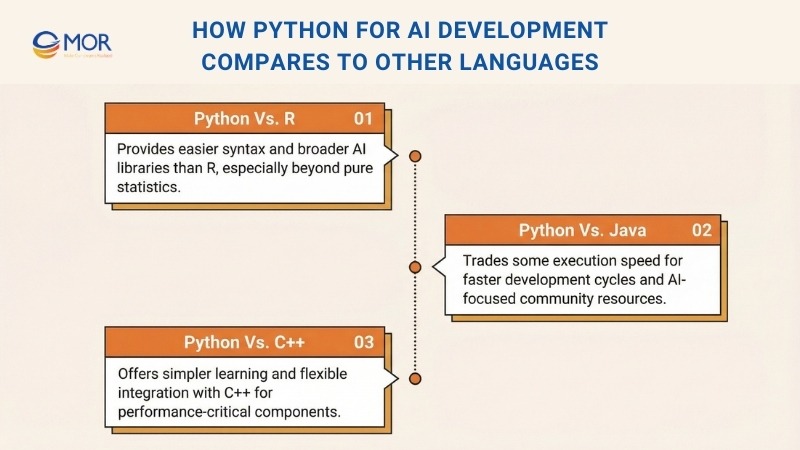
Python vs. R
Ease of Use
Python uses a simple syntax that reads more like everyday language. This clear style helps both new learners and experienced engineers understand code faster. The easy structure lets teams focus on model building instead of spending time figuring out complex rules.
R presents more of a challenge for beginners. Its commands are less intuitive, and new users often need a deeper understanding of statistics before they can work with it comfortably. This learning curve can slow the pace of AI projects for some teams.
Library Support
Python includes a wide set of tools built for AI and ML projects. Libraries like TensorFlow, Keras, and Scikit-learn give developers everything they need to build, train, and evaluate models. This strong collection of tools makes Python a flexible and reliable choice for many technical tasks.
R also offers helpful libraries, mainly for statistical work. Tools like caret and random Forest are commonly used in that field. Still, Python’s larger ecosystem provides broader support for AI development. Python also works well with cloud data systems, which helps teams run faster analysis and improve the quality of the data they use for training.
Python vs. Java
Performance
Java is well known for strong execution speed because it is a compiled language. This structure helps it perform well in large systems where fast response times matter. Its stability often makes it a solid choice for enterprise-scale platforms.
Python does not match Java’s raw speed, but it gives teams faster development cycles. Its interpreted structure supports quick tests and adjustments, which is important for AI projects that change often. This flexibility is one reason many teams choose python for AI development when they want to test ideas and refine models with less friction.
Community and Resources
Python has one of the largest developer communities in the world. Users can find tutorials, shared code, and support threads across many platforms. Places like GitHub and Stack Overflow provide answers, examples, and open-source tools that help developers solve problems quickly.
Java also has a strong following, but Python’s community places more attention on AI and machine learning. This focus leads to steady improvements in libraries, frameworks, and workflow tools. The shared effort helps keep Python at the center of modern AI development and makes it easier for teams to adopt new solutions faster.
Python vs. C++
Speed and Efficiency
C++ is known for very high performance. Since it is a compiled language, it delivers fast execution and works well in systems that need real-time responses or direct hardware control. This is why many performance-heavy applications choose C++ for their core functions.
Python does not reach the same speed levels, but it gives developers a helpful mix of usability and flexibility. Its ability to work alongside C++ lets teams build complex solutions where the heavy processing happens in C++, while the easier parts run in Python. This setup supports many teams using python for AI development, especially when they want fast results without giving up the benefits of simple code.
Learning Curve
Python is easier for most learners. Its clean and readable syntax allows new developers to pick up skills quickly, which helps them start working on AI tasks sooner. This gentle learning path is one reason many teams choose Python when building skill sets for growing AI teams.
C++ demands more effort. Its detailed syntax and manual memory control can be difficult for beginners and require deeper technical knowledge. This makes the learning process slower, although C++ remains important in areas that need high-speed performance.
Each language serves its own purpose. Python is often preferred for AI work due to its simple style, rich ecosystem of tools, and strong community support. These strengths give developers a balanced and effective path forward when creating AI models and intelligent applications.
Where Python For AI Development Is Making An Impact
“Python has been an important part of Google since the beginning and remains so as the system grows and evolves. Today dozens of Google engineers use Python, and we’re looking for more people with skills in this language.”
- Peter Norvig, director of search quality, Google
Python continues to prove its value in real business environments. Many organizations use it to solve difficult problems and build AI systems that support daily operations. Teams that rely on python for AI development often report strong results because the language helps them create stable and accurate machine learning solutions.
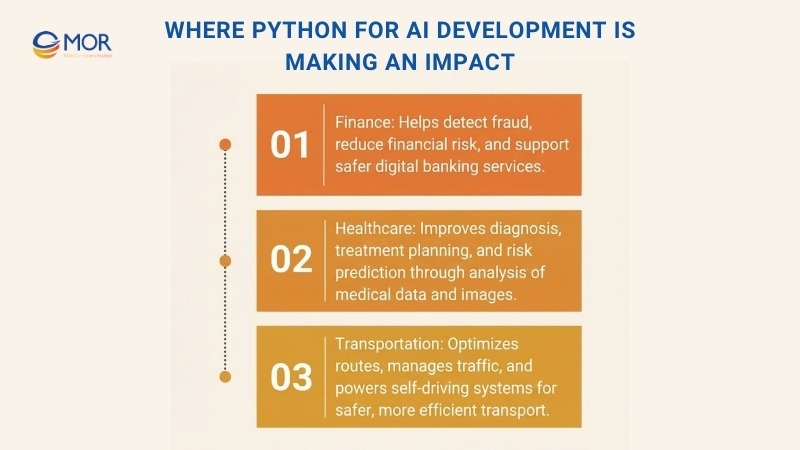
Finance
Many financial institutions face high fraud risk, and global studies show that businesses lose around 5% of yearly profits due to fraudulent activity. Machine learning models built with Python help scan transaction data and detect unusual behavior right away. These systems check customer orders, card verification codes, and email patterns to identify activity that looks suspicious.
Tools like Scikit-learn support classification models that separate genuine and fraudulent transactions. They also work well with methods like SMOTE, which creates synthetic samples to balance rare fraud cases. This helps the model spot more threats with better accuracy.
Banks also use Python algorithms to detect account takeovers, strange transfers, and false credit claims. These models protect customers and reduce manual review time for staff. Well-known companies like Stripe and Zopa have created strong financial technology solutions with Python to support safer and faster digital banking experiences.
Healthcare
Healthcare organizations use Python’s AI automation tools to improve diagnosis, treatment planning, and patient monitoring. Smart models review electronic health records, uncover hidden patterns, and suggest possible treatment paths based on real data. These capabilities help doctors make faster and more informed decisions.
Python-driven AI systems also study medical images like MRI and CT scans with high accuracy. These models can detect signs of cancer, heart disease, and pneumonia at early stages. Some solutions reach about 92% diagnostic accuracy, which is close to the 96% accuracy level reported among senior medical specialists.
Other Python-based tools evaluate risk factors related to heart conditions. They review cholesterol levels, blood pressure readings, and lifestyle indicators to predict potential health problems. This early insight helps doctors act sooner and guide patients toward better care, which increases the chance of positive outcomes.
Transportation
Python supports smarter transportation systems through tools that help companies plan faster and safer routes. AI models built with Python review traffic conditions, weather updates, and road closures in real time to choose the most efficient path. This helps delivery teams save time and improve overall logistics performance.
AI traffic platforms powered by Python also study information from sensors, cameras, and connected vehicles. They detect incidents quickly and help improve the flow of traffic. Several state transportation departments in the US use these systems to speed up response times, especially in remote areas where network coverage is limited.
Self-driving technology represents one of the most advanced uses of Python in transportation. These vehicles read sensor data, understand their surroundings, and make driving decisions without human input. This type of automation has the potential to reduce mistakes caused by human drivers and raise road safety in the long term.
Practical Guidelines For Python For AI Development
AI work can be complex, but following clear practices helps teams build stronger and more reliable solutions. These steps make daily development easier and support smoother results when working with python for AI development or any related workflow.
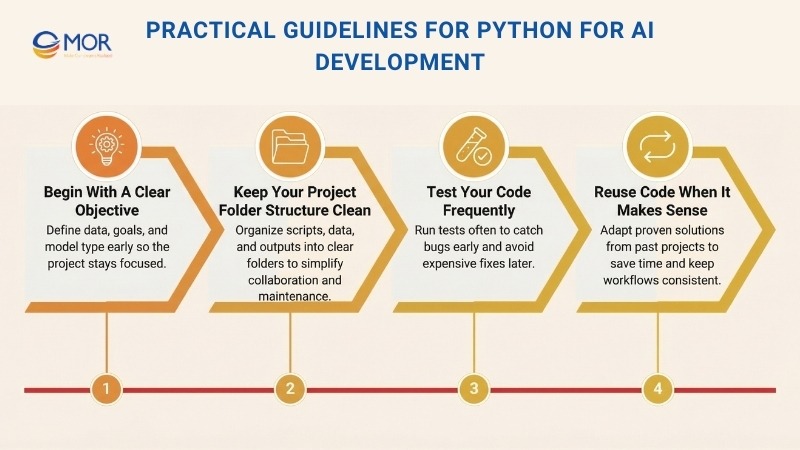
Begin With A Clear Objective
Set a clear goal before writing code. Know what type of data you will use and what model you want to create. Having a clear direction helps prevent large rewrites later and keeps the project focused from the start.
Keep Your Project Folder Structure Clean
Organize your files into simple folders for data, scripts, and results. This helps you move through the project faster and makes it easier for others to follow your work. A clean layout is helpful in team settings, but even solo developers stay more efficient with a clear structure.
Test Your Code Frequently
Run tests often so you can catch errors early. Small checks after major edits prevent bugs from spreading across the system. Fixing issues later in an AI program takes much more time, so early testing protects the flow of the project.
Reuse Code When It Makes Sense
Many AI problems repeat, so it helps to reuse working solutions from past projects. Adjust the code to fit the new task and make notes for any terms or shortcuts you add. This approach saves time and keeps your development process steady, supported further with tools like an AI code assistant for python development when needed.
Challenges To Expect When Using Python For AI Development
Python delivers many advantages, but it also comes with a few limits that teams should understand before starting a new AI project. These points matter for anyone using python for AI development, especially when systems need high performance or large-scale processing.
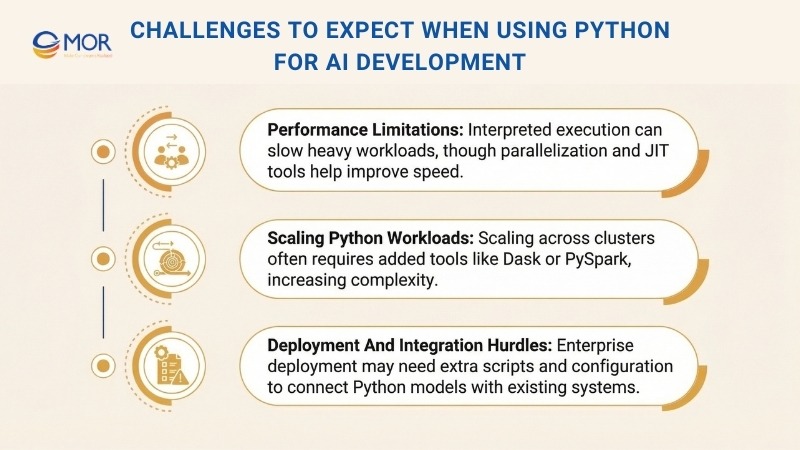
Performance Limitations
Python runs as an interpreted language, so it is not as fast as compiled options like Java or C++. This difference can be a drawback when working with machine learning or deep learning tasks that use very large datasets. Still, developers can improve performance through two common methods:
- Parallelization: It spreads processing tasks across several cores or processors to reduce execution time.
- JIT Compilation: It converts Python instructions into machine code during runtime, which greatly increases speed for demanding workloads.
If you want, I can continue rewriting the remaining sub-sections (Scaling Python Workloads and Deployment And Integration Hurdles) in the same style.
Scaling Python Workloads
Python often runs on a single machine, which creates limits when projects need to scale across larger or more complex environments. Tools like Dask and PySpark help with distributed computing and allow workloads to run across multiple systems. These options improve scalability, but they are still developing and can introduce extra steps that make a project more complicated. This added complexity can reduce some of the simplicity that many teams expect when working with python for AI development.
Deployment And Integration Hurdles
Python does not always offer strong enterprise-level support, which can make deploying machine learning models more difficult than in some other languages. Moving Python-based solutions into production systems may require custom scripts or additional setup to connect with existing platforms. These adjustments help achieve smoother integration, but they also increase the overall effort needed to deliver a finished solution.
MOR Software's Experience In Using Python For AI Development
MOR Software has delivered many AI outsourcing projects that rely on Python as the core technology. Our teams use Python because it speeds up experimentation, supports complex data workflows, and integrates well with modern cloud services. This helps clients move from early ideas to working AI solutions without getting stuck in slow development cycles.
We build systems that use Python for machine learning, natural language processing, automation, and large-scale data handling. Our engineers combine popular Python libraries with proven engineering practices, so each project stays stable even when requirements grow. Python also lets us test new models and adjust them quickly, which is valuable for businesses that need fast results.
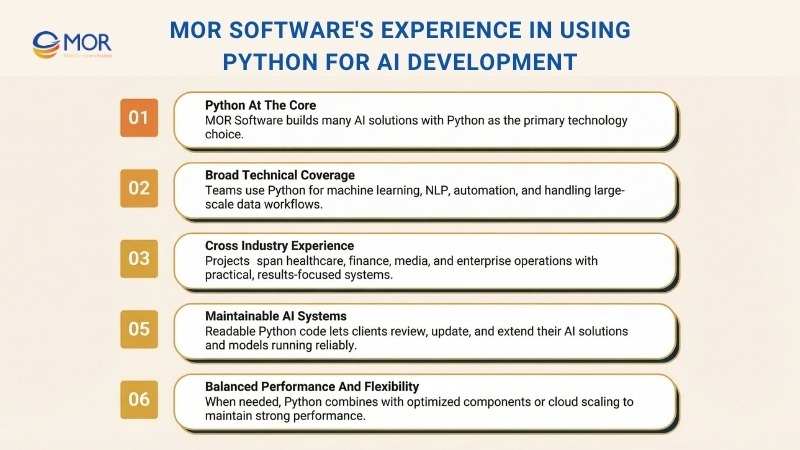
Our experience stretches across healthcare, finance, media, and enterprise operations. We have created fraud detection tools, automated data pipelines, AI-powered healthcare systems, and mobile apps that include smart features. These projects share a common setup: clean data processing, reliable model training, and smooth integration with cloud platforms like AWS.
We also focus on long-term maintainability. Python makes it easier for teams to read, review, and update code, so clients can continue improving their AI systems after launch. When a project requires extra performance, we pair Python with optimized components or use cloud-based scaling to keep the system responsive.
MOR Software uses Python because it fits real business needs. It helps us develop solutions that handle data correctly, run models with high accuracy, and stay flexible as new goals appear. That mix of speed, clarity, and stability is what makes Python a solid choice in our AI projects.
Conclusion
Python continues to guide modern AI work because it supports fast testing, clear code, and dependable results for real business problems. Its strong ecosystem and flexibility make it a smart choice for teams that want stable, scalable AI solutions. MOR Software uses python for AI development to help clients turn ideas into working products that deliver value. If you want an AI partner that understands both technology and business goals, contact MOR Software to start your project with confidence.
"Evolution is not a destination, it is a disciplined journey of innovation."
Phung Van Tu


CEO MOR AI
MOR SOFTWARE
Frequently Asked Questions (FAQs)
Should I learn C++ or Python for AI?
For beginners, Python is usually better. It’s easier to read and has thousands of pre-built AI tools. C++ is ideal for projects needing high speed and hardware control, like robotics or real-time systems. Many developers learn both over time.
Can Python be used for AI development?
Yes. Python is widely used in AI because it has clear syntax and a rich set of tools designed for machine learning and deep learning. Libraries like Scikit-learn, Pandas, Keras, TensorFlow, Matplotlib, NLTK, Scikit-image, and PyTorch make it easier to build complete AI pipelines without starting from zero.
Which version of Python is best for AI?
Developers generally use the newest stable release of Python 3. Modern versions come with speed upgrades and better support for AI libraries. Python 3.13 and later include improvements that help with machine learning performance.
How much Python is needed for AI?
You should understand basic syntax, functions, classes, loops, and data structures. After that, you’ll need to learn NumPy and Pandas, then move on to frameworks like TensorFlow, Keras, or PyTorch. It may take a few months to reach an intermediate level and longer to specialize.
Can I build my own AI with Python?
Yes. Python lets you create your own AI models for tasks like text processing, predictions, image analysis, and classification. Frameworks such as TensorFlow, Keras, and PyTorch handle complex computations, so you can focus on designing and training your model.
Why is Python popular for AI projects?
Python is popular because it's easy to learn, works well with data, and includes many ready-made AI tools. Its clean syntax helps developers test ideas quickly, which is important when training and refining machine learning models.
Is Python fast enough for AI?
Python itself is not the fastest language, but most AI libraries rely on optimized backend code written in C, C++, or CUDA. This gives you strong performance while still allowing you to write code in Python.
Do I need math to use Python for AI?
Basic knowledge of algebra, calculus, probability, and statistics helps you understand how models work. You can start with simple projects without advanced math, but deeper understanding becomes useful when tuning models or building custom algorithms.
What Python libraries should beginners learn first for AI?
Beginners often start with NumPy and Pandas for data handling, then use Scikit-learn for machine learning basics. After that, they can explore TensorFlow or PyTorch for deep learning.
Can Python handle large datasets for AI?
Yes, although large datasets may require additional tools. Python integrates well with cloud platforms, distributed systems, and libraries like Dask or PySpark that help manage big data workloads efficiently.
Share


Make Our-Dreams Realized


© 2023 . MOR Software. All Rights Reserved
Sitemap
Privacy Policy
Terms of Use

Rate this article
0
over 5.0 based on 0 reviews
Your rating on this news:
Name
*Email
*Write your comment
*Send your comment
1