


SaaS Software Development: Complete Guide for Businesses
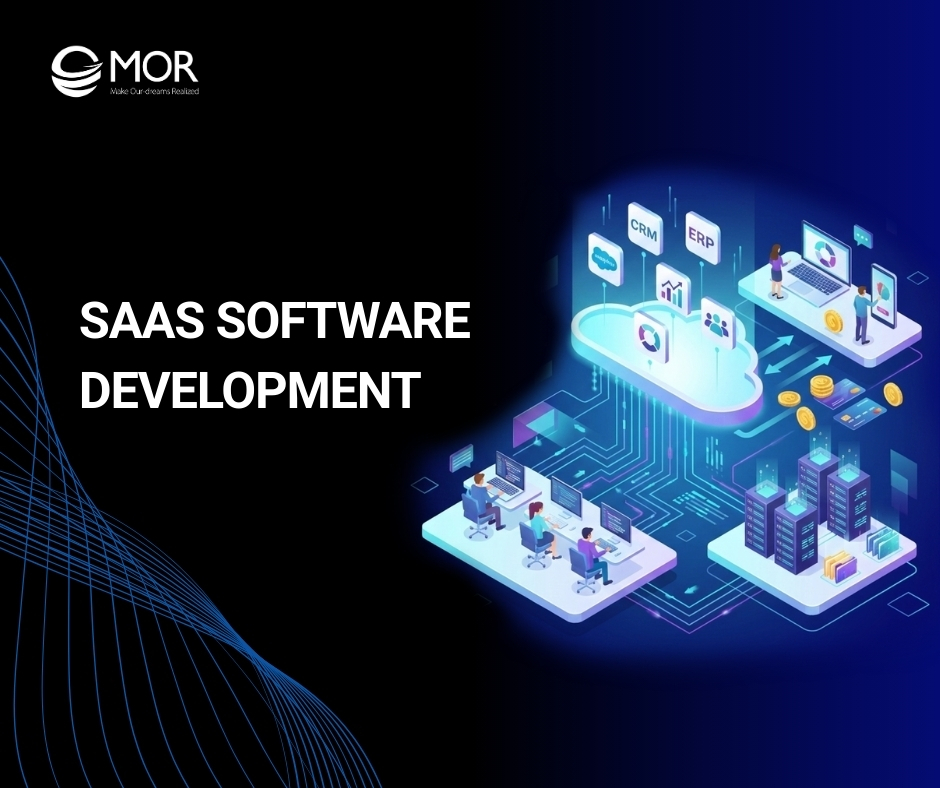
SaaS software development helps businesses cut setup time, lower costs, and scale with ease, yet many teams still struggle to choose the right path or build a product that grows with real users. This MOR Software’s guide walks you through the full journey so you can plan smarter, avoid common mistakes, and shape a solution that fits your goals.
What Is SaaS Software Development?
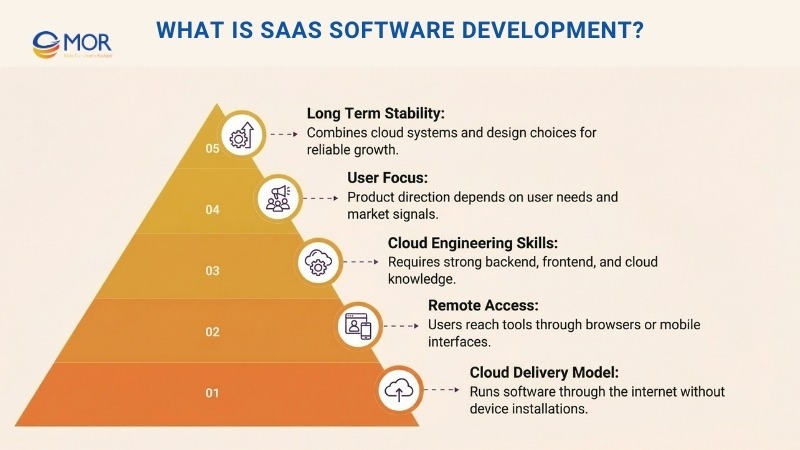
SaaS software development describes the work involved in building, launching, and managing software that users reach through the internet as a hosted service. Instead of installing programs on each device, these apps run in the cloud. Users reach the platform through a browser or mobile interface, which keeps access simple and smooth for daily use. This model has become a core part of SaaS development and continues to shape how modern software is delivered.
Recent market research shows how big this space has become. One global report valued the Software as a Service market at 266.23 billion US dollars in 2024 and expects it to reach 1,131.52 billion US dollars by 2032. This points to very strong long term growth for cloud based software.
Creating this type of solution calls for strong engineering skills and deep knowledge of cloud systems. Teams also need a clear view of user needs and current market signals so the product can grow in the right direction. When these parts come together, the result is software that stays stable, useful, and ready for long-term growth.
How SaaS Works And Why It Is Important Today
SaaS has become a key part of modern business. One industry study expects that by 2025 about 85% of all business applications will run on SaaS tools. This means this delivery model is close to becoming the default choice for companies. These platforms give companies flexible, low-cost, and scalable software options that support daily work. With this approach, teams can adjust to new demands and keep moving forward as markets shift.
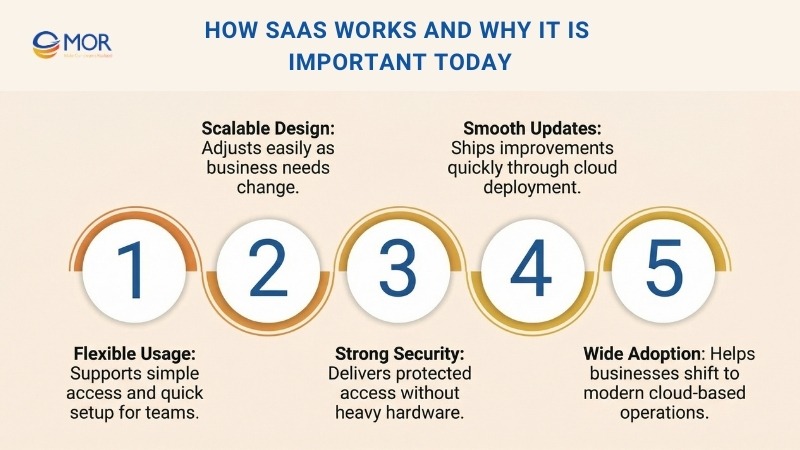
SaaS brings simple access, quick setup, and strong security. It also supports fast deployment, smooth updates, easy integrations, and room for product changes. A recent SaaS management report found that the average company used 106 different SaaS applications in 2024. We can see how deeply these tools are now built into everyday workflows. These strengths help companies grow and create new value without heavy system costs.
The rise of this model has changed how organizations use software. It has pushed a major shift in the market, as a wide range of SaaS products now play an important role in many business operations.
This section sets the stage for understanding how these tools have reshaped the bigger picture. Before going deeper, it helps to see how SaaS apps differ from older web-based solutions.
SaaS Apps Compared To Web Apps
In the software world, many people mix up SaaS apps and web apps, yet each type has its own clear traits.
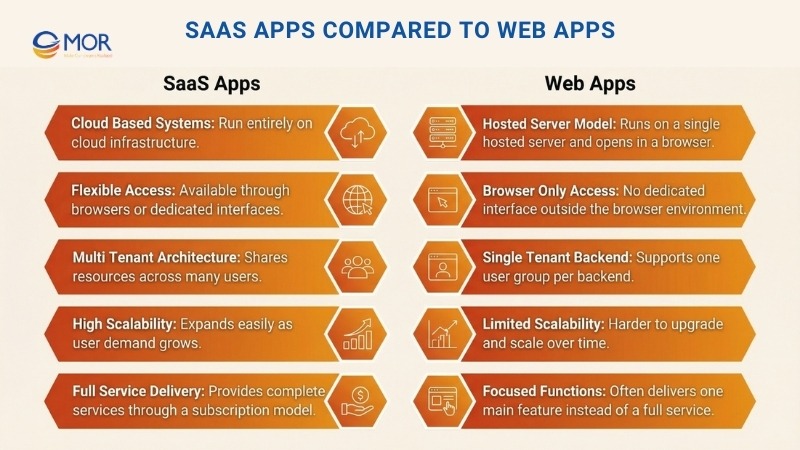
SaaS apps provide full online services through a subscription model. This setup gives users smooth access without handling local systems or hardware. Web apps work in a simpler way. They often focus on one main function and run through a browser without the multi-tenant design or wide scalability found in SaaS platforms.
SaaS Apps | Web Apps |
Operate on cloud-based systems | Run on a hosted server and open in a browser |
Reachable through browsers or dedicated interfaces | Built with a single-tenant backend |
Use a multi-tenant backend for better cost and resource control | Offer limited growth and fewer upgrade paths |
Seeing how these two types differ helps teams choose the right option when planning new products or picking the right technology for daily work.
SaaS Software Development Process: 8 Essential Steps
A smooth launch for any solution built through SaaS software development depends on clear planning and steady execution. Startup teams need to follow each part of the SaaS software development life cycle with care, since it helps guide the work from early ideas to a working product. The process often follows the steps below.
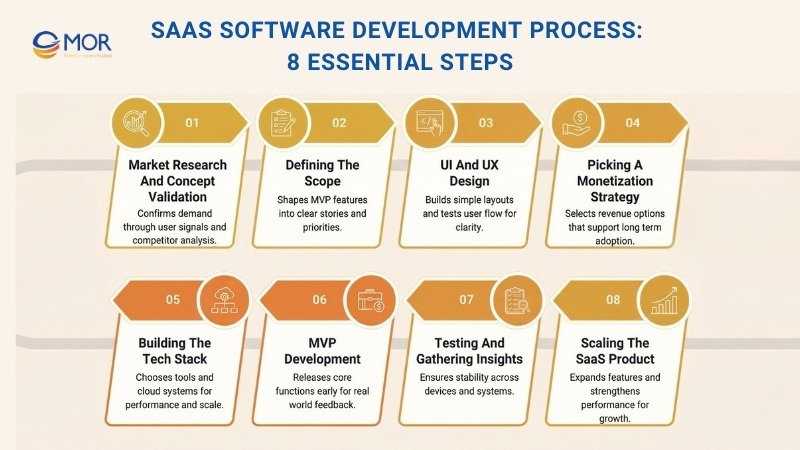
Step 1: Market Research And Concept Validation
This first stage focuses on studying the target audience and other products in the market. It also covers learning about user needs, shaping user groups, and checking if the core idea is strong enough. The aim is to gather the right customer signals so the team can build something that solves a real issue and fits the early SaaS development process.
Expert tip: Create a basic landing page to test your MVP idea and send traffic to it. Track simple conversion data to confirm interest before you invest more time and resources.
Step 2: Defining The Scope
This stage focuses on outlining the main functions and core features that will shape the MVP. The work includes choosing which features matter most based on user needs and business goals, then turning them into clear user stories that match the right acceptance rules. This helps the product feel real and gives SaaS software developers a clear direction.
Expert tip: Simple wireframes or low-fidelity designs can support detailed user stories. When certain features fall outside the main flow, these visuals make it easier to set a clear and focused backlog.
Step 3: UI And UX Design
For SaaS products, the design work centers on simple, clear, and easy experiences. The interface should guide users through the main actions without confusion, so clean layouts matter. This stage involves building high-fidelity prototypes and creating a design system that keeps everything consistent. Teams also rely on UX testing tools and real user research to shape the flow. These insights help improve prototypes early and prevent expensive revisions later.
Expert tip: Mobile-first design continues to grow in demand as more people access tools on their phones. Keep this trend in mind for future updates and choose a tech stack that supports it well.
Step 4: Picking A Monetization Strategy
Choosing how the product earns revenue, whether through freemium access, subscriptions, usage-based pricing, or a mixed option, is important for long-term growth. The right model can help a startup stand out and support steady user adoption as the product moves forward.
Expert tip: A and B testing can guide pricing decisions. Reviewing how other companies charge for similar tools also reveals gaps and ideas that your team can improve.
Step 5: Building The Tech Stack
This stage focuses on choosing the right tools for the frontend, backend, and cloud environment. The team also selects CI and CD tools to support smooth delivery. These decisions shape the product’s architecture, its ability to scale, and how easy it will be to maintain in the long run. Picking a cloud partner that fits your frontend and backend choices affects performance, security, and overall cost. When the tools work well together, the SaaS programming workflow becomes simpler and more stable, which supports strong deployment and steady function.
Expert tip: Use technologies that have already proven themselves in successful SaaS products. Many teams turn to Node.js for backend work, React for the web interface, and trusted cloud services like AWS or Azure.
Step 6: MVP Development
The main goal when creating an MVP is to confirm that the core features work well and to collect early feedback from users and stakeholders. The team focuses on releasing a simple version fast so the product can be tested in real conditions, instead of adding a large set of features too soon. This approach gives clear insight into what should improve next and helps guide the work of any SaaS software developer involved in the project.
Expert tip: Avoid adding extra functions that are not needed at this stage. A skilled partner can help shape a focused vision and build a roadmap that supports your business goals without slowing down early progress.
Step 7: Testing And Gathering Insights
SaaS products need to run smoothly on many browsers, operating systems, and devices. These solutions often handle important user data, and the number of users grows over time. This makes load tests, stress tests, and compatibility checks important parts of the process. Teams also test API connections to confirm that external systems work well with the platform.
Expert tip: Create a steady feedback cycle to improve the product using real user input. Surveys, direct interviews, and close contact with early users can help reveal what needs to change next.
Step 8: Scaling The SaaS Product
After the MVP proves its value and tests highlight what needs to be fixed, the focus shifts to growth. This stage includes adding new functions, strengthening the system, and improving the user experience. The aim is to move from a simple version to a complete product that can support a larger group of users and meet rising expectations.
Expert tip: Make sure the platform can handle more traffic and higher data levels without losing speed or stability. Work closely with your partner throughout SaaS software development to find and remove any limits that might slow the system as it expands.
With the right technical support, each part of the journey becomes clearer. A skilled team helps your product launch with confidence and continue growing over time.
SaaS Software Development At MOR Software
MOR Software helps businesses turn SaaS ideas into stable, scalable products. Our teams work across cloud platforms, modern tech stacks, and complex integrations to deliver solutions that support long-term growth. We guide clients from early discovery through design, software outsourcing development, testing, and continuous improvement, ensuring every SaaS build is reliable and ready for real-world use.
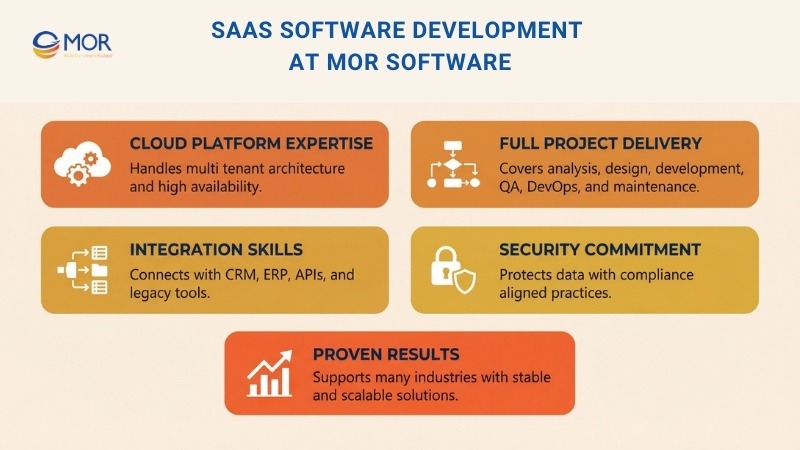
What MOR Software Brings to Your SaaS Project
- Experienced SaaS engineering teams skilled in cloud infrastructure, multi-tenant architecture, and high-availability systems.
- End-to-end delivery, covering business analysis, UI/UX design, backend development, mobile development, QA, DevOps, and ongoing maintenance.
- Deep integration expertise, including CRM solutions, ERP systems, third-party APIs, and legacy system modernization.
- Strong focus on security, handling data protection, privacy standards, and compliance aligned with industry requirements.
- Proven success across industries, demonstrated in healthcare systems, contingent workforce management solutions, e-commerce platforms, and enterprise automation tools.
MOR Software supports both startups and enterprises looking to build SaaS products that scale smoothly, perform consistently, and remain easy to maintain as user demand grows.
Contact us today to start your SaaS project with a trusted partner.
Benefits Of SaaS Software Development
The need for this model keeps growing because it brings clear value to businesses and their users. Before moving deeper into SaaS software development, it helps to look at the main strengths it provides.
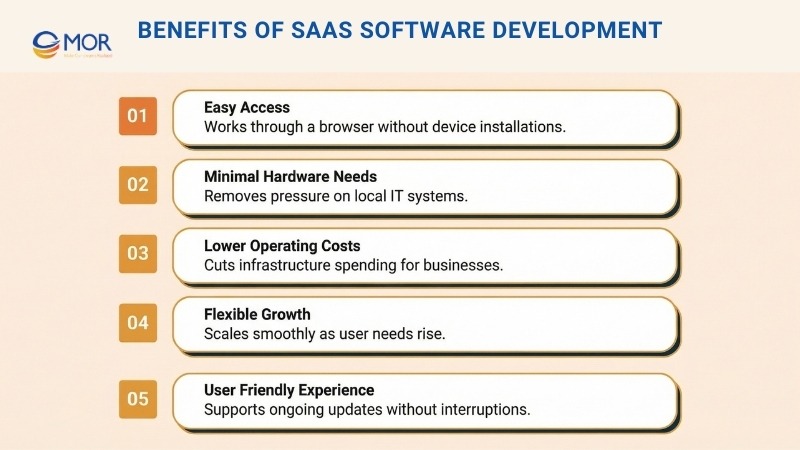
- Easy Access: Traditional programs must be installed on each device, and device compatibility can cause issues. Cloud-based tools only require a browser and an internet connection. This keeps access simple and available at any moment without extra setup, which supports many SaaS software development services in real use.
- Minimal Hardware Needs: These products run on cloud systems, so companies no longer depend on complex internal hardware. This removes the usual work needed to support older setups and reduces pressure on IT teams.
- Lower Operating Costs: All software comes with some costs. With cloud solutions, these costs drop because companies do not have to maintain heavy infrastructure.
- Flexible Growth: As a business expands, its software demands also rise. SaaS platforms can grow with the company and adjust to new needs without slowing daily operations.
Tools & Tech Stack Used In SaaS Software Development
Creating a strong product through SaaS software development depends on choosing the right mix of modern frameworks, languages, and cloud systems. A well-built stack supports good performance, keeps data safe, and delivers a smooth experience for users.
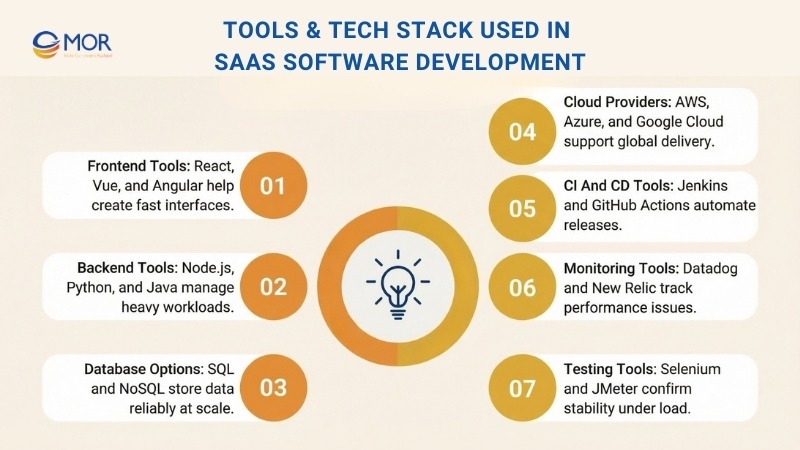
Here are the core tools and technologies that most teams rely on when building SaaS products:
- Frontend Tools: React, Angular, and Vue.js are widely chosen for building clean, responsive interfaces. These tools help teams move faster while keeping the experience steady across different devices.
- Backend Tools: Node.js, Python, and Java form the core of many cloud products. These languages handle large workloads, support API tasks, and work well with cloud-based setups used in SaaS development services.
- Database Options: PostgreSQL, MongoDB, and MySQL store both structured and unstructured data. For bigger solutions, teams often mix SQL and NoSQL to keep the system flexible.
- Cloud Providers: AWS, Google Cloud, and Microsoft Azure support global delivery, storage, and easy scaling. They also come with built-in security tools that help protect enterprise data.
- CI And CD Tools: Jenkins and GitHub Actions help automate builds, tests, and releases. This keeps updates fast and reduces errors.
- Monitoring Tools: Datadog and New Relic help track uptime, performance, and real-time issues so teams can keep the platform stable.
- Testing Tools: Selenium and JMeter support automated checks for load and performance to confirm that the app stays steady under heavy use.
When developers use the right set of tools, they can deliver scalable and secure products that grow with users and stand out in the market.
Cost Breakdown For SaaS Software Development
Working with SaaS software development often requires a clear budget because both the first build and the long-term upkeep need steady investment.
"In general, creating a basic SaaS product can cost between 25,000 and 250,000 dollars or more, depending on how complex the system is. Ongoing hosting and maintenance usually take around 15 to 30 percent of the starting cost each year. Exact numbers change based on what the platform needs and how large it aims to grow."
Ilia Kiselevich, CEO at SolveIt
Below is a closer look at the main factors that shape spending for two cases, an MVP and a full version of the product. This helps teams understand accounting for software development costs SaaS in a clearer way.
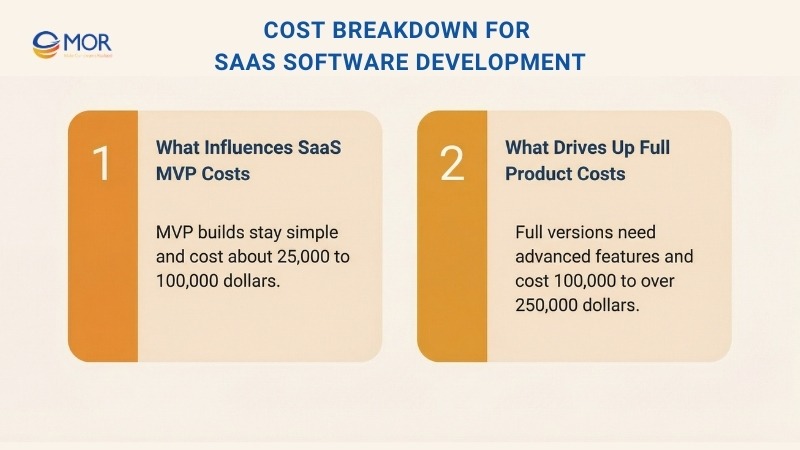
What Influences SaaS MVP Costs
The early MVP stage focuses on proving the idea, so the work usually centers on core functions and fast delivery. This keeps the initial build lean and helps teams avoid spending on features that are not yet needed. Clear priorities at this stage make SaaS software development more predictable and easier to control from a cost standpoint.
- Platform complexity: Early MVP versions use fewer core features, simpler links to other systems, and only basic security. These limits help lower total work and cost.
- Development approach: Creating an MVP from scratch can cost less than using a large SaaS framework that carries license fees. Still, a framework may speed up delivery for some teams.
- Development team: Hiring an outside team in regions with lower hourly rates often makes MVP work more affordable than building everything with an in-house group.
- Hosting and infrastructure: MVP versions run on minimal cloud setups, which keeps hosting needs and related expenses low.
Typical cost range: 25,000 to 100,000 dollars.
What Drives Up Full Product Costs
A complete version of a SaaS product usually requires deeper work, a larger team, and stronger cloud support. This stage moves far beyond the MVP because the solution must handle more users, more data, and more complex functions across the entire system.
- Platform complexity: A full build includes extra features, more system links, multiple user types, advanced data handling, and stronger security rules. These needs increase the total time and cost.
- Development approach: Fully custom SaaS software development services give teams more control but often require a higher budget at the start. Enterprise SaaS frameworks bring ready-made functions but usually include licensing fees.
- Development team: A skilled partner with direct experience in large SaaS projects is often needed to create a stable product. This added expertise raises the cost.
- Hosting and infrastructure: A complete solution needs strong cloud services, larger databases, and global content delivery to handle more users and heavy workloads.
- Ongoing maintenance: Regular updates, new features, bug fixes, and system upgrades add constant expenses to keep the product healthy.
Typical cost range: 100,000 dollars to more than 250,000 dollars.
Real World Example: Netflix’s Use Of SaaS For Worldwide Operations
Netflix, one of the largest names in global entertainment, shows how cloud-based solutions can reshape daily operations inside a company.
Instead of running and maintaining its own large server systems, Netflix uses Amazon Web Services, a broad set of cloud tools. This choice lets the company focus on what matters most, delivering high-quality shows and movies to millions of viewers around the world.
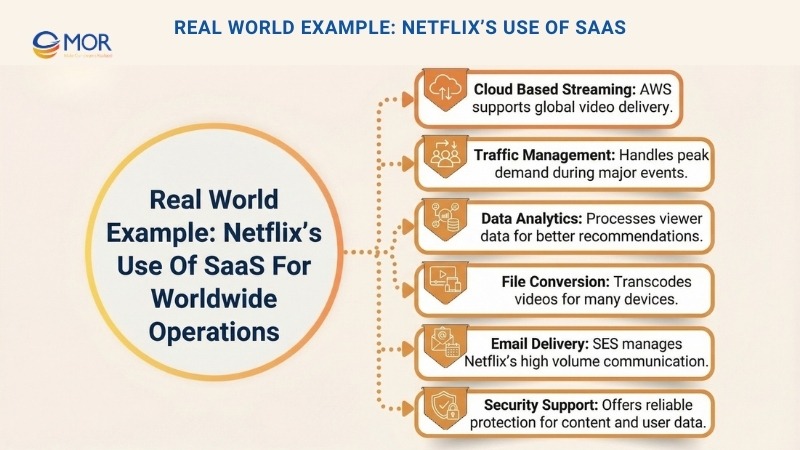
Netflix relies on AWS for several important tasks, including:
- Streaming and content delivery: AWS supports Netflix’s worldwide content delivery network. It keeps playback smooth for users everywhere and helps the system handle heavy traffic during major releases or busy viewing periods.
- Data management and analytics: AWS gives Netflix the space and speed needed to store and process large amounts of data. With this setup, Netflix can study viewer habits, offer better recommendations, and improve its content library.
- Encoding and transcoding: AWS helps convert video files into many formats so they work well on different devices and internet speeds.
- Email marketing and transactional emails: Netflix uses Amazon Simple Email Service to manage its large email needs. The platform keeps inbox placement rates high and supports strong sender reputation scores. With these results, Netflix no longer needs its own email system. When SES works with Amazon SNS, the team gains real-time email reports that support steady improvements.
- Security and reliability: AWS provides strong protection and system backups, which help secure Netflix’s content and user information.
Through this cloud-focused approach, Netflix avoids the high costs and heavy work of running its own global infrastructure.
This example shows how SaaS software development and cloud solutions can help companies grow faster, improve internal processes, and keep their attention on core goals. This idea applies to businesses of all sizes and highlights how useful this model can be across many industries.
Challenges In SaaS Software Development
Like any modern product, solutions built through SaaS software development bring their own set of hurdles. Earlier sections touched on the testing stage, which shows why strong QA support matters. These three core challenges explain this need even more clearly.
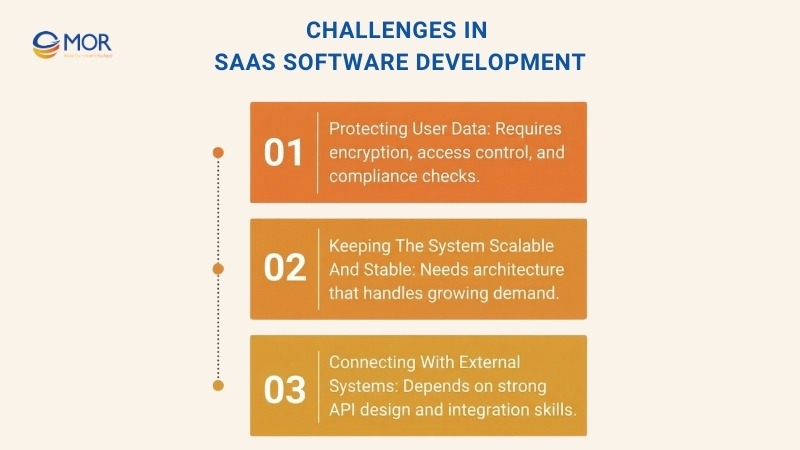
Challenge 1: Protecting User Data
Teams must set up careful plans to keep user information safe when building a cloud-based system. This often includes using encryption, limiting access rights, and running regular security and compliance checks. Adding an SBOM also helps companies stay aware of software dependencies and manage possible risks in a transparent way.
For startups working on cloud products and design work, it is important to choose partners with strong security skills and the right tools. This helps keep the platform stable and protects user privacy from the start.
Challenge 2: Keeping The System Scalable And Stable
Cloud products need to grow fast when user numbers or data loads increase. They also must stay stable so people can access the service without interruptions. This requires careful work on the system architecture and the use of technologies that support strong performance.
If you choose to hire SaaS software developer teams or bring in a dedicated group, make sure they understand how to build systems that scale well and stay reliable even under heavy demand. This experience is key to keeping the platform healthy as it expands.
Challenge 3: Connecting With External Systems
Startups that work with an outside team need partners who understand modern API rules and strong integration methods. This knowledge helps them build connections that stay stable and flexible as the product grows.
Handling complex links to third-party tools without the right experience can create major issues later. A skilled team helps avoid these problems and keeps the whole system running smoothly.
The Future Of SaaS Software Development
The cloud software space keeps changing as new technology grows and user needs shift. Modern companies expect faster updates, smarter tools, and flexible ways to deploy their products. As the field matures, several trends are shaping what comes next for SaaS software development and global product teams.
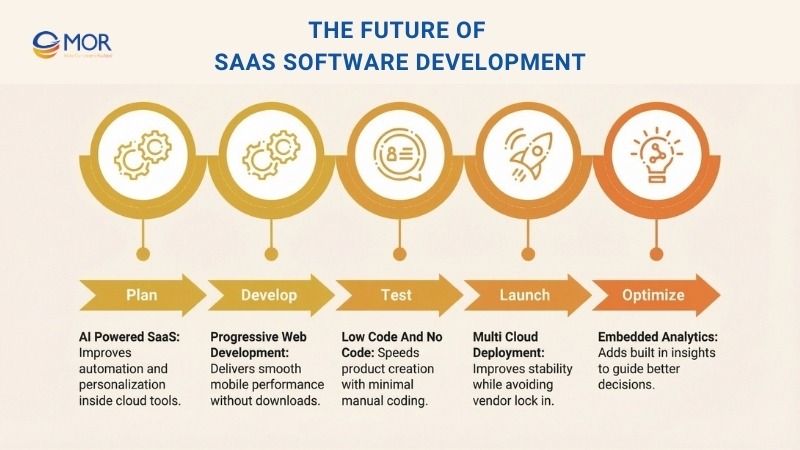
We introduce to you the key trends that are shaping the future of SaaS:
- AI-powered SaaS: Artificial Intelligence supports automation, predictions, and personal features inside SaaS platforms, helping companies build smarter tools.
- Progressive web development: PWAs let cloud apps work smoothly on mobile devices and feel close to native apps without extra downloads.
- Low-code and no-code SaaS: These tools help startups and large companies build and ship products faster with less manual coding.
- Multi-cloud deployment: Many teams use more than one cloud provider to improve stability, lower costs, and avoid vendor lock-in.
- Embedded analytics: Modern cloud apps now include strong analytics features so users can make better decisions and get more value from their data.
These shifts guide how teams create new cloud products and support SaaS development in a way that feels smarter, faster, and easier to access for users around the world.
Conclusion
A strong SaaS product depends on clear planning, the right tech stack, and steady improvements as user needs change. With the right guidance, SaaS software development becomes a clear path to faster growth and better customer value. MOR Software helps teams move through every stage with confidence, from early ideas to long-term expansion. Our engineers build systems that stay stable, secure, and easy to scale. Reach out to MOR Software to start building your SaaS solution with a trusted partner.
MOR SOFTWARE
Frequently Asked Questions (FAQs)
What is SaaS software development?
SaaS software development focuses on building applications that run online instead of being installed on local devices. Users access the software through a browser or mobile app, and the provider manages updates, security, and maintenance.
Is Netflix considered a SaaS platform?
Yes. Netflix functions as a SaaS platform because users subscribe and stream content directly over the internet without installing any software or managing infrastructure on their own devices.
Is ChatGPT an example of SaaS?
Yes. ChatGPT operates as a SaaS product since people access its AI capabilities through cloud-based interfaces and APIs rather than installing it locally.
What makes SaaS different from traditional software?
Traditional software requires manual installation and updates. SaaS applications run entirely online, giving users instant access while the provider handles upgrades, storage, performance, and security.
What are the main benefits of SaaS for businesses?
SaaS offers easy access, predictable subscription pricing, automatic updates, quick deployment, and scalability. It also reduces the cost and effort needed to maintain hardware or local systems.
How long does it take to build a SaaS product?
A typical SaaS MVP can take three to six months to develop. More advanced platforms with complex features or integrations may require a year or more to complete.
What technologies are commonly used in SaaS software development?
Developers often use cloud platforms like AWS or Azure, backend languages such as Python or Node.js, frontend frameworks like React, and databases including PostgreSQL or MongoDB. CI/CD pipelines and monitoring tools are also important.
What challenges appear when developing a SaaS platform?
Some of the biggest challenges include ensuring strong security, designing scalable architecture, maintaining high uptime, handling third-party integrations, and managing infrastructure costs as traffic grows.
How are updates and maintenance handled in SaaS applications?
Updates are released directly to the cloud environment, so users always access the latest version. Maintenance includes performance improvements, bug fixes, security updates, and backend optimizations.
Can different business models be adapted into a SaaS product?
Many business models can shift to SaaS if the service can be delivered digitally and provides ongoing value through automation or online workflows. Success depends on user demand and whether the offering fits a subscription model.
Share


Make Our-Dreams Realized


© 2023 . MOR Software. All Rights Reserved
Sitemap
Privacy Policy
Terms of Use

Rate this article
0
over 5.0 based on 0 reviews
Your rating on this news:
Name
*Email
*Write your comment
*Send your comment
1