


Ultimate Guide to Vietnam Software Outsourcing in 2026
Vietnam software outsourcing has grown into a top choice for teams that want steady delivery at a fair cost. More companies now build long-term product teams in Vietnam because they trust the talent, the work style, and the predictable pricing. The mix of young engineers and strong technical skills makes Vietnam a reliable place to run ongoing web, mobile, cloud, or AI projects.
This guide gives you a clear view of the market in 2026. It draws on real projects, field data, and our experience helping clients set up offshore teams. You get a practical look at what works, what to expect, and how to plan with confidence.
If you want deeper detail on models, pricing, or vendor types, you can read our ebook Vietnam Software Outsourcing: Complete Guide – eBook. Use this page as your starting point as you plan your next build.
Vietnam Software Outsourcing Market Overview
Vietnam has become a reliable destination for software outsourcing as global teams look for scale without cost pressure. Companies gain access to a deep pool of engineers, steady operating conditions, and clear government support for the IT sector. This combination helps businesses fill talent gaps, move faster, and keep long-term budgets under control.
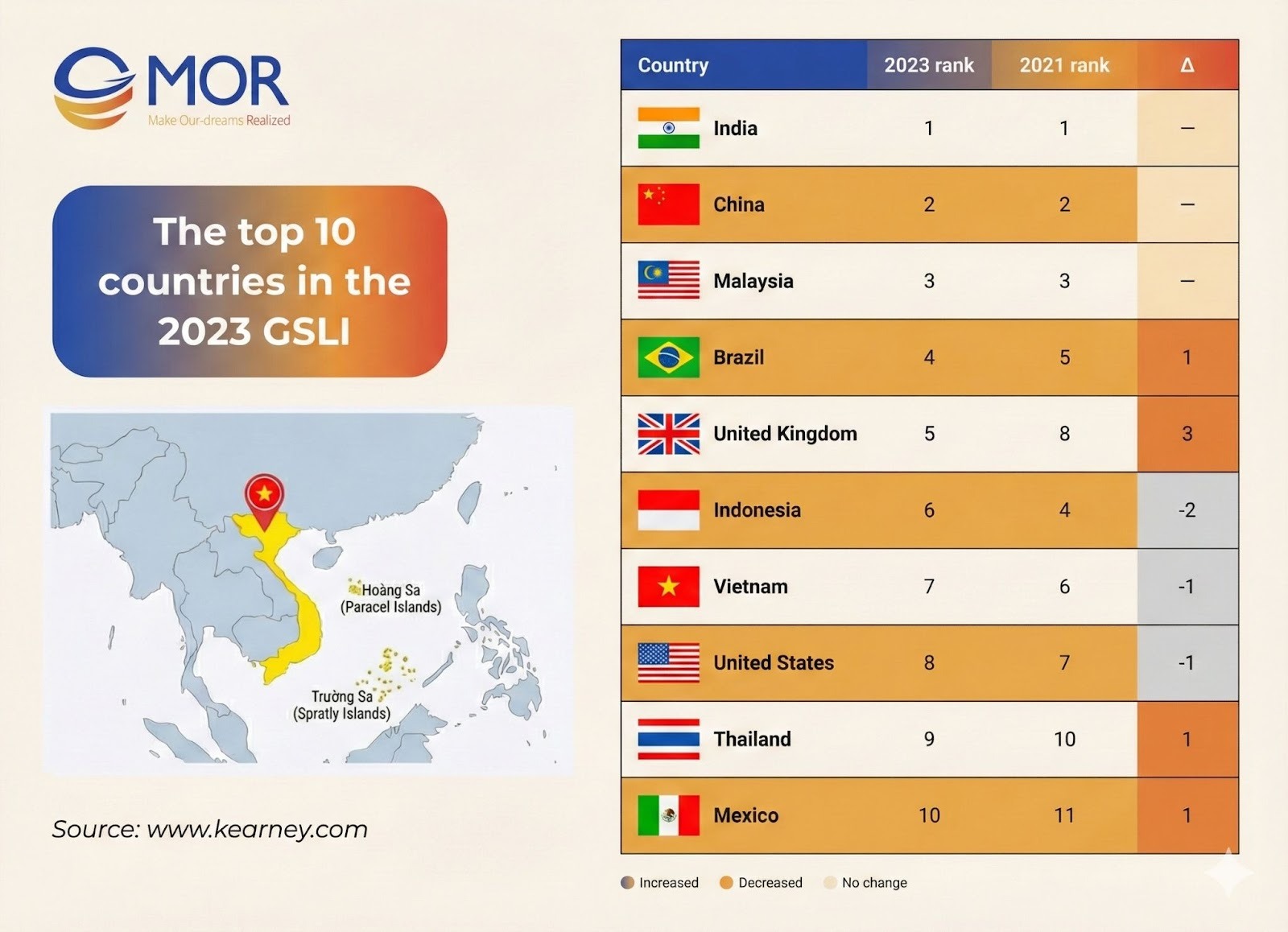
The country continues to attract major technology players. Intel, IBM, Samsung, Microsoft, and Nvidia all maintain strong operations in Vietnam. Global recognition follows. Vietnam ranked seventh in Kearney’s 2023 Global Services Location Index, which reflects strong confidence in its delivery quality and pricing stability.
Market growth supports this momentum. In 2024, the offshore IT outsourcing segment generated roughly USD 698 million in revenue. Forecasts point to nearly USD 880 million by 2028, showing steady demand from overseas clients that rely on Vietnam for ongoing development work.
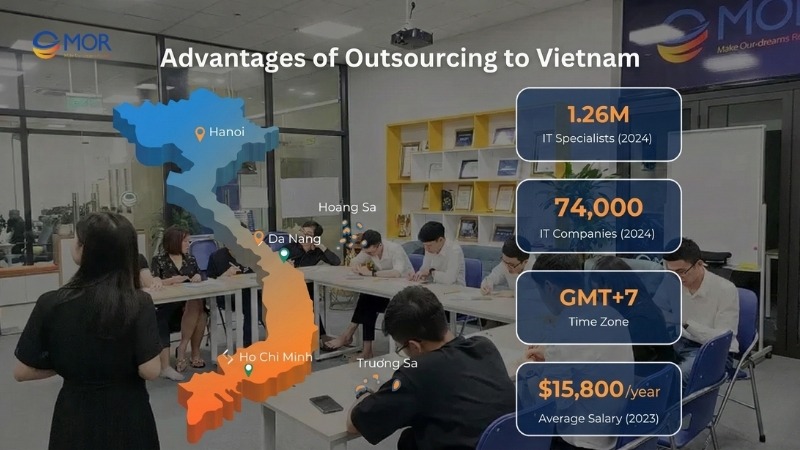
Talent scale adds another layer of strength. Around 74,000 technology companies now employ more than 1.26 million ICT professionals. Together, they generate about USD 158 billion in annual revenue, with foreign markets contributing USD 11.5 billion. These numbers confirm that software outsourcing in Vietnam competes well on a global stage.
If you want a closer look at vendor groups and pricing styles, you can read our guide on ‘IT outsourcing company in Vietnam’. It gives you more detail on how to pick the right partner for your plans. You can also get a free quotation for your project on our site if you want to see how your roadmap fits the current market.
Why Vietnam is Ideal for Software Development?
Vietnam stands out for one simple reason. You get strong engineering support without stretching your budget. Cost control, skill depth, and steady operations come together in a way few markets can match.
Cost Benefits That Scale With Your Team
Cost matters, especially when projects run for months or years. Vietnam keeps spending predictable while teams grow.
Competitive Developer Salaries
Software engineers in Vietnam earn about USD 950 per month on average, based on Glassdoor data from 2025. That figure stays well below rates in Eastern Europe, where monthly salaries often range from USD 2,000 to USD 4,000. You get experienced engineers without paying premium-market prices, which explains why Vietnam continues to rank among the top global outsourcing destinations.
Lower Day-to-Day Operating Costs
Running teams in Vietnam costs less beyond payroll. Office space, utilities, internet services, and general infrastructure come at a fraction of Western rates. Numbeo’s mid-2025 Cost of Living Index places Vietnam at 25.9, with New York City set at 100. This difference translates into leaner operating budgets for long-term outsourcing teams.
Supportive Investment Policies
Vietnam actively encourages foreign technology investment. Tax incentives, funding programs, and ICT-focused policies help companies lower setup costs and manage expenses more effectively. These measures make it easier to build and expand offshore teams with fewer financial barriers.
Stronger Return on Every Dollar Spent
Vietnam offers more than low prices. Teams bring solid technical skills and practical English communication, which reduces friction during delivery. The savings you gain can be redirected toward product growth, experimentation, and future expansion instead of overhead.
Compliance and Data Protection Readiness
Vietnam places growing focus on compliance and data security as outsourcing demand rises. Cybersecurity standards continue to tighten, and many software vendors already operate in line with global regulations, including GDPR and HIPAA.
A large share of outsourcing firms hold ISO 27001 for information security and ISO 9001 for quality management. These certifications reflect structured internal controls, documented processes, and disciplined risk handling. Legal safeguards also play a role. NDAs, SLAs, and clearly defined contracts help protect source code, data ownership, and intellectual property throughout the engagement.
For companies in the US and EU, this setup reduces exposure when working offshore. Choosing certified partners and running routine security reviews gives teams confidence that data protection expectations are met without adding operational friction.
Strength in Modern Stacks
Vietnam’s outsourcing teams work comfortably with today’s core technologies. US companies can plug into current stacks without retraining or long ramp-up time.
You will find solid coverage across backend, frontend, and infrastructure layers, including:
- Core frameworks like Java, .NET, Python, Node.js, React, and Angular
- Cloud platforms, AWS, Azure, and Google Cloud
- Microservices-based system design
- Container tools, Docker and Kubernetes
- AI and machine learning workloads
- Blockchain development
- IoT systems and device integration
This range makes it easier to match technical needs as products grow, shift architecture, or move deeper into data-driven features.
Deep and Growing Talent Pool
Talent decides whether outsourcing works or fails. Vietnam continues to stand out because the workforce is large, capable, and dependable.
Young and Tech-Savvy Workforce
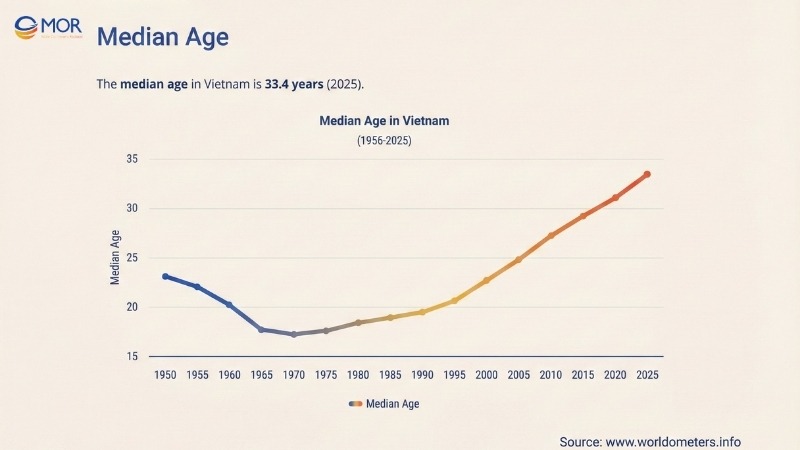
Vietnam’s median age sits at 33.4, which gives the country a steady stream of early-career and mid-level engineers. Most enter the market with strong digital habits and adapt quickly to new tools and workflows. Companies that plan to build technical teams in Vietnam can scale fast without running into hiring bottlenecks.
Hardworking and Reliable Professionals
Vietnamese engineers are known for consistency and focus. Teams show strong ownership of their work and follow through on delivery. HRM Asia highlights their loyalty and practical ‘get-it-done’ mindset, traits that matter when projects stretch over long timelines. For global companies, this means fewer disruptions and steadier output.
Solid Technical Education Pipeline
Technical education remains a national priority. Vietnam produces roughly 50,000 to 57,000 IT graduates each year and maintains a total engineering workforce of about 530,000 professionals. Nearly one third of students choose STEM paths. Graduates from universities like HUST, UIT, HCMUS, FPT, and HCMUT continue to strengthen the overall talent base.
Experience in In-Demand Specialties
Vietnamese developers work across AI, cloud systems, blockchain, analytics, and QA. Major hubs such as Ho Chi Minh City, Hanoi, and Da Nang supply engineers who are proactive, independent, and comfortable working with overseas teams.
Vietnam’s Business Landscape
Beyond talent, Vietnam provides conditions that support long-term outsourcing relationships.
Political and Social Stability
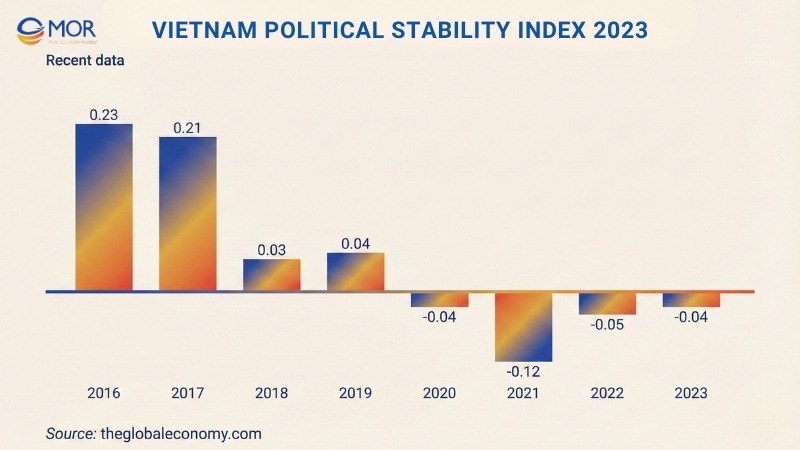
Vietnam maintains a stable operating environment for foreign businesses. Its political stability score in 2023 stood at -0.04, reflecting predictable conditions compared with many regional markets. This stability helps reduce uncertainty for long-term partnerships.
Open and Supportive Investment Climate
Free-market policies and broad trade agreements continue to attract foreign capital. In 2024, Vietnam recorded USD 38.2 billion in registered FDI, with USD 25.3 billion already implemented. This flow supports steady growth across IT outsourcing and BPO services.
Low Workforce Turnover
Workforce stability remains another advantage. VietnamNet reports that 75 percent of companies avoided layoffs, while nearly half saw attrition limited to 1 to 10 percent. For international clients, this translates into fewer handovers and more consistent team continuity.
English and Communication Fit
Clear communication plays a big role in outsourcing success. Vietnamese development teams continue to close the gap with global clients.
Time Zone Alignment That Supports Collaboration
Vietnam sits in the GMT+7 time zone, which works well for both APAC and Western teams. This setup allows overlapping work hours, faster feedback loops, and near round-the-clock progress on active projects.
Improving English Skills and Business Awareness
Vietnam ranks 63rd out of 116 countries for English proficiency. Beyond language basics, many developers understand Western work culture, reporting styles, and collaboration norms. That familiarity reduces friction during planning, reviews, and daily delivery, making cross-border teamwork easier to manage.
If you want to explore this topic deeper, you can check our article on Why Vietnam is ideal for software development.
Types of Outsourcing Models
Vietnam software outsourcing gives you several ways to build and scale your team. Each model fits a different type of project, budget, and working style. You might need long term support, short cycles, or extra hands for a tight release. The models below help you match your plans with the right setup. They also help you decide how much control you want to keep in house and how much you want your vendor to handle. Most companies try more than one model as their product grows. You can do the same as you figure out what works best for your roadmap.
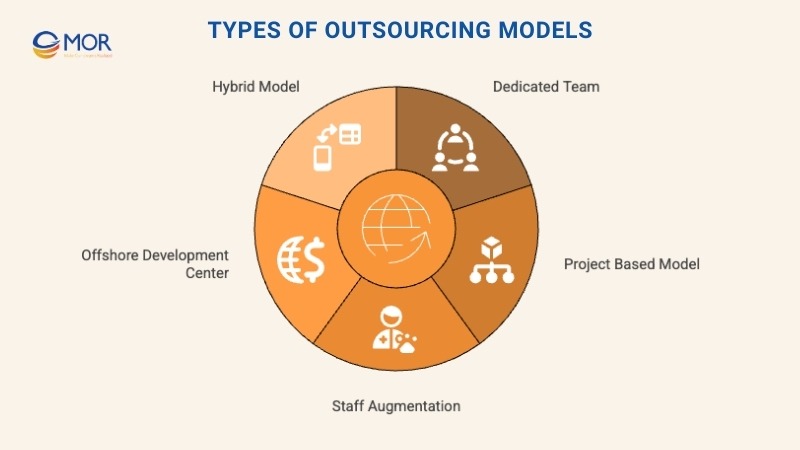
Dedicated Team
A dedicated team works only on your product. You treat them like an extension of your internal group. They join your standups, pick up your tools, and follow your sprint routines. This setup feels close to hiring full time staff, but without long HR cycles.
Advantages
- Strong continuity and growing product knowledge over time.
- Easy to scale based on your roadmap and release plans.
- High alignment with your workflow and culture.
Disadvantages
- Needs strong planning and clear communication on your side.
- Not ideal for short or fixed scope builds.
Best for: Long term development, SaaS products, enterprise work, and projects with ongoing updates. Many teams use this model when they want steady output while keeping strategy in house.
Project Based Model
This model gives you a clear scope, timeline, and cost from day one. The vendor handles the full lifecycle from discovery to launch. You check progress, give feedback, and wait for delivery.
Advantages
- Cost and timeline are fixed at the start.
- You spend less time managing day to day work.
Disadvantages
- Limited room for new ideas once the scope is locked.
- The final result depends on how well the early plan was written.
Best for: MVPs, websites, small modules, rebuilds, and jobs with stable requirements. It also fits companies that want predictable spending without long sprints.
Staff Augmentation
IT staff augmentation adds external engineers to your team. They follow your lead and join your existing structure. This helps when you lack certain skills or need short term support.
Advantages
- Quick capacity increases without long hiring cycles.
- Full control stays inside your company.
- Great for adding skills like QA, DevOps, mobile, or AI.
Disadvantages
- Needs strong onboarding.
- Productivity drops if coordination is weak.
Best for: Teams with a solid base that only need support during peak loads. It also works well when you want to keep direction in house while adding new skills.
Offshore Development Center (ODC)
An ODC gives you a stable, long term engineering unit in another country. The vendor runs staffing and operations. You handle goals and product direction. Many companies pick offshore development Vietnam models to scale without high domestic costs.
Advantages
- Strong cost savings when you scale.
- High retention and long term product memory.
- Flexible processes based on your needs.
Disadvantages
- Needs strong governance and security rules.
- Takes time for the team to reach full speed.
Best for: Fast growing companies, large systems, and multi year programs. It works well when you want a stable tech base outside your home country.
Hybrid Model
The hybrid model mixes two or more setups. You might keep a dedicated team, add staff augmentation during bigger cycles, and assign fixed scope tasks to a project based unit. This gives you more freedom to adjust your structure.
Advantages
- Strong flexibility and custom setups.
- Helps you balance cost, speed, and control.
Disadvantages
- Needs clear roles to avoid overlap.
- Coordination becomes harder with more moving parts.
Best for: Large companies, multi product groups, and teams with steady workloads across several streams. It also works for firms that shift between research, fast delivery, and maintenance.
Vietnam software outsourcing supports every model above with mature vendors and broad talent supply. If you want a closer breakdown, you can read our guide on types of software development outsourcing models.
Offshore vs Nearshore vs Onshore Outsourcing
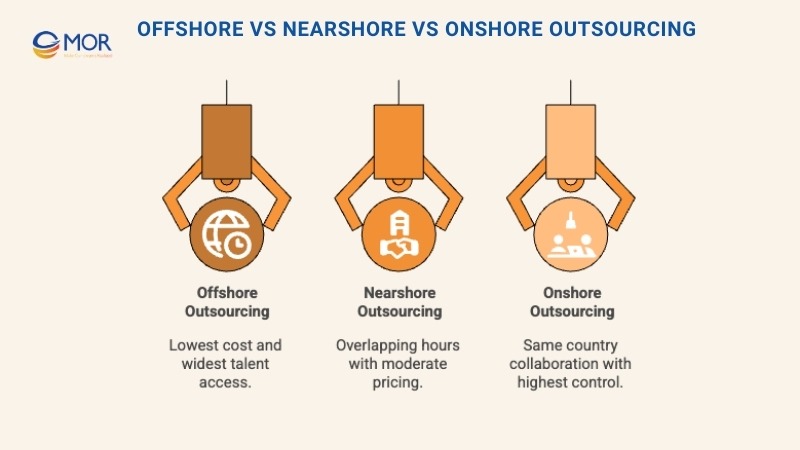
Your outsourcing location shapes your cost, your work rhythm, and your delivery speed. Many companies compare offshore, nearshore, and onshore models when planning Vietnam software outsourcing because each model fits a different style of work. Some teams want the lowest cost. Others want close time zone overlap. Some want strict control with fast feedback. Your choice depends on the type of product you build and how you prefer to run your team. The breakdown below helps you see the strengths and tradeoffs of each path.
Offshore Outsourcing
This model means your software team sits in a distant country with a wide time zone gap. You gain access to large talent pools and lower development costs, which makes it popular for long roadmaps and scaling fast.
Advantages
- Lowest cost among the three options due to more affordable labor markets.
- Access to a large talent pool that supports long term growth.
- Easy to scale when your roadmap gets bigger.
Disadvantages
- Time zone gaps slow down quick replies.
- Cultural or language gaps may require stronger project control.
- Needs clean processes to keep output stable.
Nearshore Outsourcing
This model places your team in a nearby country with overlapping time zones. You still save money, but you also enjoy faster real time collaboration thanks to closer geographic distance.
Advantages
- Real time communication is much easier.
- Better cultural and business alignment.
- A good middle path when you need cost control without long delays.
Disadvantages
- Not as cost friendly as offshore.
- Talent pool depends on the size of the region.
Onshore Outsourcing
This model keeps your vendor inside your own country. Your team and the vendor share the same time zone, business culture, and legal rules, which helps complex or sensitive projects move smoothly.
Advantages
- Strongest control and the fastest communication.
- Simple compliance and data protection.
- Great for projects with high security needs.
Disadvantages
- Highest cost of the three models.
- Harder to scale large teams quickly.
Cost, Quality, and Time Comparison
Each model shifts how you manage cost, communication, and access to talent. The table below shows how they stack up.
Model | Cost Level | Collaboration & Time Zone | Talent Access | Best Use Case |
Offshore | Low | Challenging, delayed | Very large pool | Scaling, cost efficiency |
Nearshore | Medium | Smooth, overlapping hours | Good regional pool | Agile cycles, daily communication |
Onshore | High | Easiest and fastest | Depends on local market | High security, complex coordination |
Choosing the right outsourcing style depends on how you work and what your product needs. Offshore helps you save cost and scale wide. Nearshore gives you closer communication without onshore pricing. Onshore fits teams that want full control from day one.
Vietnam vs India Outsourcing Comparison
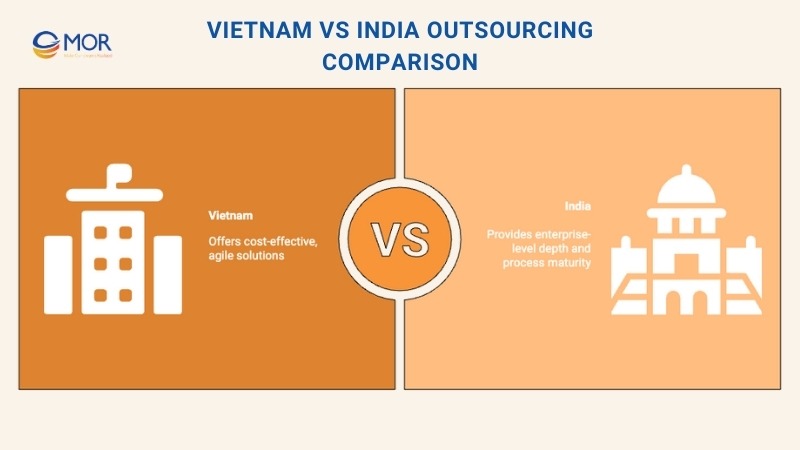
Vietnam software outsourcing often gets compared with India because both countries give you strong engineering talent and fair pricing. Each market brings something different to the table. Your choice depends on your budget, the type of product you build, and how your team likes to work. Many companies look at cost first, then think about skills, time zones, and delivery style. These points between Vietnam vs India help you see where each country fits within software development outsourcing Vietnam projects or larger global programs.
Cost Comparison
Vietnam usually gives you slightly lower rates for mid level and senior engineers. This matters when you want stable quality without blowing your budget. Companies that plan long sprints or multi year work see a clear advantage here. India is still cost friendly, but prices in major hubs rise quicker due to high demand and long market maturity. You get value in both places, but Vietnam IT outsourcing often feels more balanced for small and mid sized teams.
Talent and Tech Stack
India has one of the largest developer pools in the world. Many engineers there work on legacy systems, enterprise software, and massive migration projects. This helps companies that need deep technical coverage across old and new stacks.
Vietnam’s talent pool is smaller but younger. Engineers learn fast and work well with modern tools. You see strong skills across mobile, cloud native apps, web systems, DevOps, and AI. Many Vietnam outsourcing companies build teams focused on startups and fast growing scale ups. This creates a natural fit for product oriented work that moves quickly.
Time Zone and Collaboration
Vietnam sits in GMT+7, which gives you smooth overlap with Japan, Korea, Singapore, and Australia. Teams in Europe also get a workable window for calls. India at GMT+5:30 still supports global work, but Vietnam often lines up better for East Asia and ASEAN markets.
Communication styles differ too. India has long experience serving Western clients. Vietnam tends to focus on short, clear messages, quick replies, and tight coordination. Many teams prefer this style for sprints that move fast.
Process Maturity
India has decades of outsourcing experience. Large vendors follow CMMI, ISO, and strong enterprise rules. This helps with high scale delivery and complex programs.
Vietnam is newer but moves quickly. Many vendors follow ISO standards and work with modern agile practices. Teams stay flexible and collaborative, which suits product companies that change direction often.
Comparison Table: Vietnam vs India
Below is a short view of how the two countries compare across key points.
Criteria | Vietnam | India |
Cost | Lower overall, especially mid senior roles | Competitive, but higher in major tech hubs |
Talent Pool | Smaller but young, fast learning, product oriented | Very large, experienced across enterprise systems |
Tech Stack Strength | Modern stacks like mobile, web, cloud, AI, DevOps | Broad mix including legacy, enterprise, cloud |
Time Zone | GMT+7, great for Asia and part of EU | GMT+5:30, wide global reach |
Process Maturity | Growing fast with strong agile culture | Highly mature outsourcing market |
Best For | Startups, scale ups, modern tech builds | Enterprise scale and legacy modernization |
Both countries help you build quality teams. Vietnam works well if you want modern engineering, strong pricing, and fast collaboration. India fits better when you need very large teams or deep enterprise experience.
Top Vietnam Software Outsourcing Companies (Category-Based)
Vietnam software outsourcing covers a wide range of company types, so the experience you get depends on the group you pick. Large vendors feel steady and structured. Mid size teams balance price and speed. Smaller firms move fast and stay close to your product. This category view makes it easier to match your goals with the right partner. It also reflects how most buyers filter Vietnam IT outsourcing options when they need long term work or a fresh product build.
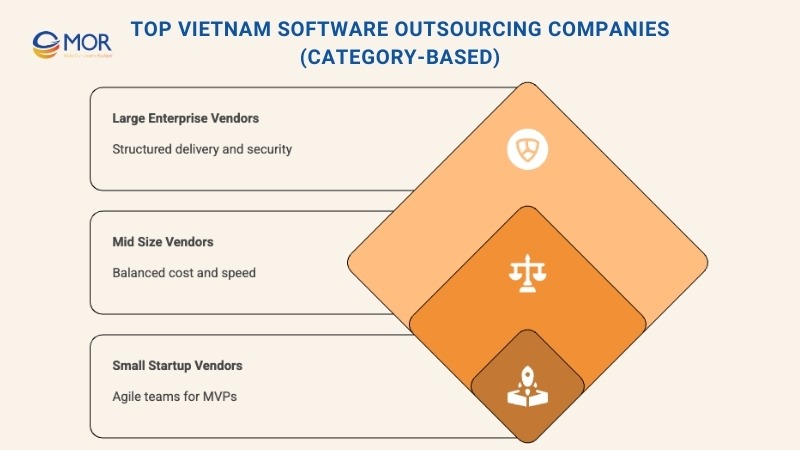
If you plan to scale later, this breakdown helps you judge which group fits your expected growth path. Many companies start with a small team then shift to a mid size vendor once their roadmap expands. Others who manage big systems go straight to enterprise vendors. The table below gives you a clear snapshot of how each category works.
Comparison Table: Large vs Mid-Size vs Small Outsourcing Companies in Vietnam
Category | Typical Company Size | Cost Level | Best For | Process & Delivery | Tech Capability | Example Companies (Full List) |
Large Enterprise Vendors | 1000–5000+ engineers | 5.000–6.000 USD | Large enterprise, large team (30+ members) multi-team systems | CMMI & ISO, strong security, structured governance, parallel delivery units | Cloud, AI, data engineering, enterprise stacks, SAP | FPT Software, TMA Solutions, NashTech, KMS Technology, CMC Global |
Mid-Size Vendors | 200–800 engineers | 3.500–4.000 USD | Scale-ups, product companies, SMB enterprise, MVPs, PoC | CMMI & ISO, fast onboarding, balanced delivery, flexible models, clear communication | Web, mobile, AI and ML, cloud-native, QA | MOR Software, Sotatek |
Small or Startup-Focused Vendors | 20–150 engineers | 3.000–3.500 USD | Startups, rapid prototyping, early product cycles | Agile-first, short delivery loops, high adaptability | Mobile apps, UX, quick product builds | InApps, AgileTech |
Case Studies From Vietnam Companies
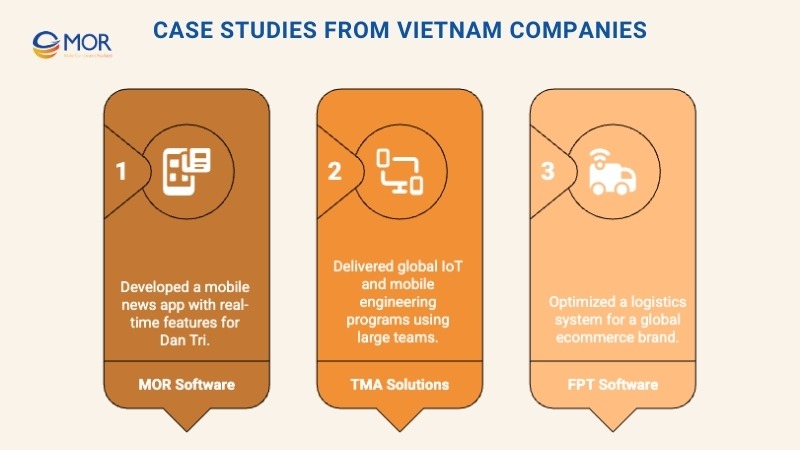
Real projects show how Vietnam software outsourcing performs under pressure. The three case studies below highlight different strengths across mobile development, IoT work, and large scale enterprise systems. Each case gives you a clearer view of how Vietnam teams handle complex tasks, long timelines, and high user demand. These stories also show how vendors support clients with steady delivery and practical engineering choices, which matters when you plan long term work in software development outsourcing Vietnam programs.
MOR Software – Digital News Mobile App for Dan Tri
MOR Software worked with Dan Tri, one of Vietnam’s biggest online news outlets, to build a mobile platform for millions of readers. The team used Swift, Kotlin, .NET, and Python to shape a fast, stable app with real time notifications and flexible layouts. Social sharing tools helped Dan Tri reach more readers and stay active across channels. A team of ten engineers worked on the app for twenty four months. Traffic rose and engagement improved once the app went live. This case shows how Vietnam software outsourcing companies handle high load mobile systems that need constant updates.
TMA Solutions – Global Mobile and IoT Engineering
TMA Solutions employs around four thousand engineers and runs offices across several regions. Their teams work on IoT systems, mobile apps, R&D projects, and enterprise platforms. Clients in the US, Canada, Europe, and APAC trust TMA for long cycle work. These projects often mix hardware, software, and ongoing system support. This track record shows how Vietnam IT outsourcing scales for complex global projects with diverse requirements.
FPT Software – Logistics Optimization for a Global E Commerce Enterprise
FPT Software helped a global ecommerce brand rebuild its logistics platform. The new system increased order processing speed and lowered daily costs. Their engineers handled large scale integration and reshaped the workflow to match growing demand. This case proves how Vietnam teams support enterprise clients that need stability and measurable gains.
If you want guidance for your own project, you can get our free consulting session and receive a clear roadmap for your build.
Pricing and Cost Benchmark
Vietnam software outsourcing gives you strong technical talent at a fair price. Rates stay stable across seniority levels, which helps you plan long sprints or full product cycles without budget stress. Many companies track software outsourcing costs Vietnam early in their planning phase because it helps them manage budgets and still secure solid engineering work. The numbers below give you a clear view of typical hourly rates and a sample project cost, so you can estimate your own budget with more confidence.
Snapshot of Hourly Rates in Vietnam
You may want a quick view of how roles are priced before planning your team. These numbers give you a simple baseline for Vietnam software outsourcing rates.
- Junior Developer: 10–18 USD per hour
- Mid Level Developer: 18–35 USD per hour
- Senior Developer or Specialist: 35–55 USD per hour, higher for cloud, AI, or architecture work
- QA, BA, PM: 20–45 USD per hour
These ranges help you build balanced teams that support fast delivery without overspending. Many Vietnam IT outsourcing teams mix junior and mid level engineers with one or two seniors to keep velocity steady and cost low.
Project Cost Benchmark Table
The table below shows how these rates align with typical workloads. It helps you understand how each role contributes to the full build.
Role / Level | Hourly Rate (USD) | Typical Workload Description |
Junior Developer | 10–18 | Basic coding, small modules, support tasks |
Mid Level Developer | 18–35 | Full features, backend services, integrations |
Senior Developer or Architect | 35–55+ | System design, scalability planning, complex tasks |
QA, BA, PM | 20–45 | Testing, requirement work, delivery support |
Sample Project Cost Illustration
Below is a rough estimate for a mid size product built in four months with a balanced team. This setup fits many Vietnam outsourcing companies that support mobile or web projects.
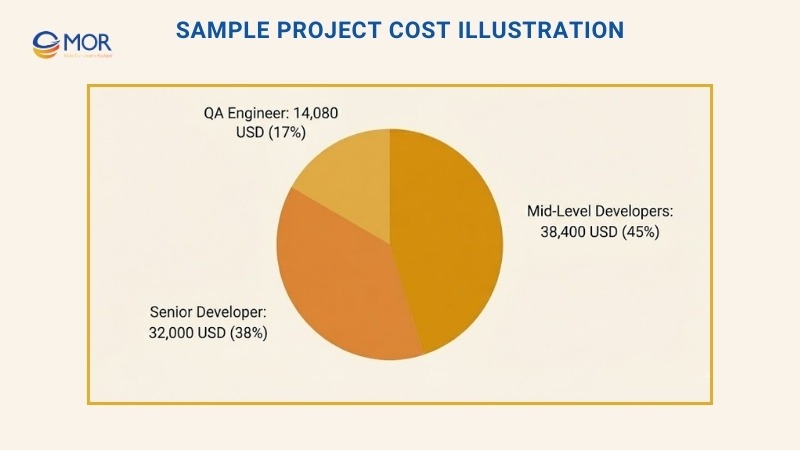
Team Setup
- 1 Senior Developer
- 2 Mid Level Developers
- 1 QA Engineer
Assuming 160 hours per month, per role
Role | Rate (USD/hour) | Total Hours | Cost (USD) |
| Senior Developer | 50 | 640 | 32,000 |
| Mid Level Developers (x2) | 30 | 1,280 | 38,400 |
| QA Engineer | 22 | 640 | 14,080 |
| Total Estimated Cost: 84,480 | |||
Vietnam’s pricing structure gives you room to plan long term work without losing control of your budget. You can explore more details in our cluster guide on Vietnam IT consultant daily rate.
How to Choose the Right Outsourcing Partner in Vietnam?
Picking the right partner shapes the success of your Vietnam software outsourcing plan. You want a team that fits your product goals, your work style, and your budget. A clear checklist helps you avoid mismatches and keeps your project on track from day one.
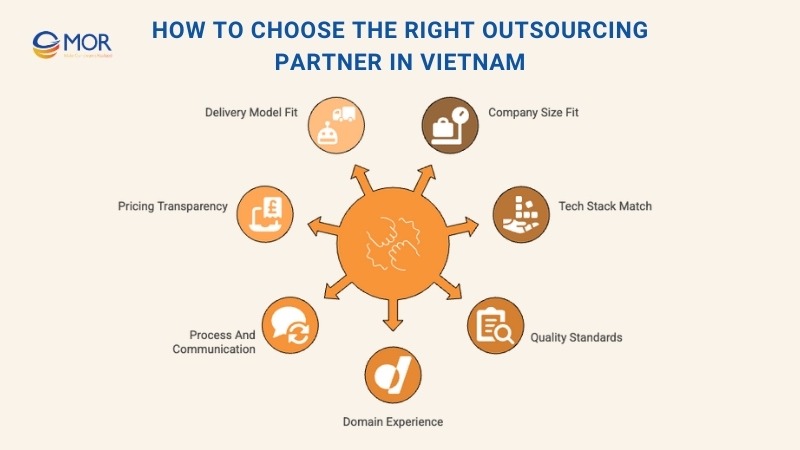
- Company size: Look at how big the vendor is and how they staff long term work. Large vendors fit enterprise scale projects. Mid size vendors support product teams that want steady delivery. Small vendors suit MVPs and early stage ideas.
- Tech stack strength: Check whether the team works with the tools your product needs. Many software development outsourcing Vietnam teams cover web, mobile, cloud, and AI. Make sure their core skills match your roadmap rather than forcing new tools on your project.
- Certifications and quality standards: ISO or CMMI signals stable processes and consistent delivery. These standards matter when you work with large teams or handle sensitive data.
- Domain experience: Vendors with past projects in your field understand your rules faster. This helps when you work in fintech, healthcare, ecommerce, logistics, or other regulated areas.
- Process and communication style: Ask how they run sprints, track progress, and handle risks. Strong Vietnam IT outsourcing teams use clear communication, short feedback loops, and structured delivery.
- Pricing clarity: Transparent rates and clean estimates help you plan budgets. Good vendors explain what is included so you avoid cost surprises later.
- Delivery model match: Decide whether you need a dedicated team, staff augmentation, a project based model, or an ODC. Some Vietnam outsourcing companies work across all models, while others specialize in a single one.
Choosing your partner is easier when you compare vendors against this list instead of judging on price alone. A partner who fits your goals, process, and roadmap gives you stronger long term results and a smoother working relationship.
Can AI Replace Software Outsourcing?
AI keeps changing how companies build software. Many tasks that once needed hours now finish in minutes. Tools write code, scan for bugs, and run deployments with little manual work. This shift makes teams faster, but it also raises a fair question for anyone planning Vietnam software outsourcing. Will AI replace software developers?
Current AI Capabilities
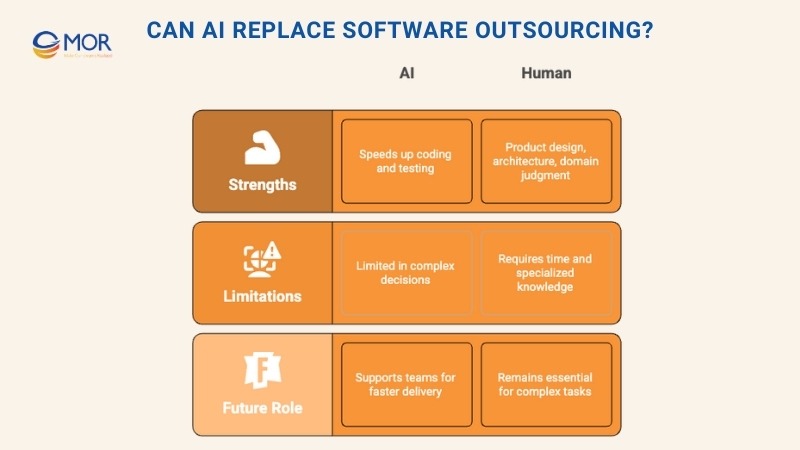
AI helps with coding, code review, testing, and deployment tasks. Tools like GitHub Copilot and ChatGPT Code write functions, suggest improvements, and clean up complex logic. AI driven QA tools scan large codebases and spot issues early. These tools help outsourcing teams move through sprints faster and reduce time spent on routine tasks.
Limitations of AI vs Human Outsourcing Teams
AI still has clear limits. It struggles with deep domain work in finance, healthcare, or fintech where rules shift often. It cannot brainstorm with you or design full product flows that match user needs. AI misses the human judgment needed to run projects, make tradeoffs, or adjust plans when requirements change suddenly. Outsourcing teams stay important for complex and collaborative projects that need real discussion and steady leadership. This includes long term programs, high security systems, and anything tied to strict compliance.
Hybrid Model: AI + Outsourcing
Many companies now use a hybrid approach. AI handles routine coding, testing, and DevOps tasks. Engineers focus on core logic, architecture, and problem solving. This model helps Vietnam IT outsourcing teams finish sprints faster and cut down on manual work. It also makes it easier to scale without hiring large teams. The hybrid model feels natural because AI supports the team instead of replacing it.
Takeaway for Businesses
These points sum up how AI fits into real software work and what you can expect when you blend it with skilled engineering teams.
- AI adds speed, not full replacement. It handles routine work but cannot match human judgment in complex builds.
- Best results come from a blended model. AI tools support engineers, but skilled teams still guide architecture, planning, and delivery.
- You gain stronger output. Code quality improves, cycles shorten, and decisions stay grounded in real product needs.
- Your roadmap stays steady. The mix of AI support and human expertise keeps projects stable and moving in the right direction.
Next Steps to Start Your Vietnam Outsourcing Journey
If you plan to build or scale your product this year, Vietnam software outsourcing gives you a strong path forward. You can download our full eBook to understand models, pricing, and vendor selection at a deeper level. If you want guidance for your own roadmap, you can contact our team for a consultation. We will review your goals, suggest the right model, and help you plan a clear next step for your build.
MOR SOFTWARE
Frequently Asked Questions (FAQs)
Why outsource software development to Vietnam?
Vietnam gives you strong engineering skills, fair pricing, and smooth collaboration. Many companies choose it for long term builds. You can explore more in our cluster on Vietnam outsourcing companies.
How much does software outsourcing in Vietnam cost?
Rates range from 10 to 55 USD per hour depending on seniority. Vietnam IT hourly rates stay stable across roles. See our pricing guide for more details.
Are Vietnam developers skilled in modern tech stacks?
Yes. Teams work with mobile, web, cloud, AI, and DevOps. Many vendors focus on product oriented builds. You can read more in our tech capability cluster.
Which vendor size is best for startups?
Small and mid size teams suit MVPs and early stage builds. They move fast and adapt well. Our category guide explains this in detail.
Which vendor size fits enterprise needs?
Large vendors support ODC models, strict security, and multi team delivery. They fit long term enterprise work.
Can Vietnam teams handle AI or cloud projects?
Yes. Many teams cover AI, ML, and cloud native systems. They support complex projects across industries.
How do I pick the right outsourcing model?
It depends on your timeline, budget, and internal capacity. Our guide on outsourcing models breaks each one down.
Is English communication strong in Vietnam outsourcing teams?
Most PMs and engineers use English daily. Calls and handoffs stay clear and direct.
Can AI replace outsourcing teams?
AI supports coding and QA, but human teams still handle design, planning, and collaboration. Our AI section explains the hybrid model.
Share


Make Our-Dreams Realized


© 2023 . MOR Software. All Rights Reserved
Sitemap
Privacy Policy
Terms of Use

Rate this article
0
over 5.0 based on 0 reviews
Your rating on this news:
Name
*Email
*Write your comment
*Send your comment
1