


Custom Blockchain Software Development: Businesses Guide 2026
Custom blockchain software development is no longer an experiment. Many businesses struggle with rigid platforms, security gaps, and systems that fail to scale with real operations. This creates risk, wasted budget, and stalled products. In this guide, MOR Software will explain how custom blockchain development solves these problems, what to build, what it costs, and how businesses can move forward with confidence in 2026.
What Is Custom Blockchain Development?
Custom blockchain software development refers to the creation of blockchain-based applications, platforms, or ecosystems that are designed around a company’s specific operational and business requirements. Rather than depending on ready-made frameworks, organizations can build their blockchain architecture from the ground up, covering consensus mechanisms, smart contracts, token models, and governance structures.
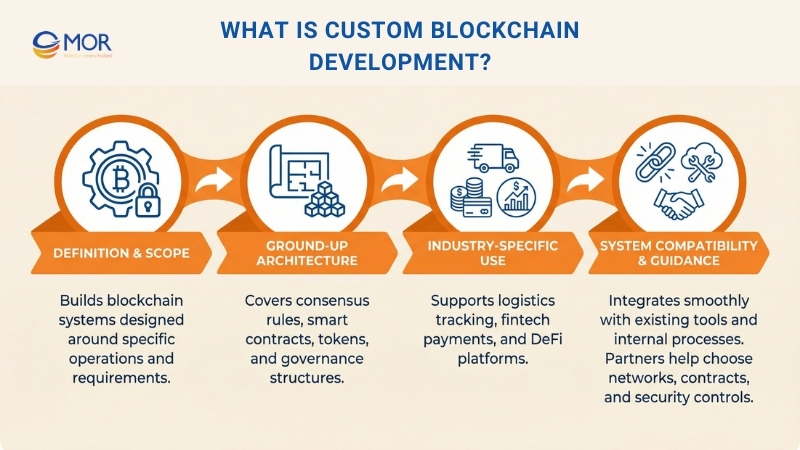
For example, a logistics company may require a blockchain system that supports transparent shipment tracking, while a fintech startup might need a blockchain-powered payment gateway or a DeFi protocol. Through custom blockchain development, businesses can make sure this type of system works smoothly with their existing tools and internal processes.
A professional enterprise partner supports this development approach by helping businesses select the right setup, whether public, private, or hybrid, create tailored smart contracts, and apply security controls that match real-world risk and compliance needs.
Why Do Businesses Invest In Custom Blockchain Software Development?
Every industry deals with its own set of challenges, from protecting data accuracy to building trust across partners and customers. Ready-made blockchain platforms often lack the flexibility needed to respond to these specific demands.
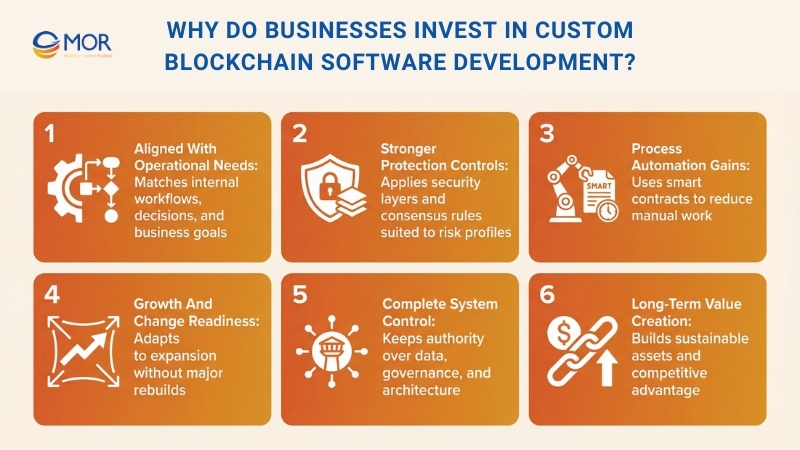
This is why custom blockchain software development continues to attract business investment:
- Aligned With Operational Needs: Tailored blockchain software is created to match your internal workflows, decision paths, and business objectives.
- Stronger Protection Controls: This development approach allows the use of advanced security layers and custom consensus rules that suit your risk profile.
- Process Automation Gains: The solution supports automated operations through tailored smart contract development, reducing manual effort.
- Growth And Change Readiness: The platform can adapt as your organization expands or shifts direction, without major rebuilds.
- Complete System Control: Unlike shared platforms, you maintain authority over data, governance rules, and the overall architecture, which many blockchain development solutions cannot fully provide.
Custom Blockchain Software Development Vs Standard Blockchain Solutions
Standard blockchain options usually follow a single, fixed model, while custom blockchain software development gives businesses more freedom and direct control. This type of solution can be shaped to connect with existing systems, improve performance, meet regulatory rules, and address security and privacy needs that generic options often fail to cover. It also allows teams to approach blockchain solutions development with clearer alignment to real operational goals.
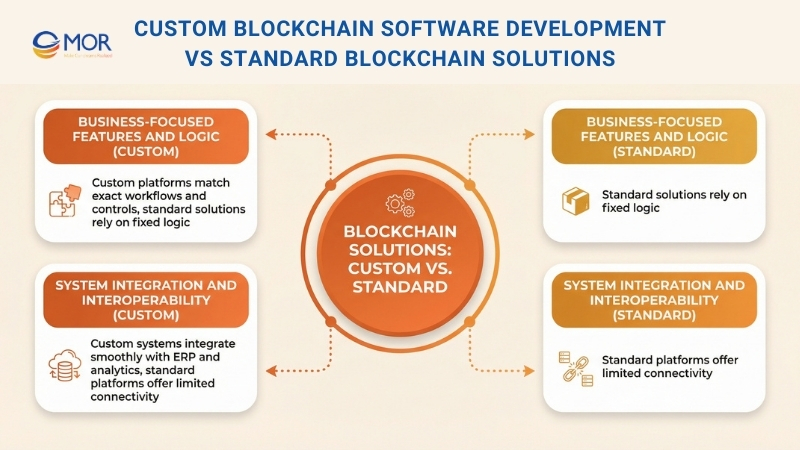
Business-Focused Features And Logic
Bespoke blockchain platforms are created to match business-specific needs through features and logic that standard products rarely support. These systems are built to handle unique operational challenges, improve internal processes, and support long-term competitiveness. A company may choose custom enterprise blockchain development to manage complex supply chain workflows, where transparency, traceability, and control matter at every stage from sourcing to delivery.
A key benefit of this type of system lies in its ability to reflect exact business requirements. A financial organization may need stronger protection methods like advanced encryption and multi-signature approvals to secure sensitive data. In a similar way, a healthcare provider may require a platform that aligns with strict regulations like HIPAA, which demand careful handling of patient information and access rights.
These platforms also support smart contracts that automate routine operations, lower reliance on manual work, and reduce the chance of human mistakes. Contract logic can trigger actions when set conditions are met, helping with payments, settlements, and compliance reviews. This automation improves speed while maintaining accuracy and consistency across transactions.
Beyond these capabilities, tailored blockchain systems can include custom consensus models that fit business priorities, whether they focus on energy use, transaction speed, or security. This flexibility helps organizations balance performance and cost. They can also support different token structures, allowing teams to issue and manage digital assets or internal tokens that align with operational goals.
System Integration And Interoperability
Integration capability is a core requirement when deploying custom blockchain software development within established IT environments. For a rollout to work well, the platform must connect smoothly with legacy systems and business applications, expanding blockchain value without disrupting daily operations. Tailored blockchain systems often include APIs, or Application Programming Interfaces, that simplify integration across different tools. These interfaces enable communication between applications and the chain, supporting data exchange and task execution without manual handling. A typical case involves linking the platform with an ERP system, which can strengthen data accuracy and security across operational workflows.
Integration also reaches analytics platforms, allowing organizations to extract practical insights from on-chain activity. When the system connects with advanced reporting tools, teams can track transactions in near real time and support informed planning decisions. This setup also helps with compliance reporting and audit readiness, which matter in tightly regulated sectors. A well-connected architecture, similar to those seen in custom enterprise software development, lets businesses roll out blockchain in stages. Teams can begin with selected processes, expand gradually, and validate performance in real operating conditions before a wider launch.
Examples Of Custom Blockchain Software Development
Many industries have adopted custom blockchain software development to address specific operational demands and business goals. In the finance sector, tailored blockchain systems have been introduced to simplify payment flows, strengthen security, and support regulatory compliance. Ripple, a well-known name in this field, provides a blockchain-based payment protocol that supports fast and secure cross-border transactions.
Within supply chain operations, IBM has launched a bespoke blockchain platform known as IBM Food Trust. This system focuses on improving traceability and safety for food products. It enables participants across the supply chain, including farmers, processors, distributors, and retailers, to access trusted data about product origin and condition, which helps improve food safety and limit waste.
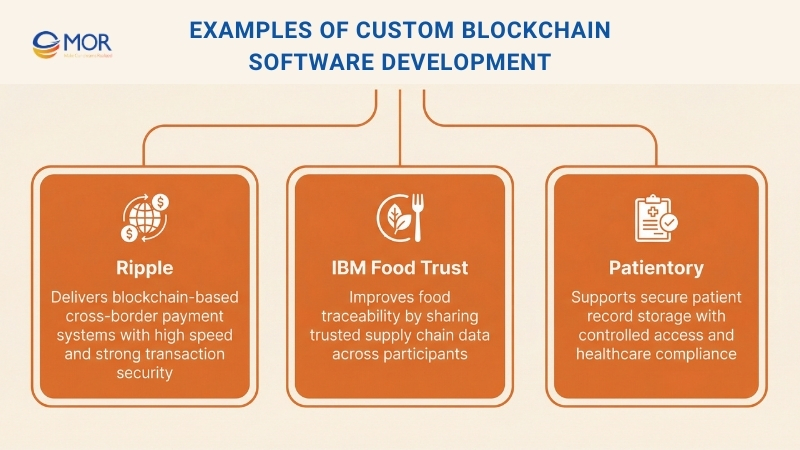
Healthcare also presents strong use cases for this type of system. In this sector, custom blockchain application development supports secure and efficient patient record management. Patientory delivers a blockchain-based platform that helps healthcare organizations store and manage medical data securely. It keeps patient records private and limits access to approved users, supporting privacy standards and regulatory compliance.
Together, these cases highlight how tailored blockchain platforms can support change across different industries through solutions designed for specific challenges. As the technology continues to mature, more sectors are expected to adopt this approach, driving wider use and continued innovation.
Core Components Of Custom Blockchain Software Development
Solutions built through custom blockchain software development rely on a mix of foundational technologies and advanced integrations. The main components are outlined below.
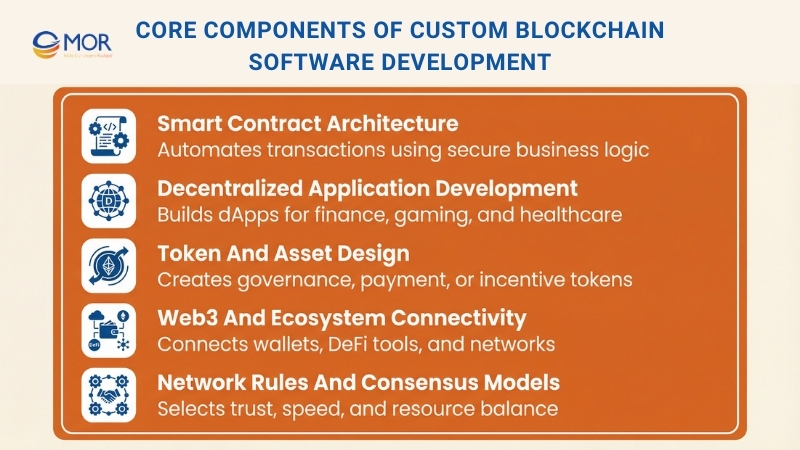
1. Smart Contract Architecture
Smart contracts are self-executing programs that run transactions automatically once predefined rules are met. Working with an experienced smart contract team helps make sure your contract logic is secure, reliable, and aligned with your business rules, which is a core part of professional blockchain development services.
2. Decentralized Application Development
Decentralized applications, often called dApps, sit at the center of most blockchain ecosystems. Custom blockchain app development supports the creation of decentralized platforms for areas like finance, gaming, supply chains, and healthcare, allowing smooth interaction between user interfaces, smart contracts, and the underlying network.
3. Token And Asset Design
Tailored blockchain systems often include native tokens used for governance, payments, or incentive models. These tokens may represent digital assets, utility access, or real-world items like property, depending on how the platform is designed.
4. Web3 And Ecosystem Connectivity
Modern blockchain platforms connect with decentralized web infrastructure through Web3 tooling. This connectivity allows applications to link with wallets, DeFi protocols, and cross-chain networks, supporting a consistent and accessible user experience across ecosystems.
5. Network Rules And Consensus Models
Organizations can choose from different consensus models, including Proof of Stake, Proof of Authority, or Delegated Proof of Stake, based on their security needs and performance goals. This choice helps balance speed, trust, and resource use within the overall architecture.
Common Platforms Used In Custom Blockchain Software Development
Selecting the right network is a key decision when planning custom blockchain software development. The platforms below are among the most widely used options for business-focused builds.
1. Solana
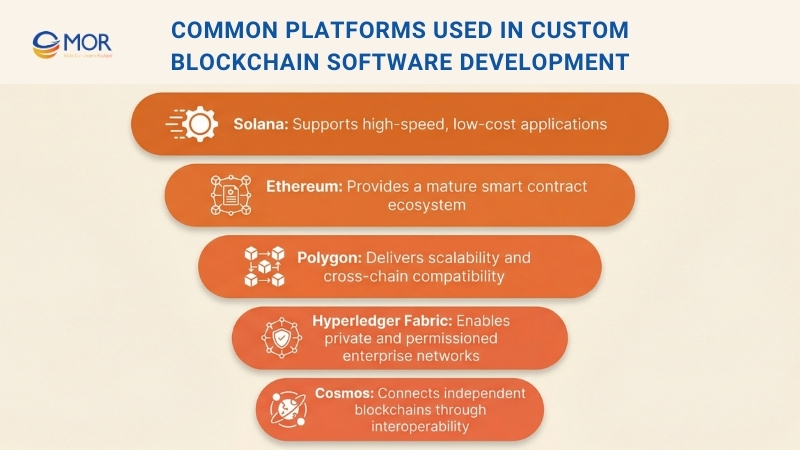
A Solana development partner typically focuses on high-speed applications that need strong scalability and very low transaction fees. Its fast processing makes this network well suited for gaming projects, DeFi use cases, and NFT-based ecosystems.
2. Ethereum
Ethereum remains the most widely adopted platform for smart contracts. It provides a mature ecosystem for building decentralized finance tools, DAOs, and a wide range of dApps used in tailored blockchain systems.
3. Polygon
Recognized for scalability and lower operating costs, Polygon is often chosen for enterprise-grade applications and projects that require cross-chain compatibility without sacrificing performance.
4. Hyperledger Fabric
Hyperledger Fabric is a strong option for organizations that need private networks and controlled access. It supports secure business data handling within enterprise blockchain solutions.
5. Cosmos
Designed for interoperability, Cosmos enables independent blockchains to connect and share data across networks in a structured way.
Each option fits different technical and business goals. A trusted blockchain development company in USA can help you evaluate these platforms and select the one that best aligns with your operational needs and long-term plans.
Custom Blockchain Software Development Process Explained
Traditional databases and blockchain systems both store data in structured formats. The difference lies in how blockchains apply encryption to protect records from tampering or unauthorized access. This protection makes custom blockchain software development especially suitable for security-sensitive use cases in finance, supply chains, and healthcare. Many organizations choose to outsource blockchain development services to manage this complexity more effectively.
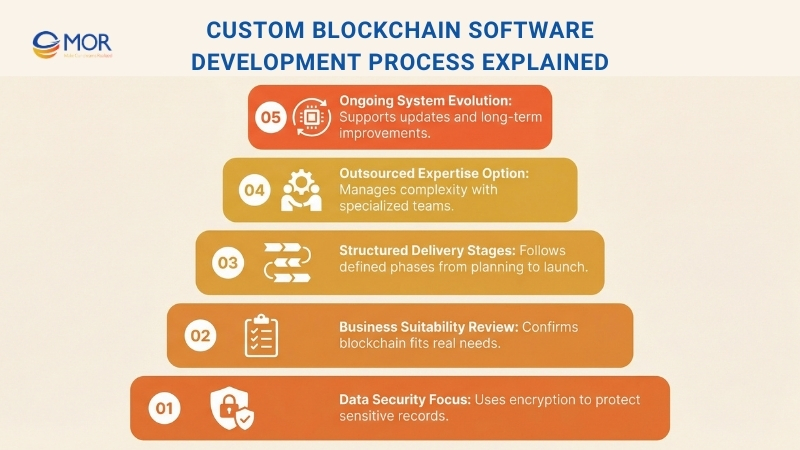
The blockchain software development process typically follows six key stages.
1. Define The Business Problem
The first step involves clearly defining the problem you want the blockchain system to solve and outlining the issues the solution must address. Before building an application from the ground up, you need to confirm that this approach meets your business requirements and that moving from an existing system to a blockchain-based one makes sense.
Once you are confident that a blockchain solution is necessary, you can move forward and select the most suitable platform for the project.
2. Choose The Blockchain Foundation
Designing a blockchain-based application from scratch often takes months or even years and requires careful research. Spending enough time at this stage helps confirm that the selected foundation supports your operational needs and long-term goals.
The next step is to decide which platform best addresses your challenges through its consensus model and technical capabilities. When building a decentralized system that relies on smart contracts, teams may choose an Ethereum-based setup as part of the overall architecture.
3. Design The Blockchain Concept
After selecting a blockchain platform, the focus shifts to defining business requirements and shaping the core concept. At this stage, teams outline functional needs and identify technical elements that fit into the broader ecosystem, supporting timely delivery and a clear roadmap. You also need to decide whether the network will be permissioned or permissionless before development begins. This choice supports smoother front-end work and helps deliver consistent results within the overall custom blockchain software development plan.
4. Proof-Of-Concept Stage
A proof of concept is required to show how a blockchain project works in practice. Teams can choose between a conceptual model or a design prototype at this point. When using a conceptual approach, clear scenarios help users understand feasibility and real-world value. Proposals define project boundaries and expected outcomes. Once the concept is validated, a prototype follows, including sketches, information structure, mock-ups, visual designs, and tested components that confirm the system can perform as intended.
5. System And Interface Design
After the application structure is defined, developers begin creating user interfaces for each software component. APIs connect the interfaces with backend logic, while visual design work gives the platform a clear and consistent look. Once all console elements and interface layouts are complete, the system is ready to move into the next phase of custom blockchain software development.
6. Development And Deployment
The final and most intensive phase is the build of the blockchain application itself. During this stage, teams implement core logic and integrate APIs to support the use cases defined earlier across different versions of the system.
After full testing is complete, the application moves into production and delivery preparation. Deployment on a test network takes place before public release to confirm that every feature performs as expected.
Launching the platform does not mark the end of the process. Ongoing maintenance is required to support updates, security adjustments, and future improvements as the system continues to evolve.
Industries Benefiting From Custom Blockchain Software Development
Solutions built through custom blockchain software development are changing how organizations handle efficiency, transparency, and security across many industries:
- Finance And DeFi: With support from a DeFi development company, businesses can create decentralized exchanges, lending systems, and yield-focused platforms that operate without central control.
- Healthcare: Blockchain systems help protect patient records from tampering and support clear, auditable data sharing between medical institutions.
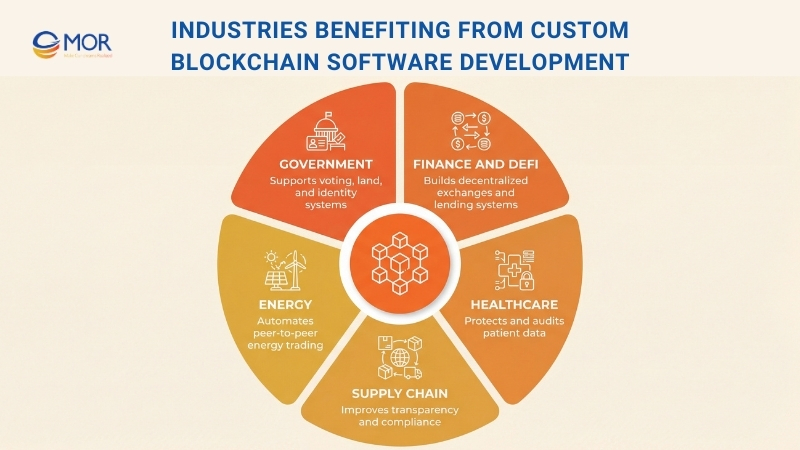
- Supply Chain: Enterprises gain real-time visibility into goods movement, which supports product authenticity and regulatory compliance.
- Energy: Smart contracts support automated peer-to-peer energy trading between producers and consumers.
- Government: Blockchain technology improves processes like digital voting, land registration, and identity verification.
When working with experienced blockchain consultants, organizations can identify high-value blockchain use cases that align closely with their operational needs and industry requirements.
Key Challenges In Custom Blockchain Software Development
Building a solution through custom blockchain software development comes with a distinct set of challenges that can test even skilled teams and mature organizations. Although blockchain technology offers strong potential across many industries, it includes complex technical layers that require careful planning and experienced execution to work effectively.
Technical Complexity
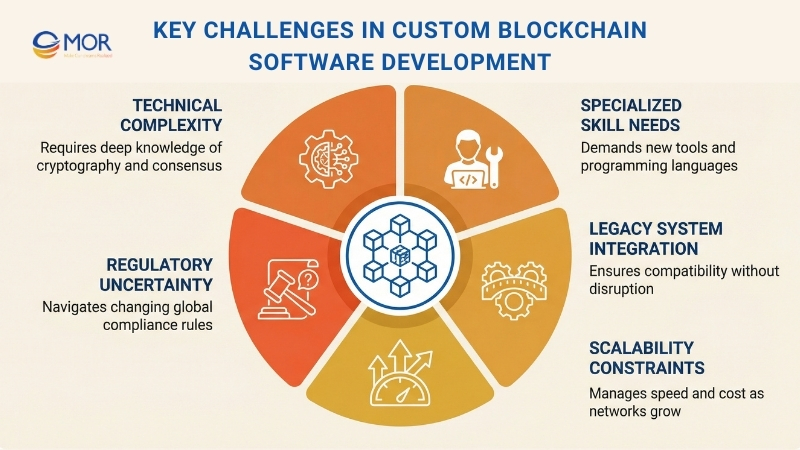
One of the main obstacles in custom blockchain software development is technical complexity. Blockchain systems differ greatly from traditional databases and require a solid understanding of core principles like cryptographic methods, consensus mechanisms, and smart contract design. Teams need strong skills in these areas to deliver a secure and reliable system.
In addition, blockchain work often requires learning specialized programming languages and tools. Ethereum, one of the most widely used platforms for decentralized applications, relies on Solidity for smart contracts. This requirement forces developers to adopt new languages and adjust to unfamiliar environments, which can increase the learning curve.
Connecting blockchain technology with existing IT systems introduces another major challenge. The new platform must work smoothly with legacy infrastructure without interrupting daily operations. Achieving this level of compatibility calls for detailed planning and strong technical coordination. It often involves deep customization and repeated testing, which adds further complexity to the overall development effort.
Scalability Constraints
Scalability remains a major challenge in this architecture. As blockchain networks grow, especially those that rely on proof-of-work models, transaction speed can drop and delays can increase. This happens because each transaction must be confirmed by many nodes, which slows processing as network participation expands.
For businesses, these limits raise real concerns. The platform must support high transaction volumes without performance loss, which is critical in sectors like finance and retail where speed and scale matter. Teams often evaluate scaling options like sharding, off-chain processing, or alternative consensus models such as proof-of-stake. These approaches help manage heavier workloads while maintaining acceptable security and response times.
Scaling also brings higher costs. As the ledger grows, the system requires more computing power and storage, which increases operating expenses. This can discourage small and mid-sized organizations from adopting this type of system or restrict how far they can expand it.
To sum up, although custom blockchain software development delivers clear benefits, it also introduces challenges that teams must address. Technical depth and scalability limits are among the most pressing concerns. Overcoming them depends on strong technical skills, careful planning, and continuous improvement.
Regulatory And Compliance Barriers
The rollout and growth of blockchain systems across industries often face regulatory and compliance barriers. These issues arise from the decentralized design of blockchain, which does not align easily with the centralized models used by most regulators. Governments and oversight bodies worldwide continue to assess how to govern a technology built to operate without a central authority. This creates a complex compliance environment for teams working on custom blockchain software development.
A major concern is the lack of consistent regulation. Rules around blockchain differ widely from one country to another. Some regions support innovation through flexible policies, while others apply strict controls that slow adoption. This gap creates challenges for projects that operate across borders. Companies must work through many regulatory frameworks, which can increase both cost and time commitments.
Privacy features within blockchain systems also raise compliance concerns, especially under rules like the General Data Protection Regulation (GDPR) in Europe. This regulation requires strong protection of personal data and grants individuals the right to request data removal in certain cases. The permanent nature of blockchain records makes data deletion difficult without affecting the integrity of the entire ledger.
Financial compliance rules add another layer of difficulty. Regulations related to Anti-Money Laundering (AML) and Know Your Customer (KYC) require organizations to verify user identities and monitor suspicious activity. Since many blockchain transactions rely on pseudonymous identities, meeting these obligations can be challenging and often requires additional controls within the platform.
Cost And Timeline Breakdown For Custom Blockchain Software Development
Planning budgets and schedules for custom blockchain software development depends on several variables, including system complexity, chosen blockchain network, security standards, and integration depth.
Public chains, private environments, smart contract scope, and compliance requirements all affect overall cost and delivery time. The estimates below reflect common market ranges shared by industry benchmarks and providers of custom blockchain development services.
Project Scope | Typical Cost Range | Estimated Timeline | What’s Included |
Basic blockchain solution | $15,000 – $60,000 | 3–6 months | Simple dApps, basic smart contracts, limited user roles, minimal integrations |
Mid-level blockchain platform | $60,000 – $150,000 | 6–8 months | Advanced smart contracts, dashboards, APIs, moderate integrations, stronger security |
Enterprise or high-complexity system | $150,000 – $500,000+ | 9–12+ months | Custom blockchain networks, DeFi platforms, multi-chain support, enterprise integrations |
Smart contract security audit | $10,000 – $30,000+ | 2–6 weeks | Code review, vulnerability testing, compliance checks |
Ongoing maintenance and support | $1,000 – $10,000/month | Ongoing | Performance optimization, upgrades, security updates, monitoring |
These figures work best as planning guidelines rather than fixed commitments. Final budgets and timelines are usually set after detailed requirement review, platform selection, and architectural planning. Clear scope definition and long-term goals at an early stage help limit budget overruns and delivery delays.
Why MOR Software Is Trusted For Custom Blockchain Software Development
MOR Software works with businesses that need blockchain systems built for real operations, not experiments. The focus stays on production-ready solutions that fit existing platforms, data flows, and security requirements.
We approach custom blockchain software development from a business-first angle. Every project starts with clear use cases, whether that is transaction automation, data traceability, or decentralized system control. From there, the team designs blockchain architectures that match performance, privacy, and governance needs instead of forcing generic frameworks into place.
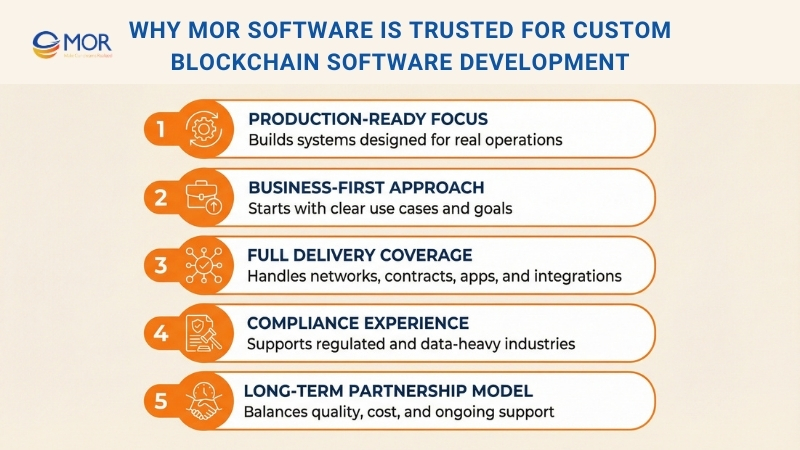
Our engineers handle the full delivery scope. That includes blockchain network design, smart contract logic, dApp development, and integration with enterprise systems like ERP platforms, internal databases, and third-party APIs. Security reviews, permission models, and audit readiness are built into the development cycle, not added later.
MOR Software brings strong experience across regulated and data-heavy industries, including finance, healthcare, manufacturing, and logistics. This background helps teams design blockchain solutions that support compliance, scale reliably, and remain maintainable over time.
With delivery teams based in Vietnam and experience serving global clients, we operate as a trusted custom blockchain development company that balances engineering depth, cost control, and long-term support. Businesses that partner with MOR Software gain a blockchain team focused on stability, clarity, and systems that continue to perform well beyond launch.
Conclusion
Custom blockchain software development gives businesses control, security, and systems that scale with real operations. When done right, it supports automation, transparency, and long-term growth without locking teams into rigid platforms. MOR Software helps businesses turn blockchain ideas into production-ready systems built for compliance and performance. If you are planning a blockchain project in 2026, contact us to discuss your requirements and explore a practical, business-focused path forward.
MOR SOFTWARE
Frequently Asked Questions (FAQs)
What is custom blockchain software development?
Custom blockchain software development involves building blockchain systems tailored to a company’s specific workflows, data needs, and security requirements. The solution is designed from the ground up instead of relying on generic platforms.
How is custom blockchain different from using existing blockchain platforms?
Custom solutions give full control over architecture, consensus rules, and governance. Prebuilt platforms limit customization and may not fit complex business or compliance needs.
Which businesses should consider custom blockchain software development?
Businesses with complex processes, high data integrity needs, or strict security requirements often benefit the most. Finance, healthcare, logistics, energy, and public sector organizations are common adopters.
What are the main components of a custom blockchain solution?
Typical components include blockchain network design, smart contracts, decentralized applications, token systems, and integrations with existing enterprise software.
How long does custom blockchain software development take?
Timelines vary by complexity. Simple solutions may take a few months, while enterprise-grade platforms often require nine months or longer.
How much does custom blockchain software development cost?
Costs depend on scope, platform choice, security requirements, and integrations. Projects can range from tens of thousands of dollars to several hundred thousand for complex systems.
Can custom blockchain solutions integrate with existing systems?
Yes. Most custom blockchain projects include API-based integrations with ERP systems, databases, analytics tools, and other business platforms.
What security risks exist in custom blockchain development?
Risks include smart contract bugs, improper permission models, and weak cryptographic design. These risks are reduced through audits, testing, and careful architecture planning.
Are custom blockchain solutions scalable?
Scalability depends on the chosen architecture and consensus model. Custom designs allow teams to plan for growth using techniques like layer-two networks or alternative consensus mechanisms.
What industries are seeing the most value from custom blockchain software development?
Finance, supply chain, healthcare, energy, and government services are leading adopters due to their need for transparency, trust, and secure data sharing.
Share


Make Our-Dreams Realized


© 2023 . MOR Software. All Rights Reserved
Sitemap
Privacy Policy
Terms of Use

Rate this article
0
over 5.0 based on 0 reviews
Your rating on this news:
Name
*Email
*Write your comment
*Send your comment
1