Manufacturing Lead Time: Comprehensive Guide For Manufacturers
Late deliveries, material shortages, and slow production cycles can quickly disrupt operations and frustrate customers. Understanding manufacturing lead time helps manufacturers control production timelines, improve planning accuracy, and deliver orders faster. In this guide, MOR Software will explain what this timeframe means, how it differs from production cycle time, and practical strategies companies use to shorten factory lead times and improve operational performance.
What Is Manufacturing Lead Time?
Manufacturing lead time describes the total duration required to produce a product or deliver a service. It refers to the full period that starts when production activities begin and ends when the finished item is ready to be delivered.
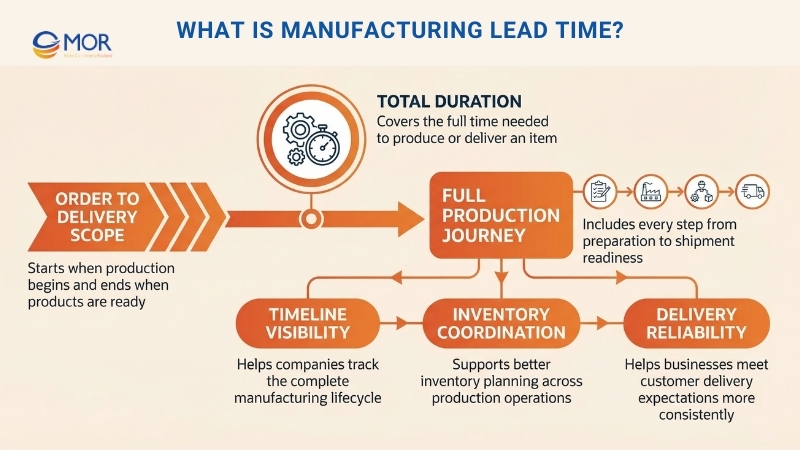
This timeframe covers every step of the production journey, from the initial preparation stage to the moment the final product is ready to ship. It represents the full lifecycle of manufacturing and helps companies track the overall production timeline. Businesses use this information to coordinate inventory levels, manage supply chain operations, and meet customer delivery expectations more reliably.
Key Components Of Manufacturing Lead Time
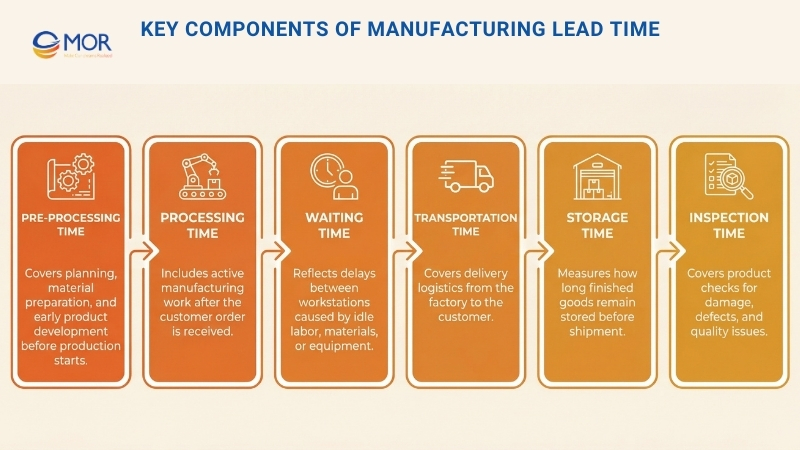
While manufacturing lead time covers the entire supply chain process from beginning to end, it can be divided into several components. Each part reflects a different stage of the production process and helps explain how the overall production timeline develops. The sections below describe these stages in greater detail.
Pre-Processing Time
Pre-processing time refers to the stage that occurs before an order is officially placed and production begins. This phase usually includes planning which products will be produced and identifying the materials required to create them. During this period, you may issue a purchase order for raw materials or prepare a new product concept that will later enter the manufacturing process.
Processing Time
Processing time begins once a customer order has been received and the product moves into active production. During this stage, the item passes through the manufacturing process itself. It includes the period when machines and equipment operate and when workers carry out direct tasks using the materials.
In digital production environments, platforms such as Odoo Manufacturing (MRP) help track this stage more accurately by monitoring work orders, machine usage, and production progress in real time. This visibility allows manufacturers to understand exactly how long each step in the production process takes.
Waiting Time
During production, there are moments when a product must pause before moving to the next workstation. This delay is known as waiting time. It may occur when a worker is waiting for materials to arrive at their station or when equipment remains unused because of overproduction or excess inventory. Although some waiting is unavoidable in many factories, long delays can extend the overall production timeline, so minimizing idle time remains important.
Transportation Time
Transportation time represents the stage when finished goods travel from your facility to the customer. It includes the entire process of arranging delivery logistics, such as booking cargo ships for overseas transport or coordinating with trucking companies to secure vehicles and drivers for product distribution. This movement of goods forms a critical part of manufacturing lead time, since delivery planning directly affects when customers receive their orders.
Storage Time
In some situations, manufacturers do not ship products immediately after production ends. Instead, the finished goods remain in storage for a period of time. Storage time describes how long inventory stays on shelves before it is selected and packed for shipment. Items may remain inside the production facility or be transferred to a warehouse before final delivery.
Inspection Time
Inspection time refers to the process of checking products to identify damage or potential defects. The moment when this evaluation occurs can differ depending on the production system. Some manufacturers include inspection within the main production steps, while others conduct it as a separate stage once the item has been completed.
Different Types Of Manufacturing Lead Time
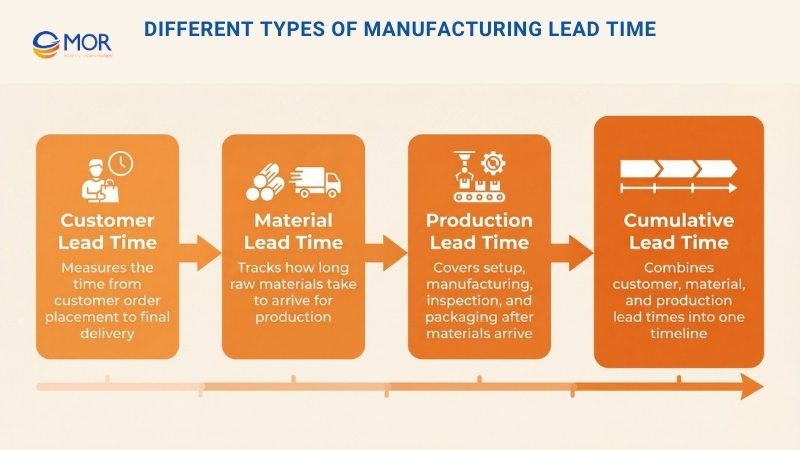
Various forms of manufacturing lead time play an important role in production operations. Each one influences inventory levels, scheduling decisions, customer satisfaction, and overall business competitiveness. When manufacturers review and improve these different timelines, they can increase operational efficiency, lower expenses, and strengthen their ability to deliver products to customers on schedule.
Customer Lead Time
Customer lead time describes the time span between when a customer submits an order and when the product is delivered to them. This measurement is important from a customer satisfaction perspective because it directly shapes the buyer’s experience. A shorter customer lead time often leads to higher satisfaction levels and stronger customer loyalty.
Material Lead Time
Material lead time represents the period required for a company to receive raw materials after identifying that they are needed for production. This stage includes procurement activities and coordination with suppliers. Effective control of this timeframe helps maintain steady production operations and prevents costly delays within the manufacturing process.
In practice, manufacturers often manage this stage through tools such as Odoo Manufacturing, where material requirements planning helps teams see what needs to be purchased, in what quantity, and when those inputs must arrive to support production.
Production Lead Time
Production lead time refers to the time a company needs to produce an item once the required materials have arrived. It covers every stage of the manufacturing process, including initial setup, actual production work, final inspections, and packaging. Lowering this period can create more efficient manufacturing cycles and allow products to reach customers faster.
A platform like Odoo Manufacturing can also support production lead time control by connecting work orders, work centers, and production progress in one place, making delays easier to detect and address earlier.
Cumulative Lead Time
Cumulative lead time combines customer lead time, material lead time, and production lead time into one measurement. It provides a complete view of the time needed from the moment materials are requested until the finished product reaches the customer. Monitoring and improving this full timeline helps companies enhance operational performance and simplify the entire production and delivery process.
Manufacturing Lead Time Vs Cycle Time
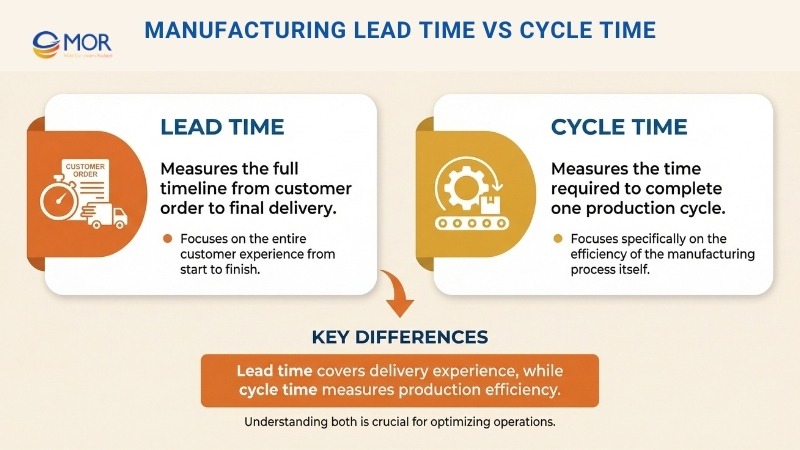
When discussing production operations and factory performance, two terms frequently appear: manufacturing lead time and cycle time. Both help measure how efficient a production system is, yet they focus on different aspects of the process. The explanation below shows how lead time in manufacturing compares with cycle time in a simple way.
Lead Time
Imagine you order a custom-built bicycle. Lead time is similar to the timer that starts the moment your order is confirmed and ends when the bicycle arrives at your door. It represents the total duration needed for a process to move from beginning to completion. In a factory environment, this timeframe usually includes:
- The time spent waiting for materials to arrive,
- The time required to produce the item and
- The time needed to deliver the finished product to the customer.
Lead time helps you understand how long customers must wait before receiving their orders. Businesses track this measure carefully because it influences how customers judge their reliability and service performance.
Cycle Time
Now consider the moment when your bicycle is actually assembled in the workshop. Cycle time describes the time required to complete one full production cycle, starting when work on a product begins and ending when that item is finished and ready for packing. In simple terms, it measures how long the production task itself takes.
This metric focuses directly on the manufacturing activity and allows companies to evaluate how efficiently products are being produced. When manufacturers reduce cycle time, they can increase output and complete more items within the same period.
Key Differences
Both measurements help manufacturers analyze operational performance and identify improvement opportunities. Understanding the distinction between them allows businesses to evaluate production efficiency while also monitoring delivery performance.
- What They Measure: Lead time measures the entire timeline from customer order to final delivery, while cycle time measures the period required to produce a single unit.
- Focus Area: Lead time relates to the full customer experience, covering every step from order placement to product arrival. Cycle time concentrates on how efficiently individual items are produced.
- Impact: Reducing lead time improves customer satisfaction because products arrive sooner. Shorter cycle times increase production efficiency and can also help reduce manufacturing costs.
How To Calculate Manufacturing Lead Time
Within the manufacturing sector, manufacturing lead time serves as an important performance indicator that directly affects a company’s ability to satisfy customer demand. Measuring this timeframe helps manufacturers understand their production speed and maintain a competitive advantage.
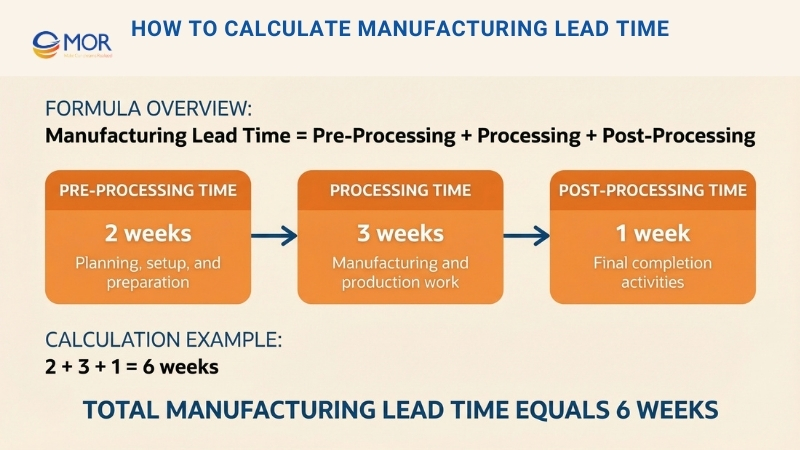
Here is the basic formula:
Manufacturing Lead Time (MLT) = Pre-Processing Time + Processing Time + Post-Processing Time
Example Of Manufacturing Lead Time Calculation
A company named XYZ Manufacturing Company requires 2 weeks for pre-processing activities, 3 weeks for processing, and 1 week for post-processing operations. The total production timeline can be calculated as follows:
Let T1 represent the pre-processing time.
Let T2 represent the processing time.
Let T3 represent the post-processing time.
Let MLT represent the total manufacturing lead time.
Using the formula MLT = T1 + T2 + T3, and inserting the actual values, the calculation becomes:
MLT = 2 weeks + 3 weeks + 1 week = 6 weeks
The final result shows that the complete manufacturing lead time for XYZ Manufacturing Company equals 6 weeks.
In real operations, this calculation becomes easier when production, purchasing, and completion data are recorded in a connected system such as Odoo Manufacturing, where timestamps from each stage help teams review actual lead time more accurately.
Factors That Influence Manufacturing Lead Time
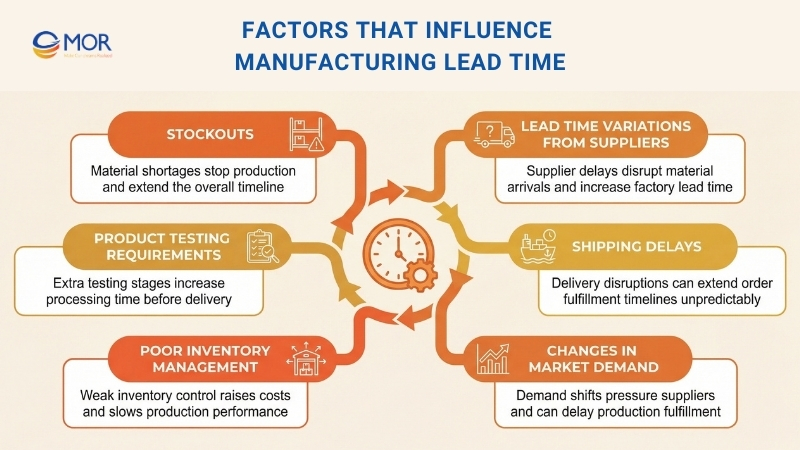
Understanding how to measure and shorten manufacturing lead time is important because many operational factors can extend the overall production timeline. A wide range of conditions may add delays during production and delivery. The elements that influence factory lead time include several operational challenges, including the following.
Stockouts
Just as a vehicle cannot operate without fuel, a manufacturer cannot complete orders without raw materials. Stock shortages can create serious problems for production because they stop manufacturing activities completely. This interruption in production may:
- Extend the overall production timeline.
- Increase customer dissatisfaction.
- Decrease total sales.
- Encourage customers to purchase products from competing companies.
With the support of inventory management software, you can set reorder points so the system automatically sends new purchase orders to suppliers once raw material levels fall below a defined threshold. This approach helps ensure that production operations continue without interruption.
Manufacturers often use systems such as Odoo Manufacturing to connect replenishment rules with production demand, helping planners spot shortages earlier before they interrupt factory operations.
Lead Time Variations From Suppliers
Just as material shortages can increase manufacturing lead time, supplier delays can also create similar problems. When suppliers experience stock shortages or supply chain disruptions, their delivery timeline becomes longer, which then increases the factory production lead time as well.
Working with multiple suppliers can make it difficult to predict when every required component will arrive. This situation may lead to overstocking or insufficient inventory levels. Excess stock can place pressure on your financial resources, while insufficient materials can cause missed sales opportunities. These challenges make it harder to maintain stable production operations.
You can reduce this risk by consolidating suppliers so that all necessary materials arrive at the same time. This approach allows production runs to proceed smoothly while also reducing shipping costs.
When supplier timing is tracked alongside production needs in Odoo Manufacturing, planning teams can adjust purchasing decisions faster and reduce the effect of supplier-side delays on the factory schedule.
Product Testing Requirements
When preparing to skydive, you expect the parachute to be carefully tested and manufactured with extremely high quality standards. Your safety depends on it.
Products like parachutes require strict testing procedures, and additional testing stages naturally increase the time required before delivery. The Production Part Approval Process (PPAP) often determines how long processing takes in such situations. During manufacturing, companies must inspect the quality of each component and confirm that all parts function correctly when assembled together.
The total number of tests, along with the number of components that must be evaluated, directly influences the overall production timeline.
Shipping Delays
Shipping refers to the movement of products from one location to another. Several conditions can influence delivery time, including natural disasters, operational mistakes, and shortages of important components. Among all the challenges mentioned earlier, this factor is often the most unpredictable and the hardest for manufacturers to manage.
Businesses can lower the risk of shipping delays by choosing suppliers that operate close to their production facilities. Another option is to work with suppliers who regularly monitor stock levels and maintain stable inventory availability. A practical guideline is simple: fewer incoming shipments generally reduce the chances of disruptions in the order fulfillment timeline.
Poor Inventory Management
Weak inventory control practices can negatively influence the overall production timeline within a manufacturing operation. When inventory processes are inefficient, companies often face higher management expenses, increased handling costs, and slower production performance. Unlike transportation disruptions or supplier variability, inventory management is an internal factor that manufacturers can control directly.
Establishing effective inventory control allows you to monitor the quantity of materials currently available in storage. This visibility helps ensure that all required components are ready when production begins, allowing manufacturing operations to proceed without interruption.
This is also where Odoo Manufacturing fits naturally, since it gives planners a clearer view of on-hand stock, incoming materials, and components already reserved for active production orders.
Changes In Market Demand
In 2017, fidget spinners suddenly became extremely popular across global markets. Reports suggested that approximately 50 million units were sold during the first half of that year alone. Today, however, the product receives very little attention.
This example shows that predicting customer demand with complete accuracy is extremely difficult. A product that attracts strong interest today may quickly lose relevance later. Poor demand planning under these conditions can create financial losses for manufacturers.
Shifts in market demand can also influence the overall production timeline. When demand rises quickly, suppliers may experience increased pressure to deliver materials. Delays at the supplier level can slow order fulfillment and extend the factory lead time required to deliver finished products.
If demand shifts quickly, Odoo Manufacturing can help teams revise material plans and production priorities with less manual coordination, which makes the response more stable and timely.
Key Benefits Of Reducing Manufacturing Lead Time
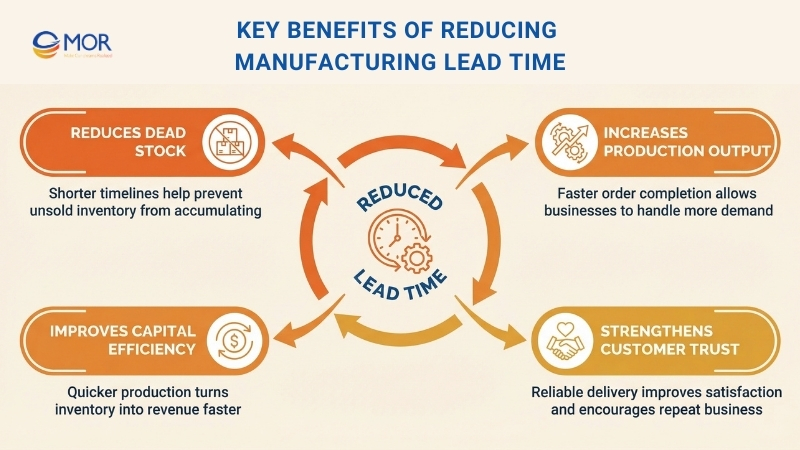
Delivering products to customers on schedule improves customer satisfaction, yet businesses also gain several operational advantages when production timelines become shorter. Lower manufacturing lead time does more than help retain buyers. It can also strengthen financial performance and improve production efficiency across the organization. Several important benefits appear when companies reduce the time required to complete production and delivery.
Reduces Dead Stock
Dead stock refers to inventory that has been produced but remains unsold. This situation often occurs when businesses cannot deliver or sell products within a reasonable timeframe. Shorter manufacturing lead time helps prevent excess inventory from building up, which can otherwise create significant financial losses for companies.
Increases Production Output
When orders reach customers more quickly, businesses can accept a greater number of new orders. Faster production timelines allow companies to handle higher demand and expand their sales volume. Lower production lead time can therefore raise revenue because it increases the total number of orders a company can complete.
Improves Capital Efficiency
When capital remains tied to raw materials and production activities for long periods, companies must wait longer before they see profits from sales. Reducing the overall production timeline helps businesses convert inventory into revenue more quickly. Faster order processing and increased sales allow organizations to generate profits sooner and support faster business growth.
Strengthens Customer Trust
Customers tend to return to companies that maintain product availability and deliver orders quickly. Businesses that achieve shorter lead times for production often enjoy stronger customer relationships. Reliable delivery performance leads to satisfied customers and makes it easier for companies to attract new buyers.
How To Reduce Manufacturing Lead Time
Reducing manufacturing lead time helps businesses deliver products faster and build stronger relationships with customers. Shorter delivery timelines often lead to better satisfaction and long term trust. Because of this, manufacturers must understand how to manage supply chain disruptions and maintain efficient production timelines. Several practical strategies can help companies improve the overall production cycle.
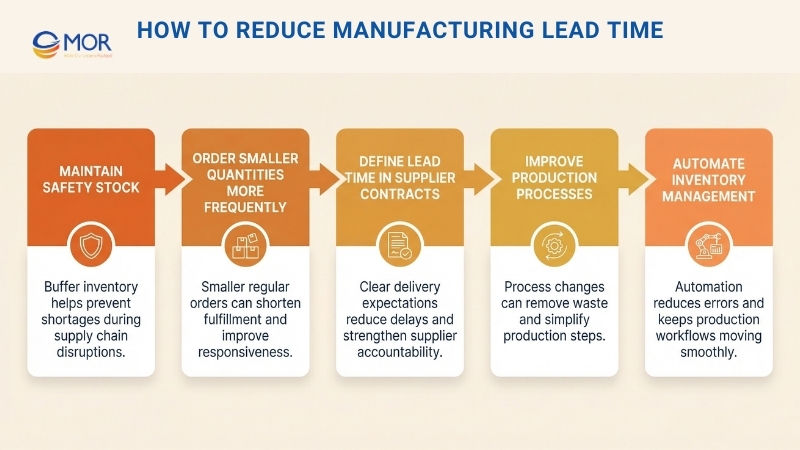
Maintain Safety Stock
If your company does not rely on just-in-time inventory practices, maintaining safety stock can provide an effective buffer when supply chain disruptions occur. Safety stock refers to extra inventory that companies store to prevent shortages.
In industries where holding excess inventory is not practical, you can consider setting reorder points. A reorder point defines the inventory level at which new materials must be ordered. When you use inventory management software, you can create custom reorder thresholds so the system automatically places purchase orders when stock reaches a predefined level.
In Odoo Manufacturing, teams can combine demand-based planning with replenishment rules to maintain buffer stock at more practical levels without losing control of inventory.
Order Smaller Quantities More Frequently
Ordering smaller quantities at regular intervals allows companies to complete customer orders faster than placing large bulk purchases.
When invoices are divided into smaller orders, businesses can process shipments more quickly and shorten manufacturing lead time. While suppliers sometimes offer discounts for large bulk purchases, placing smaller orders often improves operational efficiency.
Define Lead Time In Supplier Contracts
If you expect your suppliers to deliver materials within a specific timeframe, it is important to document this requirement clearly. Delays that prevent you from fulfilling customer orders on schedule can significantly damage your operations.
Your supplier agreements should clearly define delivery expectations and include consequences for late shipments. Without clear communication or written expectations, delays can easily occur within the supply chain.
It also helps when supplier lead times are recorded in a connected planning environment, since Odoo Manufacturing can reflect vendor timing inside broader material and production planning activities.
Improve Production Processes
If you want to reduce manufacturing lead time, reviewing your internal processes can help identify steps that can be simplified or removed.
Several improvements may help streamline production activities:
- Completing tasks simultaneously where possible
- Removing repetitive quality assurance checks
- Automating sales orders
Automate Inventory Management
Automation in inventory management reduces the risk of human error and lowers the chance of delays within production operations.
Although spreadsheets can support basic inventory tracking, automated inventory systems provide far greater capabilities. These platforms can notify you when stock levels are low, automate vendor management activities, generate purchase orders and shipping labels, and handle many other operational tasks. Automating these elements helps companies maintain smoother and more efficient production workflows.
This is one of the strongest areas for Odoo Manufacturing, since it connects inventory movements, replenishment logic, and production orders in one workflow instead of leaving teams to manage them across separate tools.
The Future Of Manufacturing Lead Time In Ecommerce Operations
The ecommerce sector continues to change rapidly, and manufacturing lead time is also evolving as technology and market expectations develop. Several trends are shaping how companies shorten production timelines and improve order fulfillment performance.
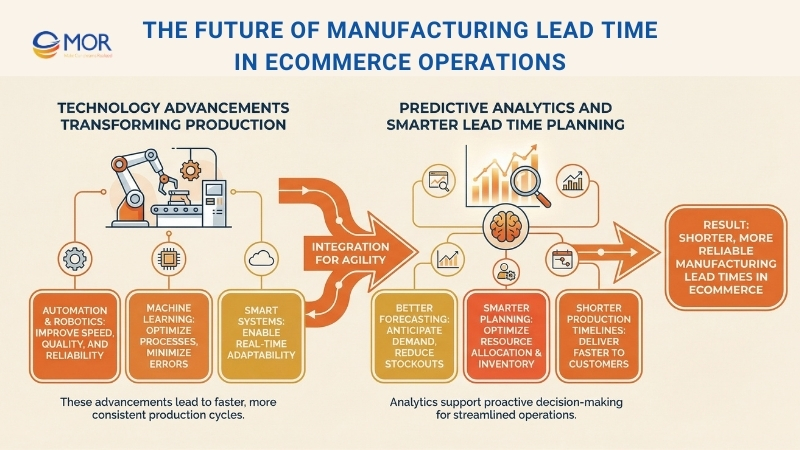
Technology Advancements Transforming Production
Technological progress such as automation, robotics, and machine learning is changing the way manufacturing systems operate. These innovations help improve production efficiency, shorten production lead time, and strengthen product quality. Companies that adopt these tools often gain a competitive advantage while moving toward faster and more reliable manufacturing turnaround time.
Predictive Analytics And Smarter Lead Time Planning
Predictive analytics applies historical data and statistical models to estimate production timelines more accurately. When businesses analyze past performance, customer demand patterns, and manufacturing capacity, they can better anticipate production requirements. This insight improves resource allocation, supports stronger production planning, and helps reduce the overall production timeline.
Sustainability is another factor shaping the future of production operations. As environmental awareness grows and demand for eco friendly products increases, manufacturers face pressure to adopt responsible practices. Using recyclable materials, reducing waste, and implementing sustainable production methods can support shorter production cycles while also meeting environmental objectives.
Another emerging technology influencing factory operations is additive manufacturing, often called 3D printing. This approach allows companies to create prototypes quickly, customize products, and produce items on demand. These capabilities help reduce production cycle time and increase flexibility when responding to customer needs. Integrating additive manufacturing into operations can simplify supply chains and support the delivery of customized products with shorter lead times.
Manufacturing lead time remains a critical element of ecommerce operations. Understanding its definition, importance, and improvement strategies helps companies manage production timelines more effectively. Strong control of the production schedule supports supply chain efficiency, increases customer satisfaction, and helps businesses remain competitive in a constantly changing ecommerce environment.
Improving Manufacturing Lead Time With MOR Software Solutions
MOR Software helps manufacturers improve production planning, material coordination, and shop floor visibility through Odoo Manufacturing. We support businesses that want to reduce delays across purchasing, production, and order fulfillment by building a more connected planning environment.
With Odoo Manufacturing, teams can manage material requirements, production orders, work centers, and inventory movements in one system. This gives manufacturers a clearer view of where delays begin and how they affect the broader production schedule.
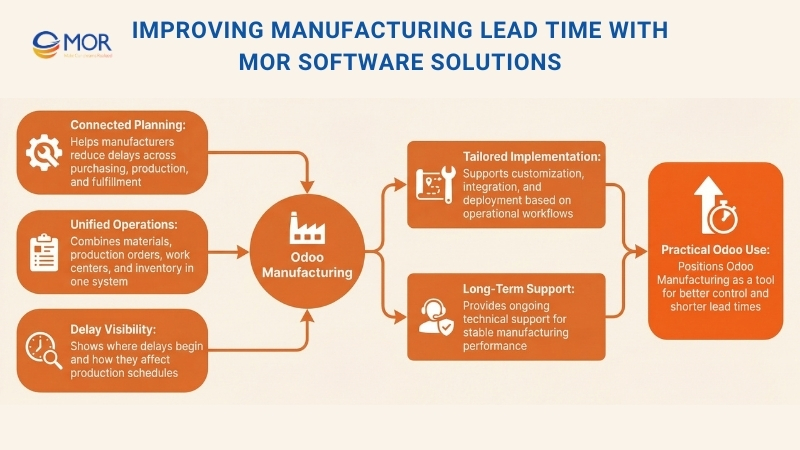
Our team supports implementation, customization, integration, and long-term technical support so the platform matches your existing workflows and operational needs. Through this approach, MOR Software positions Odoo Manufacturing as a practical tool for manufacturers that want better planning accuracy, stronger process control, and shorter lead times across production operations. Contact MOR Software today to discuss how our experts can help you implement and optimize Odoo Manufacturing for your factory.
Conclusion
Managing manufacturing lead time effectively helps manufacturers maintain stable production schedules, control operational costs, and deliver products to customers on time. When companies improve material planning, streamline workflows, and monitor production performance, they can shorten the overall production timeline and respond faster to market demand. MOR Software supports manufacturers in building smarter production systems using Odoo Manufacturing, helping businesses optimize planning, improve visibility across operations, and reduce delays throughout the manufacturing process. Contact MOR Software to explore how your factory can improve lead time performance.
MOR SOFTWARE
Frequently Asked Questions (FAQs)
What is manufacturing lead time?
Manufacturing lead time refers to the total amount of time required to produce a product from the moment production preparation begins until the finished item is ready for delivery. It includes stages such as material sourcing, manufacturing, inspection, and shipment preparation.
Why is manufacturing lead time important for businesses?
Manufacturing lead time helps businesses plan production schedules, manage inventory, and maintain reliable delivery timelines. Shorter lead times allow companies to respond more quickly to customer demand and improve overall operational efficiency.
What are the main components of manufacturing lead time?
Manufacturing lead time typically consists of three main stages: pre-processing time, processing time, and post-processing time. Pre-processing covers planning and material procurement, processing involves the actual manufacturing work, and post-processing includes inspection, packaging, and shipping preparation.
What factors can increase manufacturing lead time?
Several factors can extend manufacturing lead time, including raw material shortages, supplier delays, complex quality testing requirements, inefficient inventory management, shipping disruptions, and unexpected changes in market demand.
How is manufacturing lead time calculated?
Manufacturing lead time can be calculated using a simple formula:
Manufacturing Lead Time = Pre-Processing Time + Processing Time + Post-Processing Time.
This formula helps businesses estimate the total time needed to produce and prepare products for delivery.
What is the difference between manufacturing lead time and cycle time?
Manufacturing lead time measures the total time from order placement to product delivery. Cycle time measures the time required to produce a single unit during the production process. Lead time focuses on the entire supply chain timeline, while cycle time focuses on production efficiency.
How can companies reduce manufacturing lead time?
Businesses can reduce manufacturing lead time by improving inventory control, maintaining safety stock, streamlining production workflows, automating operational tasks, strengthening supplier relationships, and improving production planning.
What is material lead time in manufacturing?
Material lead time refers to the time it takes for suppliers to deliver raw materials after an order has been placed. Managing supplier performance and procurement processes effectively helps prevent production delays.
How does manufacturing lead time influence customer satisfaction?
Manufacturing lead time directly affects how quickly customers receive their orders. When companies consistently deliver products on time or faster than expected, customers are more likely to trust the brand and place future orders.
Can technology help improve manufacturing lead time?
Yes. Technologies such as automation tools, production management systems, data analytics platforms, and inventory management software help manufacturers monitor operations, detect bottlenecks, and improve production efficiency.
Share


Rate this article
0
over 5.0 based on 0 reviews
Your rating on this news:
Name
*Email
*Write your comment
*Send your comment
1