


TOP 8 Best Vendor Management System Providers in 2026
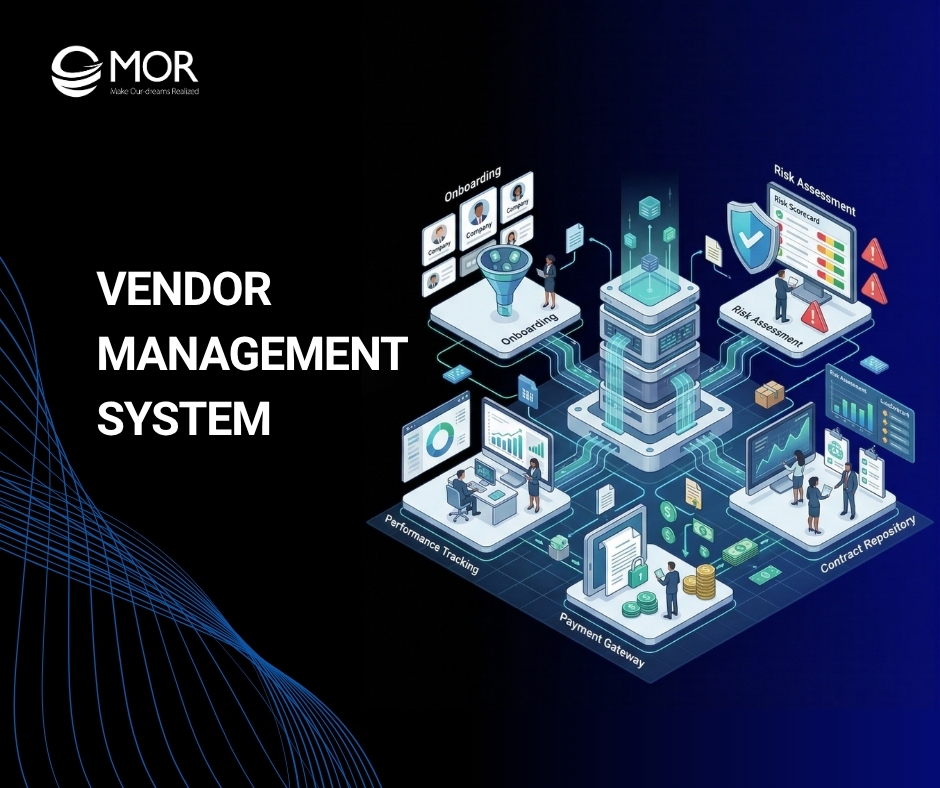
Managing suppliers with spreadsheets, scattered emails, and manual approvals often leads to delays, poor visibility, and rising compliance risk. A vendor management system helps fix that, but choosing the right vendor management software can still feel confusing. This MOR Software’s guide will explain what matters, what to compare, and how the right platform can support better control, faster decisions, and stronger vendor performance.
What Is A Vendor Management System?
A vendor management system is a software platform that helps companies handle supplier relationships in a more organized way. It brings all vendor details into one place, supports new supplier onboarding, tracks how they perform, and helps teams make payments on time.
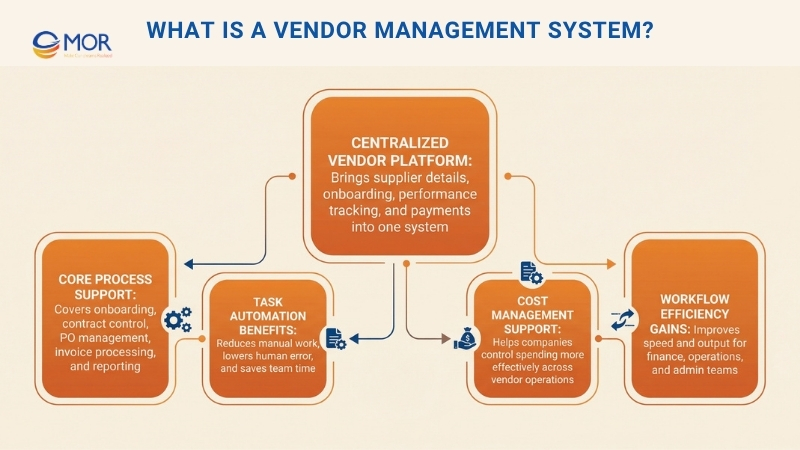
Vendor onboarding, contract control, purchase order (PO) management, invoice processing, and reporting are core functions of vendor management system software. Any vendor management solution can automate many manual tasks, helping businesses cut down on human mistakes and save a great deal of time.
With this system in place, companies can manage costs more effectively and improve the speed and output of workflows used by finance, operations, or admin teams.
Vendor Management System Market Overview
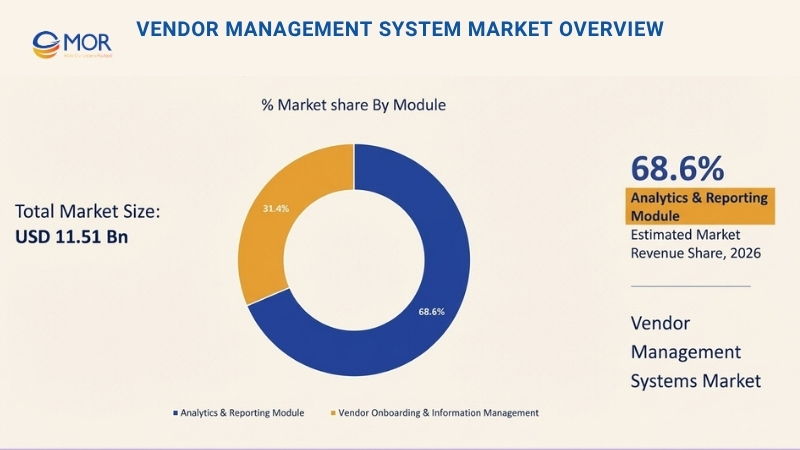
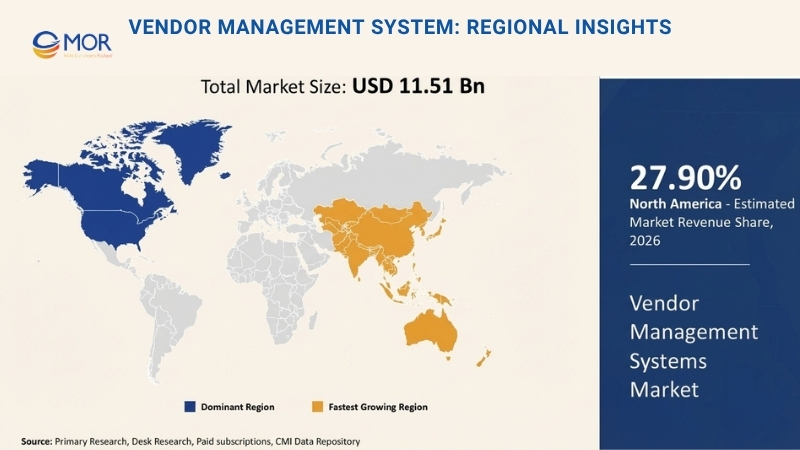
The market for vendor management systems is expanding at a steady pace as companies search for smarter ways to manage suppliers, service partners, and contingent workers in one digital environment. Recent estimates place the global market for this software at around $11.5 billion in 2025 to 2026, and forecasts suggest strong double-digit growth will continue in the years ahead. That rise shows a wider move away from spreadsheets and disconnected procurement steps toward more connected tools that deliver clearer visibility, stronger control, and more automation.
A number of factors are driving that growth. Businesses now deal with more complex supplier networks, stricter compliance rules, and greater pressure to watch third-party risk more closely. At the same time, procurement leaders are putting more money into digital tools, sustainability, AI, compliance, and cybersecurity, all of which strengthen the value of enterprise vendor management.
Another major shift in the market is that these platforms now do far more than store vendor records and support onboarding. Modern tools now include contract tracking, performance scorecards, invoice workflows, compliance checks, and predictive analytics. AI is also playing a larger role, especially in spend analysis, contract review, supplier risk tracking, and workflow automation. Industry reports show that procurement teams are moving in this direction at a fast pace, even if full AI use is still at an early stage.
Because of that, the VMS market is no longer seen as a narrow software category. It is now becoming a key part of procurement, risk control, and operational planning for both mid-sized companies and large enterprises.
Core Capabilities Of Vendor Management Software
These capabilities below define how a vendor management system supports daily operations, from onboarding to performance tracking and compliance control. A strong vendor management platform helps your team reduce manual work while improving visibility across every supplier interaction.
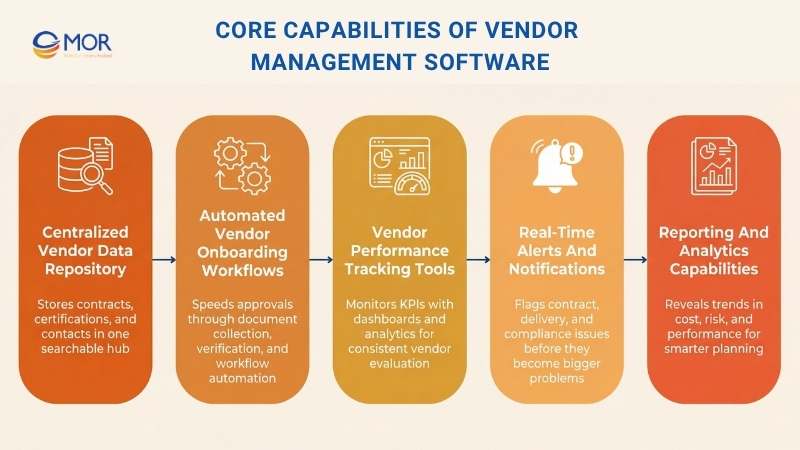
Centralized Vendor Data Repository
A secure and searchable hub for vendor records, including contracts, certifications, and contact details, removes the need for scattered files and manual searches. GearBox® by IRIS supports flexible vendor profiles, making it simple to view current information through a single vendor data management system.
Keeping all vendor information in one place supports better teamwork because both internal teams and vendors can access the documents and timelines they need.
Automated Vendor Onboarding Workflows
Vendor onboarding can take a long time when teams handle it by hand. Vendor management software simplifies this part of vendor management through document collection, verification, and approval workflows. This removes delays and helps vendors get approved and ready to work more quickly.
Vendor Performance Tracking Tools
Regular performance review is important if a business wants to keep strong standards and clear accountability across supplier relationships. With built-in tracking features, a vendor management system helps companies monitor key performance indicators (KPIs) such as delivery speed, product quality, and responsiveness, much like many supplier management applications do today.
GearBox® gives companies access to real-time dashboards and analytics that support consistent vendor evaluation across regions and departments.
Real-Time Alerts And Notifications
Manual oversight often causes missed deadlines and compliance issues. This platform helps lower those risks through real-time alerts for key events such as contract expiry dates, missed deliveries, and compliance breaches.
This function allows businesses to act early instead of waiting until problems grow, which supports quicker response when issues appear.
Reporting And Analytics Capabilities
Advanced analytics features deliver useful insights into vendor performance, costs, and risk levels. With data-led reports, program managers, vendor managers, and business leaders can spot patterns, improve procurement plans, and negotiate better contract terms.
Top Vendor Management System Providers For 2026–2027
Choosing the right vendor management system often comes down to your company’s size and whether you manage product suppliers, service vendors, or a flexible workforce.
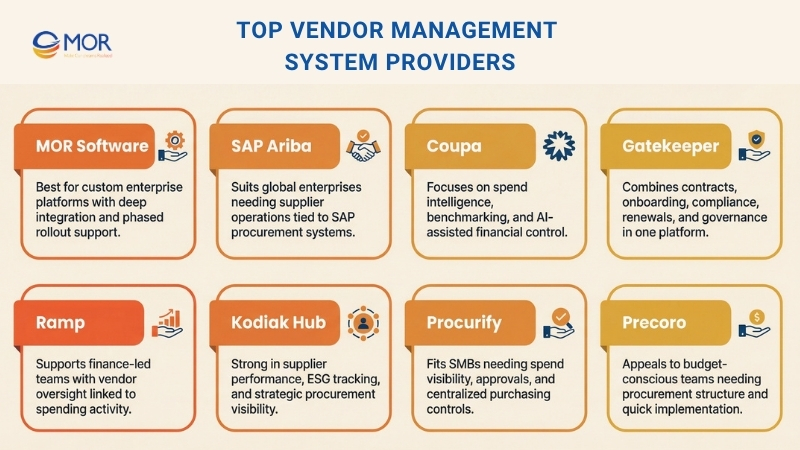
MOR Software
MOR Software is a strong fit for enterprises that do not want a fixed, off the shelf vs custom software tool and instead need a vendor management system shaped around their own approval processes, supplier data structure, compliance rules, and system connections. MOR’s public materials present the company as a Vietnam software development outsourcing and enterprise solutions partner that covers consulting, development, data migration, system integration, implementation, and management. It also works with dedicated offshore teams, which is valuable for long-term rollouts that require phased delivery, team expansion, and support after launch.
What gives MOR an edge for large enterprises is its wide integration capability. The company openly highlights Salesforce consulting and customization, third-party integrations, and experience in building highly tailored business applications that can run as standalone tools or as connected platforms. That matters when your vendor management platform needs to link with ERP, finance, procurement, HRM software development, or CRM systems instead of operating alone. MOR also says it follows agile delivery with clear sprint-based progress, which suits enterprises that prefer phased launches rather than waiting for one long release.
Another strength for MOR is its delivery scale. MOR Software states that it has completed 850+ projects across 10+ countries and operates in Vietnam and Japan, which supports its position in global enterprise work. To be clear, MOR is not promoted as a packaged software vendor in the same way as SAP Ariba or Gatekeeper. Its value is different: tailored architecture, flexible engagement options, and deep enterprise integration for companies that need a custom-fit vendor control solution.
SAP Ariba
SAP Ariba remains one of the strongest options for global enterprises that want vendor operations closely tied to source-to-pay processes. SAP positions the platform around supplier information management, supplier self-service through SAP Business Network, two-way synchronization with SAP ERP, supplier lifecycle tools, and supplier risk functions. That makes it a strong choice for multinational companies already using large SAP-based procurement environments.
Coupa
Coupa stands out for spend intelligence. The company describes its platform as an AI-native total spend management system and points to a large community-generated dataset and network activity that improve visibility and decision-making. That gives Coupa a strong position for finance and procurement teams that care about benchmark-based savings, spend analysis, and AI-assisted control rather than only supplier recordkeeping through a vendor management system.
Gatekeeper
Gatekeeper is a strong option for companies where vendor oversight begins with contracts and third-party governance. Its platform combines contracting, vendor onboarding, compliance, renewals, spend tracking, and vendor portal workflows in one place. That unified setup makes it especially appealing to legal, procurement, and risk teams that want tighter control over the full vendor lifecycle without managing separate tools.
Ramp
Ramp works well for finance-led mid-market teams that want vendor oversight tied directly to spending activity. The platform brings together corporate cards, bill pay, procurement, and accounting tools, and Ramp also gives vendor-level records and spend visibility linked to real transactions. For businesses that care more about speed, approvals, and financial control than large procurement transformation, it can work as a practical vendor invoice management system.
Kodiak Hub
Kodiak Hub is strongest where supplier relationship management meets ESG, quality, and performance improvement. Its public positioning centers on supplier scorecards, supplier performance, sustainability, carbon footprint, supplier onboarding, and risk and compliance. That makes it a strong option for organizations that want deeper supplier review and strategic procurement visibility, especially in manufacturing and supply chain-heavy industries that rely on a vendor management system.
Procurify
Procurify is a good match for SMBs and scaling businesses that need stronger purchasing discipline without adopting a very heavy enterprise suite. The company presents its platform as an AI-powered intake-to-pay solution for the mid-market, with solid spend visibility, workflow automation, approval controls, and centralized purchasing. In practice, that means better compliance and clearer control for companies that are growing quickly and want tighter spend oversight, including teams exploring vendor management systems staffing needs.
Precoro
Precoro is one of the easier options for budget-conscious teams. Its platform focuses on centralized procurement, budget control, visibility across projects or business units, supplier records, contract storage, vendor onboarding, and 3-way matching. It is also presented as simple to scale and quick to launch, which makes it appealing to smaller businesses that want structure and control without a long rollout cycle from a cloud based vendor management system.
Compare Leading Vendor Management Systems Providers For 2026–2027
Each provider serves a different business need, so the best choice depends on your size, workflow complexity, and integration goals. While some buyers may also review related software categories or even compare element management system vendors during research, the platforms below are more directly focused on supplier and procurement control.
Provider | Best For | Key Strengths |
MOR Software | Global Enterprises | Best for enterprises that need a tailored vendor management system instead of a boxed SaaS product. MOR Software’s strengths include custom software development outsourcing, system integration, Salesforce expertise, dedicated offshore teams, and flexible delivery for complex global workflows. |
SAP Ariba | Global Enterprises | Enterprise-level supplier management inside SAP’s wider source-to-pay ecosystem, with supplier self-service, SAP ERP synchronization, supplier lifecycle tools, and access to SAP Business Network. |
Coupa | Spend Intelligence | AI-native total spend management platform that uses a large community dataset and network intelligence to improve spend visibility, benchmarking, and decision-making across procurement and finance. |
Gatekeeper | Contract Focus | Strong in contract-led vendor control, combining onboarding, third-party risk, compliance, renewals, spend monitoring, and vendor portal functions in one platform. |
Ramp | Mid-Market Finance | Combines cards, bill pay, procurement, and vendor tracking in one finance platform, giving teams quick visibility into vendor spend and approval workflows. |
Kodiak Hub | Sustainability/ESG | AI-powered SRM suite focused on supplier scorecards, supplier performance, sustainability, carbon tracking, risk and compliance, and global process alignment. |
Procurify | SMBs & Scaling | Mid-market intake-to-pay platform with AI workflows, spend visibility, policy controls, and centralized purchasing for growing businesses that need stronger compliance. |
Precoro | Budget-Conscious | Budget-friendly procurement platform designed for centralized control, distributed teams, fast setup, budget tracking, 3-way matching, and built-in supplier management features. |
Key Benefits Of Using A Vendor Management System
A vendor management system helps companies create consistency, visibility, and control in the way they work with third-party suppliers. When data is centralized and processes are standardized, it supports compliance, improves decisions, and lowers the day-to-day effort tied to managing vendors across different teams.
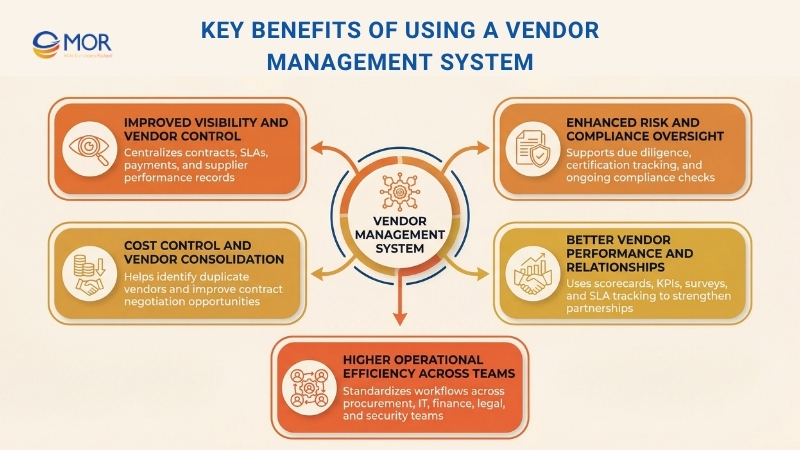
Improved Visibility And Vendor Control
A VMS brings vendor records, contracts, SLAs, and payment details together in one place. This removes scattered spreadsheets, cuts manual mistakes, and makes it easier to see the current status and performance of each supplier.
Enhanced Risk And Compliance Oversight
It supports pre-contract reviews, due diligence records, and ongoing tracking of vendor certifications and regulatory obligations. Automated reminders and structured checks help maintain continuous compliance and reduce third-party risk through a vendor management system.
Cost Control And Vendor Consolidation
A centralized supplier view makes it easier to identify duplicates, secure better terms, and combine contracts when possible. These insights help businesses reduce avoidable spending and improve purchasing power, especially when reviewing vendor vs manufacturer roles across sourcing decisions.
Better Vendor Performance And Relationships
Performance scorecards, KPIs, surveys, and SLA tracking create more structured and transparent supplier relationships. This helps companies solve issues early, reward strong performers, and keep long-term partnerships with important vendors.
Higher Operational Efficiency Across Teams
A shared platform creates a more consistent way of working across procurement, IT, security, finance, and legal teams. With standardized workflows and clearer approvals, cycle times go down and coordination becomes much smoother, which is especially useful in vendor management system staffing workflows.
Essential Features Of A Modern Vendor Management System
We have outlined the main parts and features of a vendor management system in the table below.
Component | Features |
Streamlined Supplier Onboarding and Master Data Management | • Digital Onboarding: Step-by-step registration, e-signatures, document uploads, and adjustable approval workflows. • Supplier Master Data Management: Duplicate control, validation rules, lifecycle stages, change history, and governance. |
Secure Supplier Portals | • Centralized communication. • Order and shipment tracking. • Self-service profile changes. • Role-based visibility. |
Built-in Quality Management Tools | • Complaint and Nonconformance Management: Standardized intake, automated routing, SLA timers, evidence uploads, and a full audit trail. • CAPA: Analysis templates, task tracking, effectiveness reviews, and automated escalations. • Incoming Inspection and Sampling: Inspection plans, acceptance rules, result logging, and certificates of analysis (CoA). |
Supplier Audits | • Audit scheduling. • Custom checklists. • Digital scoring. • Findings and corrective actions. • Re-audit tracking. |
Supplier Scorecards | • Key Performance Indicators (KPIs): On-time delivery (OTD), PPM/defects, responsiveness, cost variance, NCR cycle time, and CAPA effectiveness. • Weighted scoring, performance trend tracking, automatic supplier tiering, and focused improvement plans. |
Proactive Compliance and Risk Management | • Compliance Tracking: Data points like country of origin, ESG ratings, and a document repository with automatic expiry reminders. • Risk Monitoring: Financial health checks, negative news mentions, geo-risk alerts, and performance trend tracking. • Automated Risk Mitigation Workflows: Triggered from preset thresholds, with requalification workflows. |
Operational Visibility Across the Supply Chain | • PO Management and Shipment Tracking: ERP integration, advanced shipping notice (ASN) processing, and real-time shipment monitoring. • Delivery Calendars and Shortage Alerts: Consolidated shipment view and proactive shortage warnings. • Advanced Inventory Workflows: Vendor-Managed Inventory (VMI) and consignment inventory control. |
Document Management | • Version control. • Approval workflows. • Controlled distribution. • Read acknowledgments. |
Real-Time Dashboards and Analytics | • Operational dashboards and visuals such as Pareto charts and heatmaps. • Self-service reporting. • Business Intelligence (BI) integration such as Power BI and Tableau. |
Enterprise-Grade Security | • Granular Access Control: Role-based access control (RBAC) and attribute-based access control (ABAC). • Secure Authentication and Auditing: Single Sign-On (SSO), Multi-Factor Authentication (MFA), and audit logs. • Data Segmentation and Isolation: Logical separation by division, product line, or region, plus supplier-specific tenants or namespaces. |
Integration Capabilities | • API-first architecture. • iPaaS support such as MuleSoft and Boomi. • Real-time updates through webhooks and event streams. • Integration with ERP, PLM, MES, QMS, and identity providers. • Anti-corruption layer for data integrity. |
Workflow Engine and Automation | • No-code workflow design. • Smart automation and escalations. • Ready-made process templates for supplier onboarding, complaint management, audit and CAPA flows, and recurring supplier reviews. |
Modular and Scalable Architecture | • Separate modules for phased rollout. • Horizontal scalability for high availability. • Role-based user interfaces. • Localization with multilingual and multi-currency support. |
Vendor Lifecycle Management (VLM) Capabilities | • Full supplier lifecycle tracking from onboarding to offboarding. • Centralized visibility into supplier status, performance, and engagement history. |
Supplier Registration and Qualification | • Flexible supplier onboarding forms and document submission. • Automated qualification workflows, scoring, and approval steps. |
Contract Management and Renewals | • Centralized contract storage with version control. • Automated renewal alerts, compliance checks, and approval workflows. |
Performance Monitoring and Scorecards | • Ongoing tracking of supplier KPIs and SLA compliance. • Custom scorecards with benchmarking and performance insights. |
Invoice and Payment Processing Integration | • Connection with finance systems for invoice validation and processing. • Automated payment workflows, reconciliation, and dispute resolution. |
Advanced Analytics and Reporting Dashboards | • Custom dashboards for supplier performance, risk, and spend analysis. • Predictive and prescriptive insights for better decision-making. |
Robust Risk Assessment and Mitigation Tools | • Real-time risk scoring based on financial, operational, and geopolitical conditions. • Automated alerts and mitigation workflows for risk events. |
Compliance Management (Regulatory, ESG, Data Security) | • Tracking supplier compliance with regulations, ESG standards, and data security rules. • Automated document tracking, audit readiness, and reporting. |
Third-Party Risk Management (TPRM) | • Ongoing monitoring of third-party risks across suppliers and partners. • Risk categorization, assessment frameworks, and mitigation tracking. |
Integration with Existing Enterprise Systems (ERP, CRM, Procurement) | • Smooth integration with enterprise platforms for unified data flow. • Synchronization of supplier, financial, and procurement records. |
Configurable Workflows and Automation | • Flexible workflow setup to match business processes. • Automation for approvals, notifications, escalations, and compliance checks. |
User-Friendly Interface and Accessibility (Mobile, Self-Service Portals) | • Clear UI/UX for internal teams and suppliers. • Mobile access and self-service portals for real-time use. |
AI and Machine Learning Capabilities | • AI-based recommendations for supplier selection and improvement. • Machine learning models for ongoing learning and pattern detection. |
Predictive Analytics for Supplier Performance | • Forecasting supplier performance trends and possible risks. • Data-led insights to improve supplier planning and relationships. |
Automated Data Extraction and Validation | • Smart document data capture using OCR and AI. • Automated validation rules to support data accuracy and consistency. |
Fraud Detection and Anomaly Identification | • Detection of unusual transactions or supplier behavior. • Real-time alerts and investigation workflows to stop fraud. |
How To Choose The Right Vendor Management System For Your Business
Choosing the right platform starts with a clear view of your goals, processes, and internal limits. The best fit is not always the most advanced tool. It is the one that matches how your business works today and where you want it to go next.
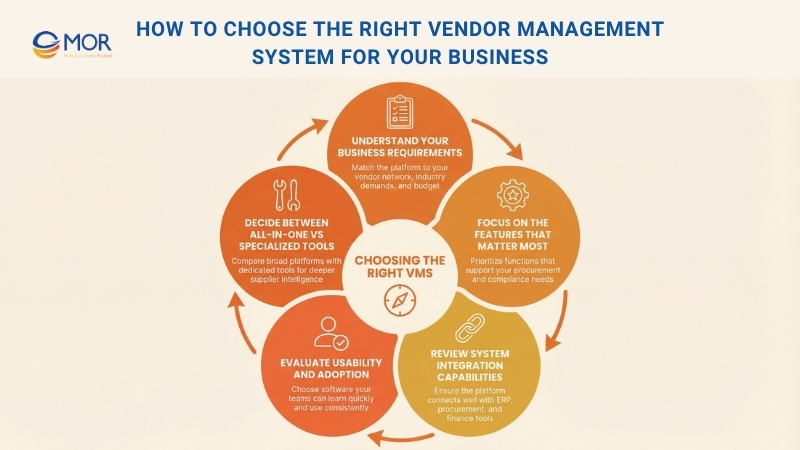
Understand Your Business Requirements
Start with a close review of your company’s actual needs. Think about the size and structure of your vendor network, the regulatory demands in your industry, and the budget you can allocate. If you manage a large and varied supplier base, you may need a vendor management platform with strong data control and compliance features. On the other hand, if your goal is to improve communication with only a small number of important vendors, a simpler tool may be enough.
Focus On The Features That Matter Most
Some platforms give you only basic tools for storing vendor records, while others include more advanced functions like real-time performance tracking, risk evaluation, and compliance oversight. You should identify the features that matter most to your procurement approach. If risk control is a key concern, choose software that includes built-in risk assessment tools. If sustainability and ESG reporting are important to your business, make sure the platform can track supplier compliance in those areas.
Review System Integration Capabilities
Your vendor management system will probably need to connect with other tools in your technology stack, such as ERP, procurement, and finance software. To avoid data silos and support smoother workflows, make sure the platform you choose works well with your current systems.
Evaluate Usability And Adoption
No team wants to struggle with awkward software that feels too hard to use. If your staff cannot learn it quickly, they will stop using it, and the system can turn into costly shelfware. Look for a platform with a clear and user-friendly interface, since strong software usability can improve productivity and adoption. User experience matters because an easy-to-use tool helps your teams work faster, shortens the learning curve, and supports wider use across the business.
Decide Between All-In-One Vs Specialized Tools
S2P and P2P platforms cover a wide range of tasks, but the truth is simple. When supplier relationships are treated as real business assets, you often need deeper tools and better intelligence than a broad platform can provide. That is where dedicated vendor management software stands out, turning supplier data into useful insights that support stronger business results.
Trends In The Vendor Management System Market For 2026
The vendor management system market in 2026 is moving past simple record storage and basic workflow automation. Buyers now want platforms that help guide decisions, identify risk earlier, and support stronger supplier relationships across compliance, sustainability, and performance management. Recent research across procurement and supply chain points to AI adoption, predictive analytics, ESG data integration, and greater transparency as the main forces shaping the next wave of VMS platforms.
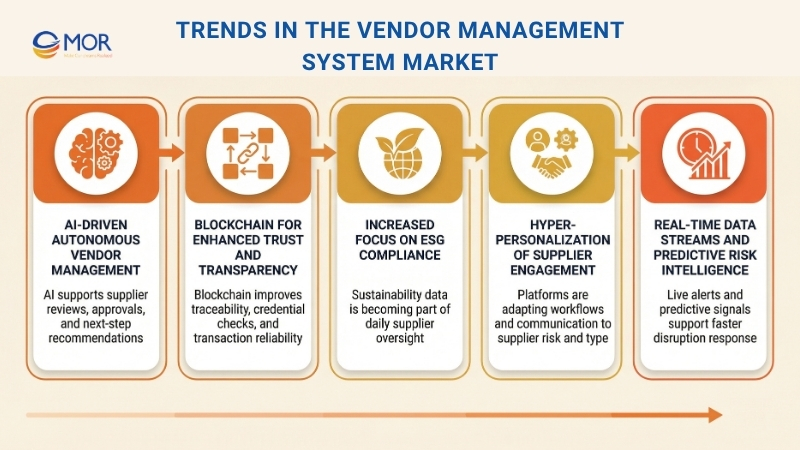
- AI-Driven Autonomous Vendor Management: VMS platforms are moving toward AI-assisted decision support, helping teams review suppliers, automate routine approvals, and suggest next steps with less manual work.
- Blockchain for Enhanced Trust and Transparency: Blockchain is drawing more interest for supplier credential checks, traceability, and more dependable transaction records, especially in areas where auditability is important.
- Increased Focus on ESG Compliance: Sustainability data is becoming part of daily procurement and supplier oversight, rather than staying limited to annual reports.
- Hyper-Personalization of Supplier Engagement: Companies want VMS tools that adapt communication, onboarding flows, and performance collaboration based on supplier type and risk level. This reflects a wider move toward AI-led operations.
- Real-Time Data Streams and Predictive Risk Intelligence: Demand is growing for live risk signals, outside data feeds, and predictive alerts that help businesses respond to disruption more quickly.
Empowering Your Enterprise With Strategic Vendor Management System
A vendor management system brings structure, visibility, and control to how your business works with suppliers. It helps centralize data, improve compliance, track performance, and support better decisions across procurement and operations. With the right platform, your team can reduce manual effort, respond faster to risks, and build stronger, long-term vendor relationships.
If you are ready to move beyond scattered tools and take full control of your supplier ecosystem, MOR Software can support you. Contact us to request a demo or explore our solutions to build a system that fits your workflows and grows with your business.
MOR SOFTWARE
Frequently Asked Questions (FAQs)
What is a Vendor Management System (VMS)?
A Vendor Management System is software that helps organizations manage contingent worker sourcing, approvals, onboarding, invoicing, compliance tracking, and reporting in one centralized platform.
How does a vendor management system reduce business risk?
It standardizes how vendors are selected and evaluated. The system tracks compliance, monitors performance, and flags issues like expired documents or poor delivery. This helps teams act early before problems grow into real risks.
What is the ROI of implementing a vendor management system?
Most companies see value through lower operating costs, fewer manual tasks, and better visibility into spending. It also helps avoid compliance penalties and improves vendor negotiations, which can lead to measurable savings over time.
Can it integrate with ERP or CRM systems?
Yes. Most modern platforms connect with tools like ERP, CRM, and accounting systems. This keeps data consistent across teams and removes the need for duplicate entry or manual syncing.
Who should use a vendor management system?
Any business working with several suppliers can benefit from it. Large enterprises use it to manage complex global vendor networks, while mid-sized companies use it to bring more structure and control to procurement and finance processes.
What types of vendors can it manage?
It can handle a wide range of vendor types, including suppliers, service providers, contractors, and outsourced teams. Some systems also support contingent workforce management for temporary staff.
How long does implementation usually take?
It depends on the system type. A simple cloud-based setup may take a few weeks. A custom-built vendor management system with integrations and tailored workflows can take several months.
What features should you expect?
Look for vendor onboarding, contract management, performance tracking, risk monitoring, reporting dashboards, and system integrations. Ease of use also matters, since teams need quick adoption.
Is a custom system better than a ready-made solution?
It depends on your business needs. Ready-made tools work well for standard workflows. A custom vendor management system fits better when your processes or integrations are more complex.
How does it improve supplier relationships?
It creates transparency between both sides. Clear KPIs, shared data, and consistent communication help resolve issues faster and build stronger long-term partnerships.
Does it support ESG and compliance tracking?
Yes. Many systems track ESG metrics, regulatory requirements, and certifications. They also send alerts when documents expire or when vendors fail to meet compliance standards.
Can small businesses benefit from a vendor management system?
Yes. Many platforms are built for smaller teams with simple setup and lower costs. Even basic use can improve spend control and reduce manual tracking.
Share


Make Our-Dreams Realized


© 2023 . MOR Software. All Rights Reserved
Sitemap
Privacy Policy
Terms of Use
Rate this article
0
over 5.0 based on 0 reviews
Your rating on this news:
Name
*Email
*Write your comment
*Send your comment
1