


10 Best Talent Management System Software Platforms for 2026
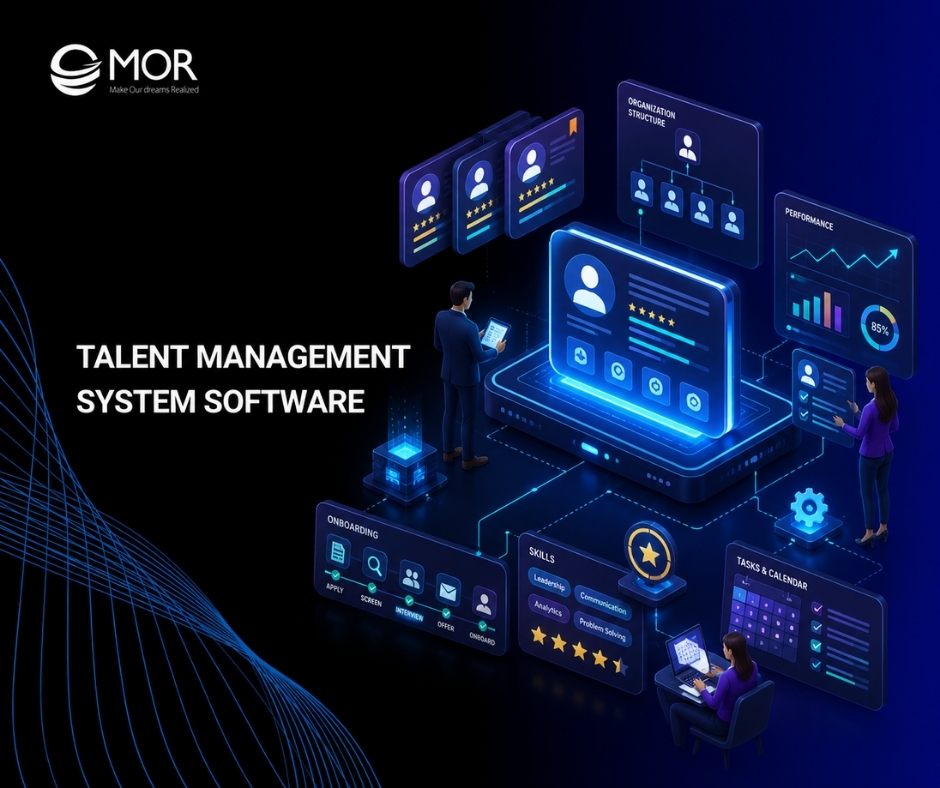
HR platforms now cross into recruiting, HRIS, HCM, learning, performance, skills, and workforce planning, which makes a simple feature checklist a poor buying tool. The right talent management system software depends on your workforce size, current HR stack, talent priorities, integration needs, and budget. This MOR Software guide will review ten platforms, their current pricing, trial access, strengths, limits, and the business cases each one fits best.
Key Takeaways
- Talent management software connects hiring, performance, learning, engagement, and employee development.
- The 10 picks are BambooHR, Greenhouse, PerformYard, Deel Hire, ClearCo, Sloneek, Paylocity, GoCo, Performance Pro, and RemoFirst.
- Compare pricing, integrations, trial access, scalability, and workflow fit before choosing.
What Is Talent Management System Software?
Talent management system software connects the processes companies use to attract, hire, onboard, assess, develop, reward, and retain employees. Most platforms bring candidate data, employee records, goals, skills, learning history, feedback, and workforce reporting into connected workflows.
The category overlaps heavily with HRIS and HCM. Capterra notes that talent platforms commonly cover recruitment, employee performance, talent assessments, learning, and development. Its 2025 HR Software Trends research also found that 43% of HR leaders who use a talent management tool rate it as critical to their company's HR operations.
System | Primary Purpose | Typical Scope | Best When |
Talent Management System | Develop and retain talent | Performance, learning, skills, succession, talent acquisition | Talent strategy drives the purchase |
HRIS | Maintain HR records | Employee data, documents, basic workflows | Core HR administration drives the purchase |
HCM | Manage the broader workforce lifecycle | HRIS, talent, payroll, workforce management | A company wants one broad platform |
Point Solution | Solve one narrow talent problem | Performance, LMS, engagement, ATS | Existing HR systems already cover other processes |
Vendor labels don't always tell you what the product really does. A platform marketed as an HRIS may contain recruiting and performance tools, while a TMS may depend on another system for payroll or core employee records.
That distinction affects procurement. A talent management system software solution application can mean a broad suite in one RFP and a specialist talent layer in another, so compare actual modules, data flows, APIs, and ownership boundaries.
Cloud deployment now dominates this category because employee self-service, browser access, integrations, analytics, and AI services depend on shared data. Yet a company doesn't need to replace its entire HR stack just to improve talent management. A specialist platform can sit beside an existing HRIS when performance, recruiting, learning, or skills management is the real gap.
10 Best Talent Management System Software for 2026
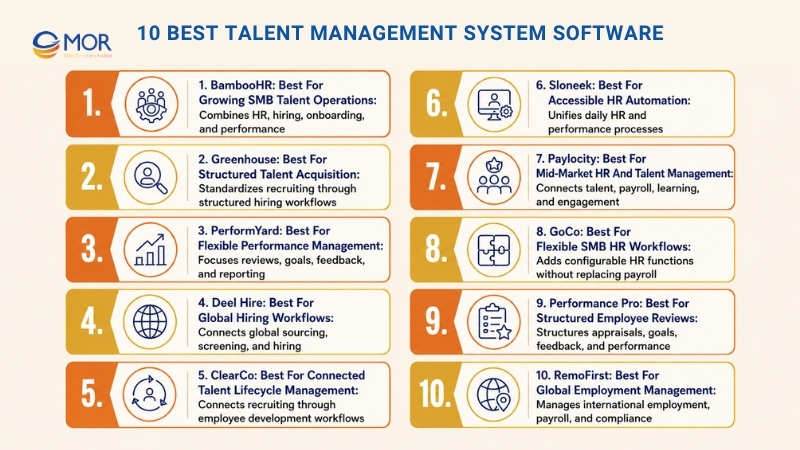
The best talent management system software depends on the job you need it to do. BambooHR covers broad SMB HR needs, Greenhouse goes deeper into recruiting, PerformYard centers on employee performance, and RemoFirst addresses international employment rather than deep succession or learning.
Our talent management system software recommendations reflect those differences. The ten products below include broad HR suites, specialist platforms, recruiting systems, and global workforce tools rather than pretending every buyer needs the same product.
# | Software | Best For | Pricing ($) | Trial |
1 | BambooHR | Growing SMBs needing HR and performance together | Core $10, Pro $17, Elite $25/employee/month | 7-day free trial |
2 | Greenhouse | Structured recruiting and high-volume hiring | Custom quote | Personalized demo |
3 | PerformYard | Configurable performance reviews and goals | 5-10/person/month | Product tour/demo |
4 | Deel Hire | Global sourcing, hiring, and onboarding | Find Talent $14/worker/month | Demo available |
5 | ClearCo | Connected recruiting, onboarding, performance, and engagement | Custom quote | Demo available |
6 | Sloneek | SMB and mid-market HR automation | Custom quote | 14-day free trial |
7 | Paylocity | Mid-market HR, payroll, and talent operations | Custom quote | Demo available |
8 | GoCo | Flexible HR workflows for SMBs | PEPM, custom package quote | Free interactive product tour |
9 | Performance Pro | Structured reviews and goal management | 2-3/user/month, Capterra listing | No free trial listed |
10 | RemoFirst | Global employment and contractor management | EOR from $199/person/month; Premium Contractors $25/person/month | Free contractor tier; EOR demo |
Pricing reflects current vendor pages where public rates exist. Performance Pro is the exception because its vendor doesn't publish a current public price, so the table uses Capterra's August 2026 listing and labels that source accordingly.
BambooHR: Best for Growing SMB Talent Operations
BambooHR suits small and midsize businesses that want employee records, hiring, onboarding, performance, and employee experience under one HR platform. That breadth makes it easier to avoid piecing together separate systems during early growth.
Its current plans begin with Core and move through Pro and Elite. BambooHR lists hiring and onboarding inside the platform, while its performance tools support assessments, collaborative goals, peer feedback, and performance reporting.
Core Talent Capabilities
- Applicant tracking and recruiting workflows
- Digital onboarding
- Central employee records
- Performance assessments
- Goal setting
- Peer feedback
- Employee experience tools
- Reporting and HR dashboards
- Compensation functions in higher plans
Main Advantages
- Keep core HR data connected: Candidate and employee information stays closer to onboarding, performance, and reporting instead of moving between unrelated spreadsheets.
- Lower the adoption barrier: The product targets teams that need broad HR functions without the scale of an enterprise HCM program.
- See pricing before sales calls: BambooHR publishes starting prices for its three primary packages, which makes early budgeting easier.
Potential Limitations
- Expect limits at enterprise depth: Organizations needing deep succession pipelines, skills intelligence, or complex global workforce structures may need another talent layer.
- Plan for tier changes: Broader capabilities sit in higher packages, so the real subscription cost depends on the functions your HR team needs.
Best Fit
BambooHR fits growing organizations that want talent management system software connected to everyday HR administration. It makes particular sense when a company has moved past spreadsheets but isn't ready for a large HCM deployment.
Pricing
BambooHR lists Core at $10 per employee/month, Pro at $17, and Elite at $25 for organizations above 25 employees. Companies with 25 employees or fewer start at a flat $250 monthly rate.
Trial
BambooHR currently promotes a 7-day free trial on its product pages, giving teams time to test workflows before making a purchase.
Greenhouse: Best for Structured Talent Acquisition
Greenhouse puts recruiting at the center. Its Core, Plus, and Pro plans cover sourcing, structured interviewing, scheduling, reporting, candidate matching, automation, and governance rather than trying to replace payroll or broad employee administration.
The platform suits companies that want a more controlled hiring process. Structured interviews, shared scorecards, candidate pipelines, and recruiting analytics help teams keep hiring decisions consistent as volume grows.
Core Talent Capabilities
- Sourcing and recruiting CRM
- Candidate pipelines
- Structured interview kits
- Interview scorecards
- Scheduling
- Talent matching
- Hiring analytics
- Sourcing automation
- Candidate fraud and spam detection
- Enterprise hiring governance
Greenhouse is especially relevant for buyers comparing applicant tracking and talent management software systems. Its strength sits at the candidate and hiring stages rather than deep post-hire development.
Main Advantages
- Standardize hiring decisions: Interview kits, scorecards, and defined workflows give recruiters and hiring managers a common process.
- Scale recruiting controls: Plus and Pro add deeper reporting, automation, data configuration, security controls, and developer tools.
- Work from one candidate pipeline: Recruiters can move sourcing, screening, interviews, and hiring activity through a shared system.
Potential Limitations
- Plan for post-hire tools elsewhere: Performance management, compensation, succession, and broad learning aren't the product's main scope.
- Request pricing before comparison: Greenhouse doesn't publish a fixed subscription rate.
Best Fit
Greenhouse fits organizations where recruiting consistency, candidate quality, hiring volume, or governance creates the largest talent gap. Companies already running a mature HRIS can add it as a specialist acquisition layer.
Pricing
Pricing is customized around the Core, Plus, or Pro plan, hiring volume, organizational complexity, and required capabilities.
Trial
Greenhouse directs prospects toward a personalized product demo rather than a public self-service free trial.
PerformYard: Best for Flexible Performance Management
PerformYard takes a narrower route. Instead of combining payroll, recruiting, benefits, and employee records, it concentrates on performance reviews, goals, feedback, check-ins, and reporting.
That makes the platform relevant when an existing HRIS works fine but annual reviews don't. A buyer seeking performance management system software can add PerformYard without replacing the full HR environment.
Core Talent Capabilities
- Performance reviews
- Check-ins
- Goal management
- 360-degree peer reviews
- Continuous feedback
- Reporting and analytics
- Sign-off workflows
- Employee engagement add-on
- AI-assisted review support
- Meetings and survey add-ons
Main Advantages
- Adapt review cycles: HR teams can configure review forms, timing, goals, and feedback processes around existing performance methods.
- Get implementation support in the subscription: PerformYard states that implementation, employee training, and customer support come with its performance plan.
- Keep the scope focused: Companies don't need to buy payroll or recruiting modules just to replace an old appraisal process.
Potential Limitations
- Keep the HRIS in place: PerformYard describes itself as a performance platform rather than a full HRIS, so broader employee administration still sits elsewhere.
- Add-ons increase spend: AI, engagement, meetings, and surveys can raise the monthly rate beyond the base performance package.
Best Fit
PerformYard works well for HR teams that already trust their employee system but need stronger review cycles, goal tracking, feedback, and reporting. It's also useful when managers follow different performance models across teams.
Pricing
Performance Management costs 5-10 per person/month, billed annually. PerformYard AI adds 1-3, and other add-ons have their own PEPM rates.
Trial
The company provides product tours and sales-led demos rather than listing a standard public free trial on its current pricing page.
Deel Hire: Best for Global Hiring Workflows
Deel Hire, shown as Find Talent on Deel's pricing page, tackles sourcing, screening, hiring, and candidate management. Its close link to Deel's international employment products gives distributed companies a shorter route between recruiting someone and putting the right employment structure in place.
The product works standalone or beside Deel's hiring services. Current functions include job posting, stage-based pipelines, AI screening, offer generation, interview scheduling, interview summaries, candidate management, and marketplace access.
Core Talent Capabilities
- Job posting
- Candidate pipeline management
- AI-powered screening
- Interview scheduling
- AI interview summaries
- Interview feedback
- Offer generation
- Vetted talent marketplace access
- Candidate management
- LinkedIn and Google Workspace connections
Main Advantages
- Connect global sourcing and hiring: Companies recruiting across countries can keep candidate activity close to Deel's broader employment stack.
- Automate repetitive recruiting work: AI screening, summaries, scheduling, and offer generation take routine steps out of the recruiter's queue.
- Keep pipeline status visible: Stage-based candidate tracking gives teams a common view of active hiring work.
Potential Limitations
- Treat it as hiring-led software: Deep succession planning, employee learning, and post-hire performance development require other Deel products or another system.
- Check total stack cost: A $14 recruiting product may sit beside contractor, EOR, payroll, or engagement services, each with separate pricing.
Best Fit
Deel Hire fits distributed companies that recruit employees or contractors across markets and want talent management system software focused on getting people through the hiring funnel. It's less suited to buyers whose priority is succession or long-term performance development.
Pricing
Deel lists Find Talent at $14 per worker/month. The product can run independently or alongside another Deel hiring service.
Trial
The current pricing page provides a Book a demo route. We couldn't verify a separate public free trial for Find Talent, so buyers should confirm trial access with Deel directly.
ClearCo: Best for Connected Talent Lifecycle Management
ClearCo spans recruiting, onboarding, employee performance, learning, engagement, compensation, and people analytics. Its packages let buyers start around hiring or employee growth and move toward wider lifecycle coverage.
The platform works well for organizations that want fewer gaps between recruiting and post-hire development. Connected workflows help HR teams carry employee data into performance reviews, learning plans, engagement programs, compensation decisions, and reporting.
Core Talent Capabilities
- Candidate attraction
- Recruiting workflows
- Background checks
- Onboarding
- Performance management
- Employee management
- Employee engagement
- Learning management
- Compensation management
- People analytics
- Talent AI
- Integrations
Main Advantages
- Keep lifecycle data connected: ClearTalent, ClearGrow, and TotalTalent cover different stages without forcing every organization into the same package.
- Carry hiring data further: Recruitment and onboarding information can feed later goals, performance, learning, and employee development.
- Centralize talent reporting: People Analytics and platform-level integrations support a shared view across talent processes.
Potential Limitations
- Budget requires a sales conversation: Public package descriptions don't include fixed subscription prices.
- Scope can become broad: Buyers should map which lifecycle stages need replacement before buying TotalTalent simply for coverage.
Best Fit
ClearCo suits mid-market organizations that have outgrown separate recruiting, onboarding, performance, and engagement tools. It can work as talent management system software when the business wants employee lifecycle data to stay connected instead of split across point products.
Pricing
ClearCo publishes package structures for ClearTalent, ClearGrow, TotalTalent, and ClearLearn but doesn't display fixed subscription rates. Pricing requires direct contact.
Trial
A live talent management demo is available. The vendor doesn't list a standard self-service free trial on its current product pages.
Sloneek: Best for Accessible HR Automation
Sloneek targets companies that want employee administration and talent processes in a lighter system. Its product covers onboarding, absences, employee records, performance reviews, 360 feedback, reporting, and other daily HR workflows.
For smaller HR teams, that mix can be easier to manage than a large HCM rollout. Sloneek also puts free trial access upfront, which lets buyers test real workflows without entering a credit card.
Core Talent Capabilities
- Employee lifecycle records
- Onboarding
- Performance reviews
- 360-degree feedback
- Competency work
- Attendance and absence management
- HR reporting
- Employee documents
- Time tracking
- AI-supported HR functions
Main Advantages
- Test the full platform early: Trial accounts provide access to all functions for 14 days rather than a restricted demo environment.
- Keep daily HR work together: Employee data, absence tracking, onboarding, and performance processes live in the same product.
- Start without a long setup: Sloneek states that a basic trial setup can be ready in around 15 minutes.
Potential Limitations
- Enterprise depth may be insufficient: Large organizations with complex global succession, workforce planning, or deeply layered governance should compare broader HCM systems.
- Public pricing is limited: Buyers need a tailored quote to establish the complete subscription cost.
Best Fit
Sloneek is a practical talent management system software option for SMB and mid-market HR teams that want core employee processes plus performance management under one roof. Teams that value hands-on product testing before procurement also get a clear advantage.
Pricing
Sloneek currently uses tailored sales pricing for paid deployments rather than publishing one universal list rate.
Trial
The free trial lasts 14 days, includes all functions, and requires no credit card. Sloneek also states that onboarding and setup help is available during evaluation.
Paylocity: Best for Mid-Market HR and Talent Management
Paylocity combines HR, payroll, workforce management, talent, benefits, and employee experience. Talent Management includes recruiting, onboarding support, 360-degree feedback, assessments, compensation management, pulse surveys, and more than 600 prebuilt learning and development classes.
The platform fits companies that want talent processes connected to broader HR operations. For talent management system software large companies, Paylocity can centralize workforce data, learning, employee feedback, compensation, and reporting instead of keeping those functions in separate systems.
Core Talent Capabilities
- Recruiting
- Candidate communication
- Onboarding training
- Pulse surveys
- 360-degree feedback
- Talent assessments
- Compensation management
- Learning and development
- Employee experience
- HR reporting
Main Advantages
- Connect talent and payroll data: Paylocity places talent functions inside a wider HR and payroll environment.
- Support employee learning: Its current Talent Management package includes a large library of prebuilt learning classes.
- Keep employee signals nearby: Surveys, sentiment tools, recognition, performance information, and workforce records can support broader people decisions.
Potential Limitations
- Pricing isn't visible upfront: Companies need to submit workforce and product details before receiving a price.
- Broad scope demands careful selection: An organization interested only in performance reviews may buy more platform than it needs.
Best Fit
Paylocity works best for mid-market organizations that want talent processes connected to HR administration, payroll, workforce management, and employee experience. It suits buyers consolidating several HR systems under one vendor.
Pricing
Paylocity states that pricing is customized around company size, selected products, and support needs. There is no standard current list rate for the Talent Management package.
Trial
The vendor uses pricing consultations and demos rather than publishing a self-service free trial on its pricing page.
GoCo: Best for Flexible SMB HR Workflows
GoCo focuses on small and midsize employers that want configurable HR workflows without discarding every existing provider. Its pricing structure starts with a base package, then lets buyers add functions according to their needs.
That modular model is useful when payroll, benefits, or another system already works well. GoCo states that companies can keep a cloud payroll provider and connect it to the HR platform.
Core Talent Capabilities
- Hiring and onboarding
- Employee HR records
- Employee self-service
- Documents and e-signatures
- Recruiting options
- Performance management
- Goal tracking
- Employee surveys
- eNPS
- Reporting
- HR integrations
Main Advantages
- Keep existing payroll: GoCo can sync with cloud-based payroll systems, so an HR software purchase doesn't automatically trigger a payroll migration.
- Add functions in stages: Base packages and optional add-ons let smaller companies pay for the areas they actually plan to use.
- Test through real demo data: Its interactive Product Tour runs as a preloaded GoCo account instead of a static sales video.
Potential Limitations
- Talent depth varies by package: Recruiting, performance, goals, and engagement capabilities depend on the selected configuration.
- Cost needs a custom calculation: PEPM pricing is used, but the complete rate isn't listed as one fixed public figure.
Best Fit
GoCo fits SMBs that need flexible HR automation and don't want to replace a working payroll setup. It's a good match when your talent management system software requirements sit beside core HR rather than enterprise succession or skills intelligence.
Pricing
GoCo uses a per-employee-per-month structure. Every customer selects a base package, then optional add-ons change the final quote.
Trial
GoCo provides a free interactive Product Tour with guided walkthroughs and demo data. No credit card or personal system setup is required.
Performance Pro: Best for Structured Employee Reviews
Performance Pro is another specialist choice for companies that need structured appraisal and goal workflows rather than a full HR suite. Its scope includes performance reviews, feedback, goal alignment, learning connections, and pay-for-performance processes.
Current pricing presents one complication: the vendor doesn't publish a current public price that we could verify directly. Capterra's 2026 listing currently shows two paid tiers at $2 and $3 per user per month, so buyers should treat those figures as third-party pricing and confirm them before budgeting.
Core Talent Capabilities
- Employee evaluations
- Goal management
- Goal alignment
- Feedback workflows
- Learning and performance links
- Pay-for-performance processes
- Performance automation
- Employee review records
Main Advantages
- Keep attention on performance: Organizations can replace spreadsheet reviews without buying a wide HCM package.
- Connect goals and evaluations: Goal alignment and performance review workflows sit inside the same product.
- Start from a low listed rate: Current third-party pricing is lower than many broad HR suites, pending direct vendor confirmation.
Potential Limitations
- Expect other HR systems to remain: Recruiting, payroll, broad employee administration, and global workforce management need separate tools.
- Verify pricing directly: The most visible current rates come from Capterra rather than an official public vendor pricing page.
Best Fit
Performance Pro suits organizations replacing manual appraisal processes or older review tools. It makes sense when HR wants structured goals and evaluations but doesn't need another system to manage the whole employee lifecycle.
Pricing
Capterra lists Pick 1 at $2/user/month and Pick 2 at $3/user/month, while Pick 3 requires vendor contact.
Trial
Capterra's current pricing record states no free trial and no free version. Buyers should confirm demo or evaluation terms directly before signing.
RemoFirst: Best for Global Employment Management
RemoFirst sits at the edge of the TMS category because its main role is global employment rather than deep performance, learning, or succession management. It acts as an Employer of Record and supports contractor management, payroll, employment compliance, benefits, and international workforce administration.
That focus makes it useful when the immediate talent problem is 'How do we employ this person in another country?' rather than 'How do we run their next performance cycle?' RemoFirst currently supports EOR hiring across 185+ countries.
Core Talent Capabilities
- International employee onboarding
- Employer of Record services
- Global payroll
- Contractor onboarding
- Contractor payments
- Local employment contracts
- Benefits access
- Background checks
- Visa and work permit support
- International compliance administration
Main Advantages
- Enter new hiring markets without local entities: The EOR structure handles formal employment requirements for international hires.
- See starting rates publicly: RemoFirst publishes its base EOR and contractor prices.
- Start contractor management for free: Its free contractor tier covers onboarding, identity checks, contracts, and expense reimbursement.
Potential Limitations
- Don't treat it as a deep TMS: Succession planning, structured learning, competency management, and complex performance programs aren't its main purpose.
- Separate HR development tools may remain necessary: A growing organization may pair RemoFirst with an HRIS or performance platform.
Best Fit
RemoFirst suits startups and growing companies employing people abroad without forming a legal entity in each market. It works best when global hiring and employment administration sit ahead of deeper talent development requirements.
Pricing
Employer of Record service starts at $199 per person/month. Premium Contractors costs $25 per person/month, and contractor management has a free tier.
Trial
The contractor tier can be used free, while EOR buyers are directed to book a demo.
How Does a Talent Management System Work?
A software talent management system works as a shared data and workflow layer across the employee lifecycle. Candidate details gathered during hiring can become onboarding records, performance data, skill profiles, learning plans, and succession information later.
The value comes from continuity. HR shouldn't need to rebuild the same person's profile every time that employee moves into another talent process.
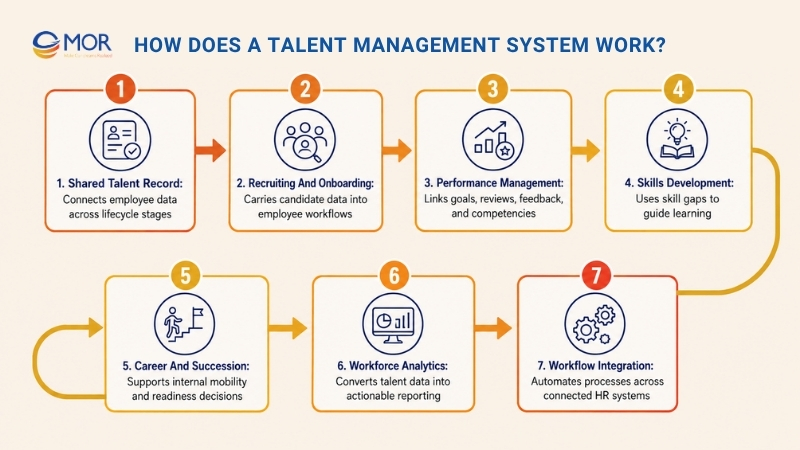
- Create a structured talent record: The system stores candidate profiles, resumes, employee data, skills, competencies, goals, feedback, learning history, and career interests. Those records give later workflows a common data source.
- Run recruiting and selection: Recruiters manage requisitions, applicants, screening, interviews, decisions, and offers. An ATS may sit inside the platform or connect through an API.
- Carry new hires into onboarding: Candidate records become employee records after acceptance. HR can assign documents, tasks, training, manager actions, and other onboarding work without re-entering the same data.
- Connect goals to performance: Managers create goals, schedule reviews, collect feedback, record competency ratings, and track progress across review periods. Past evaluations remain available for future development conversations.
- Develop employee skills: Skill gaps can trigger learning plans, courses, mentorship, or other development activity. The World Economic Forum's Future of Jobs Report 2025 found that 63% of employers cite skills gaps as a main barrier to business change, while 59 of every 100 workers are projected to need training by 2030.
- Guide career and succession choices: HR and managers can compare skills, performance history, readiness, interests, and role requirements when reviewing internal moves or succession pools.
- Track engagement and retention signals: Surveys, recognition, feedback, attendance patterns, and other employee data can highlight teams that need manager attention.
- Turn workforce data into reports: Dashboards bring hiring activity, performance, learning, skills, mobility, turnover, and other measures into a format leaders can review.
- Exchange data across the HR stack: APIs and native connectors pass information between HRIS, payroll, LMS, ATS, ERP, identity systems, collaboration tools, and BI platforms.
- Trigger routine workflows: Rules can send reminders, start approval chains, assign onboarding work, schedule reviews, launch learning tasks, or notify managers after employee events.
A typical flow looks like Applicant → Candidate → New Hire → Performance → Skills Development → Career Mobility → Succession. The record gains more useful information at each stage, which gives managers a better basis for later talent decisions.
Key Features of Talent Management System Software
Feature count can be misleading. The benefits of talent management system software depend more on how well recruiting, performance, learning, skills, engagement, and reporting exchange information than on how many boxes appear in a vendor comparison.
Map each capability against a real workflow before buying. That exercise quickly separates useful functionality from the 'nice to have' items that raise cost without fixing an HR problem.
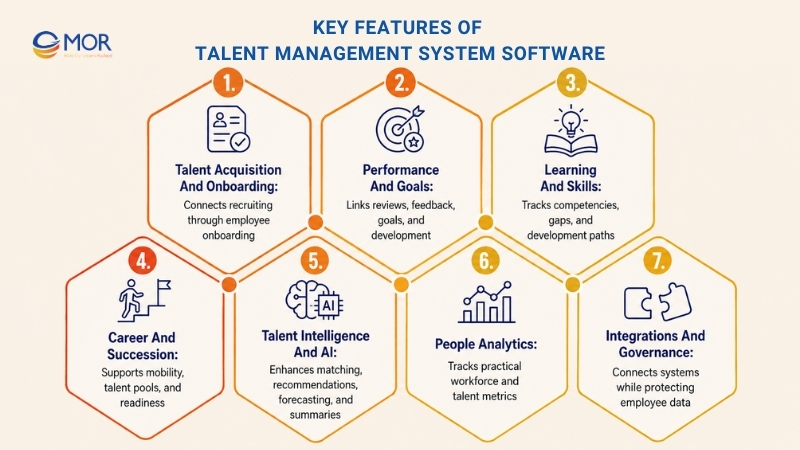
Talent acquisition and onboarding
Look for candidate sourcing, ATS pipelines, interviews, offers, onboarding tasks, document collection, and handover into employee records. AI is already entering this area quickly. SHRM's 2025 Talent Trends found that 51% of organizations use AI to support recruiting, the highest reported HR use case.
Performance and goal management
Reviews, OKRs, manager check-ins, 360 feedback, calibration, competencies, and development plans should share employee data. A review system becomes far more useful when managers can connect goals to prior feedback and future growth plans.
Learning and skills development
LMS functions, skill inventories, competency models, learning paths, and gap analysis support internal development. Plan talent management system software training around HR administrators, managers, and employees so each group knows which actions belong in the system.
Career mobility and succession
Career paths, internal opportunities, talent pools, readiness levels, and high-potential identification help companies fill more roles internally. A good setup lets HR compare role requirements against employee skills and performance history.
Employee engagement
Pulse surveys, eNPS, recognition, employee listening, and feedback tools give managers another source of workforce signals. The useful part comes after collection: teams need ownership for reviewing results and acting on them.
Compensation and rewards
Merit cycles, salary bands, incentive rules, and pay-for-performance links can connect rewards to performance data. Buyers should check local payroll boundaries before assuming a talent platform can calculate or process every payment.
Talent intelligence and AI
Current systems use AI for candidate matching, skill inference, recommendations, summaries, workforce forecasting, and HR assistants. Review source data, permissions, human approval steps, and audit records before assigning AI to higher-risk decisions.
People analytics and reporting
Dashboards should answer practical questions about hiring, turnover, performance distribution, learning participation, skills, internal mobility, and retention. Reporting loses value when the same employee has conflicting records in several systems.
Integrations and APIs
Check connections to HRIS, payroll, ATS, LMS, ERP, Microsoft Teams, Slack, identity management, data warehouses, and BI tools. API access becomes especially useful when standard connectors don't match your data model.
Security and governance
Role-based permissions, audit logs, data retention rules, privacy controls, SSO, and access reviews protect employee information. Buyers should map who can read, edit, export, and approve sensitive data before UAT.
Talent Management System Software vs Traditional HR Software
Traditional HR software centers on administrative work: employee records, documents, attendance, payroll inputs, and routine HR processes. Talent management system software puts greater weight on attracting, assessing, developing, engaging, and retaining employees.
The border between the two is getting harder to see. BambooHR and Paylocity, for example, place talent functions beside core HR administration, so product labels alone aren't enough for a sound comparison.
Comparison Area | Talent Management System Software | Traditional HR Software |
Primary focus | Talent acquisition, development, performance, retention | HR administration and employee records |
Recruiting | ATS, candidate pipelines, assessments, hiring workflows | Basic hiring records or limited recruiting |
Onboarding | Connected onboarding and development workflows | Documents, forms, basic task lists |
Performance | Goals, reviews, feedback, calibration, competencies | Basic appraisal records |
Learning | LMS, skills development, learning paths | Limited training records |
Skills management | Skill profiles, gap analysis, competency models | Basic employee qualifications |
Career development | Career paths and development plans | Limited or manual processes |
Internal mobility | Talent matching and internal opportunities | Usually limited |
Succession planning | Talent pools, readiness, leadership pipelines | Usually limited |
Employee engagement | Surveys, feedback, recognition, sentiment | Basic employee communication |
Analytics | Talent, skills, performance, mobility, retention data | Payroll, headcount, attendance, basic HR reports |
AI use | Skills matching, recommendations, talent analysis, workflow support | Mainly administrative automation |
Main users | HR, talent teams, managers, leaders, employees | HR administrators and payroll teams |
Best fit | Companies focused on developing and retaining talent | Companies focused on core HR administration |
A company running mature payroll and HRIS tools may only need a performance, learning, or recruiting layer. Another company may save admin work by consolidating several HR products into one broader suite.
Start with system boundaries. Write down which application owns candidate data, employee records, payroll, goals, skills, learning, and reporting, then test whether your proposed platform removes duplication or creates another copy of the same data.
Develop a Strategic Talent Management System with MOR Software
Packaged platforms solve many common HR workflows, but they can leave gaps when recruitment logic, performance rules, legacy data, integrations, or user scale differs from the vendor's standard setup. MOR Software's service materials cover web, mobile, Salesforce, offshore development, consulting, QA, system work, and Human Resource Management as an industry domain.
That gives companies another route when standard talent management system software can't fit the operating model. MOR's current HRM scope includes software for recruitment, performance, training, and payroll, supported by broader engineering and consulting services.
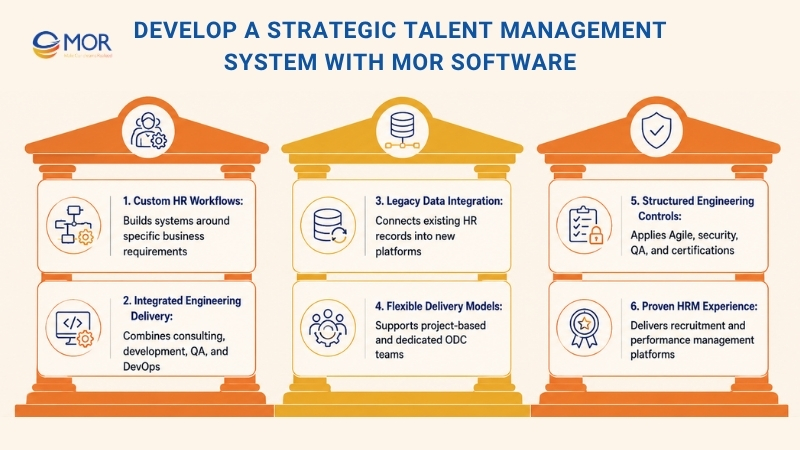
- Shape HR workflows around the business: MOR can develop web and mobile systems when standard SaaS workflows don't match company rules. Its HRM experience covers recruitment, performance, training, and payroll, which provides a relevant base for custom talent products and system extensions.
- Connect consulting to engineering delivery: The service portfolio spans web development, mobile development, Salesforce development, offshore teams, QA, DevOps support, and IT consulting. A project can move through requirements clarification, architecture decisions, coding, testing, delivery, and maintenance under one technical relationship.
- Link new systems to existing HR data: Legacy records are often the hard part of a TMS program. In the PEOPLE HRM project, MOR assigned a separate four-engineer team to integrate customer data into the platform when corporate demand increased.
- Choose project ownership that fits your team: MOR supports project-based development and Offshore Development Center models. Project-based delivery suits a defined system scope, while ODC gives a client a dedicated engineering team that can extend internal capacity over time.
- Apply structured engineering controls: MOR documents two-week Agile sprints, DevOps and QA support, ISO/IEC 27001 information security practices, and engineers holding 150+ certifications across AWS, PSM, Salesforce, ISTQB, Java, Google Cloud, and other technology areas. Its stack covers Java, PHP, Python, ReactJS, Salesforce, AWS, Azure, Google Cloud, and other technologies used across enterprise applications.
- Check HRM experience against real delivery: PEOPLE is one of MOR's largest HRM references. The engagement ran for four years and involved nearly 100 MOR developers, while the platform covered recruiting, employee evaluation, planning, and target management. A second Talent Solutions Optimization Initiative used a seven-member team for 12 months with PHP, Zend Framework, Laravel, OracleDB, and SQL Server; the documented results included faster hiring, better new-hire productivity, stronger engagement, and better retention.
MOR Software fits companies that need a custom talent platform, extensions to an existing HR system, legacy data migration, enterprise integrations, or extra engineering capacity for a growing HR product. Share your target modules, user volume, current systems, and integration requirements through MOR Software's contact page so the team can assess the technical scope and suitable delivery model.
Conclusion
Choosing talent management system software starts with the workflow you need to fix, not the longest product checklist. Compare data ownership, integrations, talent depth, user fit, and full cost before you shortlist vendors. If packaged platforms leave gaps around custom HR logic, legacy data, integrations, or scale, contact MOR Software to assess custom development, system integration, modernization, or an ODC delivery model.
"Solutions Director at MOR Software, has extensive expertise in software development and management. He leads innovative projects and provides strategic solutions to enhance business operations, helping clients achieve digital transformation goals."
Pham Huu Canh


Solutions Director
MOR SOFTWARE
Frequently Asked Questions (FAQs)
What is talent management system software?
It is software that manages connected talent processes across recruiting, onboarding, performance, learning, skills, career development, succession, engagement, and workforce analysis. A TMS often connects to HRIS or payroll systems rather than replacing every HR application. The exact scope differs widely between vendors.
Which organizations or roles benefit most from talent management system software?
Growing SMBs, mid-market companies, enterprises, distributed teams, and recruitment-heavy organizations can all benefit when talent processes become hard to manage manually. Primary users include HR teams, recruiters, talent leaders, managers, executives, and employees. The right product depends on workforce scale and process complexity.
How does talent management system software differ from a standard HRMS?
A TMS centers on employee attraction, development, performance, skills, mobility, and retention. An HRMS usually covers wider administrative work, including employee records, attendance, payroll-related processes, and benefits. Many modern products cross these boundaries, so compare modules and data ownership rather than product labels alone.
What are the essential features to evaluate in a talent management system software?
Prioritize recruiting, onboarding, performance, goals, learning, skills, succession, engagement, reporting, APIs, and access controls according to your actual workflows. Integration quality deserves equal attention because duplicate candidate and employee records can create more admin work than a new platform removes.
How much does talent management system software cost in 2026?
Pricing ranges widely. Public examples in this guide run from Performance Pro's third-party listed 2-3/user/month to BambooHR plans at 10-25/employee/month, while several vendors use custom quotes. Add implementation, migration, integrations, training, support, add-ons, and internal administration when calculating total cost.
How long does it take to implement a talent management system software?
Implementation time depends on workforce size, data quality, integrations, configuration, security review, and the number of modules. A narrow performance tool can move faster than a broad HCM rollout. Data migration, UAT, manager preparation, and integration testing often determine the real timeline.
Will talent management system software fully automate or replace HR managers?
No. TMS software can automate reminders, routing, screening support, reporting, scheduling, and other repeated tasks, but people still own hiring decisions, feedback, performance conversations, compensation judgment, employee relations, and workforce planning. AI should support defined HR workflows rather than become the final decision maker.
Can talent management software integrate with an existing HRIS and payroll system?
Yes, many platforms connect through native integrations, APIs, middleware, or ETL processes. Check which system owns each employee field before integration begins. Clear ownership prevents duplicate records, conflicting updates, broken payroll inputs, and reporting differences between HR, finance, and talent teams.
How is AI used in modern talent management system software?
AI supports candidate matching, resume screening, skill inference, review summaries, learning recommendations, HR assistants, workforce forecasts, and reporting. Buyers should test the quality of source data, permissions, approval steps, auditability, and output accuracy before placing AI inside higher-risk employee decisions.
Share


Make Our-Dreams Realized


© 2023 . MOR Software. All Rights Reserved
Sitemap
Privacy Policy
Terms of Use
Rate this article
0
over 5.0 based on 0 reviews
Your rating on this news:
Name
*Email
*Write your comment
*Send your comment
1