


9 Steps to Build Compensation Management Process
Pay decisions get messy when salary bands, bonuses, benefits, and approvals live in different files. A clear compensation management process helps you control people costs, keep pay fair, and make better reward decisions across HR, finance, and management teams. In this guide, MOR Software will show the 9 steps to build a stronger compensation plan and turn it into a working system.
Key Takeaways
- A compensation management process gives your company a clear way to set pay, benefits, bonuses, and reward rules without random decisions.
- The 9-step compensation planning process covers compensation strategy, job analysis, market research, salary structure design, performance alignment, benefits planning, compliance review, employee communication, and ongoing evaluation.
- Technology helps human resource development teams manage pay data, approval flows, audits, and reports with fewer errors and less manual work.
What Is Compensation Management Process?
A compensation management process is the way a company plans, builds, applies, and manages pay programs so it can hire good people, keep them, and reward strong work while keeping pay fair inside the business and competitive in the market.
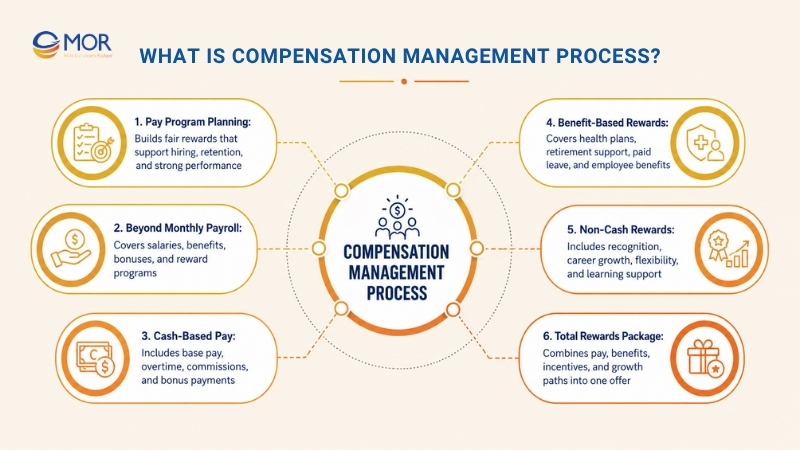
A simple process definition covers more than monthly payroll. Payroll is about sending the correct pay to employees on time. The compensation management process in HRM models with larger choices around salary levels, benefits, bonuses, and reward programs that support fairness and business goals.
- Cash-based pay: Base pay, hourly rates, overtime, sales commission, and bonus payments
- Benefit-based rewards: Health plans, retirement support, paid leave, and other employee benefits
- Non-cash rewards: Recognition, career growth, flexible work, and learning support
The types of compensation management can feel like planning a full meal, not just putting bread on the table. Base pay may cover the basic need, but benefits, incentives, and growth paths make the full package feel worth staying for.
9 Steps To Build Compensation Management Process
Before you build a pay plan, you need to know what it means and what it does not mean. Many teams mix up a pay strategy with a pay plan, but they are not the same thing. After the definition compensation management process becomes clear, it is easier to see strategy as the reason behind pay choices and the plan as the way those choices get used.
Your pay strategy is the big view of your company’s reward choices. It shows where you want to stand in the talent market, how you balance fair pay inside the business with outside pay levels, and which rules guide salary decisions. It also connects pay with business goals, culture, and company values.
Your pay plan turns that strategy into daily use. It sets clear items like salary bands, job levels, bonus rules, and benefit options that shape how employees are paid.
A strong pay plan often takes 4 to 8 weeks to build with input from HR, finance, managers, and leaders. These compensation management process steps show how the compensation process moves from a high-level idea into a working pay system.
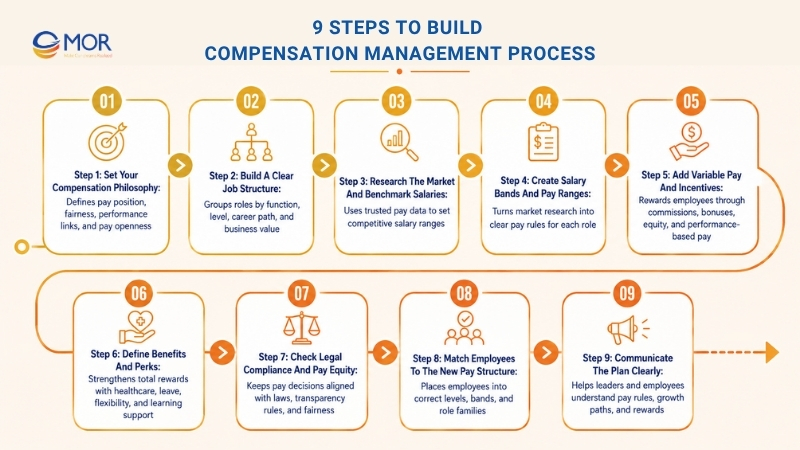
Step 1: Set Your Compensation Philosophy
Every strong pay plan needs a clear point of view before numbers enter the picture. A compensation philosophy explains how your company makes pay choices, rewards employees, and connects those choices with wider business goals.
At the basic level, your pay philosophy should answer:
- Market pay position: Will your company pay above the market, near the market, or below the market?
- Fairness across teams: How will you keep pay balanced across roles, levels, and departments?
- Performance link: How much should results affect salary increases, bonuses, or other rewards?
- Pay openness: How much information will employees see about ranges, levels, and pay rules?
Real-world case: Salesforce builds its pay philosophy around equal pay, and it connects this work with its wider values around fairness and inclusion:
Step 2: Build A Clear Job Structure
A pay plan needs a shared way to define roles before salary decisions can make sense. A job architecture gives your company a common system for grouping jobs by function, team, and work scope. It also shows how roles connect through growth paths, management duties, and level of business value. This job map gives the compensation management process flow a steady base.
Building your job structure often includes:
- Role groups: Putting similar jobs into clear families, like Engineering, Sales, or Marketing.
- Growth levels: Creating career paths that help candidates and employees see where they can move next and how pay changes with each move. One path may look like Individual Contributor → Manager → Director → Executive.
- Level guides: Setting out the skills, duties, and results expected at each level. A simple guide may look like this:
- Software Engineer Level 2: Completes assigned work with some guidance, shows solid skill in main technical areas, and starts to help with small team results.
- Software Engineer Level 3: Leads harder work, supports junior team members, and often joins technical planning across teams.
Step 3: Research The Market And Benchmark Salaries
Pay has a strong effect on whether people stay with a company or look elsewhere. Gallup found that 30% of employees who left a job on their own said better pay and benefits could have made them reconsider.
No compensation management process can work well if it ignores what other employers are paying. That is why market research and salary benchmarking matter.
To learn the market rate, start with trusted salary tools like Deel Salary Insights or providers like Mercer. These sources collect real pay data, which helps you set salary ranges that match the hiring markets you use.
When you research the market, review:
- Sector pay levels: Similar jobs can pay very different amounts across industries. Your team needs to know how your sector shapes pay expectations.
- Role-based pay data: Pay can shift a lot between jobs, even inside one team. Compare roles that truly match in scope and skill.
- Location-based pay factors: Place still affects salary, even when work is remote. Jobs in high-cost cities often need higher pay than similar jobs in lower-cost areas.
- Pay movement: Economic pressure, scarce skills, and return-to-office rules can push salaries up or down. Watching these changes helps you adjust earlier instead of fixing pay gaps later.
Step 4: Create Salary Bands And Pay Ranges
Market data has little value if it does not guide real pay choices. Salary bands turn your research into clear pay ranges for each job, level, and role family.
Each band should show the lowest, middle, and highest base pay for a role. In a salary administration process, these ranges should reflect:
- The outside market rate for the job
- The job structure your company has built
- Your pay philosophy, like paying at, above, or below market
Without salary ranges, pay talks become random and hard to defend. When bands are clear, hiring managers, HR, and finance can work from the same rulebook.
You also need to decide how employee location changes pay. GitLab, as a real-world case, uses an open compensation calculator with a location factor for each employee. It does not base pay only on living costs; it compares local labor markets against San Francisco as the reference point.
Other companies, like Basecamp, use location-free pay and give the same salary based on the San Francisco market at the 90th percentile, no matter where an employee works.
Step 5: Add Variable Pay And Incentives
Base salary is only one piece of a full pay plan. Many companies add variable pay to bring in and keep high performers. Employees earn this pay when they meet certain targets or business results, so it is not fixed like base salary.
- Revenue-based commission: Pay connects directly to sales results or quota completion, which is common in sales teams.
- Company profit sharing: A business shares part of its profit with employees, often once a year.
- Shares and options: Startups and growth companies often use long-term ownership rewards to keep employees committed and tied to company results.
- Stay bonuses: These payments help keep key employees during change, like restructuring, leadership shifts, or large product launches.
- Result-based bonuses: One-time payments reward individual, team, or company performance.
- Merit pay increases: Salary increases reward steady strong work, new duties, or new skills.
No single incentive model fits every company or every role. Variable pay should match the job type, level of duty, and pay philosophy. These compensation process examples show how incentives can change by role:
- Sales teams: These roles often use commission tied to sales targets or revenue. Strong sellers may earn 40 to 50% of total pay through bonuses or commission.
- Senior leaders: Executives often receive performance bonuses, long-term incentive plans, and equity awards that connect leadership goals with company results.
- Support or operations roles: These jobs may have a smaller variable pay portion, but they can still receive bonuses tied to customer satisfaction, response time, or similar measures.
- Product and engineering teams: These employees may receive stock options or yearly bonuses tied to company milestones or peer-reviewed work results.
Step 6: Define Benefits And Perks
Benefits and perks are often treated like extras, but they are a core part of total rewards. A MetLife benefits study found that employees who feel cared for by their employer are 1.5 times more likely to say they are happy and feel they belong at work.
Salary may help bring someone into your company, but benefits often affect whether they stay. In tight hiring markets, benefits can shape a candidate’s choice between job offers. In retention planning, they also help raise satisfaction without always turning to salary increases.
Modern pay packages often include:
- Medical coverage: Health, dental, and vision plans are still common in many markets.
- Paid leave: Vacation, sick days, and personal leave, often with more choice for different work styles.
- Retirement support: 401(k) plans, pensions, or local retirement programs.
- Family leave: Longer and more inclusive leave for parents and caregivers.
- Remote work support: Money for home office tools, internet, or coworking space.
- Mental health support: Therapy access, wellness budgets, or mental health days.
- Learning budgets: Funds for training, certificates, coaching, or upskilling.
- Local benefit options: Transport support, childcare help, or regional perks that make benefits fair for global teams.
These rewards show the kind of workplace your company wants to build. The compensation management process should make clear whether you care only about short-term cost control or long-term loyalty, and good candidates can spot the difference.
Step 7: Check Legal Compliance And Pay Equity
Pay planning must follow the rules in every place where your employees work. These rules may cover labor law, tax, minimum wage, social payments, pay fairness, and salary transparency.
Pay transparency rules are changing how companies handle compensation. Different regions are moving in different ways:
The United States
States like California, New York, and Colorado now require employers to show salary ranges in job ads. Some states also require companies to share pay range details with current employees when they ask or during review periods. These rules aim to support fair pay and lower bias in pay decisions, mainly for groups that have been underpaid in the past.
Europe
Under the EU Pay Transparency Directive, member states must bring in new pay transparency and pay equity rules by June 2026. The directive covers salary ranges in job posts, bans pay secrecy, and sets reporting duties for employers above certain headcount levels. Companies also need to explain pay gaps that cannot be justified and give workers access to pay data by role group and gender.
Canada
Provinces like British Columbia and Ontario have added or widened pay transparency rules, including salary range sharing and public reporting duties.
Australia
The Workplace Gender Equality Amendment (Closing the Gender Pay Gap) Bill 2023 requires large employers to publish gender pay gap data, with more detailed rules being added over time.
Compensation managers should also review the full range of pay transparency levels and the main points to consider at each level.
Step 8: Match Employees To The New Pay Structure
To put your pay plan into real use, match every employee to the job levels and salary bands you have created based on their current work, skills, and level of business value.
This work is often called leveling, and it helps turn the compensation management process into action. To do it well:
- Check each employee’s current job, team, and work scope
- Place them into the right job family and level
- Use location rules or variable pay models when needed
- Mark cases where pay or level does not match the expected range
Team leaders add useful detail because they know how roles really work day to day. Their input also helps the wider business trust the final decisions.
Mapping employees after the pay structure is done also keeps old pay choices from shaping future decisions. It gives the employee compensation management process a clean base that HR can use when explaining or defending pay outcomes.
Step 9: Communicate The Plan Clearly
Employees care about pay, and they want to know their company has handled salary choices fairly. If the process feels hidden, trust can drop, and more employees may leave for a company with clearer pay rules.
Strong communication should cover leaders and individual contributors.
Guidance for team leaders
Your people leaders will share the message, answer questions, and handle disappointment or frustration. Give them:
- A simple explanation of the company’s pay philosophy and how the structure was built
- The reason behind employee mapping and role leveling
- Talking points, FAQs, and training so departments give clear and steady answers
Guidance for individual employees
Use documents, Q&A sessions, or one-on-one meetings to explain:
- How their pay was set, based on role, level, location, performance, and other factors
- What their total pay includes, like salary, bonus, equity, and benefits
- How they can grow and what they need to do to move into the next pay band or level
A clear pay plan cuts confusion and helps people understand the system. When employees know how pay decisions are made and what they need to do next, they are more likely to trust the process, even when they do not agree with every result.
The Importance Of Effective Compensation Management Process
Pay and rewards sit near the top of what employees care about most. The way you run your compensation management process affects retention, hiring, legal compliance, and the strength of your business results.
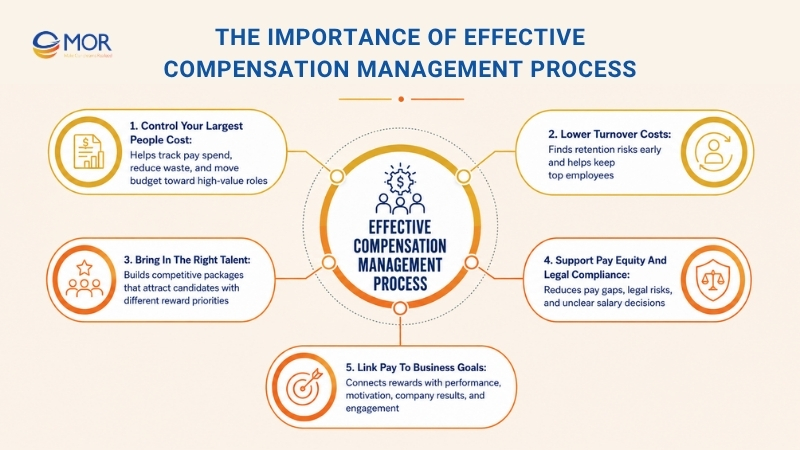
Control Your Largest People Cost
For many companies, employee pay is the largest cost in the yearly budget. If no one reviews it often, waste can build up fast. Market pay changes, roles grow, and a package that worked two years ago may now feel weak. Live pay data and strong compensation planning help you see where money goes, spot overspend, and move budget toward the roles and people that create the most value.
Lower Turnover Costs
Replacing employees costs a lot. Gallup research shows that replacing one employee can cost 1.5 to 2 times that person’s yearly salary, based on role and seniority. For a 100-person company with an average salary of $50,000, high turnover may create millions in yearly replacement costs. A strong compensation management process helps you find retention risks early, keep pay competitive, and hold on to your best people.
Bring In The Right Talent
Many candidates look at the full package first, including benefits, flexibility, equity, and growth paths. Companies with clear and competitive pay structures have a stronger hiring position, mainly when they need rare or hard-to-find skills.
Good pay plans also help recruiting teams speak to different candidate groups. Different people value different rewards. Deloitte’s 2025 Global Gen Z And Millennial Survey found that Gen Z employees value work-life balance more than moving up the company ladder, with only 6% saying their main career goal is to reach a leadership role. For this group, flexibility, mental health support, and meaningful work may matter more than higher base pay. Sales teams, in contrast, often expect commission-heavy plans where earnings rise with results.
When you know what drives candidates in your market, you can shape reward packages that bring in people who are likely to do well in your company.
Support Pay Equity And Legal Compliance
Without regular review, pay choices can become uneven over time. People in similar jobs may earn different amounts because of hire date, negotiation power, or manager choice. This can create pay compression, where new hires earn the same as, or more than, longer-serving employees. It can also create pay gaps across gender, age, or other groups. Compensation planning gives your company a clear structure, lowers legal risk, and makes pay decisions easier to explain.
Link Pay To Business Goals
A company depends on its people, and pay has a direct link to how they work. The compensation management function connects employee rewards with company results. It gives you ways to motivate people through base pay, bonuses, equity, and non-cash rewards. When employees see how their work connects to pay and how that pay supports company goals, the compensation management business process creates stronger focus, better output, and higher engagement.
Common Challenges In Compensation Management Process And How To Fix Them
A clear structure helps, but real-world pay planning still brings some hard moments. These are common issues companies face when running a compensation management process, plus what to keep in mind as you fix them.
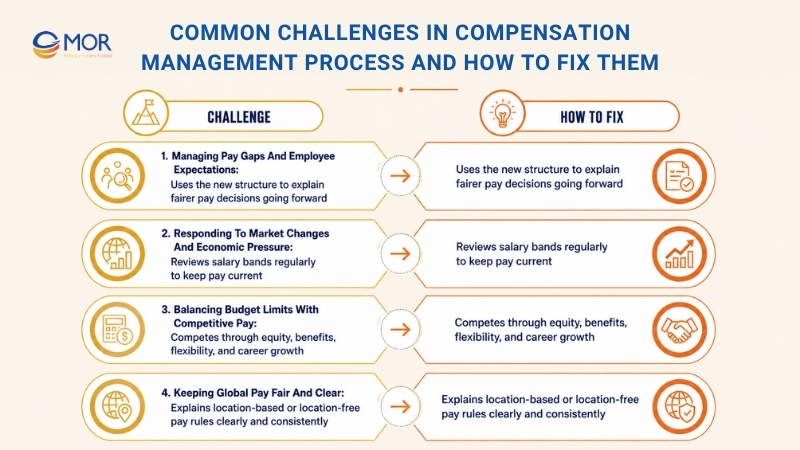
Managing Pay Gaps And Employee Expectations
When you make pay structures formal, old gaps often come to light. Two people doing similar work may earn different pay because they joined at different times, negotiated differently, or had different managers. These gaps can cause tension, but you should not try to defend every old decision. Use the new structure as the base for each talk, then show how the pay plan will create fairer decisions from now on.
Responding To Market Changes And Economic Pressure
Pay data can get old quickly. Inflation, living costs, and talent demand can make salary bands out of date in a short time. To keep pay current, set regular review points and leave space in the budget for updates. This matters more for fast-growing companies and industries where hiring pressure changes often.
Balancing Budget Limits With Competitive Pay
Startups and self-funded companies may not be able to match salaries from large brands, and that is normal. Only one company can pay the highest rate in a market. Still, your compensation management process can compete through equity, benefits, flexible work, and clear career growth.
Keeping Global Pay Fair And Clear
Global teams face a tough question: should pay change based on where employees live? Many remote-first companies begin with location-based pay, but this model can feel random later. It may seem unfair when people in different cities do the same work but receive different salaries.
Real-world case: Float recently stopped using location-based pay. The company now pays every team member at 95% of the San Francisco market rate, no matter where they live. The change came from a push for more fairness and simpler rules, and “same work, same pay” became its new pay principle.
Location-based pay can still work for many companies. But if you use it, you need to explain the reason clearly and show how it matches your company values. The most important point is to keep the model consistent and ready for growth.
How To Evaluate The Effectiveness Of Your Compensation Management Process
A compensation management process should not sit untouched after launch. You need to test whether it still supports employees, hiring goals, budget control, and legal rules. Regular review helps you spot weak points before they turn into bigger pay problems.
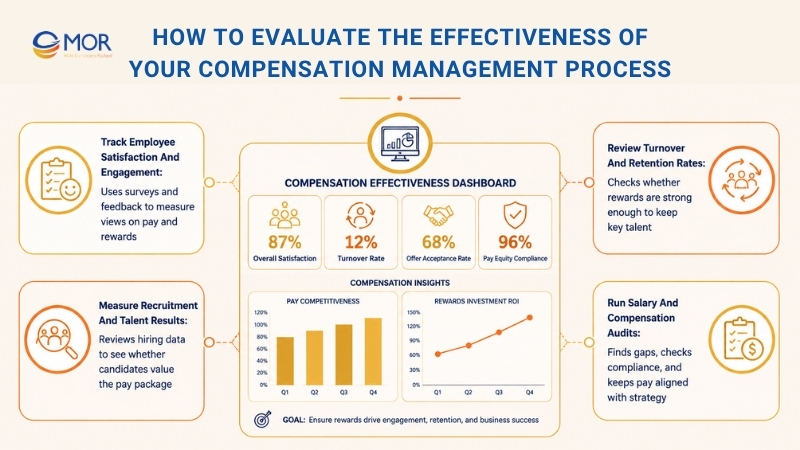
Track Employee Satisfaction And Engagement
One way to check pay program quality is to measure how employees feel about it. Employee surveys, feedback channels, and focus groups can show how people view their salary, benefits, bonuses, and growth paths. High satisfaction and strong engagement often show that the pay program meets employee needs and expectations.
Review Turnover And Retention Rates
High turnover can point to pay-related problems. When you study turnover and retention rates, you can see whether your rewards are strong enough to keep top employees. If many people leave, the compensation management process may need updates so your company can protect key talent.
Measure Recruitment And Talent Results
A strong pay program helps your hiring team attract better candidates. Review recruitment results, including the number of applicants, applicant quality, offer acceptance rates, and hard-to-fill roles. These numbers show whether candidates see your pay package as attractive. Better recruitment data helps your company adjust pay plans and reach stronger talent.
Run Salary And Compensation Audits
Regular salary and pay audits help your company follow laws, internal rules, and market standards. A good audit reviews pay data, compares it with approved rules, and finds gaps or uneven decisions. It should also check the main compensation management process components, including job levels, salary bands, bonuses, and benefits. These reviews help your company fix issues early, keep pay fair, follow rules, and stay connected to the pay strategy.
Using Technology To Improve Compensation Administration
Compensation technology helps companies move away from manual pay work and into connected systems with better accuracy, visibility, and control. As the business grows, these tools make it easier to run the compensation management process across teams, departments, and locations in a steady way.
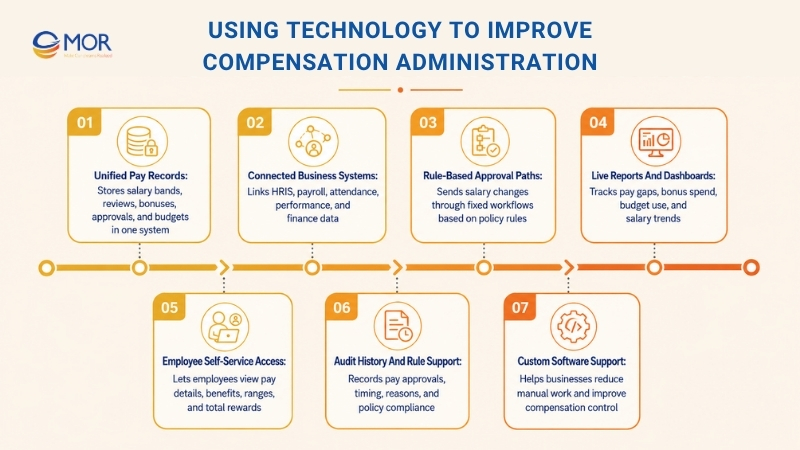
- Unified pay records: Modern pay software brings salary bands, pay reviews, bonuses, and approval steps into one protected system. It creates one trusted place for employee pay data and budget choices.
- Connected business systems: A strong tool can link with HRIS integration, automated payroll processing, attendance, performance, and finance systems. When HR teams have data from several sources in one place, they can make pay choices with more complete and reliable information.
- Rule-based approval paths: Compensation technology can send salary changes through fixed approval steps based on roles, teams, budgets, or policy rules. This cuts waiting time and removes much of the back-and-forth through emails and manual reminders.
- Live reports and dashboards: Dashboards help HR leaders watch salary band movement, pay gaps, bonus spend, budget use, and pay trends. Better visibility helps teams find issues before they grow.
- Employee self-service access: Employees can view salary details, bonus eligibility, pay ranges, benefits, and total rewards statements in one place. Clear access to pay information helps build trust and better understanding.
- Audit history and rule support: Audit logs show who approved pay changes, when each choice was made, and why it happened. These records support the compensation administration process and help keep pay decisions steady across the business.
MOR Software is a trusted technology software outsourcing partner that helps businesses streamline HR, payroll, and compensation operations through custom software solutions. With experience building scalable enterprise systems, MOR Software enables organizations to manage compensation processes more efficiently, reduce manual work, improve data accuracy, and gain better control over pay-related decisions.
Conclusion
A fair pay system needs clear rules, clean data, and regular review. The compensation management process gives HR, finance, and managers one shared way to set salaries, reward performance, control costs, and explain pay decisions. When spreadsheets and manual approvals slow the work down, MOR Software can help you build a custom HRM or payroll management system that fits your team. Contact MOR Software to turn compensation planning into connected software that scales with your business.
"Solutions Director at MOR Software, has extensive expertise in software development and management. He leads innovative projects and provides strategic solutions to enhance business operations, helping clients achieve digital transformation goals."
Pham Huu Canh


Solutions Director
MOR SOFTWARE
Frequently Asked Questions (FAQs)
What is a compensation management process?
A compensation management process is the way a company plans, reviews, and manages employee pay. It covers salary, bonuses, benefits, incentives, pay equity, and reward policies.
Why do companies need a clear pay management system?
Companies need a clear system to avoid random pay decisions. It helps HR, finance, and managers make fair choices based on role value, market data, budget, and employee performance.
What are the main parts of employee compensation?
The main parts include base salary, hourly wages, bonuses, commissions, benefits, paid time off, retirement plans, and non-cash rewards. Some companies also use equity, profit-sharing, and career growth rewards.
How often should companies review compensation?
Most companies should review pay at least once a year. Fast-growing teams or high-turnover industries may need reviews more often, especially when market rates shift quickly.
Who should be involved in pay planning?
HR usually leads the process, but finance, managers, and executives should join key decisions. HR brings people data, finance checks budget limits, and managers explain role needs and performance.
How does salary benchmarking support the compensation management process?
Salary benchmarking helps companies compare pay with the external market. It shows whether salary bands are too low, too high, or no longer aligned with hiring and retention goals.
What is pay equity in compensation planning?
Pay equity means employees doing similar work with similar skills, duties, and performance are paid fairly. It helps reduce unfair gaps across gender, location, department, or hiring date.
What are common problems in compensation planning?
Common problems include outdated salary data, unclear job levels, weak approval workflows, pay compression, hidden pay gaps, and too much reliance on spreadsheets.
How can technology improve pay reviews?
Technology helps HR teams manage salary bands, approvals, reporting, and pay records in one place. It also reduces manual errors and gives leaders better visibility into budget, fairness, and trends.
How can a company improve its compensation management process?
A company can improve its compensation management process by setting a clear pay philosophy, building job levels, using market data, creating salary bands, reviewing pay regularly, and communicating decisions clearly.
Share


Make Our-Dreams Realized


© 2023 . MOR Software. All Rights Reserved
Sitemap
Privacy Policy
Terms of Use

Rate this article
0
over 5.0 based on 0 reviews
Your rating on this news:
Name
*Email
*Write your comment
*Send your comment
1