


Metaverse Game Development: Complete Guide for Businesses 2026
Metaverse game development is moving from bold ideas to real business cases, but many teams still struggle with cost, tools, NFTs, wallets, security, and 3D gameplay. A weak plan can turn a great virtual world idea into a slow, risky project. In this guide, MOR Software will explain the full build process for business teams.
Market Overview Of Metaverse
The Metaverse is changing how people play, shop, work, and meet online. Tech leaders like Mark Zuckerberg and Satya Nadella see it as a major part of the internet’s next stage.
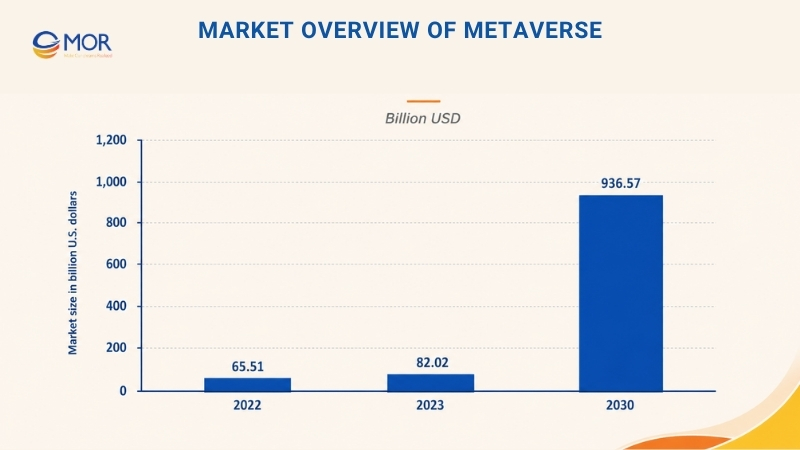
In 2022, the global metaverse market reached $65.5 billion. Forecasts pointed to $82 billion in 2023 and a sharp rise to $936.6 billion by 2030, with many use cases behind this growth, and metaverse games development standing out as one of the main drivers.
Metaverse gaming is also turning online play into shared, interactive 3D spaces where users feel present inside the action. As games move deeper into these virtual worlds, a game app development company faces new needs in design, scale, safety, and gameplay quality.
Like moving to the next stage in a game, we can now look at metaverse game development cost step by step. Before the cost part, let’s look at what this game type means and which traits make it different.
>>> Explore how leading companies in 2026 are shaping the next era of web3 game development through innovation, transparency, and smart blockchain integration.
What Is A Metaverse Video Game?
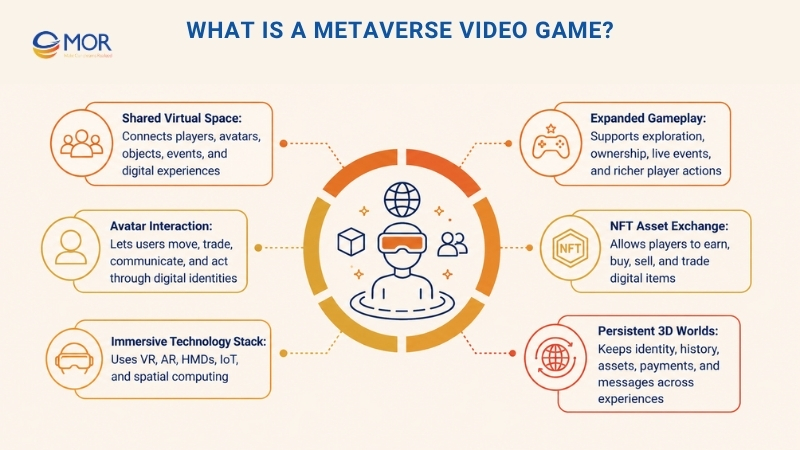
In metaverse game development, a game is built around a shared virtual space where digital versions of real people and objects can meet and interact. These digital versions are known as avatars, and they can act, move, trade, and connect in ways that mirror real life. Virtual reality, augmented reality, HMD, IoT, and spatial computing help create this type of metaverse software. The virtual space connects with the game so players can explore, own items, join events, and do much more than standard gameplay allows. One major draw is the use of NFTs, where players can earn, buy, sell, and exchange digital assets through game activity.
Matthew Ball, in The Metaverse: And How it Will Revolutionize Everything, gives a wider view of this idea.
He describes the metaverse as a large connected network of live 3D virtual worlds where many users can join at the same time, keep a sense of presence, and carry data like identity, history, items, messages, and payments across experiences.
This technology is still new and still taking shape. New ideas are moving fast in this space, but many parts still need more work before the market reaches full maturity.
Main Steps of Metaverse Game Development
The process behind custom metaverse game development includes stronger safety, cleaner game flows, and proper tool setup inside the product. These are the main stages needed to create a metaverse video game.
Choose the Right Blockchain Network
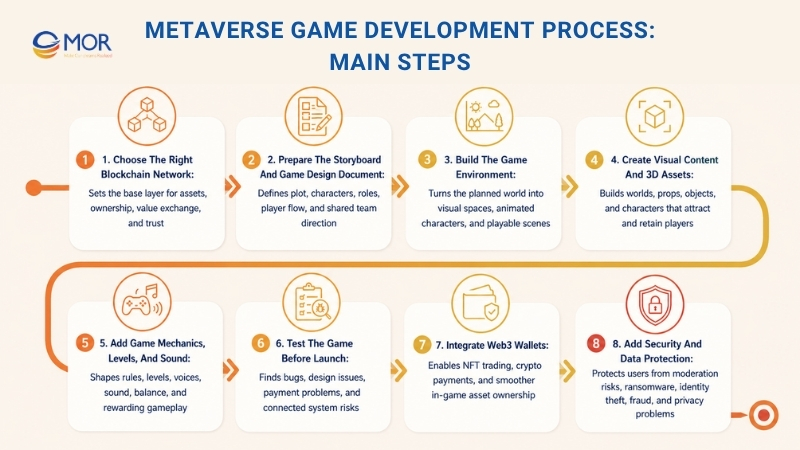
Metaverse games can be built on different blockchain platforms. The right choice can shape how well the game runs and how much trust users place in it. Each network gives the game its own traits, since the chain works as the base layer for assets, value exchange, and ownership.
Prepare the Storyboard and Game Design Document
The storyboard sits near the start of the metaverse game development process. At this point, the team sets the plot, main characters, and each role inside the game world. This step strongly affects how players feel, move, and stay interested in the experience. Storyboarding also guides the wider metaverse product development plan. A game design document is then prepared so the whole team has one shared reference.
Build the Game Environment
After the storyboard and first design plan are ready, the team starts building the game space. This stage of metaverse game development turns the planned world into a visual setting. Characters also start to move through animation work. Each character receives a clear role, and the main story starts to take shape based on the agreed project plan.
Create Visual Content and 3D Assets
Visual quality is often what pulls players into a metaverse video game first. It helps make the space feel rich, real, and worth exploring. This content includes the world, objects, props, and characters inside the game. Blockchain developers need to spend enough time shaping these visual parts with care. Strong visuals and a clear story are often what keep players coming back.
Add Game Mechanics, Levels, and Sound
The next stage covers game rules, level setup, and sound design. Character voices may be based on real players, then added to match the scene and action. Game mechanics are the parts that make play feel fun and rewarding. Level balance and gameplay balance also belong to this stage.
Test the Game Before Launch
After the first game version is built, testing starts. The team checks the metaverse game many times with different testing tools. Bugs in code, design issues, and weak points in the levels are checked during this stage. Testing helps prepare the game before it goes live. Gameplay, payment flow, and connected systems are also tested so the release works in a stable way.
Integrate Web3 Wallets
A Web3 wallet is a key part of many metaverse games. This step usually comes after the game design, gameplay, and characters are ready. Strong wallet setup lets players buy, sell, or trade NFTs inside the game with less friction. The game’s own crypto token may also become the main currency used in that world. Wallet setup turns the project into a Web3 activity. One well-known case in metaverse NFT marketplace development is Decentraland. It uses an earn-to-play model built on blockchain logic.
Add Security and Data Protection
User safety can become a serious concern in metaverse spaces. The metaverse game development process should include a strong safety layer from the start. Teams also need to plan for several risks during design and add proper controls before launch.
- Moderation can become hard in the metaverse and may leave users exposed inside a virtual space.
- NFTs can face ransomware attacks, which may block users from reaching their own digital assets.
- Darkverse risks, including identity theft and spoofing, can create serious problems for players.
- Financial fraud can rise because metaverse spaces often support high volumes of online buying and selling.
Other risks include social engineering, cyber-physical attacks, and privacy problems.
Key Technologies Behind Metaverse Game Development
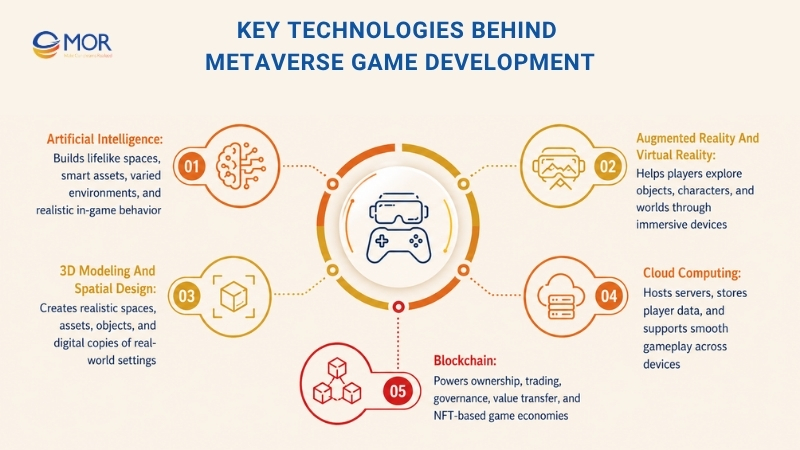
To understand how to build a game for the metaverse, you need to know the technology behind it. A metaverse game development platform often depends on the following tools and systems.
Artificial Intelligence
Artificial intelligence (AI) can read and process large sets of data quickly, which helps teams build virtual worlds faster. Machine learning methods and multimodal AI models can work together to create game spaces that feel close to real life. In metaverse dev, AI also supports varied environments, smart assets, and more lifelike in-game behavior.
Augmented Reality and Virtual Reality
AI and virtual reality can work together to make the digital experience feel more real and more engaging. Players can view objects, characters, and scenes through the AR and VR parts of the game. They can also explore the game’s virtual world through headsets, controllers, or other supported devices.
3D Modeling and Spatial Design
For any team that builds virtual worlds, realism is often one of the main goals. 3D modeling helps make this possible in a practical way. It is used to build lifelike spaces and assets that feel more natural during play. 3D cameras can also help bring real-world objects into online spaces. In many cases, this method makes metaverse apps feel like a digital copy of the real world.
Cloud Computing
Cloud computing uses services like AWS or Azure to host multiplayer servers, store player data, and support smooth gameplay across devices. With the right skills, teams can scale server capacity so players in different locations still get a steady gaming experience.
Blockchain
Blockchain works as a base layer for many metaverse worlds. Decentralized control, digital ownership, value transfer, and governance all depend on this technology. In NFT metaverse game development, the selected blockchain can shape how assets move, how users trade, and how the whole game economy works.
Business Benefits Of Metaverse Game Development
Metaverse game development brings strong promise, but businesses also need to understand the gains that come with this type of virtual ecosystem. These gains can support steady growth, better user value, and stronger market results.
The Metaverse has several clear benefits that show why the model is gaining business attention.
New Revenue Models
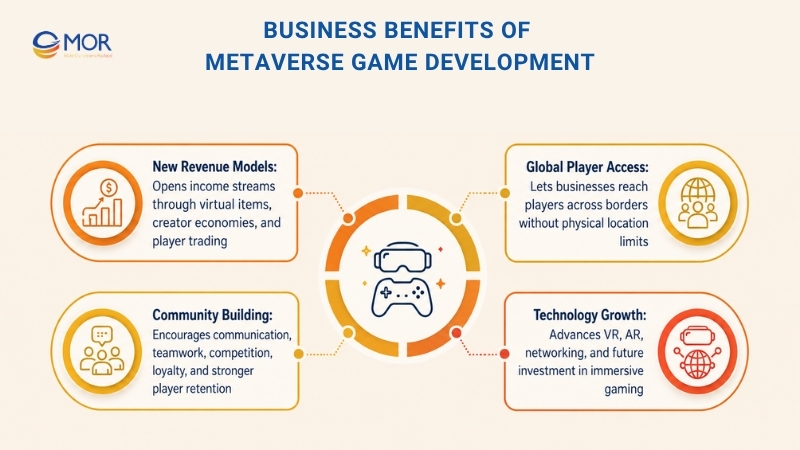
Metaverse games create fresh ways to earn money because players can buy, sell, and exchange virtual items. This can open income paths for game owners, creators, and players inside the same digital economy.
For business owners, this is a good time to consider investment with support from a skilled game app development company. Competition will keep growing, so early planning can help a brand build a stronger place in the market.
Global Player Access
Players can join shared virtual spaces from many countries without needing to be in the same physical place. Businesses can also reach users across borders and grow their market without location limits.
Community Building
A major strength of metaverse games is the way they bring players together. Users can talk, work together, compete, and join shared missions in one active space. This sense of belonging can help players build stronger ties with the game, which can lead to better retention and long-term loyalty.
Technology Growth
Creating metaverse games pushes new work in virtual reality, augmented reality, and online networking. It also expands what immersive gaming can do and gives businesses new ways to invest in the future of virtual play.
Working with an experienced game development agency can support stronger long-term project results. Now, let’s look at the main factors that shape the cost of metaverse game development.
Unique Characteristics Of Metaverse Game Development
Metaverse game development gives teams many ways to add special game elements that improve how users play and interact. The points below show what can make a metaverse game feel different from a standard online game.
Decentralized Ownership and Economy
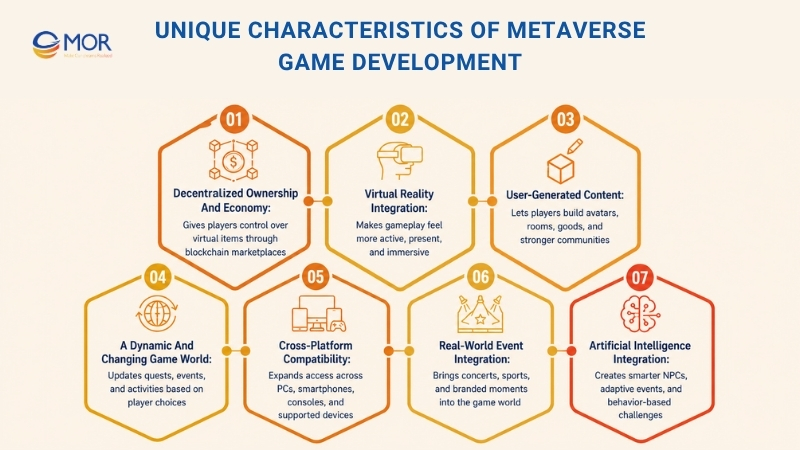
A metaverse game built on blockchain can give players real control over their virtual items. They can buy, sell, and trade digital goods with other users through a decentralized marketplace.
Virtual Reality Integration
When a metaverse game uses VR, players can feel closer to the game world. The experience becomes more active, as if the user is standing inside the virtual space instead of only watching it on a screen.
User-Generated Content
Player-made content can raise engagement and help create a stronger community. Users may design avatars, build virtual rooms, and create digital goods inside the game world.
A Dynamic and Changing Game World
A metaverse game can have a live world that keeps changing over time. Quests, events, and activities can shift based on player choices and the needs of the wider community.
Cross-Platform Compatibility
When players can join from different devices, access becomes much easier. Support for PCs, smartphones, and game consoles can also help the player base grow.
Real-World Event Integration
Real events, including concerts or sports matches, can become part of the game world. These moments give players memorable experiences and give brands new ways to reach audiences.
Artificial Intelligence Integration
A metaverse game can use AI to create smarter and more lifelike non-player characters, or NPCs. It can also create events and challenges that change based on player behavior.
What Are The Key Elements Of Metaverse Game Development?
The main parts of a metaverse game include virtual spaces, avatars, network systems, and immersive devices like VR headsets.
It also uses 3D graphics, artificial intelligence, and blockchain to create a shared virtual space that stays active over time. The Metaverse needs fast internet, strong devices, and well-built software to give users a smooth and interactive experience.
In simple terms, a metaverse game is a layered platform that needs many strong technologies to work well.
Virtual Environment
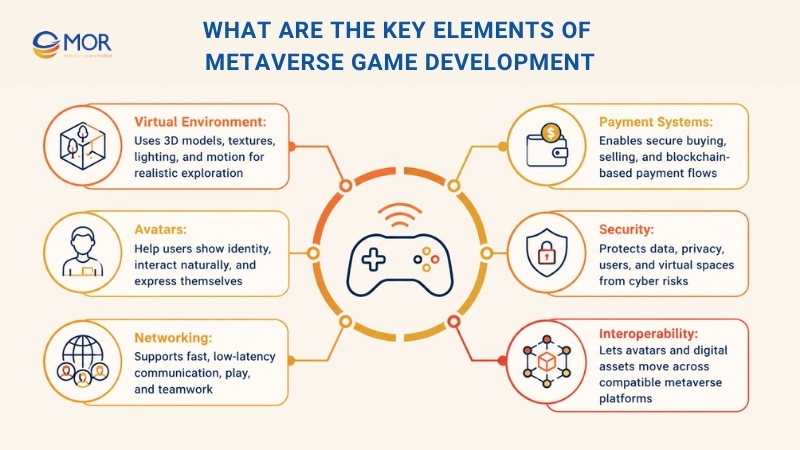
A strong virtual space is needed for any successful metaverse game. It includes 3D models, textures, lighting, and motion design that make the world feel real and worth exploring.
Avatars
Users need avatars so they can show themselves and interact with other people in the Metaverse. These avatars should let users change their look, build a personal identity, and express themselves inside the virtual world.
They should also move and react in a natural way, with body motion and facial detail that feel real.
Networking
A strong network setup is needed for live user interaction in the Metaverse. It should support fast, low-latency connections so users can talk, play, and work together without major delays.
Payment Systems
Payment tools are needed for buying virtual goods and services inside the Metaverse. These systems also need blockchain knowledge so teams can build secure, stable, and simple payment flows.
Security
User safety is a key part of any metaverse game. This includes protecting personal data, keeping user privacy safe, blocking cyber attacks, and adding moderation tools for a safer virtual space.
Interoperability
Interoperability lets users move between different metaverse worlds with their avatars and digital assets. This needs shared standards and strong compatibility across different metaverse platforms.
Best Tools For Metaverse Game Development
These are common tools teams use when building a metaverse game.
- Project Coordination: With a tool like Helix Plan, formerly Hansoft, your team can manage tasks and teamwork across each part of the game.
- Game Development Engine: Engines like Unreal, Unity, and CryEngine give your game a base structure, so your team does not need to code every physics rule from zero.
- 3D Asset Creation Tools: Tools like Maya and ZBrush help your team build 3D game assets.
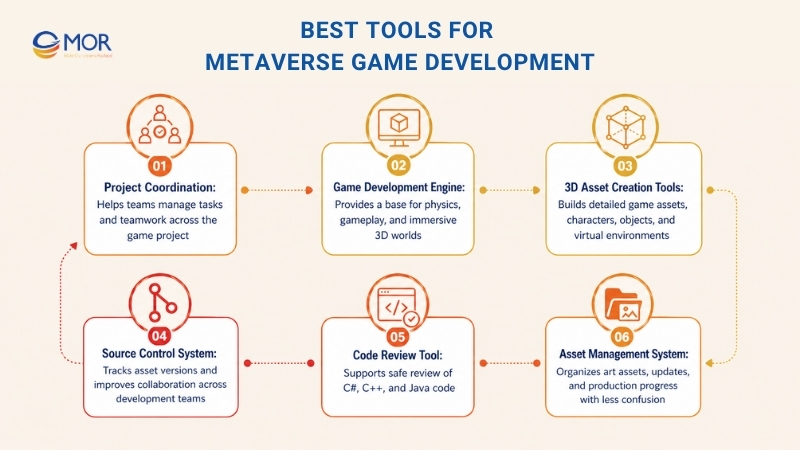
- Source Control System: A tool like Perforce Helix Core helps track each version of your digital assets and supports better teamwork.
- Code Review Tool: A tool like Helix Swarm helps your team share and review C#, C++, and Java code before it is added.
- Asset Management System: A digital asset management (DAM) tool like Helix DAM helps your team track art asset updates and progress with less confusion.
Metaverse Game Development Cost: What Businesses Should Know
The cost of building a metaverse game can change a lot based on the factors discussed above. For platforms like iOS and Android, prices differ because each one has its own build rules and testing needs. iOS projects often cost more at the start due to strict quality checks and device rules. Android, in contrast, has many device types, so testing and performance work can raise the total cost.
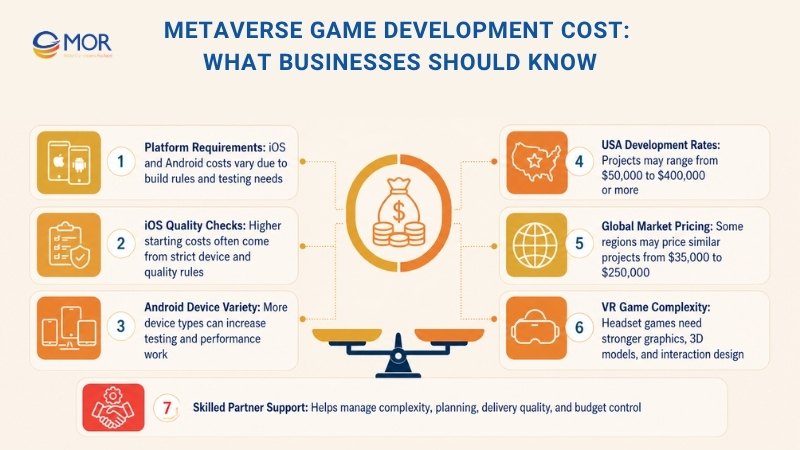
In the USA, development rates are usually higher, so metaverse game development may cost from $50,000 to $400,000 or more. This range can cover small games, mid-sized products, and large virtual world projects.
Across global markets, areas with lower labor costs, including the Middle East, India, and Southeast Asia, may price similar work from $35,000 to $250,000. You should work closely with your chosen team to get a more accurate estimate for your project needs.
VR headset games often cost more than PC or console games. They need high-quality graphics, detailed 3D models, and careful interaction design. For that reason, a rich VR game with many functions usually requires a larger budget than a PC or console version.
These goals are easier to reach with a skilled development partner that can manage project complexity, team planning, and delivery quality. A strong team can also help you keep cost and output under better control.
How To Choose A Metaverse Game Development Company
Choosing the right metaverse game development company means looking past nice visuals and bold claims. A strong partner should understand 3D game design, multiplayer systems, blockchain, NFTs, VR/AR, security, and long-term support. Use the checklist below to judge whether a team can turn your idea into a stable, engaging, and scalable metaverse game.
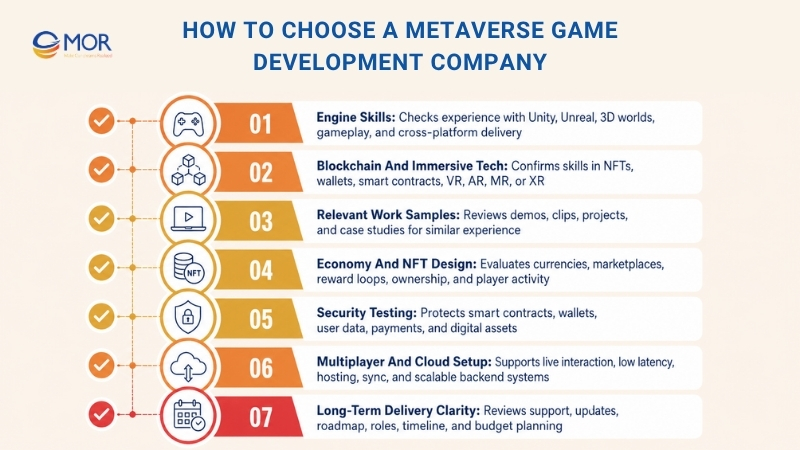
- Engine Skills Across Unity And Unreal: The company should know how to create immersive 3D worlds, realistic settings, smooth gameplay, and cross-platform access with leading game engines.
- Blockchain And Immersive Tech Skills: If your game includes NFTs, crypto wallets, virtual assets, or immersive play, the team should have real work experience with blockchain networks, smart contracts, VR, AR, MR, or XR.
- Relevant 3D Or Web3 Work Samples: Review previous projects, demos, gameplay clips, or case studies to check whether the company has built similar products before.
- In-Game Economy And NFT System Design: A good team should understand currencies, NFT assets, marketplaces, reward loops, and ownership models that help players stay active.
- Security And Smart Contract Testing: The company should test smart contracts, protect user data, secure wallets, and limit risks tied to fraud, asset loss, or payment errors.
- Real-Time Multiplayer And Cloud Setup: Metaverse games often need live interaction, so the team should know servers, cloud hosting, player sync, low latency, and backend systems that can grow.
- Support After Release: Choose a company that can handle bug fixes, updates, new functions, performance tuning, server checks, and security care after launch.
- Roadmap And Budget Clarity: A reliable partner should explain the build stages, timeline, needed roles, and cost factors before work starts.
A serious vendor should also have experienced metaverse game developers and metaverse consultants who can connect creative ideas with real technical limits. If your project includes tokenized assets, review whether the team has the skill level expected from a metaverse NFT game development company.
Why MOR Software Is The Best Choice For Metaverse Game Development
A metaverse game needs more than 3D assets and a bold idea. It needs a clear product plan, stable architecture, secure user flows, smooth integrations, and a team that can keep the project moving after launch. At MOR Software, we help businesses turn complex software ideas into practical products, from consulting and development to QA, offshore software testing, cloud setup, and long-term maintenance.
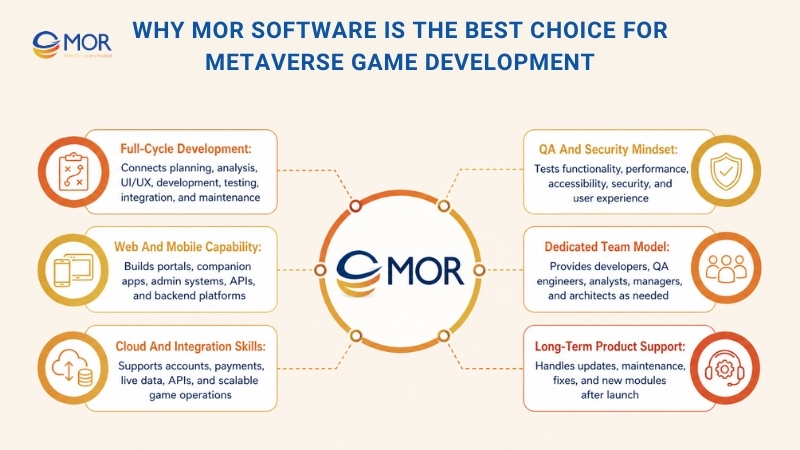
- Full-cycle development: We support your project from planning, analysis, UI/UX design, development, testing, integration, and maintenance, so every stage stays connected.
- Web and mobile capability: Our team builds web apps, mobile apps, backend systems, APIs, and cross-platform products that can support metaverse game portals, companion apps, and admin systems.
- Cloud and integration skills: We work with cloud services, system integration, external APIs, and scalable backend logic to support user accounts, payments, live data, and game operations.
- QA and security mindset: Our testing team checks functionality, performance, accessibility, security, and user experience before release and during future updates.
- Dedicated team model: Businesses can build a flexible MOR team with developers, quality assurance teams, business analysts, project managers, and solution architects based on project needs.
- Long-term product support: We stay with your product after launch through updates, maintenance, fixes, and new module releases as your metaverse game grows.
Businesses that need metaverse game development services can work with MOR Software for product planning, software outsourcing delivery, QA, integration, and metaverse technology consulting in one connected team.
Conclusion
Metaverse game development gives businesses new ways to create digital products, build player communities, and open revenue from virtual assets. Yet success depends on the right product plan, tech stack, security model, and long-term support team. From 3D environments to Web3 wallets and cloud systems, each choice affects cost and quality. Need a trusted team to shape your idea into a working product? Contact MOR Software today and discuss your project with our experts.
MOR SOFTWARE
Frequently Asked Questions (FAQs)
What is metaverse game development?
Metaverse game development is the process of building 3D virtual games where players can interact through avatars, explore shared spaces, trade digital assets, and join real-time activities.
How is a metaverse game different from a normal video game?
A normal game usually has fixed gameplay and limited interaction. A metaverse game creates a shared virtual space where players can socialize, own assets, join events, and take part in a living game economy.
What technologies are used in Metaverse Game Development?
Common technologies include Unity, Unreal Engine, blockchain, AI, VR, AR, cloud computing, 3D modeling, smart contracts, and Web3 wallets.
How much does it cost to build a metaverse game?
The cost depends on game size, platform, design quality, blockchain use, VR/AR functions, multiplayer systems, and security needs. A basic project costs less, while a large 3D world with NFTs and live multiplayer can cost much more.
How long does it take to develop a metaverse game?
A simple prototype may take a few months. A full metaverse game with 3D worlds, avatars, NFTs, wallet integration, and multiplayer gameplay can take 6 months to over a year.
Do metaverse games need blockchain?
Not always. Blockchain is useful when the game needs NFTs, token rewards, asset ownership, marketplaces, or decentralized economies. A non-blockchain metaverse game can still work well for social play or virtual events.
What are NFTs used for in metaverse games?
NFTs can represent avatars, land, weapons, skins, collectibles, tickets, rewards, or other virtual items. They give players proof of ownership and allow trading inside or outside the game.
Why is security important in Metaverse Game Development?
Security protects user accounts, wallets, NFTs, payments, and personal data. It also helps prevent fraud, smart contract errors, identity theft, and asset loss.
Which game engines are best for metaverse games?
Unity and Unreal Engine are the most common choices. Unity works well for cross-platform games and mobile projects. Unreal Engine is often used for high-quality 3D visuals and immersive worlds.
How do businesses choose the right Metaverse Game Development company?
Businesses should review the company’s game portfolio, Unity or Unreal skills, blockchain knowledge, VR/AR experience, cloud setup, security process, and post-launch support plan.
Share


Make Our-Dreams Realized


© 2023 . MOR Software. All Rights Reserved
Sitemap
Privacy Policy
Terms of Use

Rate this article
0
over 5.0 based on 0 reviews
Your rating on this news:
Name
*Email
*Write your comment
*Send your comment
1