


15 Latest Mobile App Development Trends to Deploy in 2026
Many apps look modern but still feel slow, scattered, or hard to use. The mobile app development trends shaping 2026 show a clear shift toward smarter UX, faster delivery, stronger security, and real business value. In this guide, MOR Software will explore the latest mobile app development trends and what they mean for your next product plan.
Key Takeaways
- Mobile app development trends in 2026 are pushing businesses to build apps that feel faster, safer, more personal, and easier to scale across devices.
- The 15 major trends include agentic AI development solution, cross-platform development, super apps, spatial computing, hyper-personalization, edge computing, privacy-first design, green coding, low-code and no-code tools, conversational UX, motion design, foldable and wearable apps, PWAs, beacon technology, and camera-focused apps.
- Businesses that follow these mobile technology trends can improve user experience, shorten release cycles, lower technical debt, and turn mobile products into stronger growth channels.
Mobile App Development Market Overview And Growth Outlook
A strong online presence is no longer built by releasing any app and calling it done. Your business needs the right product, one that suits your users, goals, and daily operations. Growth now depends on how well your app connects with people, removes friction, and helps your team move faster.
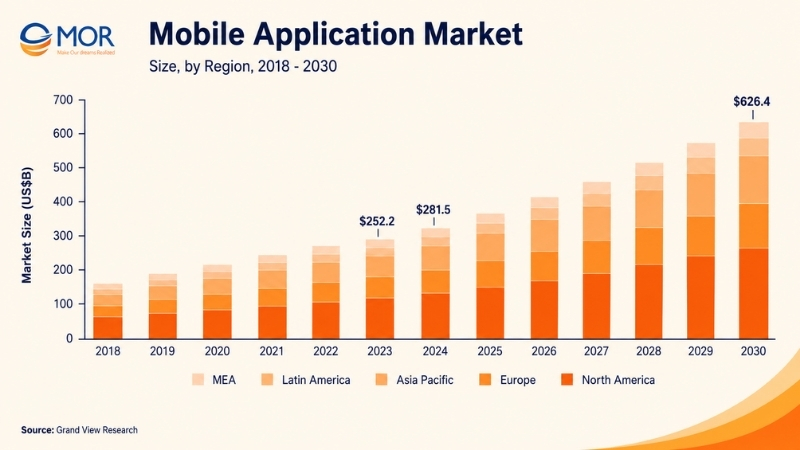
The mobile market keeps moving upward. Grand View Research valued it at about $228.9 billion in 2023, and the figure may reach $567.2 billion by 2030. That growth answers a common question, is mobile app development in demand, because mobile is now tied to how companies sell, serve, and stay close to customers.
Users now expect much more from every app they open. They want fast screens, useful flows, and personal experiences shaped by AI, AR/VR, 5G, and cloud technology. A slow or basic app can feel outdated after only a few taps.
So, if your business plans to grow its digital reach, mobile app development trends 2026 deserve close attention. This guide looks at the major mobile app development trends for 2026 and what they mean for companies that want stronger products.
Based on practical research and market signals, we have broken down the list into UX shifts, iOS and Android changes, and mobile technology trends that affect business planning.
>>> Let's explore why keeping pace with software development trends like artificial intelligence (AI), cloud computing, DevOps, and mobile applications is essential for organizations.
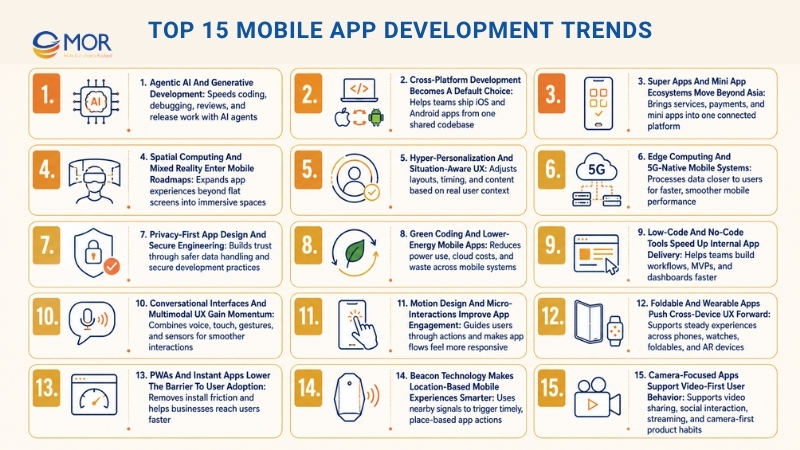
Top 15 Mobile App Development Trends In 2026
The current trends in mobile app development point to one clear idea: teams want to build faster, smarter, and with more care for real user needs. 2026 is a year of sharper product thinking, cleaner workflows, and tools that support the way developers already work. The list starts with the top mobile app development trends and expands into the areas shaping real product work now.
Agentic AI And Generative Development
AI agents are now one of the clearest mobile app developer trends. Serious mobile teams already use them to read repositories, repair dependency issues early, and keep Kotlin, Swift, and Flutter codebases more consistent. The process feels more controlled: cleaner commits, fewer surprises, and better tracking across the work.
Design-to-code flows are also becoming easier to trust. A team can share a Figma file or exported layout, and the agent can create the first version, match it with the component system, and prepare a branch for review. CI/CD updates can move straight into Slack, so developers do not need to wait for builds or search through long logs.
Telemetry makes the shift even more useful. The AI layer can read live product data, detect crash groups, and trace them back to the commit that caused the issue. It acts like a careful debugger that keeps checking the app without getting tired.
The team result is more stable: quicker cycles, fewer repeat bugs, and less stress during releases. McKinsey has reported clear productivity gains from genAI platform intergration tools in software work. Agentic AI now feels less like a new idea and more like a base layer for modern mobile development.
Cross-Platform Development Becomes A Default Choice
A single codebase for iOS and Android used to sound like a shortcut. Now, it is a serious business choice. In 2026, teams are choosing Flutter, React Native, and Kotlin Multiplatform because these tools fit current trends in mobile app development. A 2025 review found that cross-platform mobile app work has gained strong support across developer views, community use, and hiring demand.
The delivery flow now works like this:
- One shared module manages the business rules: API calls, data models, and state logic.
- Platform shells stay light: UI changes, motion details, and native connections.
- Tests run one time, then the product ships to both stores with fewer production bugs because the core stays aligned from the start.
The business value looks simple:
- Launch time gets shorter: both platforms can go live in weeks, not months.
- Maintenance becomes lighter: one fix can support two releases.
- Management work goes down: fewer teams, fewer handoffs, and fewer “iOS is ready but Android is late” calls.
Performance gaps still exist, but they keep getting smaller with each framework release. Multi-device and multi-screen support is now a normal need, as teams plan apps for phones, tablets, wearables, desktops, and in-car systems.
If your mobile plan includes broader reach, more user groups, and a controlled development budget, cross-platform development has moved from optional to expected.
Super Apps And Mini App Ecosystems Move Beyond Asia
Super apps were once treated as an “Asia-only” model. That view no longer holds. In 2026, Western platforms are starting to follow the same path. Instead of placing simple services side by side, companies are bringing different user needs into one app. Messaging can sit next to payments, social feeds can support shopping, and mobility apps can add food delivery, tickets, and insurance. The latest mobile app development trends now show that one app can become a full service hub.
The deeper shift is in the system design. Modern super apps use modular micro-frontends, secure APIs, and message queues to connect each service. Each mini app runs on its own, while the parent app manages login, data, and payment rules. The result works more like a small operating system than a single app.
This model also fixes a problem many product teams know too well: uncontrolled product growth. Instead of running many separate apps, teams can build one larger ecosystem. A new service can enter as a small module with its own release plan and analytics. Users get one steady experience, and developers can release faster with less risk.
The business gains can grow fast. Users spend more time inside the same ecosystem. Revenue paths also expand, while cross-selling feels easier when payments, messages, and discovery already sit in one place. Third-party mini apps can also join the platform without heavy integration work.
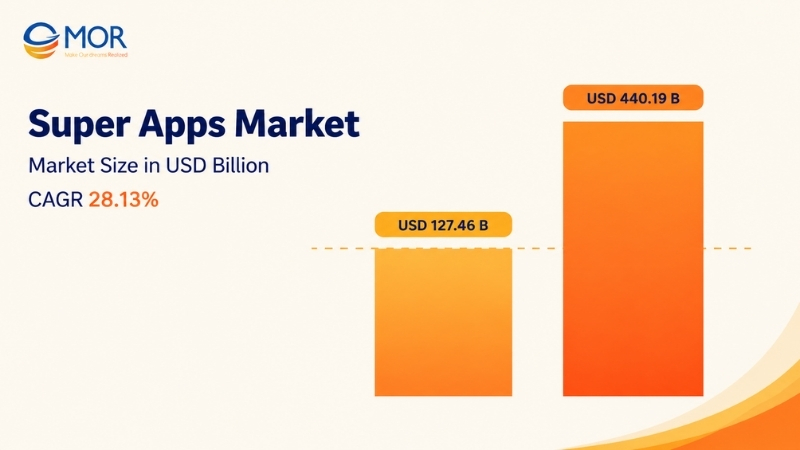
The market data makes this direction hard to ignore. Mordor Intelligence expects the super apps market to reach USD 127.46 billion in 2025 and grow to USD 440.19 billion by 2030, with a 28.13% CAGR. That rise shows how much users value one place for speed, choice, and convenience.
According to Statista, WeChat passed 1.3 billion active users by 2024, and many other ecosystems are learning from that model. Banks, retailers, and telecom firms now test mini app systems with native-like UX, separate deployment, and unified data control.
For teams planning a 2026 roadmap, super apps are moving beyond trend status. Users want less jumping between apps, and platforms that meet that need can become full ecosystems.
Spatial Computing And Mixed Reality Enter Mobile Roadmaps
Developers can now design for spaces beyond the phone screen. Spatial computing has moved into serious product planning as one of the latest trends in mobile app development.
The hardware is still early, but it is moving closer to daily use. Apple Vision Pro, Meta Quest 3, and lighter AR glasses give teams room to test immersive interfaces. The experience may still feel niche, yet developers can reuse more mobile logic and assets through shared SDKs and cross-platform tools. Many headsets still work as separate systems, but the gap is closing.
For mobile teams, this changes how interfaces are planned. Design no longer lives only inside flat screens. A dashboard can sit on a user’s desk, navigation can appear over a street view, and remote repair guides can mix video, 3D models, and AI narration. Unity MARS and RealityKit 2 now support these layers with more production-ready stability.
Spatial products also change how teams test UX. Eye tracking, gesture capture, and depth mapping give designers new ways to study user attention. The same analytics setup that once measured taps can now track where users look and how long they interact with objects.
The market outlook explains why businesses are watching closely. Grand View Research projects the extended reality market to reach USD 599.59 billion by 2030. This growth reflects demand across consumer and enterprise use, including AR filters, gaming, training, and onboarding.
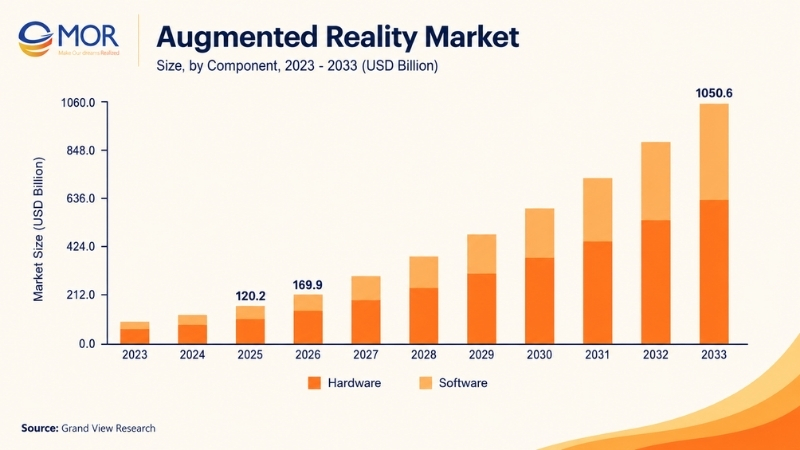
Healthcare, logistics, and education are already moving first. Training simulations and remote diagnostics can show real business value. A PwC report on immersive tech estimated productivity gains of more than 26% for field and technical work when AR-guided flows replace printed manuals.
For mobile developers, spatial computing gives the app a wider canvas. Products no longer fight only for screen space; they compete for presence.
Hyper-Personalization And Situation-Aware UX
Personalization once meant showing different banners to different users. In 2026, it means the app can adjust itself. Layouts, navigation, timing, and even short text can respond to what the user is doing, where they are, and what is happening nearby.
Context drives this change. Motion sensors, location data, and calendar signals feed models that change app behavior in real time. A finance app can detect overseas travel and show currency support before the user asks. A wellness app can read heart-rate signals and soften the interface when stress rises. This is one of the mobile app development trends users can actually feel.
The technical shift comes from small on-device models. Instead of sending every request to the cloud, the app can make decisions locally. That means faster response, stronger privacy, and lower battery use. Core ML and Android ML Kit now support real-time context checks without server calls, so teams do not need to trade privacy for smart UX.
The design method changes as well. Static user journeys give way to adaptive states that respond to intent. It blends user psychology with engineering logic. When it works well, the interface removes small points of friction: fewer taps, better timing, and more relevant content.
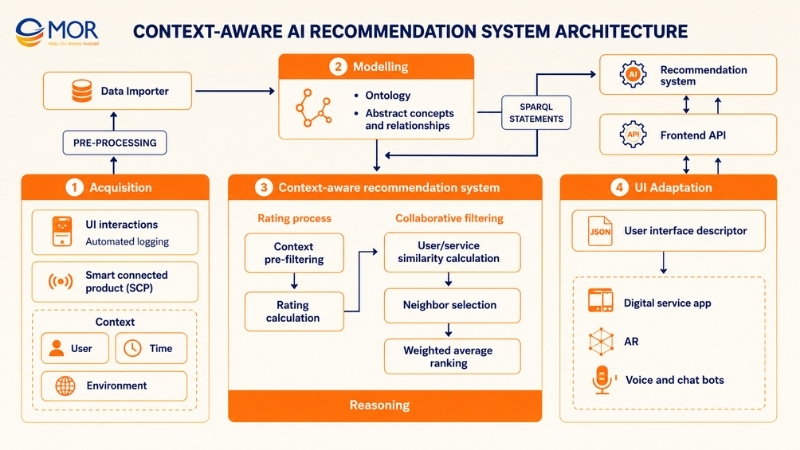
For businesses, this affects retention. Users stay longer when a product feels made for their needs. Salesforce’s 2024 Connected Customer report found that 61% of customers expect companies to anticipate their needs, and many will leave when interactions feel out of place.
Strong product teams now test adaptive flows in Figma with AI automation plugins that simulate movement, location, time of day, habits, and likely intent. This creates a new design habit: treating UX as a live system instead of a fixed screen.
Static interfaces are losing ground. Context works because it respects user attention.
Edge Computing And 5G-Native Mobile Systems
Developers dislike slow cloud response, and users dislike it even more. Edge computing changes that problem in a quiet but serious way. In 2026, real-time response is expected, and apps can only reach it when data processing happens closer to the user.
The idea is direct: do not send every task to a faraway cloud region. Push the work to edge nodes, 5G stations, local gateways, or the device itself. The result is lower latency, smoother media, and less battery drain.
Work that once needed heavy cloud systems can now finish in milliseconds. Logistics apps can follow fleets live. AR apps can render movement at 90fps with less discomfort. Industrial IoT dashboards can run predictions from field sensors without waiting for cloud round trips.
According to Statista, the global edge computing market is expected to reach $317 billion by 2026, growing at more than 18% CAGR. That makes edge one of the mobile app development technologies shaping real performance needs.
5G builds on that base. Ultra-low latency networks, in some cases near 1 ms, make cloud gaming, real-time translation, and multi-camera video calls more practical than they were in the 4G period. Developers now design apps around edge-native thinking, placing key logic near the device while syncing longer-term data to the cloud later.
For software teams, this creates new build patterns:
- Split data handling: short-term data and long-term data follow different rules.
- On-device intelligence: ML models run locally and receive federated updates.
- Live event flow: edge nodes use Kafka-like patterns to coordinate fast updates.
Users may never notice the architecture, but they feel the result. Apps open faster, streams run more smoothly, and service stays more stable in weak connection areas. That is a real edge, in every sense of the word.
Privacy-First App Design And Secure Engineering
Users have become careful with data, and they have good reasons. Many apps ask for information, but few explain how it is used. In 2026, privacy-first design is no longer only a compliance task. It now shapes product trust.
Security now belongs inside the build process from the start. Serious mobile projects use zero-trust architecture and privacy-preserving models as normal practice. This means no broad API access, no shared tokens across services, and no late “we will encrypt it later” thinking.
Modern systems use secure enclaves, differential privacy, and federated learning to keep data close to the device while still helping models improve. Apple’s Private Relay and Google’s Privacy Sandbox show the direction: hide identifiers, keep work local when possible, and still support useful functions.
A 2026 Gartner security report placed privacy-enhancing computation among major enterprise security topics, and the idea has moved into mobile teams quickly. Teams now add these methods into SDKs and CI/CD flows:
- Static code review tools detect unsafe API calls before code merges.
- Secrets tools, including HashiCorp Vault or Doppler, connect with delivery pipelines.
- Runtime threat detection uses ML to catch unusual behavior on the device.
Security now reaches beyond the codebase. UX also matters. Clear consent screens, permission prompts that match the moment, and simple data dashboards are now part of app design. Users stay when they understand what is happening.
For mobile teams, trust also protects revenue. One public data incident can waste months of acquisition spend. Privacy-first apps do more than meet rules; they become products users can trust.
Green Coding And Lower-Energy Mobile Apps
Sustainability now shows up in almost every tech event in 2026. This time, it is not just talk. Energy use has become a real KPI. Teams measure app power draw, tune APIs, and design systems that waste less compute.
The reasons are practical. Cloud costs rose, and carbon reporting rules became stricter. When every gigabyte and watt has a cost, teams start to care about leaner software again.
Developers now think in terms of joules per function. Heavy motion, constant polling, and oversized libraries are all targets for cleanup. Flutter 3.19 and React Native 0.76 added profiling tools that show CPU load and battery use in real time. Backend teams now batch API calls instead of using noisy request loops.
AI inference has also become lighter. Instead of running large models in the cloud for every task, teams use quantized, distilled, or edge-tuned versions. The user sees the same function, but the system burns less power. At scale, this matters because mobile apps consume huge amounts of energy every year.
Companies also set measurable targets instead of posting vague green messages. Google Play and the App Store now give more visibility to apps with lower power use and better resource habits. That can affect installs and retention.
Several studies show that consumers prefer brands that act on sustainability, and digital products are part of that choice. Green engineering has become part of brand trust.
So, sustainable coding is not about turning off office lights. It is about building apps that waste less energy, money, and attention. Lean code is now modern design.
Low-Code And No-Code Tools Speed Up Internal App Delivery
Low-code tools used to feel like simple builders for non-technical teams. That view has changed. In 2026, they are serious delivery tools, and product teams use them without trying to hide it.
Power Apps, Mendix, and OutSystems help non-developers create useful workflows, while developers connect these tools to CI/CD pipelines. They are now used for internal dashboards, quick MVPs, and some production workflows. This is why mobile app development latest trends often include low-code and no-code tools.
The usual process works like this:
- Product managers draft a workflow in a no-code tool.
- Developers add custom logic or connect it to a wider microservice setup.
- QA runs automated checks, and the product ships in the same sprint.
Speed does not have to mean weak quality. It means engineers spend more time on the work that needs deep skill. Visual development can handle routine CRUD tasks, while custom code handles scale, security, and rare cases. That balance works well.
A new layer now sits above it: AI-assisted low-code. Tools can complete functions, suggest UI layouts, and create integration scripts from plain prompts. They do not replace developers. They remove boring work that slows teams down.
Companies that master this hybrid mobile app development model release faster, test ideas more often, and waste less engineering time on basic plumbing. In markets where early movers often win, that value is worth measuring.
Low-code is not some far-off future. It is already part of the workflow many teams need.
Conversational Interfaces And Multimodal UX Gain Momentum
Touchscreens still matter, but they no longer control the whole experience. Voice, gestures, and glance-based actions are becoming more common, and they are changing what “interface” means.
In 2026, users expect to speak to apps, not only tap screens. Voice assistants now support in-app navigation, message dictation, and form filling without breaking the flow. The interface is learning to listen. Apple’s eye tracking in iOS 18, Android’s multimodal APIs, and on-device speech models like Whisper Edge now make these flows useful enough for daily use.
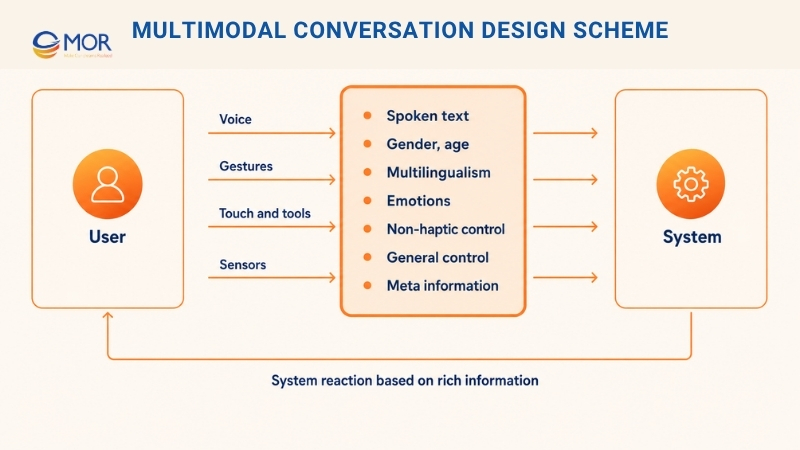
For developers, this means planning for many input types. Commands can arrive through microphones, cameras, and sensors, not only fingers. A fitness app can read gestures during exercise; a delivery app can confirm an action when the user says “yes.” Accessibility also improves because multimodal UX can fit more abilities and more real-life situations.
The strength sits in coordination. When voice, touch, and motion work together, users face less friction. A person can start a booking with voice, adjust details with a gesture, and confirm with a tap. The whole flow stays inside one app.
According to Global Market Insights, the multimodal interface market is growing at more than 16% CAGR through 2032, driven by AI assistants and spatial computing. That growth says a lot: users no longer want apps that only wait for input. They want products that can keep pace.
For product teams, mobile app development trends now point toward conversation, not only consumption. The next wave of mobile UX feels more natural because it can listen, see, and respond.
Motion Design And Micro-Interactions Improve App Engagement
Users can lose patience fast when an app feels static, crowded, or lifeless. Motion design helps solve that problem. It draws attention to the right place, guides users through actions, and makes the interface feel more responsive. Motion icons, animated scrolling, and small interaction cues can make the product feel easier to use.
For MOR Software, mobile UI/UX design is part of the full mobile delivery service. Our team plans user journeys, designs practical interfaces, and builds app flows that support adoption and engagement. New trends in mobile app development make this kind of motion work more useful, especially when users need clear direction inside complex screens.
Motion design can also help users finish tasks faster and remember the experience better.
Foldable And Wearable Apps Push Cross-Device UX Forward
The launch of Samsung Galaxy Fold in 2019 was more than another hardware moment. It marked a deeper shift in mobile devices. Foldable screens opened the door, and the wider ecosystem kept growing: smartwatches now handle tasks once tied to phones, AR glasses are moving closer to daily use, and fitness trackers have become normal tools for health-aware users.
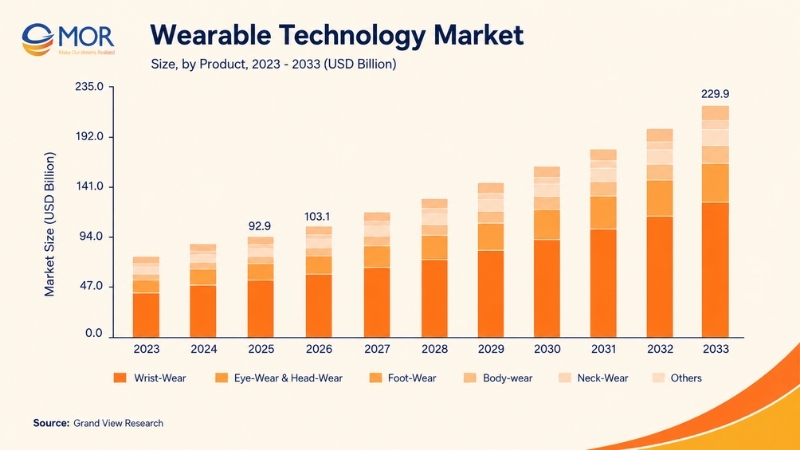
As these devices become more common, wearable app development will matter more for cross-device product experiences.
The data supports this shift. According to Grand View Research, the global wearable technology market may grow at a 13.6% CAGR from 2025 to 2030. For businesses, this raises a real question: how do you serve users across screens, devices, and interaction styles that all behave differently?
The practical effects are easy to see. A worker may review a wide spreadsheet on a foldable screen during the morning commute. The same person may want short message alerts on a smartwatch during a client meeting. Later, AR glasses may guide them through a route without using their hands. Each use case needs its own interface, but users still expect one steady brand experience.
The teams that do well in this space do not treat these devices as extras. They design from the start for different form factors. Split-screen layouts need to make sense. Watch notifications need to fit a tiny display. Voice commands need to work without making the user feel awkward.
Getting this right keeps your product useful as devices keep changing. Missing it can make your app less visible as users move across more screens.
PWAs And Instant Apps Lower The Barrier To User Adoption
Native apps still lead many categories, but Progressive Web Apps are gaining more ground. They run through browsers, remove app store steps, and avoid install friction.
PWAs sit between websites and native apps. Users can get offline access, push alerts, and fast loading without using much phone storage. For businesses, this model can support early market tests, lighter access, and faster adoption when users do not want another download.
The cost side matters. A PWA usually costs less than building and maintaining separate iOS and Android apps. It can run across devices without custom work for every platform. It also handles unstable networks better than many standard web products.
For companies reviewing their options, PWAs solve one clear problem: reaching more users without doubling the budget. They will not replace native apps in every case, but they now belong in the mobile app development trends discussion. Many teams treat them as a practical path when testing new markets or serving users who avoid app downloads.
Beacon Technology Makes Location-Based Mobile Experiences Smarter
Beacon technology quietly changes how digital and physical experiences connect. Small beacon devices can detect nearby smartphones and trigger timely messages or actions through Bluetooth Low Energy signals.
A retail user might enter a store and receive a personal offer at the right moment. A traveler at an airport might get app guidance that points straight to the gate. That is beacon technology at work. For developers, it gives apps a stronger sense of place, context, and timing.
This makes the app feel smarter without making the user do extra work.
Camera-Focused Apps Support Video-First User Behavior
Businesses that invest in video conference app development have seen strong revenue growth, especially since remote work became normal. Users keep using apps that let them share video, talk with friends, and build social communities.
That helps explain why TikTok remains one of the most used streaming apps. The platform had about 1.7 billion users worldwide.
To compare usage scale and revenue patterns across categories, teams should review mobile app usage benchmarks for 2026.
Camera-based mobile app development trends are also spreading through streaming entertainment, broadcasting, and social media products.
>>> Discover TOP 15 mobile app security best practices for 2026, along with a practical mobile app security checklist to help you protect APIs, stored data, login flows, backend services, and every release.
Why Mobile App Development Trends Matter For Enterprise Strategy
For enterprises, mobile is no longer only a brand channel or a test for user engagement. It is a main revenue driver. Subscription plans, in-app purchases, digital onboarding, and self-service flows now depend on mobile apps. Ignoring mobile app development trends can mean slower growth, weaker retention, and missed revenue in markets where competitors move quickly.
Outdated mobile systems also create hidden costs. Technical debt grows when legacy frameworks, fixed backends, or messy code cannot meet new user needs or connect with new tools. The result is slower releases, more bugs, costly refactoring, and poor scale. Over time, keeping an old system alive can cost more than rebuilding the right parts.
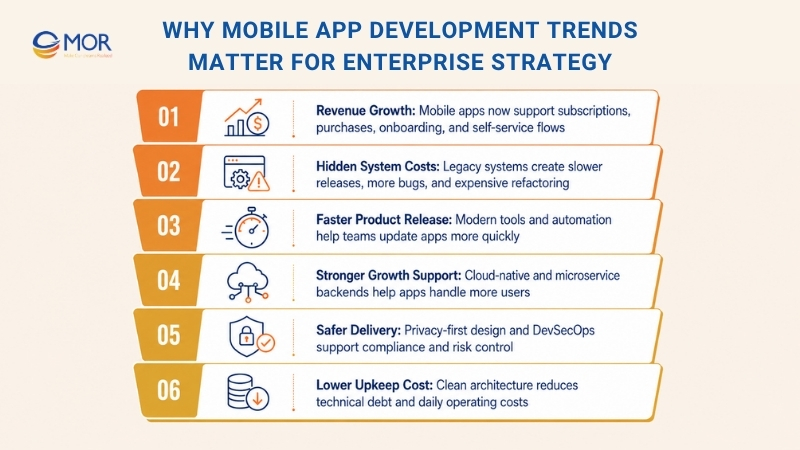
- Faster product release: modern frameworks, DevOps automation, and cross-platform tools shorten build cycles and support quicker updates.
- Stronger growth support: cloud-native and microservice backends help apps manage more users without a full rebuild.
- Safer delivery: privacy-first design, encryption rules, and secure DevSecOps methods support compliance and risk control.
- Lower upkeep cost: clean architecture and modular systems help reduce technical debt and daily operating costs.
Tracking mobile trends is not about chasing hype. It is about protecting agility, spending wisely, and staying competitive over time.
How Mobile App Development Trends Improve Business Outcomes And User Experience
As 2026 moves forward, the effect of these development changes is easier to see. Mobile app development news keeps showing how these shifts affect companies and users in practical ways.
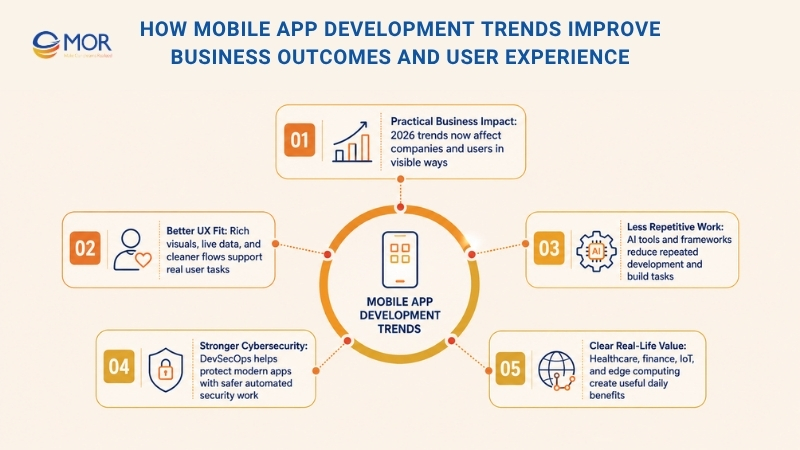
- UX now fits product function better: rich visuals, live data, and cleaner flows make users expect apps that feel simple while still doing advanced work. MOR Software’s mobile projects show the same direction, where app design must support real user tasks and business goals without making the flow feel heavy.
- Automation cuts repetitive work: DevOps teams now use newer frameworks and AI assistants to create code, manage builds, and set up complex runtime environments. These tools reduce the time developers spend on repeated tasks.
- Cybersecurity gets more attention: newer tools like IoT and gen AI need large amounts of data, and that data must move safely across local and global networks. These abilities add useful functions, but they also widen the attack surface. DevSecOps can automate parts of security work, helping enterprises keep building modern features while protecting apps from bad actors.
- Real-life value now matters more: healthcare, finance, and other sectors are using app development innovations to build products with clear daily benefits. Wearables can track health signals, AI tools can help doctors reach faster diagnoses, and AI-based finance tools can scan large data sets for useful findings. As IoT and edge computing keep growing, interest in practical, real-world benefits will keep rising.
How These Mobile App Development Trends Are Reshaping Key Industries
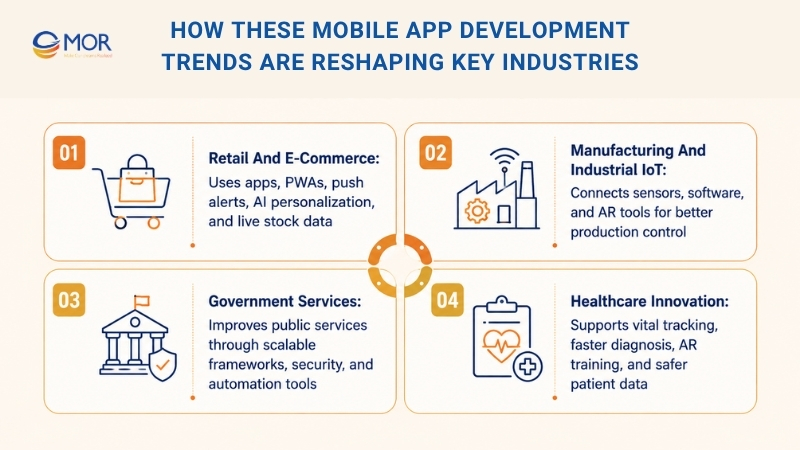
Industries respond to app industry trends in different ways, yet each one is testing new paths to create value. The top trends in mobile app development now affect how companies sell, manage work, serve citizens, and support patients.
Retail And E-Commerce
Retail and e-commerce teams were among the first to test newer smartphone application trends this year, mainly through mobile apps, PWAs, and push alerts. AI-powered tools now help build personalization engines from user searches and suggest products that fit real intent.
IoT devices also send live data through the internet so in-store teams can see stock levels in real time. This can also support automatic restocking and other parts of supply chain management.
Manufacturing And Industrial IoT
Several mobile engineering trends have helped industrial IoT move forward this year. IIoT brings sensors, software, and connected systems into factories and industrial settings. New IoT apps allow companies to place sensors and software deeper inside production work, improving live monitoring and predictive maintenance.
AR headsets that use IIoT data are also useful for training. A recent report from the IBM Institute for Business Value found that companies using AR reported average productivity gains of 32%. Together, these tools help teams work with better data, faster decisions, and clearer production control.
Government Services
This year, federal and local governments tested mobile and web frameworks to make citizen services more scalable and useful. Security and automation tools helped public agencies improve services and add new functions.
The latest application development advancements have helped agencies become faster, safer, and more responsive. Use cases include safer mobile payment systems for public services and real-time traffic or disaster alerts that support quicker emergency action.
Healthcare Innovation
Healthcare may be the sector using mobile software development trends most actively. Mobile apps can track patient vital signs, AI algorithms can support faster diagnosis, and AR or VR tools can train surgeons and trauma teams.
Healthcare teams are not only adding new functions. New DevSecOps abilities also help protect patient data and support compliance with data security laws.
Turning Mobile App Development Trends Into Real Business Advantage
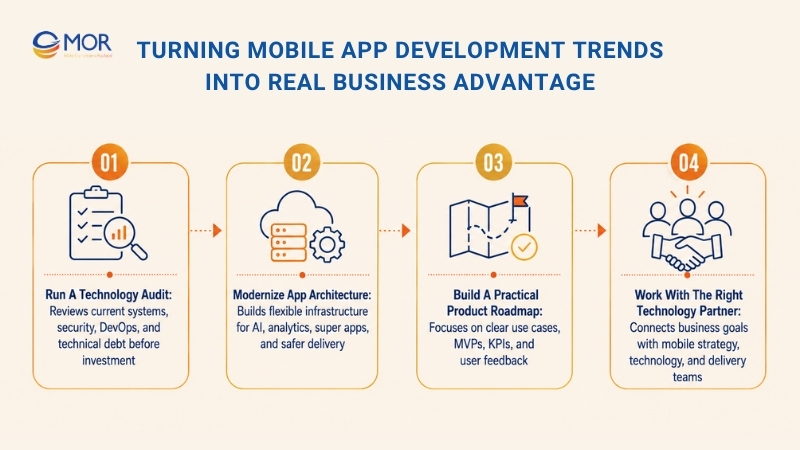
Understanding mobile app development trends is only the starting point. Real advantage comes from clear execution. Enterprises that build a structured adoption plan, instead of reacting to every new idea, are the ones that turn innovation into measurable results.
Run A Technology Audit
Before investing in new mobile development practices, assess your current app ecosystem.
A full audit should review:
- Frontend framework and performance limits
- Backend scale and architecture model
- Security status and compliance readiness
- DevOps maturity and release process
- Technical debt growth
This starting point shows whether your current system can add new abilities or needs core upgrades first.
Modernize App Architecture
AI integration, super apps, and real-time analytics need modern infrastructure.
Architecture work may include:
- Moving to cloud-native or microservice architecture
- Applying API-first design
- Improving DevSecOps pipelines
- Reworking legacy components
Without flexible architecture, innovation becomes slow and costly. A modern base supports next-generation app development at a safer pace.
Build A Practical Product Roadmap
Avoid large changes that carry too much risk.
Instead:
- Choose use cases with clear business value
- Release pilot programs or MVPs
- Measure ROI with practical KPIs
- Improve the product from real user feedback
A practical roadmap lowers financial risk and helps teams learn faster.
Work With The Right Technology Partner
Not every business has in-house skills across AI, blockchain, AR/VR, DevSecOps, cloud architecture, and mobile engineering. Building that team from zero takes time, budget, and serious hiring effort.
MOR Software can support that roadmap. We help businesses turn mobile app development trends into clear technical plans, practical product choices, and working software.
A strong technology partner can support you with:
- Skilled enterprise software development engineering teams across mobile, cloud, AI, and emerging mobile technologies
- Faster delivery through ready-to-start teams
- Lower project risk through planning, testing, and technical review
- Architecture guidance that supports future growth, not only the first release
The right partner turns trends into real execution. For businesses planning a new app or improving an existing one, MOR Software helps connect business goals with the right mobile strategy, technology stack, and delivery team.
Conclusion
Mobile app development trends are changing how businesses plan, build, and grow digital products. AI, 5G, PWAs, privacy-first design, and cross-device UX are no longer side ideas. They now shape product quality, user trust, and long-term costs. If your business wants to build a new app or improve an existing one, MOR Software can help turn these trends into a clear roadmap, reliable architecture, and a product users want to keep using. Contact us today to discuss your goals and explore the best solution for your business.
MOR SOFTWARE
Frequently Asked Questions (FAQs)
What are mobile app development trends?
Mobile App Development Trends are the main changes shaping how apps are designed, built, secured, and scaled. They often reflect new user habits, business needs, and technology shifts in areas like AI, cloud, 5G, privacy, and cross-platform development.
Why should businesses follow mobile app trends in 2026?
Businesses should follow mobile app trends because user expectations keep rising. People want apps that load fast, feel simple, protect their data, and work across devices. A company that ignores these changes may fall behind in user experience and product speed.
Which mobile app trend is most important for businesses?
There is no single answer for every business. AI may matter most for a finance app. Cross-platform development may fit a startup with a tight budget. Privacy-first design may be the top concern for healthcare, banking, or enterprise apps.
Are AI-powered apps becoming more common?
Yes. AI is becoming a normal part of mobile products. Apps now use AI for smarter search, chat support, content suggestions, fraud checks, automation, and personal user flows. The best use cases solve a real problem instead of adding AI for show.
Is cross-platform development better than native development?
Cross-platform development works well when businesses want to launch on iOS and Android faster with one shared codebase. Native development is still a strong choice when the app needs deep device access, heavy graphics, or top-level performance.
How do mobile app development trends affect app cost?
Mobile App Development Trends can raise or lower app cost based on how they are used. Cross-platform tools may cut duplicate work. AI, AR, or real-time features may add more planning, testing, and backend work. The final cost depends on product scope and technical depth.
Why is privacy-first design becoming a bigger priority?
Users are more careful with their personal data. Businesses also face stricter rules in many markets. Privacy-first design helps apps collect less data, ask for permission clearly, and protect user information from the start.
What role does 5G play in future mobile apps?
5G supports faster data transfer and lower delay. This helps apps with live video, AR, cloud gaming, real-time tracking, connected devices, and remote work tools. It gives developers more room to build mobile experiences that feel instant.
Should startups use low-code or no-code tools for mobile apps?
Low-code and no-code tools can help startups test ideas, build internal tools, or create simple MVPs. But complex apps still need skilled developers for custom logic, security, performance, integrations, and long-term growth.
How can businesses choose the right mobile app development trends to follow?
Businesses should start with user needs, budget, timeline, and business goals. A trend is worth using when it improves the product in a clear way. If it only sounds modern but adds no real value, it can wait.
Share


Make Our-Dreams Realized


© 2023 . MOR Software. All Rights Reserved
Sitemap
Privacy Policy
Terms of Use

Rate this article
0
over 5.0 based on 0 reviews
Your rating on this news:
Name
*Email
*Write your comment
*Send your comment
1