


Do Small Businesses Need HR Department? [Key Signs]
Hiring, payroll, staff issues, and compliance can feel simple when your team is small. But once growth picks up, those same tasks can eat into your day and create risk. So, do small businesses need HR, or can owners keep handling it alone? This MOR Software guide will help you spot the signs and choose the right HR setup.
Key Takeaways
- Small businesses need HR work covered once hiring, payroll, onboarding, and staff issues take too much time.
- A full HR department is not always needed. Owners can start with software, outsourcing, or part-time HR support.
- Custom HR software development solutions help small teams manage recruitment, training, payroll, and employee data in one clear system.
Do Small Businesses Need HR?
ABSOLUTELY, small companies need HR work covered, but they do not always need a full HR team. Any company with employees must handle hiring, employee pay stub, onboarding, policies, compliance, performance, and staff issues in some way. The real question is not only do small businesses need HR, but what level of HR help fits the company right now.
For a very small team, it may make sense to keep HR tasks inside the business or outsource only selected work. The owner, office manager, accountant, payroll provider, or part-time HR consultant may be enough to keep basic employee work clear and compliant.
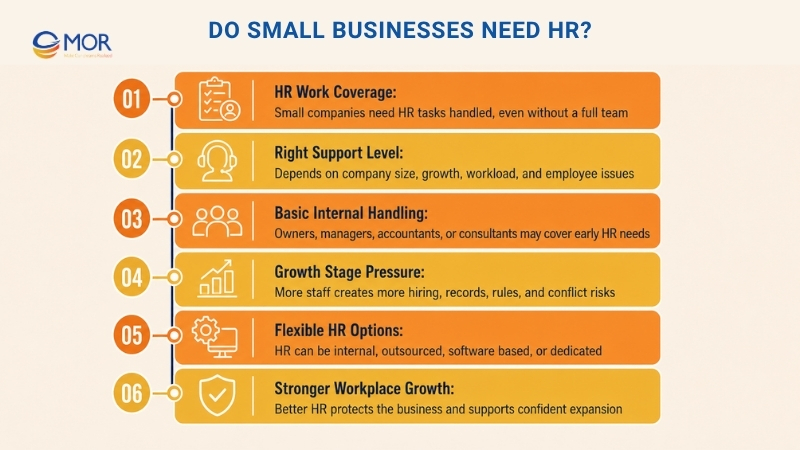
As the company grows, casual HR habits become harder to manage. More staff usually means more hiring, more records, more rules, and more chances for conflict or turnover. This is when direct HR support starts to bring clear value.
Small companies should see HR as part of growth, not just office admin. Owners may ask, do small businesses have HR departments, and the answer often changes as the team expands. Whether HR is handled inside the company, through outside support, through software, or by a dedicated HR person, better HR practices help protect the business, support employees, and build a workplace that can grow with confidence.
Importances Of HR Teams For Small Businesses
As a company adds people, staff matters stop being easy to manage through casual chats. A setup that once worked with a close team, basic payroll, quick updates, and the owner’s daily input can start to break when hiring grows, staff issues become more delicate, and rules take more care. This is often when owners start asking, do small businesses need HR, or can the same informal habits still work?
Many HR specialists advise small companies to look at direct HR support when they reach about 20 to 50 employees, mainly when they hire often, open new sites, or face more detailed workplace rules. The point is not only to take pressure off the owner, but also to protect the company, guide employees, and create a workplace that can grow in a healthy way.
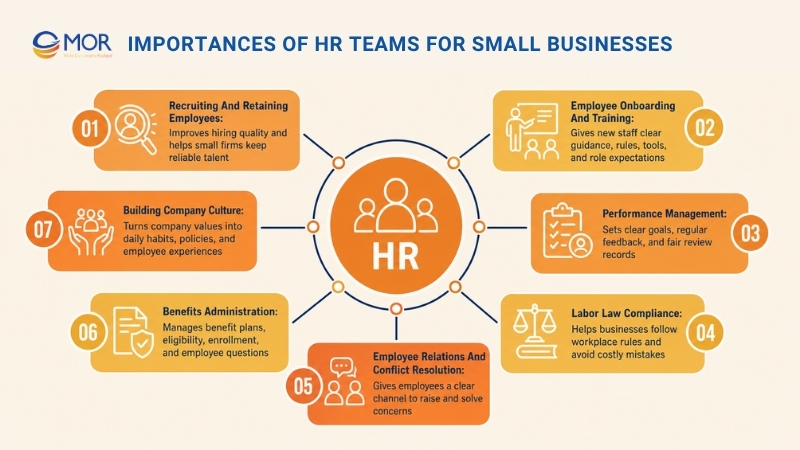
Recruiting And Retaining Employees
Hiring and retention often sit near the top of small business HR needs. When new roles open again and again, a business cannot rely only on referrals from friends or short interviews. An HR person can shape better job descriptions, review applicants in a fair way, plan interviews, and help the team choose people who fit real business goals.
Keeping employees matters as much as finding them. HR helps owners see what makes people stay, what pushes them out, and which fixes may build stronger loyalty. That may mean clearer pay ranges, better growth paths, stronger manager habits, or small acts of recognition that feel real. Many human resource development leaders note that small firms fight for good workers against large employers and other small companies. A steady HR plan can make the workplace feel more worth joining and harder to walk away from.
Employee Onboarding And Training
In a tiny team, a new hire may pick things up from coworkers or ask questions when something is unclear. That loose style may work for a short time, but it can cause trouble once the team gets bigger. Without an onboarding process, new staff may hear mixed messages, miss key rules, or need more time before they work well.
Direct HR support makes the first days feel clearer and less stressful for new employees. It may cover forms, workplace rules, company tools, training plans, and role expectations from day one. HR professionals often say that good onboarding shapes performance and retention, since people who feel guided early tend to stay longer and work with more confidence.
Performance Management
When the team gets larger, owners may struggle to notice how each person is doing. Casual comments can become uneven, and weak spots may stay hidden until they hurt output or team mood. HR can set up a simple performance management system with clear targets, regular talks, and fair ways to review work.
That does not mean a small company needs a heavy review model. For many teams, short talks every quarter, written goals, and simple notes about progress are enough. HR adds value because it makes the process steady. Employees understand what good work looks like, managers have a better way to speak about feedback, and the company has records to support pay raises, promotions, coaching, or discipline.
Labor Law Compliance
Legal risk is one of the clearest reasons to bring in proper HR help. As a team grows, more labor laws may affect the company based on size, location, field, and worker type. Errors with pay, overtime, records, employee classification, leave, or safety can become expensive fast.
An HR professional helps the business know which rules apply and use the same policy for everyone. This matters even more when a company has more than one site or works with full-time, part-time, seasonal, and contract staff. From an HR view, compliance is not just about staying away from fines. It also creates fair and open systems that protect the business and the people working in it.
Employee Relations And Conflict Resolution
In a small group, the owner or manager may deal with conflict face to face. Once the company grows, staff concerns often become more serious and harder to handle. Problems linked to poor communication, unfair treatment, attendance, behavior, or workplace harassment no HR can manage may leave people unsure where to turn.
HR gives employees a clear channel for raising concerns and helps managers respond in the right way. It can keep notes, review claims when needed, and help solve issues before they harm trust or work quality. Many HR executives see this as a major reason to involve HR early: it can stop small tensions from turning into legal, cultural, or daily operations problems.
Benefits Administration
Benefits matter more when a company wants to win and keep good people. In the early days, a small firm may give basic pay and a small amount of time off. As the team expands, staff may look for health plans, paid leave, retirement help, wellness support, or learning chances.
HR can run these programs and explain them in plain language to employees. This may include reviewing plan choices, handling enrollment, checking who is eligible, answering staff questions, and keeping benefit rules in writing. Good benefits administration also helps retention, since employees are more likely to stay when they feel the company cares about their long-term well-being.
Building Company Culture
Company culture is easy to sense when only a few people work together, but it becomes harder to keep as more employees join. Without shared values, clear communication habits, and steady management practices, the workplace can become uneven. Some managers may deal with issues one way, others may do the opposite, and employees may start to feel distant from the company’s original spirit.
HR helps turn company culture into daily action. That can include recognition, internal updates, leadership coaching, team activities, inclusion work, and clearer workplace rules. HR does not take the owner’s vision away, but it helps turn that vision into policies, habits, and real employee experiences. For a growing small business, that can be the line between only adding headcount and building a stronger company.
>>> Explore how to apply continuous performance management approach effectively using strategy, technology, and culture to keep teams engaged and performing well.
The Pros And Cons Of An HR Department For Small Businesses
A formal HR department can bring real value to companies at any stage. Still, the answer to do small businesses need HR depends on size, growth speed, and how hard people-related work has become.
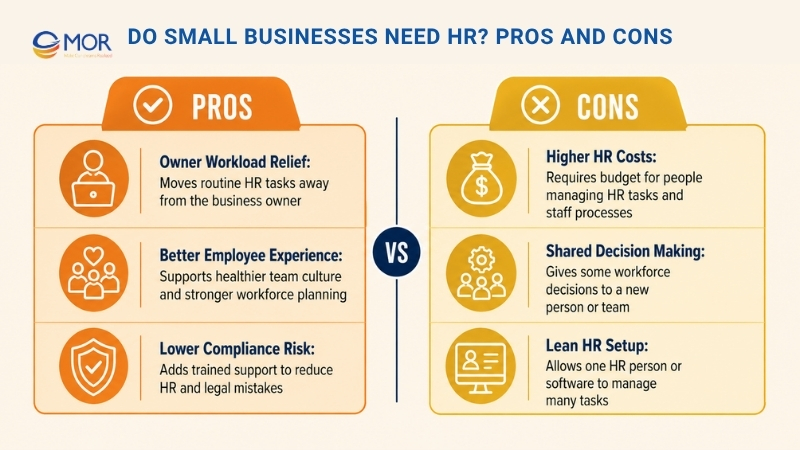
There are many upsides to having HR support, such as:
- Taking routine HR work off the owner’s plate
- Letting staff spend more time on the work they do best
- Building a stronger employee experience and a healthier team culture
- Giving one person clear ownership of long-term workforce planning
- Adding trained support to lower the chance of compliance mistakes
Still, setting up an HR team can bring some hurdles. These include:
- Paying for people who will manage HR tasks and daily staff processes
- Giving some decision-making power to a new person or team
- Dealing with staff fears or old ideas about what HR teams do
Owners can lower these risks when they hire people who understand the company’s values, purpose, and way of working. It also helps to know that the right software can let one HR person, or even a lean team, handle a lot of work well.
Starting small is often enough, and that can make the cost of hiring HR talent feel more manageable. Custom HRM software can also help owners shape HR work around their preferred process, instead of changing the business to fit a rigid tool.
Should Your Businesses Outsource HR?
After you see the need for HR support, the next choice is whether to build an internal team or get help from an outside partner or software platform. Many owners ask, do small businesses have HR departments, or do they usually outsource the work first? HR outsourcing is common among smaller companies. Research shows that 57% of companies outsource at least one HR task, and about 24% of small businesses use outside firms to handle HR work.
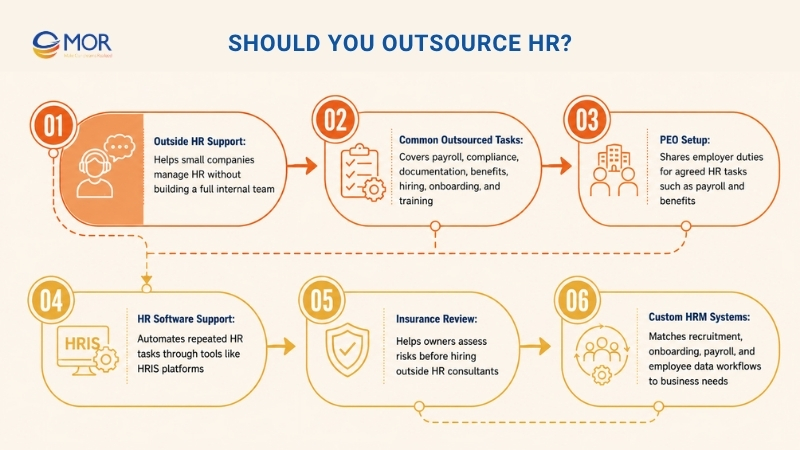
When companies outsource HR services, they often choose a professional employer organization (PEO) or an administrative services provider. These providers often help with many tasks, including the following:
- Payroll
- Compliance
- Documentation
- Performance management
- Benefits administration
- Recruiting, hiring, and onboarding
- Training and development
- Inspections and audits
A company that signs with a PEO usually enters a co-employment setup, meaning the PEO becomes an employer of record with the IRS. This lets the PEO carry legal duties for the tasks named in the agreement, such as payroll and benefits management.
Another way to ease the load is to use HR software built to handle repeated HR tasks. Business owners can also review the types of insurance needed for small hr consulting business before hiring an outside consultant, since the provider may deal with private employee data, advice, and compliance work. HR teams that want outside-style support without handing work to a third party can use tools like human resource information system (HRIS) software.
For small companies that need HR software shaped around their own process, MOR Software can build custom HRM systems for recruitment, onboarding, performance tracking, training, payroll, and employee data management. Rather than pushing every team into the same preset tool, the system can match how your people already work.
What Are The Benefits Of Outsourcing HR?
Outsourcing HR work to an outside provider can help small companies in many ways. Common gains include:
- Moving key HR tasks away from owners or staff can cut admin pressure, giving them more time to grow the business in other areas.
- Outside HR support can make people management more affordable. Instead of paying for a full internal HR team, companies can get expert help when they need it.
- Third-party HR services or software can lower legal and compliance risks, helping companies avoid fines, disputes, and costly errors.
- Access to HR knowledge can lead to better choices. Through outsourced HR support, companies can learn good practices, make sound decisions, and set policies that support the business and employees.
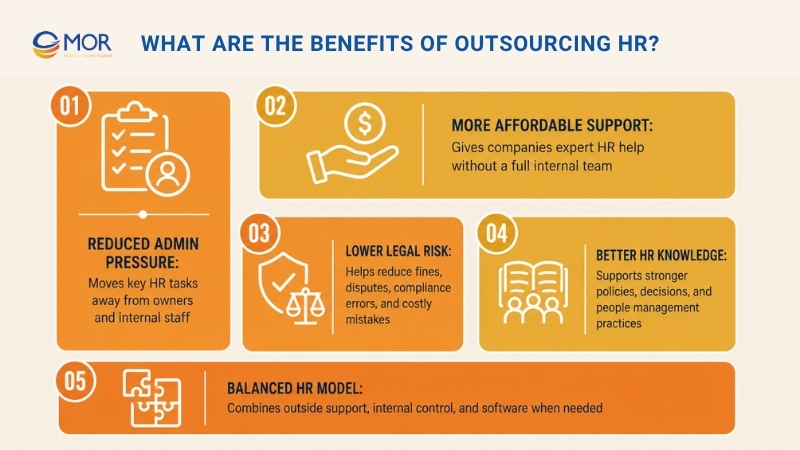
For many owners, the best HR software small business needs may include a mix of outside support, internal ownership, and software. This gives the company more control while still keeping expert help close.
Build An HR Department For Your Small Business
Once the value of HR is clear, you may start thinking about how to set up a practical HR function. These seven small business HR tips and good practices can help you get started.
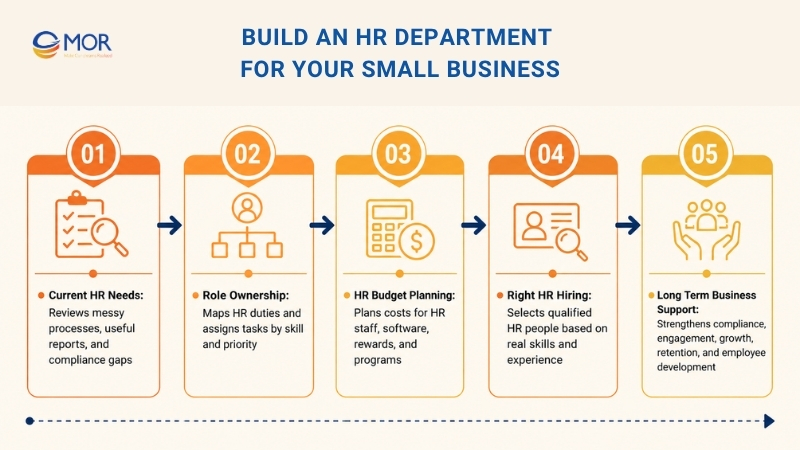
- Review the HR needs for small businesses in your company now, including what already works and what still feels messy. Check any HR reports available in your software, such as hiring reports, employee value reports, or engagement surveys. Look closely at compliance gaps, since this is often one of the areas that needs attention first.
- Map the roles and tasks your HR team must handle, then choose who will own each part. List the main HR duties and assign them based on skill, experience, and personal strengths. Set clear priorities so the most pressing work gets handled first.
- Set the HR budget across pay, software, rewards, and other staff programs. After you know what HR staff may cost, use your list of key HR practices to plan a budget for each area. You will likely need to adjust that budget as the team grows.
- Hire the right people so HR can manage staff well and keep the company aligned with workplace rules. You can attract strong candidates when the role is clear and selection is based on real HR knowledge and work history. Edit your job descriptions so they match your true needs.
HR supports the strength and long-term success of a business, no matter how small or large it is. A good HR team helps with employment rules and admin work, but it also supports staff growth, engagement, and retention. Your company may manage HR internally through HRIS integration software or work with outside specialists. Either way, sound HR habits can leave a lasting positive mark on the business.
Conclusion
So, do small businesses need HR? Yes, but the right setup depends on your team size, growth plans, and daily workload. Some companies only need basic HR software or outside support. Others need a dedicated person or team. What matters most is building fair, clear, and repeatable people processes. If your business needs a custom HRM system, contact MOR Software to build one that fits how your team works.
"Solutions Director at MOR Software, has extensive expertise in software development and management. He leads innovative projects and provides strategic solutions to enhance business operations, helping clients achieve digital transformation goals."
Pham Huu Canh


Solutions Director
MOR SOFTWARE
Frequently Asked Questions (FAQs)
Does a small business need HR?
No. A small business needs HR tasks covered, but it may not need a full HR department. In the early stage, the owner, manager, accountant, or outside provider may handle basic HR work.
When should a small business start thinking about HR support?
A small business should think about HR support when hiring becomes frequent, employee issues take more time, or compliance rules become harder to track. Many businesses start looking at HR help around 20 to 50 employees.
Who usually handles HR in a very small business?
In very small teams, HR duties often go to the owner, office manager, operations manager, or accountant. They may handle hiring, payroll coordination, time-off requests, employee records, and basic workplace rules.
What HR tasks should every small business manage?
Every small business should manage hiring, payroll, onboarding, employee records, workplace policies, performance notes, leave requests, and basic compliance. These tasks help protect the business and give employees clearer expectations.
Can HR software replace an HR person?
No. HR software can handle admin work like payroll, onboarding forms, attendance tracking, and employee records. It cannot replace human judgment in conflict, coaching, culture, or sensitive workplace decisions.
What happens if a small business ignores HR?
The business may face payroll mistakes, unclear policies, poor onboarding, inconsistent discipline, or employee conflict. Over time, these issues can hurt trust, retention, and daily operations.
Is outsourcing HR a good option for small businesses?
Yes. Outsourcing can work well for payroll, benefits, compliance updates, employee documents, and policy setup. Still, the business should keep an internal person involved in culture, communication, and employee concerns.
When should a small business hire a part-time HR consultant?
A part-time HR consultant makes sense when the business needs expert guidance but does not have enough HR work for a full-time role. This is useful for handbooks, onboarding plans, hiring steps, performance templates, and compliance questions.
What HR documents should a small business have?
A small business should keep employee contracts, payroll records, tax forms, time-off records, job descriptions, performance notes, and workplace policies. An employee handbook is also useful once the team starts growing.
How can a small business choose the right HR setup?
Start with your team size, hiring plans, budget, and risk level. A very small team may use basic software and outside payroll support. A growing team may need a consultant, outsourced HR partner, or dedicated HR staff.
Can a small company not have HR?
Yes. A small company can operate without a formal HR department, especially when the team is still very small. However, it still needs someone to manage HR responsibilities such as hiring, payroll coordination, employee records, workplace rules, and basic compliance.
What size company needs an HR department?
There is no single fixed number for every business. Some companies begin with informal HR support under 10 employees, add part-time or outsourced HR around 10 to 20 employees, and consider a dedicated HR role around 20 to 50 employees. The right time depends on hiring speed, employee issues, compliance risk, and management workload.
Is it illegal for a company to not have an HR department?
In most cases, it is not illegal for a company to operate without a formal HR department. What matters is whether the company follows employment laws, pays employees correctly, keeps required records, handles workplace issues properly, and meets local compliance rules. Businesses should check the laws in their country, state, or industry.
What does a small business need for HR?
A small business needs clear hiring steps, payroll support, employee records, onboarding materials, workplace policies, time-off rules, performance tracking, and a way to handle employee concerns. As the company grows, it may also need HR software, an employee handbook, compliance support, and a part-time or full-time HR professional.
Share


Make Our-Dreams Realized


© 2023 . MOR Software. All Rights Reserved
Sitemap
Privacy Policy
Terms of Use

Rate this article
0
over 5.0 based on 0 reviews
Your rating on this news:
Name
*Email
*Write your comment
*Send your comment
1