


Manufacturing Management System: The Ultimate Guide 2026
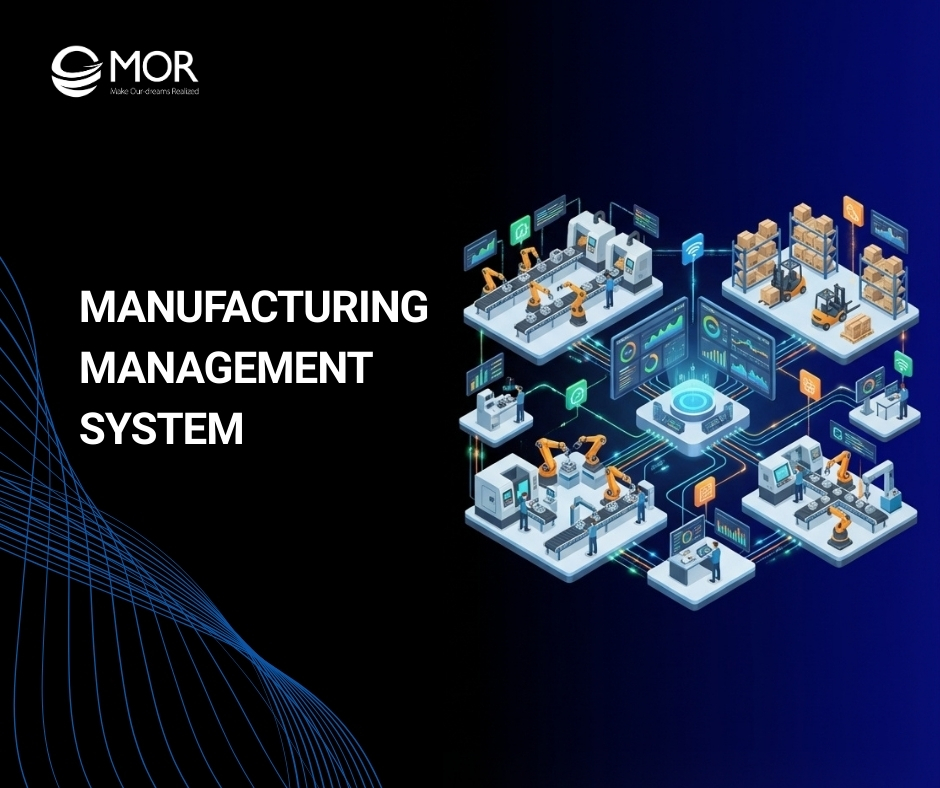
Production teams often struggle to coordinate schedules, materials, and shop floor operations while maintaining full visibility across the factory. A manufacturing management system helps solve this problem through a connected production management system that centralizes planning, monitoring, and reporting. In this guide, MOR Software will explain how this technology works and how it helps manufacturers run smarter operations.
What Is Manufacturing Management System?
A manufacturing management system is a digital solution designed to help you control, supervise, and refine every stage of your manufacturing operations. According to established industry frameworks such as MESA and VDI Guideline 5600, this platform works as a central information hub inside a factory environment.
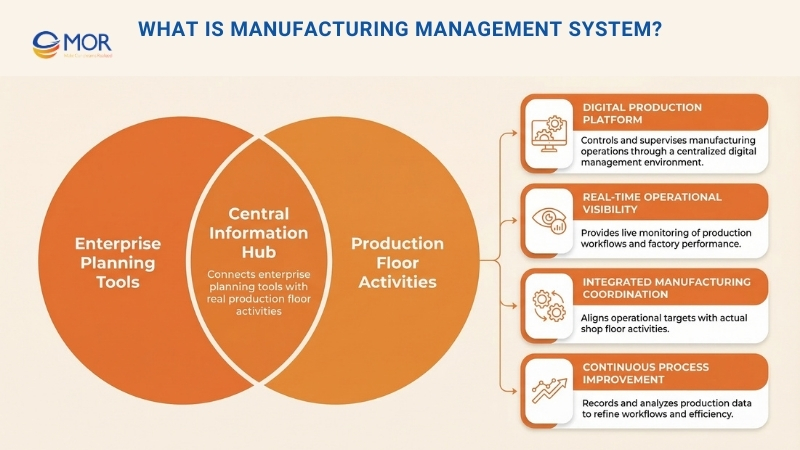
It links enterprise planning applications with activities happening directly on the production floor, helping align operational targets with real production work. You can rely on this platform to record, analyze, and continuously improve your production workflow through real-time visibility.
Core Functions Within A Manufacturing Management System
The core capabilities of a manufacturing management system extend across every stage of production coordination and manufacturing operations management. The table below outlines how each capability supports everyday factory activities.
Primary Function | Description |
Design Assessment | Evaluate operational performance and distribute resources using models that represent your manufacturing operations. |
Capacity Requirements Planning | Determine whether production demand can be met on schedule by reviewing resource requirements before planning begins. |
Scheduling | Allocate resources and define start and completion times for tasks according to your established production workflow plans. |
Schedule Management | Update schedules using live operational information and emerging issues to keep shop floor activities stable and efficient. |
Schedule Execution and Dispatching | Activate the planned schedule on the production floor while maintaining structured execution and collecting feedback for improvement. |
Status Presentations and Statistics | Present operational metrics and statistics that assist decision-making and allow simulation of improvements in production capacity and operations. |
You depend on a manufacturing management system to unify every stage of operations, including design, planning, execution, and performance reporting. This solution supports product quality, lowers operational expenses, and helps confirm that production activities follow internal business policies and regulatory rules. In sectors such as pharmaceuticals, automotive manufacturing, and food and beverage production, organizations must comply with strict frameworks like ISO 9001, GMP, and HACCP. The platform allows you to record activities, monitor operations, and demonstrate compliance with these standards.
>>> Stay ahead of the competition with our deep dives into manufacturing tech and software innovation. Explore our blog right now.
How Does Manufacturing Management System Work?
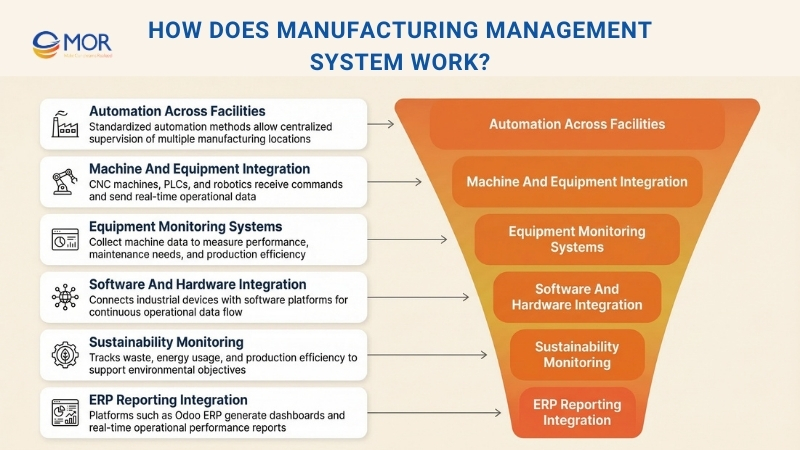
You operate a manufacturing management system to automate and coordinate your manufacturing activities. This production management platform links machines, employees, and workflows so that information moves smoothly through real-time data streams. The following points show how it functions in everyday operations:
- Standard automation practices across your facilities provide a consistent overview of production activities. You can supervise multiple factories from one digital production management platform and make decisions using reliable and synchronized data.
- Automated equipment such as CNC machines, PLCs, and robotic devices perform specialized production tasks. These tools receive commands from the platform and return real-time information about machine conditions, downtime events, and maintenance requirements.
- Equipment monitoring tools gather operational information and convert it into structured reports. You can measure equipment performance, organize production schedules, and estimate when maintenance tasks should take place.
- The connection between software applications and industrial hardware allows you to gather, review, and respond to production data continuously. This integration forms the technological base of your manufacturing operations management activities.
You gain several operational advantages from this connected environment:
- You increase productivity and accuracy when the same automation methods operate across every facility.
- You lower operational expenses when custom system development is reduced and training or maintenance costs decline.
- You protect product quality levels and maintain consistent manufacturing standards.
Modern manufacturing operations platforms also assist organizations that focus on environmental responsibility and sustainability goals. Lean production methods help you reduce waste and use materials more efficiently. The platform allows you to monitor sustainability indicators such as energy usage and waste output. Renewable energy sources can also connect to the system, while simulation tools help optimize the production workflow to lower environmental impact.
Digital platforms such as Odoo ERP play an important role within this ecosystem. You can use Odoo ERP to generate dynamic operational reports and dashboards that visualize real-time data across your factory environment. The platform connects to multiple operational data sources including production systems, supply chains, sales platforms, and financial records. You can create advanced reports, configure automated reporting schedules, and design management dashboards that display a clear view of operational performance. This level of visibility supports informed decisions and helps maintain efficient and intelligent manufacturing operations.
Compared with traditional management approaches, a manufacturing management system offers stronger scalability and operational flexibility. You can expand production capacity quickly by introducing new modules or connecting additional factories without major disruptions. Real-time monitoring and predictive analytics allow production teams to detect risks early and refine production planning. Your organization can remain responsive and competitive even in fast-changing market conditions.
Tip: Using a manufacturing management system allows you to streamline production supervision, maintain regulatory compliance, support sustainability objectives, and keep operations flexible as your business grows.
Key Components Inside A Manufacturing Management System
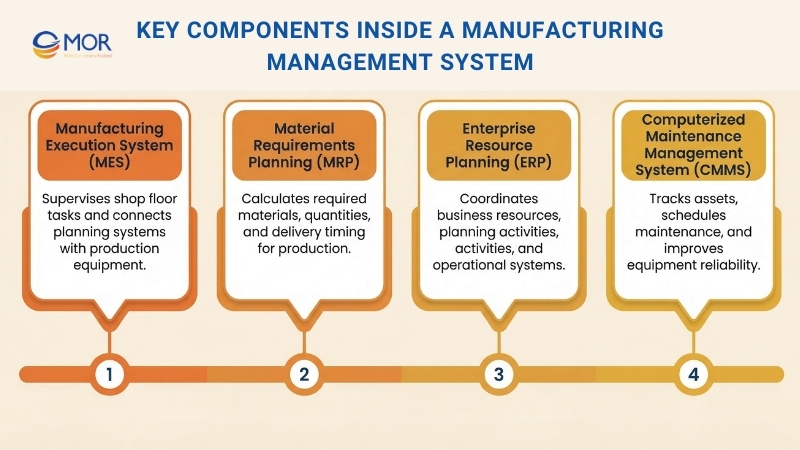
Modern factories depend on several integrated technologies that work together to simplify operations and improve productivity. A manufacturing management system connects these core technologies so production teams can coordinate activities efficiently and maintain operational visibility. Understanding these elements helps you see how each part supports manufacturing workflows and how tools such as Odoo ERP help unify operational data for better decision-making.
Manufacturing Execution System (MES)
A Manufacturing Execution System (MES) operates at the center of shop floor activities. You use it to supervise, control, and monitor manufacturing tasks as they occur in real time. This technology connects enterprise planning applications with the physical production line so operations remain coordinated from management systems to factory equipment.
Key Features / Benefits Of MES | Description |
Visibility | Delivers accurate, real-time operational data from the shop floor so managers can make informed decisions. |
Error-proofing production | Reduces manufacturing mistakes and protects product quality throughout production processes. |
Agility | Allows production teams to react quickly when production conditions or market requirements change. |
Inventory accuracy | Improves tracking and supervision of material and component inventory levels. |
Enhanced traceability and compliance | Supports monitoring of materials, parts, and workflows to meet regulatory obligations. |
Better communication throughout the business | Enables information exchange between production activities and enterprise platforms such as ERP. |
Driving continuous improvement | Uses data analytics to detect inefficiencies and refine production performance. |
Faster new product introduction | Accelerates the release of new products through more organized production workflows. |
Efficiencies and cost-savings | Limits waste, downtime, and operating costs through optimized shop floor execution. |
Top floor to shop floor integration | Links planning and logistics systems with factory operations to support smooth coordination. |
You gain strong operational advantages from MES because it helps organize production plans, maintain schedule accuracy, and enforce standardized workflows. The system provides clear progress tracking in real time, supports quality assurance standards, and generates valuable production data that encourages ongoing improvement. A cloud-based MES environment also gives you greater flexibility, allowing multiple facilities to operate under one digital production management platform while providing remote access to operational information.
Odoo ERP strengthens MES environments through integrated production dashboards and operational reporting. The platform connects data from the shop floor, inventory systems, and production planning modules, then presents it through visual dashboards and operational reports. You can monitor production schedules, evaluate performance metrics, and create reports that help identify process bottlenecks while optimizing the overall software for manufacturing process environment within your factory.
Enhanced Visualization Through Odoo ERP
Note: MES functions as a unified operational layer that links ERP platforms with automation systems. When integrated with Odoo ERP, companies can connect these technologies and obtain practical insights that support smarter manufacturing decisions.
Material Requirements Planning (MRP)
Material Requirements Planning (MRP) helps you manage and optimize inventory throughout your production process. You rely on MRP to review sales forecasts, customer purchase orders, existing inventory quantities, and supplier lead times. This evaluation shows exactly which materials are required, how many units are necessary, and the specific time they must arrive. MRP ensures that materials are delivered at the right moment for production so you avoid both shortages and excessive stock.
MRP connects production scheduling with inventory oversight and supply chain coordination. The system automates purchasing activities and production planning tasks, which helps maintain lower inventory levels while still meeting manufacturing demand. Organizations that adopt MRP frequently experience reduced inventory expenses, shorter production lead times, and improved cost efficiency. Modern MRP tools also apply artificial intelligence and cloud computing to provide real-time operational visibility and predictive insights, making inventory management even more reliable.
Odoo Manufacturing integrates with MRP functions to provide real-time reporting and operational analysis. The platform allows you to visualize material movement, supervise stock quantities, and configure alerts that notify you when shortages or overstock conditions occur. This integration supports efficient production workflows and helps prevent disruptions that could affect manufacturing operations.
Tip: When you combine Odoo Manufacturing with your MRP process, you can automate material planning updates and supply orders, helping production remain stable while keeping operational costs under control.
Enterprise Resource Planning (ERP)
Enterprise Resource Planning (ERP) platforms provide a complete operational overview of your entire manufacturing organization. You use ERP tools to coordinate materials, business resources, and operational systems, which improves efficiency and supports stronger management decisions. These platforms simplify essential activities such as inventory control, supply chain coordination, production planning, and financial administration.
- Inventory management: Monitor materials from raw components to finished goods, maintain balanced stock levels, and organize warehouse operations more efficiently.
- Production planning: Arrange production schedules, allocate operational resources, and align manufacturing output with customer demand.
- Quality control and compliance: Track product quality indicators, manage defect records, and maintain compliance with regulatory standards.
- Financial management: Consolidate financial information to monitor expenses, supervise cash flow, and support informed financial planning.
- Supply chain management: Improve the movement of goods and services, strengthen supplier partnerships, and maintain reliable delivery schedules.
- Human resources: Integrate employee information management, payroll administration, and recruitment processes.
- Customer relationship management: Record and analyze customer interactions to enhance satisfaction and increase sales performance.
- Equipment performance tracking: Observe machine condition and performance to plan maintenance and reduce unexpected downtime.
- Purchasing: Organize procurement processes, supplier selection, and negotiation activities more efficiently.
- Artificial intelligence integration: Support production optimization, demand forecasting, and data-driven decision-making.
- Cloud connectivity: Access ERP platforms from any location while maintaining scalability and operational flexibility.
Factories rely on ERP technology to lower inventory expenses and labor costs, improve productivity, and maintain compliance with regulatory requirements. These platforms also support stronger resource utilization and production scheduling, helping organizations make decisions based on accurate operational data while improving business performance and customer satisfaction. Many factories connect their manufacturing management system with manufacturing ERP systems to coordinate factory operations with finance, supply chains, and enterprise planning.
Odoo ERP strengthens these enterprise systems through integrated data connectivity and operational dashboards. The platform gathers information from production modules, inventory systems, and financial tools, then presents the results in clear visual reports. You can design customized reports, monitor KPIs, and automate scheduled reporting tasks. This capability allows you to supervise manufacturing operations more effectively and respond quickly when operational conditions change.
>>> Choosing the right location for your software project is crucial for ROI. Discover why global businesses are turning to Southeast Asia in our guide on the top IT outsourcing companies in Vietnam.
Computerized Maintenance Management System (CMMS)
A Computerized Maintenance Management System (CMMS) helps you maintain equipment reliability across your factory. You use CMMS tools to register assets, organize maintenance schedules, and manage maintenance work orders. Real-time asset monitoring and tracking provide detailed records about equipment performance and service history, allowing you to identify issues earlier and improve machinery reliability.
- Real-time asset monitoring and equipment tracking
- Automated maintenance planning and service reminders
- Inventory management for spare parts and maintenance materials
- Integration with IoT sensors to support predictive maintenance
- Work order management for organized task assignment and tracking
- Consolidated maintenance information to improve communication and automate maintenance workflows
CMMS allows your organization to move from reactive maintenance toward proactive maintenance strategies. Industry research shows that implementing CMMS can increase maintenance productivity by more than 28% while reducing equipment downtime by over 20%. Maintenance technicians can also report equipment failures directly from the production floor using mobile devices, which shortens repair response time and supports smoother operational workflows.
Odoo Maintenance can connect with your CMMS environment to provide operational dashboards and performance analytics. The platform allows you to supervise maintenance schedules, review machine condition data, and generate reports that support better maintenance planning while minimizing unexpected downtime.
Note: When maintenance information is centralized within a single operational platform, communication improves, workflows become automated, and maintenance resources can be allocated more efficiently.
Integrating Manufacturing Systems With Centralized Reporting Platforms
You can use Odoo ERP as a centralized reporting and operational visibility platform across these production technologies. Odoo connects with systems such as MES, MRP, ERP, and CMMS, allowing your manufacturing management system environment to operate with unified operational data. This connection allows you to:
- Integrate operational information from multiple systems to create a unified view of manufacturing activities.
- Build dynamic dashboards that present real-time production metrics, from scheduling performance to product quality monitoring.
- Automate operational reports and system alerts so your teams remain informed and able to respond quickly.
- Support cloud-based manufacturing tools and connected platforms that provide scalable and flexible production management.
With Odoo ERP, complex manufacturing information becomes easier to understand through clear dashboards and structured operational reports. This visibility allows you to improve production workflows, strengthen quality management, and support continuous improvement across your entire manufacturing environment.
Key Features Of Manufacturing Management System
A manufacturing management system includes a wide range of capabilities that support efficient coordination of factory operations. These functions help organizations supervise production activities, maintain operational control, and improve workflow performance. The following features illustrate how modern manufacturing management system software assists companies in managing production environments effectively.
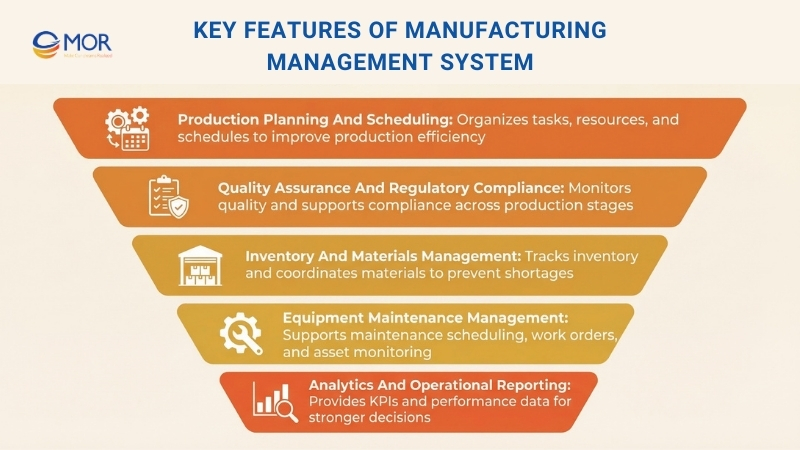
Production Planning And Scheduling
Production planning tools help companies coordinate manufacturing schedules and organize operational resources efficiently. The platform allows you to build detailed production schedules, define task priorities, allocate labor and equipment, and observe operational progress in real time. This functionality helps increase production efficiency, reduce idle time, and ensure customer orders are completed on schedule.
Quality Assurance And Regulatory Compliance
Maintaining consistent product quality and regulatory compliance is essential in manufacturing operations. A manufacturing quality management system provides monitoring tools that track product quality throughout every stage of the production cycle. These tools support compliance with industry regulations, internal standards, and customer expectations. A strong quality management system in manufacturing environments also helps reduce product defects, limit recall risks, and avoid compliance violations.
Inventory And Materials Management
Reliable inventory supervision and materials coordination support smooth manufacturing operations. This production management platform provides tools to monitor inventory quantities, supervise stock movement, and coordinate material requirements planning activities. These capabilities help prevent material shortages, lower inventory holding costs, and improve overall control of warehouse resources.
Equipment Maintenance Management
Maintenance planning plays a major role in protecting equipment reliability and production continuity. A manufacturing management system provides tools for maintenance scheduling, work order management, and asset monitoring. Preventive maintenance strategies help organizations reduce machine failures, shorten equipment downtime, and extend the operational lifespan of manufacturing assets.
Analytics And Operational Reporting
Data-driven insights support stronger decision-making across production environments. This manufacturing operations platform includes analytics and performance reporting tools that provide visibility into operational metrics. Production managers can review efficiency indicators, quality data, and resource utilization levels while evaluating KPIs that highlight improvement opportunities. These insights help organizations refine production processes and make informed operational decisions.
Why Manufacturing Management System Is Important For Modern Factories
Competition in the manufacturing sector is intense, and operational efficiency often determines success. Manufacturing management systems help organizations gain a competitive advantage because they optimize production workflows and strengthen overall operational performance.
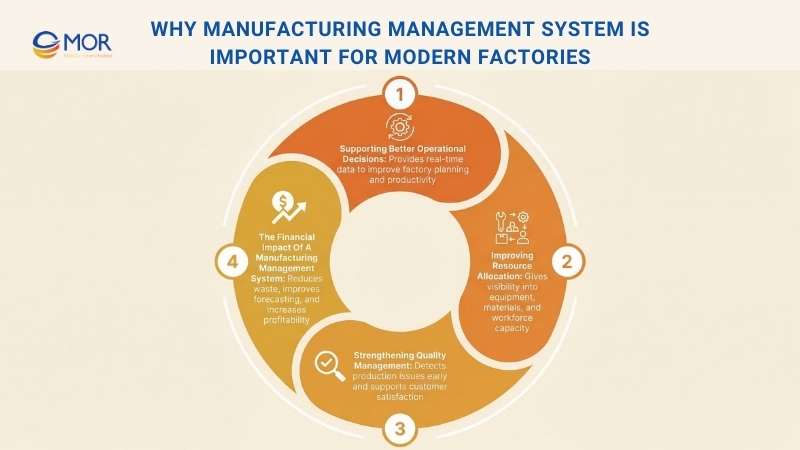
Supporting Better Operational Decisions
These systems provide real-time operational data across multiple stages of manufacturing. Managers can analyze this information to guide planning decisions and improve productivity across the factory environment.
Improving Resource Allocation
A manufacturing operations platform improves the allocation of resources because it provides a clear overview of available equipment, materials, and workforce capacity. This visibility helps reduce waste and ensures production resources are used efficiently.
Strengthening Quality Management
Production control technology makes it easier to monitor and maintain manufacturing quality standards. The system detects problems early during production activities, which prevents potential losses and supports higher customer satisfaction.
The Financial Impact Of A Manufacturing Management System
A manufacturing management system can strongly influence the profitability of manufacturing organizations. Operational improvements reduce waste, strengthen decision-making, and improve overall production efficiency. The platform delivers real-time visibility into production activities, allowing accurate demand forecasting and effective resource planning. Lower levels of overproduction, reduced material waste, and improved inventory supervision help organizations decrease operational costs and increase financial performance. Quality control mechanisms within the system also prevent expensive rework and product returns, helping protect customer satisfaction and long-term revenue. Data insights produced by the platform support strategic planning and may reveal new business growth opportunities.
Predictive maintenance represents another effective method to improve profitability using this production management platform. Historical machine performance data allows predictive models to anticipate equipment failures before they occur. This reduces operational interruptions and helps identify the root causes of technical issues. Predictive maintenance strategies can reduce machine downtime by 30–50% and extend machine lifespan by 20–40% according to industry research.
Choosing The Right Manufacturing Management System For Business Growth
When selecting a manufacturing management system, it is important to evaluate several factors that influence long-term operational success. The right production management platform should support your factory processes, improve efficiency, and adapt to your organization’s future growth.
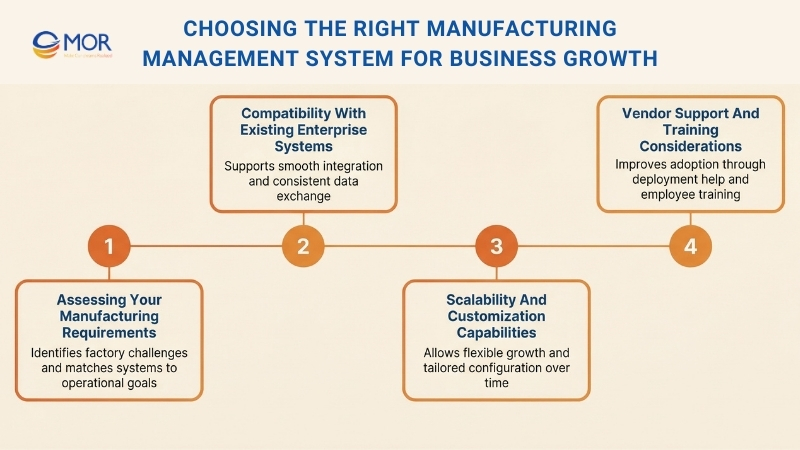
Assessing Your Manufacturing Requirements
Before choosing a production control system, you need to evaluate your specific manufacturing requirements. Identify the operational areas that require improvement and determine which challenges your factory needs to solve. This evaluation helps you narrow your search and concentrate on solutions that match your operational goals.
Compatibility With Existing Enterprise Systems
Confirm that the manufacturing management system you select integrates smoothly with your current software and operational tools. Compatibility with other enterprise platforms is necessary to support consistent data exchange and efficient workflows across departments.
Scalability And Customization Capabilities
Choose a manufacturing operations platform that can expand as your company grows and that supports customization based on your business requirements. Headless architecture solutions, which separate backend processing from frontend interfaces, offer strong flexibility for integration and customization. This approach ensures the platform can evolve alongside future technologies and changing business needs.
Vendor Support And Training Considerations
Vendor support and employee training play an essential role in the successful adoption of factory management software. Select a technology provider that offers full assistance during installation, deployment, and ongoing operations. Training programs should also be available so your team can learn to use the platform effectively. Many organizations combine these training initiatives with a learning management system for manufacturing or a manufacturing learning management system so employees can continuously develop the skills needed to operate production technologies.
Implementing A Manufacturing Management System Successfully
Implementing a manufacturing management system requires thoughtful preparation and a structured execution strategy. A well-planned rollout helps organizations adopt new production technology smoothly and ensures the platform delivers long-term operational value. The following steps outline how companies can approach implementation effectively.
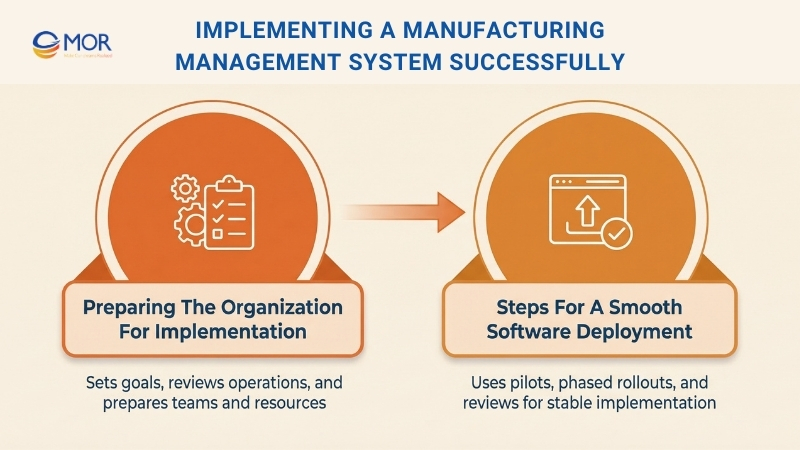
Preparing The Organization For Implementation
Before deploying a manufacturing management system, it is important to prepare your organization carefully. This preparation includes several essential activities:
- Defining clear goals and measurable objectives for the implementation process.
- Performing a detailed review of your current manufacturing operations and identifying areas that require improvement.
- Creating a dedicated implementation team that includes representatives from multiple departments.
- Communicating the implementation roadmap and expected advantages to all stakeholders across the organization.
- Confirming that required resources such as hardware, infrastructure, and technical support are ready.
Steps For A Smooth Software Deployment
After completing the preparation stage, the next step is to deploy the production management system across the organization. Follow these steps to support a successful rollout:
- Establish a detailed project timeline and allocate enough time for every stage of the implementation process.
- Begin with a pilot deployment within a limited area of the organization to detect potential challenges or technical issues.
- Observe the pilot implementation carefully and collect feedback from users so adjustments can be made when necessary.
- Use the results of the pilot stage to expand the factory management software across the rest of the organization through a phased rollout.
- Schedule regular review checkpoints and progress meetings to ensure the deployment continues according to plan.
Future Trends Shaping The Manufacturing Management System
As the manufacturing sector develops, the future of a manufacturing management system continues to change under the influence of new technologies and industry developments. These innovations create strong opportunities to increase operational efficiency, support better decision making, and encourage more sustainable production practices. The following sections examine the influence of new technologies, the connection between AI and IoT, and the direction of environmentally responsible manufacturing.
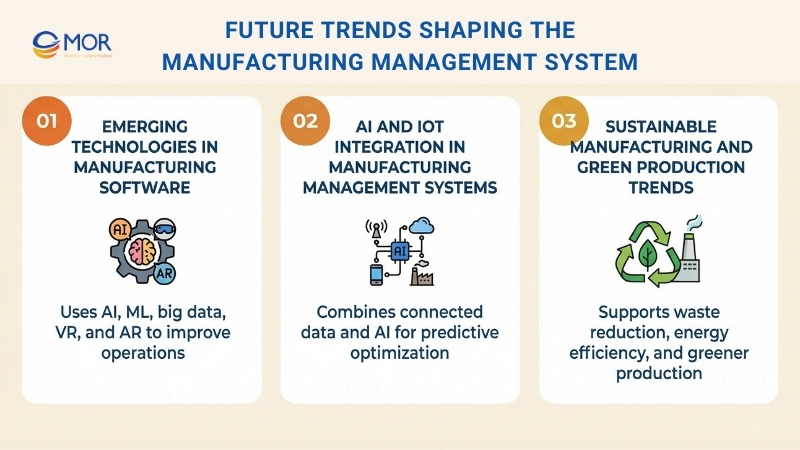
Emerging Technologies In Manufacturing Software
New technologies such as Artificial Intelligence (AI), Machine Learning, and Big Data analytics are transforming the manufacturing industry. AI-driven manufacturing management system software can automate multiple operational activities, improve production scheduling, and forecast maintenance needs. This leads to lower downtime, stronger resource utilization, and higher productivity across factory operations. In addition, the use of Virtual Reality (VR) and Augmented Reality (AR) technologies supports improved visualization, remote teamwork, and more effective training approaches within manufacturing environments.
AI And IoT Integration In Manufacturing Management Systems
The combination of AI and the Internet of Things (IoT) is changing the structure of modern manufacturing operations. IoT devices deliver real-time information related to machine performance, production progress, and environmental conditions within factories. When these data streams connect with AI algorithms, organizations can analyze patterns, forecast equipment failures, and refine production workflows. AI-enabled manufacturing management systems can use IoT data to support predictive maintenance, lower downtime, and increase overall equipment effectiveness (OEE). This integration also supports improvements in supply chain coordination, inventory control, and product quality management.
Sustainable Manufacturing And Green Production Trends
Sustainable production and environmentally responsible manufacturing practices are gaining stronger attention across the industry. Many manufacturers now focus on reducing operational waste, lowering environmental impact, and introducing renewable energy sources into their production environments. To support these goals, modern factory management software continues to evolve with tools that monitor sustainability metrics, optimize energy consumption, and promote environmentally friendly supply chain management. This shift toward greener production reflects growing consumer demand for responsible products and increasing regulatory expectations across global markets.
As manufacturing technologies continue to advance, the combination of emerging innovations, AI, IoT, and sustainable production strategies will influence the direction of the industry. Organizations that adopt these capabilities through modern digital production platforms can streamline operations, improve resource efficiency, and contribute to a more sustainable manufacturing ecosystem.
MOR Software Supports Manufacturing Management System Development
MOR Software helps manufacturers design and implement a manufacturing management system using the capabilities of Odoo. Our team supports businesses that want to connect production planning, shop floor operations, inventory control, and reporting within one digital platform. This approach helps factories manage complex workflows while maintaining clear visibility across all production activities.
With Odoo Manufacturing (MRP), companies can organize production orders, monitor work centers, and manage materials in real time. Our specialists configure the system so it fits your production processes, whether you run discrete manufacturing, assembly operations, or custom production models. The platform connects manufacturing with inventory, purchasing, quality control, and maintenance, creating a unified production environment.
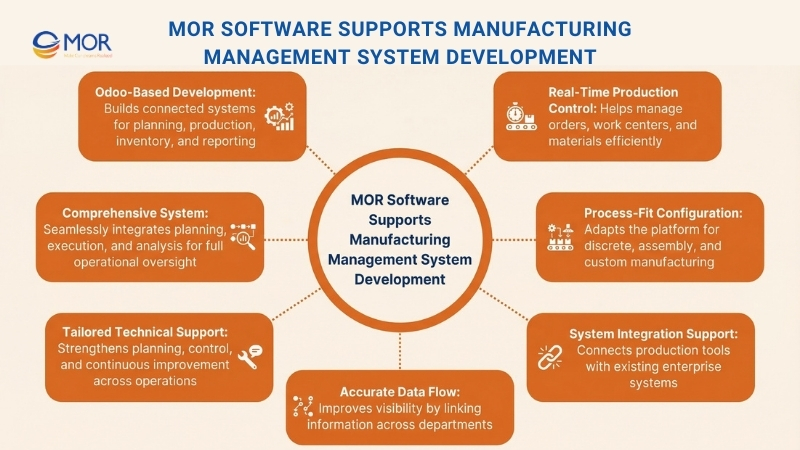
MOR Software also assists with system integration, data migration, and customization so your manufacturing operations platform works smoothly with existing enterprise tools. Our implementation team ensures that production data flows correctly between departments and that managers receive accurate operational insights.
Through tailored configuration and technical support, we help manufacturers adopt a digital production management platform that improves planning accuracy, strengthens production control, and supports continuous improvement across factory operations. Contact us to discuss how MOR Software can support the development and implementation of your manufacturing management system.
If you are considering outsourcing your Manufacturing System, don't miss these essential guides:
- [Choosing the Right Tech Companies in Vietnam]
- [The Ultimate Guide to Offshore Outsourcing Software Development Company]
Conclusion
A well-designed manufacturing management system helps manufacturers connect planning, production, maintenance, and reporting in one coordinated environment. With the right production management system in place, factories gain clearer visibility, stronger control over operations, and better decision making across the entire production cycle. MOR Software supports businesses that want to build or upgrade their digital manufacturing platforms with reliable, scalable solutions. If you are planning to modernize your production systems, contact us to discuss how our team can help.
MOR SOFTWARE
Frequently Asked Questions (FAQs)
What is a manufacturing management system?
A manufacturing management system is a software platform that helps companies plan, monitor, and control production operations. It connects processes such as scheduling, inventory management, quality control, and equipment monitoring to ensure manufacturing activities run efficiently and consistently.
What is the difference between a manufacturing management system and ERP?
An ERP system manages overall business operations such as finance, human resources, procurement, and supply chains. A manufacturing management system focuses specifically on production activities, including shop-floor control, production scheduling, machine monitoring, and operational performance.
What industries commonly use manufacturing management systems?
Many industries rely on these systems to manage complex production environments. Common sectors include automotive manufacturing, electronics production, pharmaceuticals, food and beverage processing, aerospace, and consumer goods manufacturing.
What are the key features of a manufacturing management system?
Typical features include production planning, inventory management, quality control, equipment maintenance scheduling, real-time reporting, and performance analytics. These tools help manufacturers maintain operational visibility and improve efficiency.
How does a manufacturing management system improve production efficiency?
The system provides real-time data on machines, materials, and production schedules. Managers can monitor operations closely, identify bottlenecks quickly, adjust schedules, and allocate resources more effectively.
Can a manufacturing management system integrate with other business software?
Yes. Many systems integrate with enterprise platforms such as ERP, supply chain management tools, and analytics platforms. This integration allows manufacturers to synchronize production data with purchasing, inventory, and financial systems.
What benefits does a manufacturing management system provide for quality control?
It helps monitor production steps, track defects, and enforce quality standards throughout the manufacturing process. Automated monitoring allows companies to detect problems early and reduce the risk of defective products reaching customers.
Is a manufacturing management system suitable for small manufacturers?
Yes. Modern solutions are available for companies of different sizes. Small and mid-sized manufacturers often adopt cloud-based systems that offer scalable features without requiring large infrastructure investments.
How long does it take to implement a manufacturing management system?
Implementation timelines vary depending on company size, system complexity, and integration requirements. Smaller deployments may take a few months, while larger enterprise implementations may require several months or longer.
How does a manufacturing management system support predictive maintenance?
The system collects equipment performance data and analyzes patterns that indicate potential failures. Maintenance teams can schedule repairs or servicing before breakdowns occur, which reduces downtime and extends equipment lifespan.
Share


Make Our-Dreams Realized


© 2023 . MOR Software. All Rights Reserved
Sitemap
Privacy Policy
Terms of Use

Rate this article
0
over 5.0 based on 0 reviews
Your rating on this news:
Name
*Email
*Write your comment
*Send your comment
1