


Sales Pipeline Optimization in Odoo | MOR Software's Expert Guide

Sales teams lose deals when leads sit too long, follow-ups slip, or forecasts rely on guesswork. Sales pipeline optimization with Odoo CRM gives you a clearer way to manage leads, track deal stages, and act before revenue leaks. In this MOR Software’s guide, we’ll show you how Odoo helps sales teams build a cleaner, smarter pipeline.
Key Takeaways
- Sales pipeline optimization helps teams track leads, fix stalled deals, and improve revenue forecasts.
- Odoo CRM supports cleaner pipeline work through Kanban views, lead scoring, reports, automation, and app connections.
- A strong Odoo setup works best when sales stages, lead data, follow-ups, and business systems are aligned.
What Is A Sales Pipeline?
A clear sales pipeline helps companies guide potential buyers through each step of the buying path. It works as a visual sales map that follows prospects from the first contact until the deal is closed. It also helps teams see where each buyer stands, so sales pipeline optimization becomes easier to manage with real customer data.
A sales pipeline groups leads by their activity and buying intent. Each prospect moves through set stages that show how interested they are and how close they may be to making a purchase.
>>> Highlight the top manufacturing CRM software, key features, and practical criteria to help you select a system that truly fits your operations in 2026.
The Importance Of Sales Pipeline Optimization For Sales Teams
A sales pipeline gives your sales department a clear direction. It shows the path sales reps should follow, sets the main sales stages, and helps the team choose the right action for each buyer. When reps understand customer interest levels, they can answer concerns better and guide each prospect with more confidence.
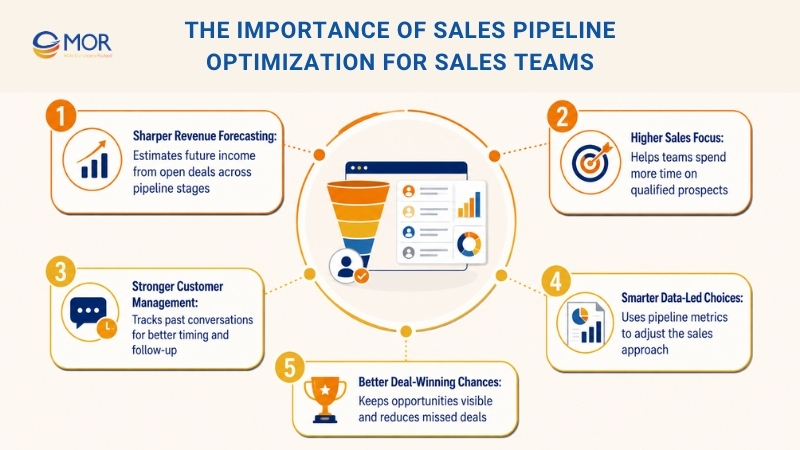
This is what a clear pipeline can bring to your business.
- Sharper Revenue Forecasting: Businesses can estimate future income by reviewing open deals across different stages, which supports better financial planning.
- Higher Sales Focus: A defined process helps teams spend more time on qualified leads and less time on prospects with weak buying signals.
- Stronger Customer Management: Tracking past conversations helps sales reps contact prospects at the right time and improve conversion chances.
- Smarter Data-Led Choices: Pipelines show useful numbers like conversion rate, deal speed, and total pipeline value, helping teams adjust their sales approach.
- Better Deal-Winning Chances: A clear process helps teams follow every opportunity closely, which supports better sales pipeline optimization and fewer missed deals.
How To Set Up Sales Pipeline Optimization With Odoo CRM
Sales leaders need a well-planned CRM system to build steady revenue. Odoo CRM supports sales pipeline optimization with a clear view of opportunities across the sales process. A practical Odoo sales pipeline optimization plan helps teams check pipeline metrics, review progress, and improve how prospects move from lead to customer.
Odoo CRM turns scattered sales data into a cleaner deal flow. Instead of keeping prospects in email threads, spreadsheets, notes, and separate apps, teams can manage each opportunity in one shared system. Think of this as a short Odoo sales pipeline optimization tutorial for building better visibility around deal owners, deal status, next actions, and urgent opportunities.
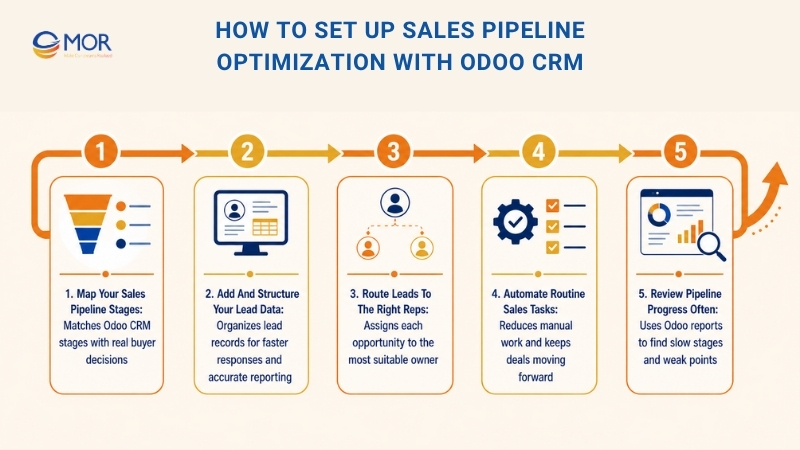
Map Your Sales Pipeline Stages
Start by deciding how your sales process should look inside Odoo CRM. Each business has its own buyer journey, so your stages should match how customers make decisions. A simple setup may include new lead, qualified opportunity, proposal, negotiation, won, and lost. For B2B sales, you may need stages like discovery, demo, technical review, stakeholder approval, contract review, and onboarding.
Inside an Odoo pipeline, teams can adjust stages around real selling actions. This makes the pipeline more useful because reps move deals based on clear progress, not loose labels. When every stage has a clear purpose, managers can track progress better and see where deals start to slow down.
Add And Structure Your Lead Data
After the pipeline stages are ready, the next step is to move lead data into Odoo CRM. Leads may come from website forms, email campaigns, phone calls, events, referrals, social media, or old databases. Odoo helps teams collect and arrange these records, so reps can respond sooner and avoid losing good prospects.
Clean lead records support stronger pipeline improvement. Teams should add contact name, company name, email, phone number, lead source, industry, expected revenue, and notes from the first talk. Better data makes lead routing, segmentation, and reporting more accurate later.
Route Leads To The Right Reps
Once leads are in the system, each one should go to the right rep or team. Odoo CRM can route leads by region, product interest, customer type, deal size, or team workload. This removes confusion and gives each opportunity one clear owner.
Lead routing also makes team responsibility easier to track. Managers can see who owns each deal, how fast they reply, and whether planned follow-ups are done. This is useful for growing teams that sell across different products, markets, or customer groups.
Automate Routine Sales Tasks
Odoo manufacturing helps sales reps handle fewer repeat tasks by hand. Teams can plan calls, create activities, send follow-up emails, set reminders, and move opportunities through stages in a more orderly way. Automation gives reps more time to speak with prospects and less time spent on admin work.
This also makes the sales process more stable. If every qualified lead needs a discovery call, demo, proposal, and follow-up email, Odoo can help reps track those steps. This kind of routine sales pipeline optimization lowers the chance of missed tasks and keeps deals moving forward.
Review Pipeline Progress Often
A sales pipeline should change as buyer behavior changes. Teams need regular reviews and Odoo CRM reports to understand what is working and where the process needs changes. Managers can check conversion rates, average deal value, expected revenue, lost reasons, and activity results.
These reports show where prospects leave the process and which stages slow deals down. If many opportunities sit in negotiation for too long, the team may need clearer pricing rules or better objection scripts. If many leads never become qualified, the company may need to improve lead sources or update its ideal customer profile.
Why CRM Is The Starting Point For A Strong Sales Pipeline
A strong sales pipeline needs more than a list of contacts. Odoo CRM helps teams manage leads, track sales activity, and review useful pipeline metrics from one place. CRM sales pipeline optimization gives businesses a better way to replace spreadsheets, reduce manual entry, and help sales reps focus on deals that can close.
A CRM stores far more than names and phone numbers. It gives sales teams one shared place to manage communication, record customer needs, follow opportunities, and decide which deals need more attention. Without this system, key details often sit in inboxes, personal notes, or separate files, which makes forecasting harder to trust.
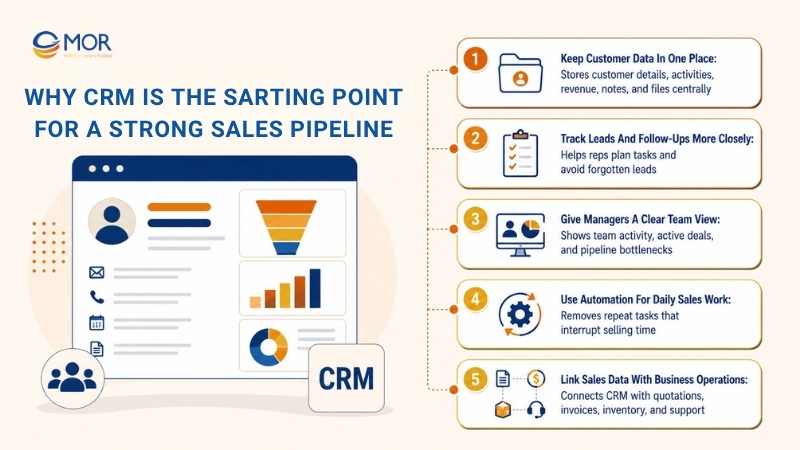
Keep Customer Data In One Place
Odoo CRM gives sales teams one central place for customer details and sales history. Each lead or opportunity can store contact information, past messages, planned activities, expected revenue, notes, and related files. This helps reps understand the customer before they make the next move.
Centralized data also helps the team work together. If one rep is away, another team member can review the record and continue the conversation without starting from zero. Managers can also look at customer activity and give better sales guidance.
Track Leads And Follow-Ups More Closely
Follow-up is a key part of a sales pipeline. A prospect may show interest now but still need several talks before they are ready to buy. Odoo CRM helps teams plan follow-up activities, set due dates, and check whether each task has been completed.
This lowers the chance that good leads get forgotten. Reps can view their daily tasks, upcoming calls, emails to send, and meetings to prepare. A more organized follow-up process helps prospects get faster replies and a better buying experience.
Give Managers A Clear Team View
Odoo CRM gives sales managers a clear view of team activity and deal progress. They can see how many leads each rep owns, how many opportunities are active, which deals are close to closing, and where bottlenecks appear. This helps managers coach the team with real pipeline data.
This level of visibility also supports better planning. If the pipeline has enough qualified opportunities, managers can forecast revenue with more confidence. If it looks weak, they can adjust lead generation, sales targets, or team priorities before revenue is affected.
Use Automation For Daily Sales Work
Manual entry can slow teams down and cause simple mistakes. Odoo CRM reduces that problem through automation. The platform can help assign leads, send email templates, schedule activities, update opportunity records, and connect CRM data with other business tools.
This gives reps more time to build trust with prospects. Automation does not replace sales work, but it removes repeat tasks that interrupt selling time. When Odoo handles these small actions, sales pipeline optimization becomes part of daily work, and reps can focus on discovery calls, demos, proposals, and negotiations.
Link Sales Data With Business Operations
Odoo CRM becomes more useful when it connects with other Odoo apps. Sales teams can move from CRM to quotations, invoices, inventory, marketing, and customer support with less friction. This creates a cleaner sales process from first contact to post-sale service.
When CRM data links with operations, teams do not need to enter the same information again and again. A won opportunity can turn into a quotation or sales order without copying details into another system. This improves data accuracy and helps customers get faster service after they decide to buy.
>>> Let's explore practical ways to cut factory spending, improve production efficiency, and support better determining manufacturing cost reduction strategies, so you can find savings without hurting output, quality, or long-term growth.
Core Odoo CRM Tools For Sales Pipeline Optimization
Odoo CRM gives sales teams a practical set of tools for managing deals with fewer blind spots. Reps can view open opportunities, move them through stages, assign tasks, prepare quotes, and review sales data in one shared place.
This matters because sales pipeline optimization relies on small actions done well every day. Among the top tools to optimize B2B sales pipeline velocity, clean views, useful reports, and connected sales apps help teams move faster and avoid avoidable deal loss.
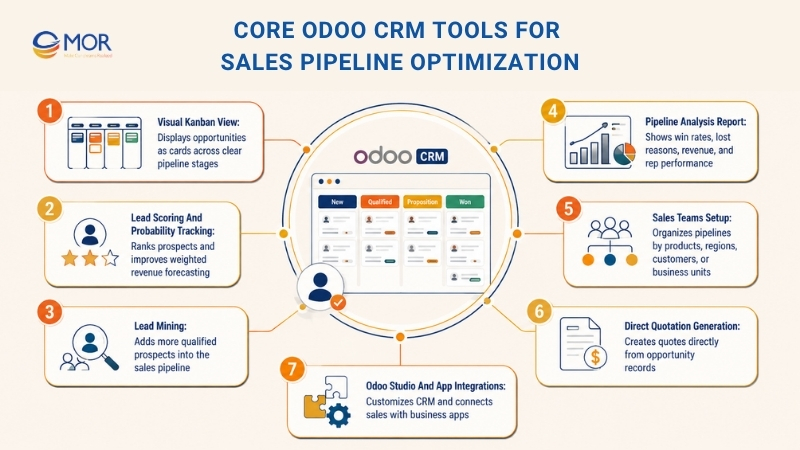
Visual Kanban View
The Kanban view is one of the most practical tools in Odoo CRM. It displays each opportunity as a card and places those cards under the right pipeline stage. Sales reps can move deals across columns when the buyer takes the next step.
This layout gives teams a quick read on pipeline activity. Managers can see open deals, slow deals, and deals close to closing without searching through long records. Reps also get a clearer idea of what each prospect needs next.
Lead Scoring And Probability Tracking
Lead scoring helps sales teams rank prospects by fit, value, and buying signals. A lead that shows clear interest, has a budget, and keeps engaging should get more focus than a cold contact that has stopped replying.
Probability tracking also supports sales pipeline optimization and better revenue forecasts. Each stage can carry a different chance of winning, so Odoo CRM can show weighted revenue in a more useful way. Teams can plan work around real deal quality instead of guessing.
Lead Mining
Lead mining helps sales teams add new prospects into Odoo CRM. Rather than waiting for manual input or random inquiries, teams can use Odoo’s lead mining tools to bring more qualified names into the pipeline.
This supports pipeline growth at the earliest stage. A sales funnel cannot stay healthy when there are too few leads at the top. Lead mining gives reps a steadier source of new opportunities, then they can qualify them and move them into the right stages.
Pipeline Analysis Report
Pipeline analysis reports show where deals move well and where they begin to slow. Sales managers can review win rates, lost reasons, stage results, expected revenue, and each salesperson’s performance.
These reports make sales reviews more useful. As an Odoo sales pipeline optimization example, if many deals drop after the proposal stage, the team may need clearer pricing, stronger proposal content, or faster follow-up. If one rep closes deals faster, managers can study that method and train others.
Sales Teams Setup
Odoo CRM lets businesses create sales teams for different products, regions, customer groups, or business units. Each team can manage its own pipeline, goals, members, and opportunities.
This setup helps as the business grows. A B2B team may need longer deal stages than a retail team. Regional Odoo sales teams may also work with different lead sources and targets. Separate team setups keep the CRM cleaner and make reports easier to trust.
Direct Quotation Generation
Odoo CRM allows reps to create quotations from the opportunity record. They do not have to copy customer details into another system or build pricing again from the beginning.
This keeps the sales process cleaner and lowers the risk of wrong data. Customer details, product records, prices, and opportunity history stay connected. When a prospect approves the quote, sales pipeline optimization continues through faster movement toward the sales order, invoice, delivery, or onboarding stage.
Odoo Studio And App Integrations
Odoo Studio helps teams adjust CRM fields, views, forms, and automation rules with less coding work. Businesses can shape the pipeline around their real sales process instead of making reps follow a fixed setup that does not fit.
Odoo CRM also connects with Sales, Inventory, Subscriptions, Marketing, and Invoicing. This lets the pipeline connect with daily business work. A won deal can move into a quote, stock check, recurring billing, or invoice with less manual input.
Sales Pipeline Optimization Metrics To Track
Odoo CRM gives sales managers useful data that helps teams improve their sales approach. Tracking the right numbers makes sales pipeline optimization easier to manage and helps forecasts become more accurate. These metrics show whether there are enough open opportunities, whether deals move at the right pace, and whether reps are spending time on the right prospects.
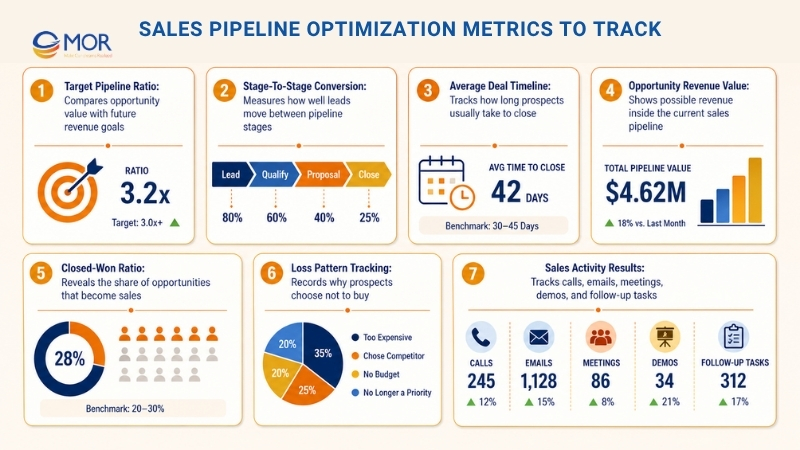
Target Pipeline Ratio
Compares opportunity value with revenue goals. This metric helps businesses see whether the current pipeline has enough possible revenue to support future targets. If the target is high but qualified opportunities are too low, the team may need more lead generation, better follow-up, or faster qualification.
Stage-To-Stage Conversion
Measures how well leads move through different sales pipeline stages. A strong rate means the team attracts suitable leads and manages them well. A weak rate may point to poor lead quality, unclear sales messages, pricing problems, weak proposals, or slow follow-up.
Average Deal Timeline
Measures how long it usually takes to close a deal. This helps sales managers understand how much time prospects need before they buy. If the timeline becomes too long, teams can review slow points like discovery calls, proposal writing, negotiation, or approval follow-up.
Opportunity Revenue Value
Shows the possible revenue held inside your sales pipeline. Tracking this figure helps teams give more attention to larger or more strategic deals while still watching smaller deals that may close quickly. Odoo CRM lets managers compare expected revenue by stage, rep, and customer group.
Closed-Won Ratio
Shows the share of opportunities that turn into successful sales. This metric helps businesses judge the strength of their sales process. If the rate is low, the team may need better qualification rules, clearer proposals, stronger positioning, or better objection handling.
Loss Pattern Tracking
Shows why prospects decide not to buy. Odoo CRM can help teams record reasons like price, timing, competitor choice, missing needs, weak fit, or no reply. Reviewing these reasons helps businesses improve pricing, sales messages, product packages, and lead targeting.
Sales Activity Results
Tracks calls, emails, meetings, demos, and follow-up tasks completed by the team. This metric helps managers see whether reps are doing enough work to move deals forward. Good activity tracking also makes coaching more useful because managers can connect sales actions with pipeline results.
Best Practices For Sales Pipeline Optimization In Odoo CRM
A strong Odoo CRM setup still depends on good sales habits. Bad data, vague stages, duplicate leads, and frozen deals can make the pipeline look stronger than it really is.
Sales pipeline optimization works best when teams check the system often. B2B sales pipeline optimization strategies should keep the pipeline clean, make stage movement easy to understand, and help reps focus on deals that may become revenue.
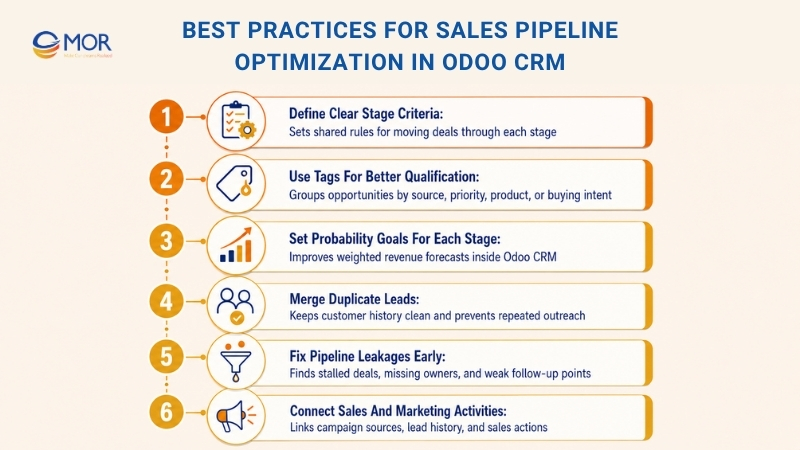
Define Clear Stage Criteria
Every pipeline stage needs a clear rule. Sales reps should know exactly when a lead is ready to move forward. Without shared rules, one rep may move a deal after one email, while another may wait until a meeting is booked.
Strong stage rules should show real buyer movement. A deal should move forward when the prospect takes a clear step, like booking a demo, requesting a quote, confirming budget, or agreeing on contract terms. This keeps stage movement steady across the team.
Use Tags For Better Qualification
Tags help sales teams group opportunities without adding too many pipeline stages. Teams can tag deals by source, priority, product interest, customer type, industry, or buying intent.
This keeps deal stage management clean. Stages should show progress, and tags should add extra detail. A rep can filter priority leads, view prospects from one campaign, or find deals tied to a product without crowding the pipeline board.
Set Probability Goals For Each Stage
Every stage should have a clear probability rate. A new lead may have a low chance of closing, but a deal in negotiation may have a much stronger chance. These rates help Odoo CRM calculate weighted revenue.
This makes forecasting more useful for managers. They can see total deal value and the more realistic value based on stage probability. Better probability rules help the team plan hiring, stock, cash flow, and sales targets with cleaner data.
Merge Duplicate Leads
Duplicate records can damage reports and create an awkward buyer experience. Two reps may reach out to the same prospect, or the same company may sit in the pipeline several times with different notes.
Teams should review duplicate records often and merge similar leads or opportunities. This keeps customer history in one place. It also gives managers a cleaner view of pipeline value, lead sources, and rep activity.
Fix Pipeline Leakages Early
Pipeline leakage happens when prospects disappear, stall, or get lost between stages. It often begins with small gaps: no next task, no follow-up date, no owner, or no clear closing plan.
Odoo reports can help managers catch these weak points early. If deals sit too long in one stage, the team should check the cause. A quick review can uncover pricing issues, poor lead fit, slow replies, or weak proposal follow-up, which makes sales pipeline optimization more practical.
Connect Sales And Marketing Activities
Sales and marketing should share the same lead history. Odoo CRM helps teams connect campaign sources, lead records, activities, and opportunities, so reps know where each prospect came from.
This creates a cleaner handoff between the two teams. Marketing can see which campaigns bring qualified leads, and sales can view earlier buyer actions before making contact. When both teams use the same data, it becomes easier to understand how to implement sales pipeline optimization for B2B sales strategy.
Build A Stronger Odoo CRM Pipeline With MOR Software
Managing and improving your sales pipeline becomes easier when the right strategy and tools work together. Odoo CRM gives businesses a clear view of every deal, so teams can track progress as sales talks move forward. With automation, useful data, and flexible pipeline templates, teams can keep the sales process accurate and support long-term growth.
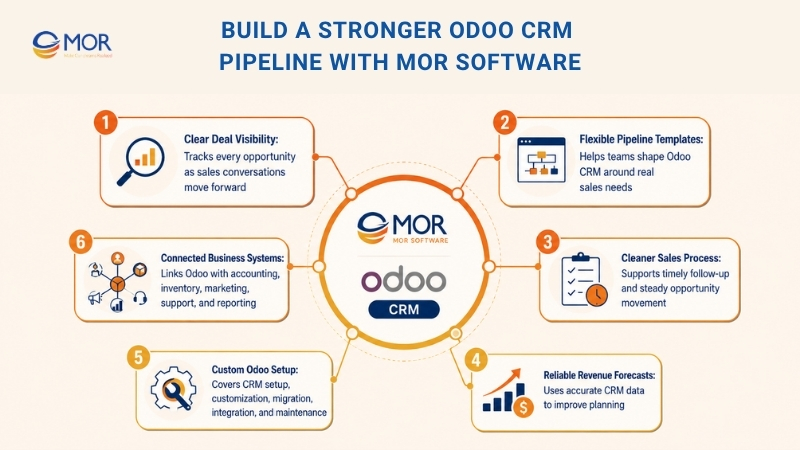
A well-planned Odoo CRM pipeline supports better customer engagement, cleaner sales process improvement, and more reliable revenue forecasts. It gives sales teams the structure they need to follow up at the right time and keep each opportunity moving.
At MOR Software, we help businesses build Odoo ERP integration services around real sales needs, not basic CRM usage. Our team can support Odoo CRM setup, module customization, Odoo migrations services, third-party integration, workflow design, and long-term maintenance. For companies with existing systems, we can connect Odoo with accounting, inventory, marketing, customer service, or reporting tools, which supports cleaner sales pipeline optimization and better daily sales work. We also support go-to-market strategy consulting sales pipeline optimization when companies need a wider plan that connects CRM, sales data, and revenue goals.
Conclusion
Sales pipeline optimization works best when your CRM reflects real sales behavior, not a generic board of leads. Odoo CRM gives teams cleaner stages, faster follow-ups, stronger reports, and better links between sales and daily operations. With MOR Software, businesses can shape Odoo around their sales flow, connect it with key systems, and keep data useful after launch. Ready to build a cleaner pipeline? Contact us to discuss your Odoo CRM project.
MOR SOFTWARE
Frequently Asked Questions (FAQs)
What is sales pipeline optimization?
It is the process of improving how leads move from first contact to closed deal. It helps sales teams remove weak-fit leads, fix slow stages, and focus on deals with real buying potential.
How does Odoo CRM help manage a sales pipeline?
Odoo CRM gives teams a visual pipeline where they can track leads, opportunities, follow-ups, quotations, and deal status. Managers can see what is moving, what is stuck, and who owns each deal.
Why does sales pipeline optimization matter in Odoo CRM?
It helps teams use Odoo CRM with a clear sales process, not as a simple contact list. Clean stages, current data, and regular follow-ups make forecasts more accurate and sales work easier to manage.
What are the main stages of a sales pipeline in Odoo CRM?
Common stages include lead generation, lead qualification, opportunity management, proposal, negotiation, closing, and follow-up. Businesses can adjust these stages to match their sales cycle.
How often should a sales team clean up its pipeline?
Most teams should review the pipeline weekly or monthly. Fast-moving sales teams may need weekly checks, while longer B2B cycles may work better with monthly reviews.
Which sales pipeline metrics should teams track?
Good sales pipeline optimization depends on metrics like conversion rate, sales cycle length, deal value, win rate, pipeline coverage, lost reasons, and activity performance.
What is a healthy sales pipeline?
A healthy pipeline has qualified leads, clear next steps, current deal values, realistic close dates, and enough opportunities to support revenue goals. It should not be filled with old or inactive deals.
Can Odoo CRM automate sales follow-ups?
Yes. Odoo CRM can help teams schedule calls, create activities, send follow-up emails, set reminders, and track completed tasks. This helps reps avoid missed follow-ups.
What causes a sales pipeline to become inaccurate?
Old leads, stalled deals, wrong deal values, missing activities, and unrealistic close dates can all weaken pipeline data. These problems make revenue forecasts harder to trust.
How can businesses improve their sales pipeline in 2026?
They should define clear stages, clean lead data, assign owners, automate routine tasks, review metrics, and remove weak opportunities. In 2026, sales pipeline optimization should be a regular sales habit, not a one-time cleanup.
Share


Make Our-Dreams Realized


© 2023 . MOR Software. All Rights Reserved
Sitemap
Privacy Policy
Terms of Use

Rate this article
0
over 5.0 based on 0 reviews
Your rating on this news:
Name
*Email
*Write your comment
*Send your comment
1