


Top 12 Employee Performance Review Template [FREE DOWNLOAD]
HR teams often struggle to run fair and consistent performance evaluations, especially when feedback, goals, and documentation are scattered across different systems. A well-designed employee performance review template helps structure these conversations and keeps evaluations clear and objective. In this guide, MOR Software will share practical examples of review formats that organizations can use to manage staff assessments more effectively.
12 Best Types Of Employee Performance Review Templates
Organizations can choose from many formats when building a framework for employee evaluations. The list below introduces several commonly used formats that appear in the employee performance review template, helping human resource development departments and managers organize feedback, measure progress, and guide development discussions more effectively.
1. Annual Performance Review Template
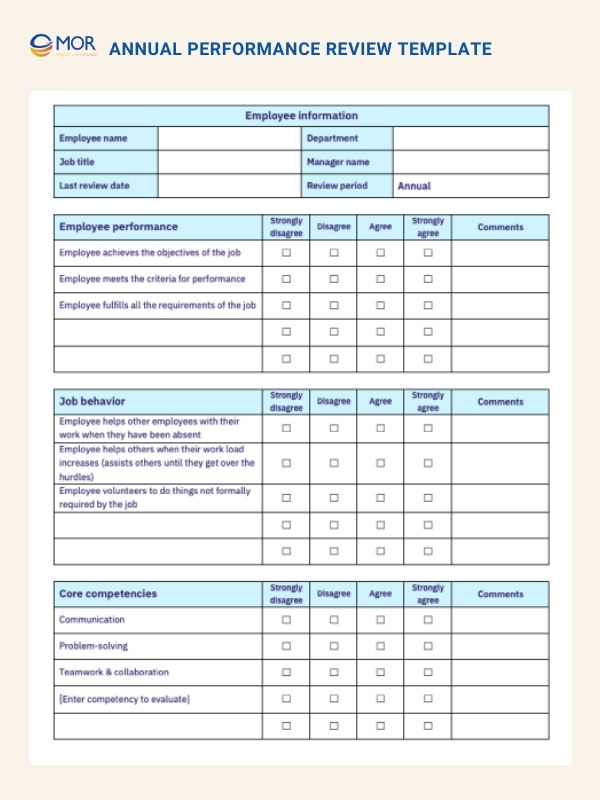
This format reviews an employee’s performance across an entire 12-month period. It normally records skills, major accomplishments, goal achievements, and objectives for the upcoming year. Many HR departments also rely on a staff annual review template to capture long-term performance trends and document career progress.
Key Benefits:
- Offers a clear, high-level overview of performance patterns and overall development during the year
- Promotes detailed conversations between managers and employees about achievements and future plans
- Acts as a basis for compensation decisions including salary increases, promotions, and bonus considerations
- Supports identification of long-term growth needs and career development opportunities
Potential Limitations:
- Conducting reviews only once per year may allow issues occurring mid-year to go unnoticed
- Gathering performance information from an entire year can require significant effort if there are no regular check-ins or documented updates
2. Quarterly Performance Review Template
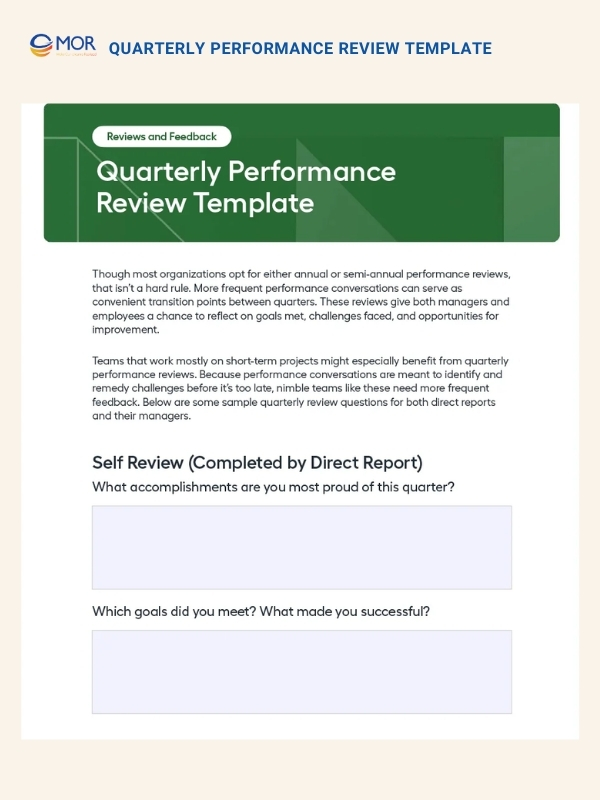
A quarterly evaluation examines performance across a three-month timeframe. It highlights recent accomplishments, progress toward targets, current obstacles, and priorities for the next quarter. Organizations often adapt the same review structure used in annual assessments, adjusting the timeline and narrowing the focus to short-term goals. In many HR systems, this employee performance review template can contribute data toward a yearly performance review template used for broader evaluation cycles.
Key Benefits:
- Delivers structured feedback four times during the year, encouraging continuous progress and timely corrections
- Allows managers to adjust goals quickly when business priorities change
- Keeps evaluation meetings shorter and centered on recent work
Potential Limitations:
- A short review window may reduce attention on long-term professional development goals
- Frequent evaluation cycles can sometimes lead to repeated conversations about similar topics or challenges
3. 360-Degree Performance Review Template
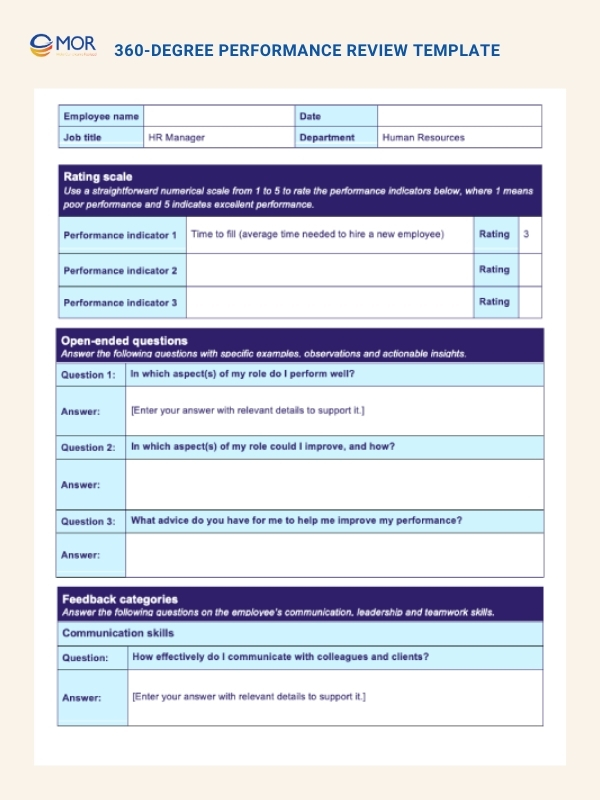
A 360-degree review collects feedback from several perspectives, including managers, coworkers, direct reports, and sometimes even customers, together with the employee’s own self-assessment. This evaluation approach helps create a balanced picture of performance by combining rating scales with open-ended responses. In many organizations, these assessments are completed using structured employee review sheets, allowing different contributors to share their observations and insights.
Key Benefits:
- Provides balanced feedback that minimizes the risk of relying solely on a manager’s perspective
- Offers detailed insights that help guide professional growth and long-term career planning
- Encourages employees to stay accountable to a wider group of colleagues, not only their direct supervisor
- Particularly useful when evaluating individuals in leadership or management positions
Potential Limitations:
- Gathering and organizing feedback from many contributors can require considerable time and coordination
- Personal opinions or workplace relationships may influence how honestly participants respond
>>> Explore more HRM topics on MOR Blog right now!
4. Employee Feedback Review Template
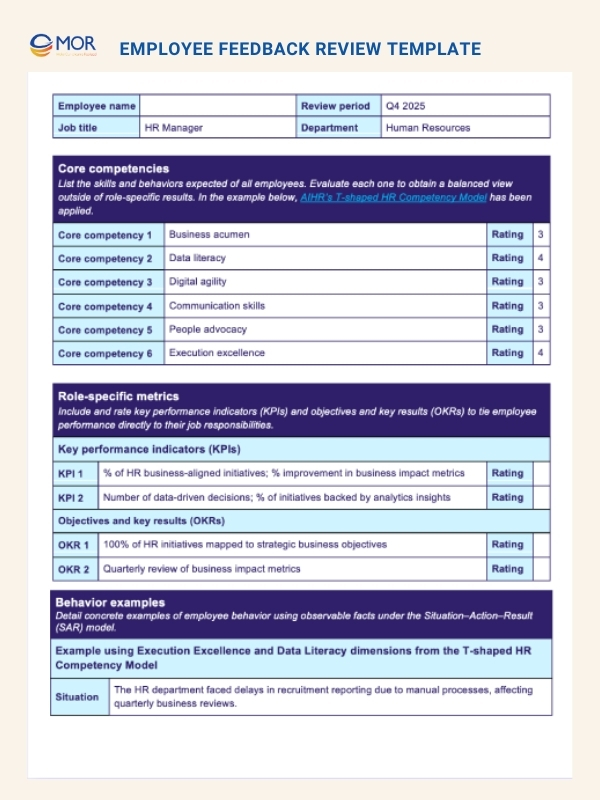
An employee feedback review template documents a structured conversation between a manager and an employee. The discussion centers on assessing performance, recognizing achievements, identifying strengths, and addressing areas that need improvement in order to support professional development. Many HR departments use also HR metrics for using a personnel review template to guide this exchange and ensure that key topics are covered while encouraging constructive dialogue.
Key Benefits:
- Promotes open and meaningful discussions that help employees feel listened to and valued
- Creates a documented record that can be used to track progress and guide future follow-up conversations
Potential Limitations:
- Heavy reliance on a fixed format may cause the conversation to feel overly structured or rehearsed
- Following the document too strictly may reduce opportunities for spontaneous and genuine communication between the manager and the employee
5. Employee Evaluation Template
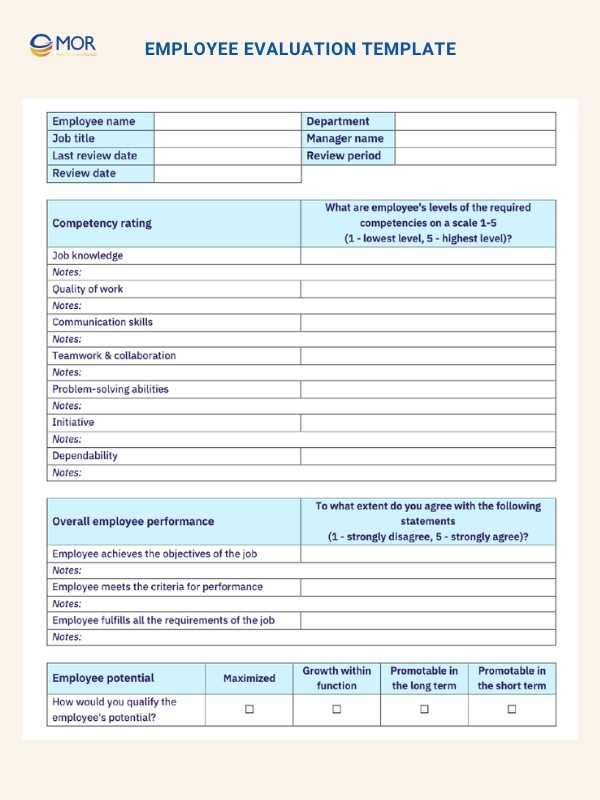
A traditional employee evaluation template is commonly used to conduct annual, semi-annual, or quarterly performance assessments. This evaluation document compares an employee’s past results with the expectations defined in their role. HR teams often use this structure when making decisions related to compensation changes, promotions, or formal disciplinary actions. In many organizations, this type of review format functions as a structured job review template that helps managers assess how well employees meet the requirements of their positions.
Key Benefits:
- Provides a consistent and transparent evaluation structure across teams
- Guides managers and employees through the process of reviewing performance, identifying development needs, and setting future goals
Potential Limitations:
- When the structure is too strict or narrowly defined, important achievements, capabilities, or personal strengths may be overlooked
- Focusing mainly on past results may ignore current development progress that should also be recognized and supported
6. Competency-Focused Performance Review Template
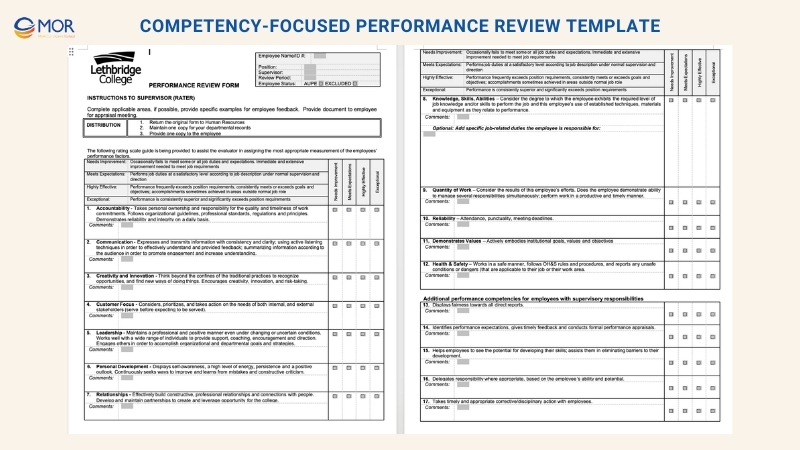
This review structure evaluates employees according to the essential competencies required for success in their roles and within the organization. The form usually includes sections that assess company-wide competencies as well as technical capabilities needed for specific positions. It also allows space to document improvement areas and outline new targets for the next evaluation cycle.
Key Benefits:
- Helps employees see how their work contributes to broader organizational goals
- Places attention on behaviors, skills, and capabilities rather than only final outcomes
- Encourages productive discussions about professional development and capability growth
Potential Limitations:
- Building a complete competency framework can require extensive time and collaboration between HR teams and leadership groups
- Soft skills are often more difficult to describe and measure accurately
- Strong focus on ideal behaviors may sometimes restrict authentic working styles in certain roles
7. Simple Employee Performance Review Template
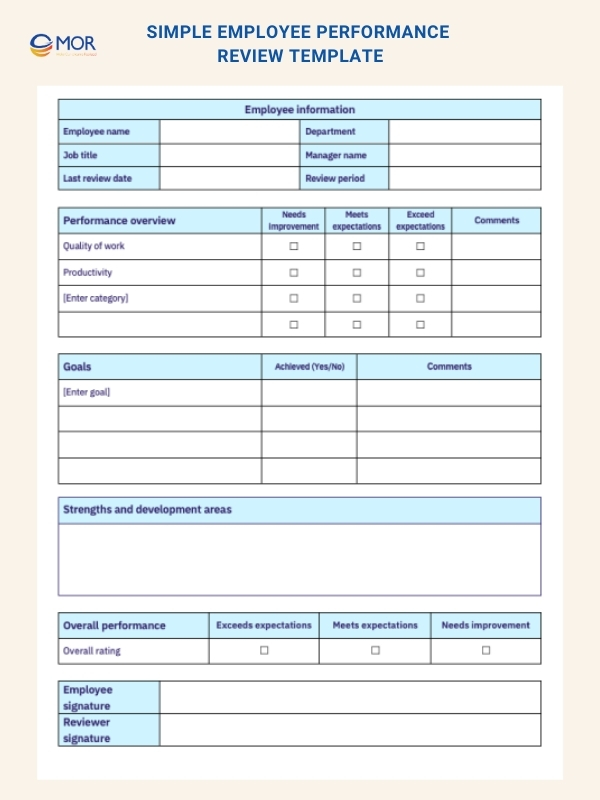
As the title suggests, this template is designed to remain clear and uncomplicated. It normally contains a short list of performance attributes and work skills, a rating scale such as “unsatisfactory” through “excellent,” and sections for reviewing earlier goals while setting new ones for the upcoming period. Many HR teams prefer this streamlined format because it keeps evaluations efficient.
Key Benefits:
- Simple to apply and requires very little training for managers or supervisors
- Keeps discussions centered on the most important performance factors, making evaluations brief and practical
- The straightforward design encourages managers to hold review conversations more often, such as monthly or quarterly
Potential Limitations:
- The limited structure may lack the detail found in more comprehensive review forms, which can cause certain performance aspects to be missed
- A very simple format may result in more subjective ratings if managers depend heavily on personal judgment rather than documented examples
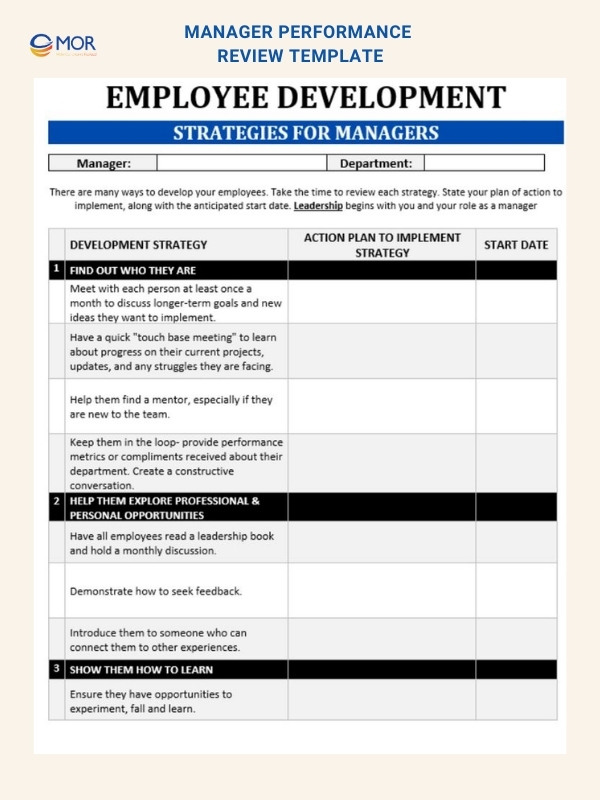
8. Manager Performance Review Template
This template is designed to evaluate the performance and influence of individuals in leadership positions. It highlights both strengths and development areas while focusing on leadership abilities, team performance results, and how effectively managers contribute to organizational objectives. In some cases, companies customize versions such as a sales employee performance review template when managers oversee specialized teams like sales departments. Many versions also include sections for personal reflection and feedback from senior leaders.
Key Benefits:
- Encourages consistency by applying standardized evaluation criteria across different departments
- Ensures managers remain accountable for leadership abilities including communication, decision making, and coaching
- Helps organizations detect leadership gaps and plan focused development programs
- Strengthens alignment between managerial performance and overall company priorities
Potential Limitations:
- Separate versions may be needed for different management levels since expectations vary between team leaders and senior executives
- Reviewers may require guidance to evaluate managers fairly when personal relationships or prior experiences are involved
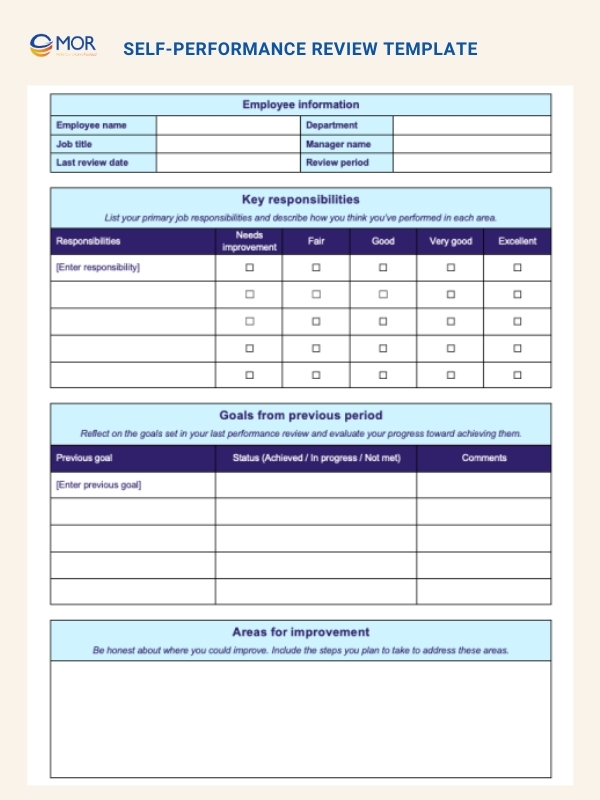
9. Self-Performance Review Template
This format allows employees to assess their own work before a formal evaluation takes place. It encourages individuals to reflect on their achievements, difficulties, and development needs. Through this reflection process, employees can better understand what support, training, or resources might help them perform more effectively. Employees often complete it using an employee performance review template word document that allows easy editing and personal input.
Key Benefits:
- Prepares both managers and employees for more open and constructive review discussions
- Gives employees a stronger opportunity to express their views during the evaluation process
- Encourages personal responsibility for professional development and long-term career growth
Potential Limitations:
- Some individuals may struggle to assess themselves accurately and may either rate their work too highly or too modestly
- If communication between managers and employees is weak, differences between self-evaluations and supervisor feedback may create misunderstandings
10. Employee Development Plan Template
An employee development plan helps staff members build the knowledge and abilities needed to succeed in their current roles while preparing for future career opportunities within the organization. This planning tool connects an employee’s career ambitions with the broader goals of the company.
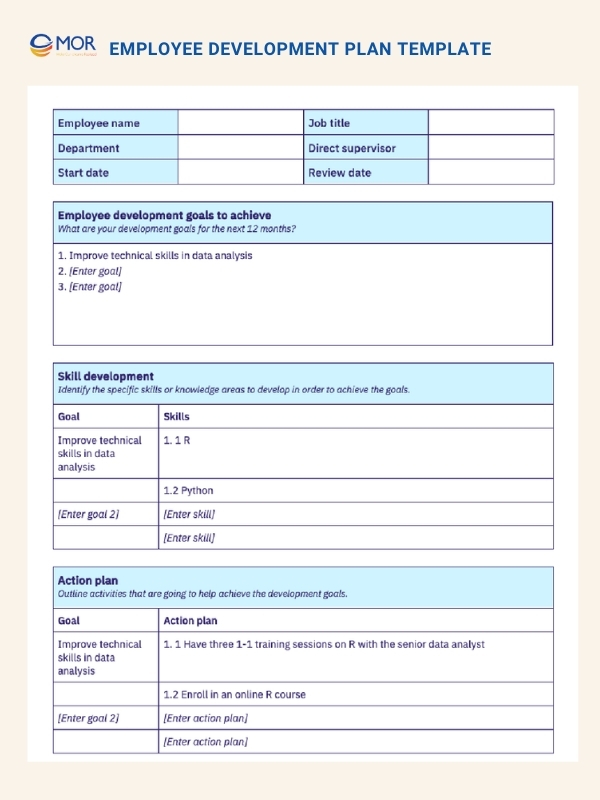
A development plan normally outlines both short-term and long-term objectives together with the actions required to achieve them. These actions may include completing training programs, accepting challenging assignments, or obtaining professional certifications. Many organizations adapt this template to organize these development plans so employees and managers can track progress clearly.
Recording a development plan helps ensure that employee career goals remain aligned with organizational priorities. It also shows that the company values its workforce and is committed to supporting professional growth over time.
11. Performance Improvement Plan Template
A performance improvement plan (PIP) is a structured process created through collaboration between the manager, the employee, and the HR team to address performance gaps that prevent the employee from meeting expected standards. The goal of a PIP is to support improvement and learning rather than serve as a punishment. It provides a clear structure, guidance, and support resources that help employees overcome challenges and strengthen their performance. This structured improvement plan plays an important role in helping organizations manage performance issues fairly.
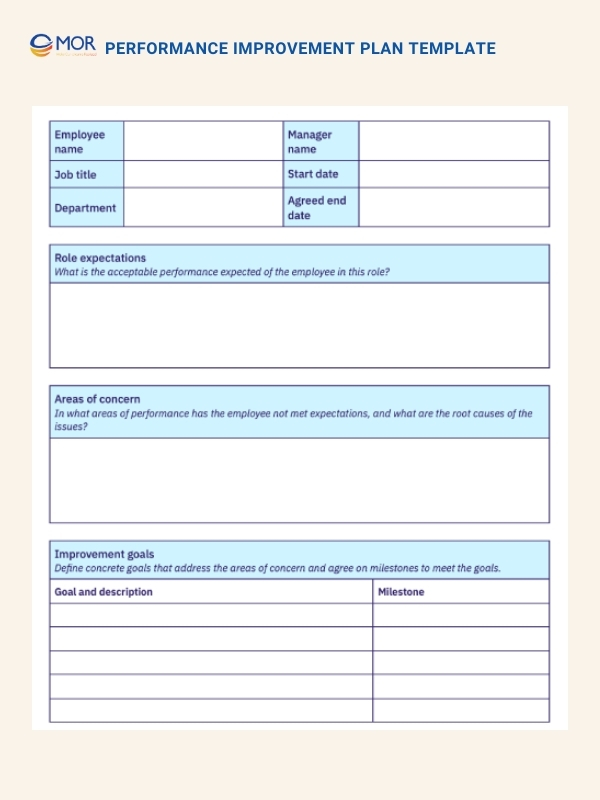
Each improvement plan normally contains the following elements:
- A clear explanation of the performance concerns and the specific areas that require improvement
- Evidence or examples showing where expectations have not been met
- Specific and measurable goals that define successful improvement
- Concrete actions the employee must complete to reach the required standards
- A defined timeframe that outlines when progress should be achieved
- The resources, guidance, or training the organization will provide
- Possible outcomes or next steps if the expected improvements are not achieved
Although every situation may require some customization, using a consistent performance improvement plan format helps organizations maintain fairness, transparency, and alignment across teams.
12. Career Progression Framework Template
A career progression framework template explains the potential growth opportunities available within an organization. It improves transparency and helps employees understand what knowledge, experience, and results are required to move forward in their careers.
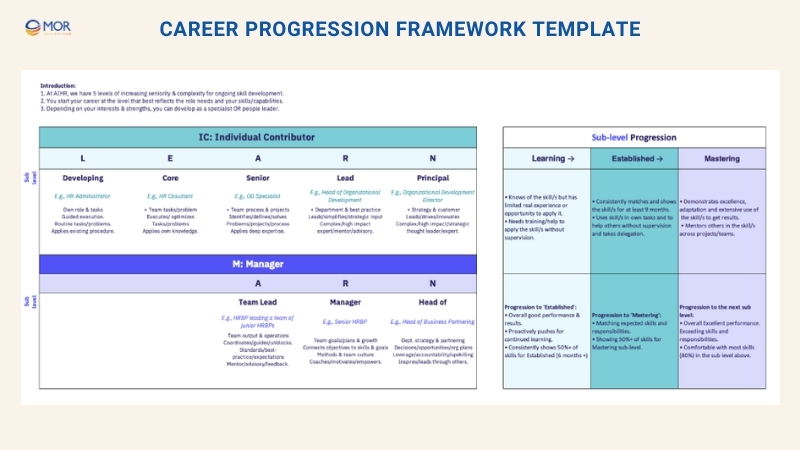
This framework normally contains several important elements:
- Defined job titles and role levels across the organization
- Job descriptions that explain responsibilities, performance expectations, and essential skills
- Technical, operational, and leadership competencies associated with each position
- Clear criteria used to determine readiness for promotion or advancement
- Professional development options and examples of possible career paths
After completing a review discussion, managers can use this framework to explain how performance feedback connects with future career opportunities. In some cases, organizations align these frameworks with a 30 60 90 day employee performance review template to track early progress and development milestones. This process helps employees connect present improvements with their long-term career development.
Importances Of Employee Performance Review Template
Using a structured employee performance review template provides several advantages for organizations, managers, and staff members:
Creates a consistent structure for evaluating all employees
Every employee receives the same evaluation format. This standard structure helps reduce bias and supports fair treatment across departments and teams.
Reduces preparation time with a structured review format
Instead of preparing appraisal documents from the beginning, managers can spend more time providing thoughtful feedback and discussing employee progress.
Supports fair evaluations through clearly defined criteria
Defined rating systems and evaluation standards encourage reviewers to support their assessments with clear evidence rather than relying on general impressions. This structure helps reduce subjective judgment and strengthens effective performance management practices.
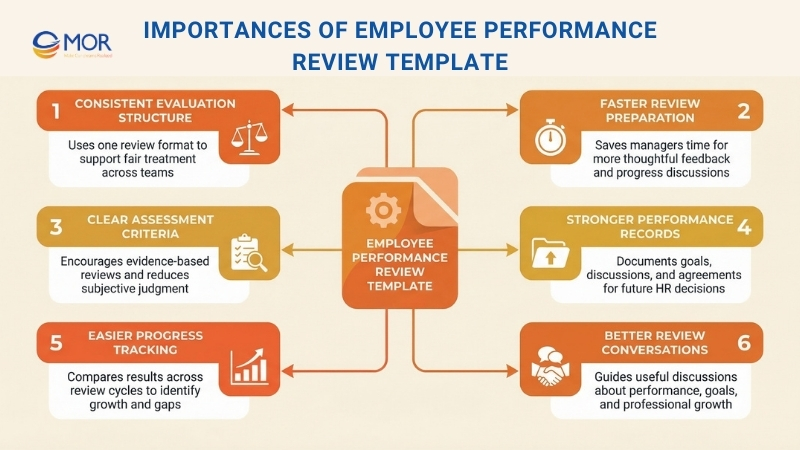
Improves documentation and performance record management
A consistent review sheet creates reliable records of discussions, performance goals, and agreements. These records help organizations monitor development, guide promotion decisions, and address future predictive HR analytics situations.
Makes long-term performance tracking easier
When the same review structure is used across multiple evaluation cycles, it becomes easier to compare performance results and development trends. Managers and employees can recognize improvements and identify areas that still require attention.
Supports productive conversations between managers and employees
The structured form guides both parties through key discussion topics and ensures important areas are covered. This format supports productive conversations about performance, objectives, and professional growth.
>>> When turning review results into fair compensation updates, running your numbers through a cost of an employee calculator helps project the true financial impact beyond baseline salary adjustments.
Key Components Of An Employee Performance Review Template
When designing an employee performance review template, it is important to include several essential sections that capture the most relevant aspects of an employee’s work performance. These sections usually cover the following elements:
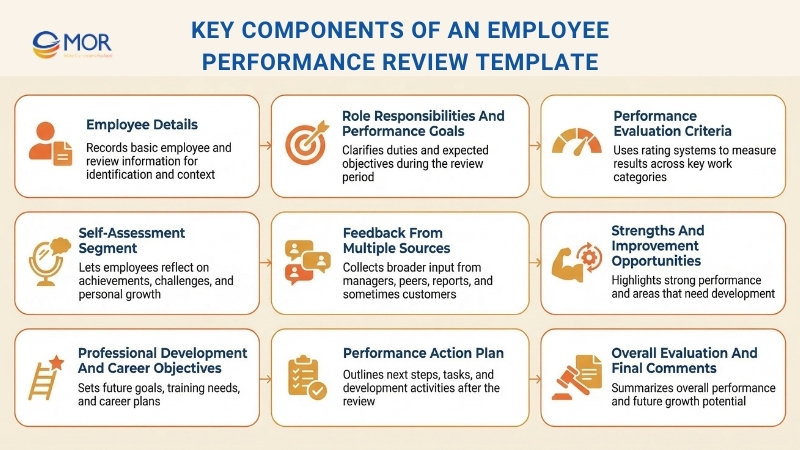
Employee Details
The review document should begin with fundamental details about the employee who is being evaluated, including:
- Name
- Job title
- Department
- Review period (for example, quarterly or annually)
- Manager’s name
Role Responsibilities And Performance Goals
This part should describe the employee’s primary duties and the objectives they were expected to complete during the evaluation period. This information provides context for the assessment and helps employees understand how their daily work connects with organizational targets.
Performance Evaluation Criteria
An employee performance review template normally includes a rating structure that measures the employee’s work results. This system may use a numeric scale, such as 1 to 5, or descriptive levels such as exceeds expectations, meets expectations, or below expectations.
Typical categories within this section often include:
- Quality Of Work
- Productivity
- Communication
- Collaboration
- Problem-Solving
- Initiative
- Time Management
- Leadership Skills (for managerial roles)
Self-Assessment Segment
Many review documents include a self-evaluation section where the employee can assess their own work and think about their achievements and challenges during the review period. This part of the appraisal form encourages individuals to take responsibility for their professional growth and share observations that managers may not have noticed.
Feedback From Multiple Sources
360-degree feedback tools have become more common in modern review processes. These forms gather input from several sources, including managers, colleagues, direct reports, and sometimes customers. This method provides a broader perspective on employee performance. A typical 360-degree feedback form evaluates areas such as teamwork, communication, leadership ability, and adaptability.
Strengths And Improvement Opportunities
This part of the evaluation highlights the employee’s key strengths and identifies areas where improvement is necessary. Clear examples should support the observations presented in the review. Constructive feedback plays an important role in helping the employee understand how they can continue improving.
Professional Development And Career Objectives
A well-designed employee performance review template should not focus only on past performance. It should also help define goals for the future. Use this section to discuss development opportunities, training requirements, and long-term career ambitions. Managers may also establish specific and measurable objectives that the employee can work toward before the next evaluation period.
Performance Action Plan
After the feedback and objectives discussed in the earlier sections, a clear action plan should be prepared so both the employee and the organization understand the next steps. This plan may include specific tasks the employee should complete to strengthen performance, along with training programs or professional development activities that support improvement.
Overall Evaluation And Final Comments
At the end of the review, a final rating can be provided to summarize the employee’s overall performance during the evaluation period. Managers can also include a short set of closing remarks that highlight the main conclusions from the review and comment on the employee’s future growth potential.
Best Practices When Using An Employee Performance Review Template
Are you ready to begin the process? You can explore our guide to performance reviews best practices for additional ideas, or follow the key recommendations below to ensure your evaluation discussions remain useful, constructive, and meaningful for both managers and employees when working with an employee performance review template:
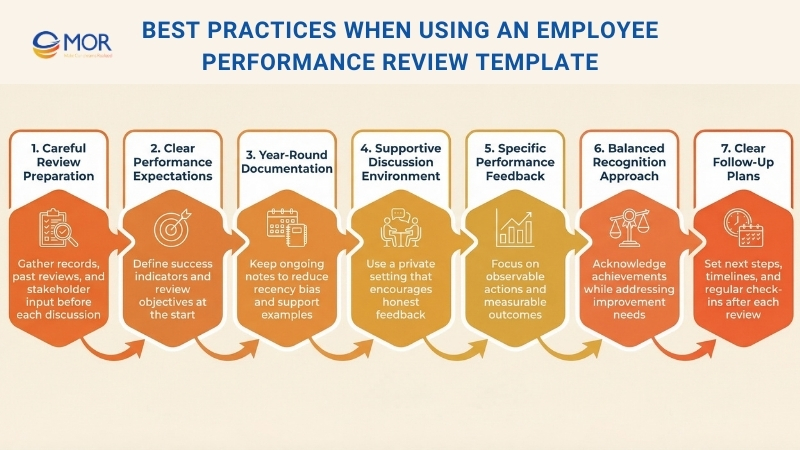
Plan carefully before every performance discussion
Collect performance records, review earlier evaluations, and gather input from relevant stakeholders. Proper preparation helps ensure the conversation is supported with real examples rather than broad opinions.
Define expectations and objectives clearly
Start each review by clarifying what successful performance means for the position and identify the specific indicators that will guide the evaluation.
Maintain consistent records during the year
Strong project management practices involve keeping continuous notes on employee accomplishments, challenges, and development instead of depending only on recent memory. This method helps prevent recency bias and gives concrete examples to discuss during evaluations.
Provide a supportive space for feedback conversations
Select a private location and schedule enough time for discussion without interruptions. When employees feel comfortable, they are more willing to participate in honest conversations about their work.
Discuss observable actions and measurable results
Present feedback through specific situations and clear outcomes instead of focusing on personality traits. This approach makes the feedback easier to understand and more practical to apply.
Recognize achievements while addressing improvement areas
Highlight successes before discussing development needs. This balanced structure supports employee confidence while still addressing necessary growth areas.
Finish with clear next steps and timelines
Conclude each evaluation with agreed actions and development goals. Effective project planning supports setting realistic follow-up deadlines and explains how progress will be monitored.
Arrange frequent follow-up discussions
Do not wait until the next formal review cycle to offer feedback. Regular conversations about performance help prevent surprises and allow adjustments to be made at the right time.
Build A Smarter Employee Performance Review Template With MOR Software
Handling staff evaluations becomes challenging when organizations depend on spreadsheets, scattered files, or inconsistent review formats. An effective employee performance review template works much better when it operates within a structured digital environment that keeps evaluations organized, easy to track, and aligned with company objectives.
MOR Software supports organizations that want to design and implement customized HR outsourcing services and contingent workforce management systems that enable structured employee assessments. Our engineering teams develop HRM software development solutions that connect staff review forms directly with internal platforms, allowing managers to assess performance, monitor goals, and store feedback within a single centralized system.
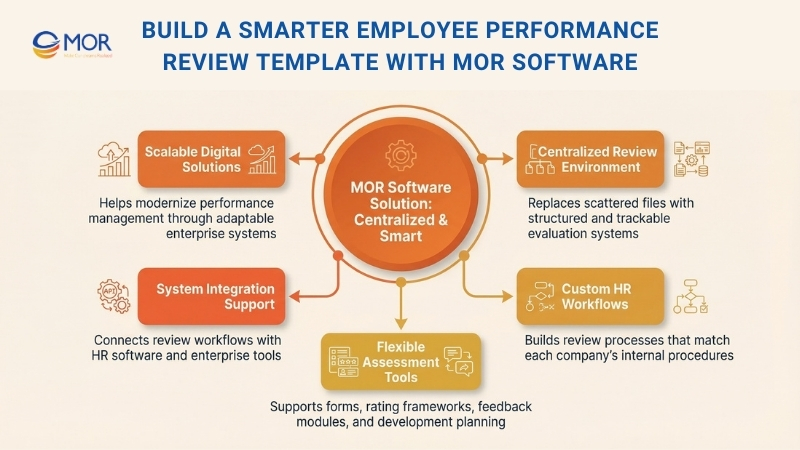
Our specialists collaborate closely with each client to design evaluation workflows that match internal HR procedures. This work includes building flexible assessment forms, rating frameworks, feedback HRM models, and professional development planning tools. Managers can follow employee progress across different review periods while HR teams maintain accurate records for promotions, training programs, and long-term career development.
These systems can also connect with existing HR AI software, enterprise applications, and workplace communication tools. This integration helps organizations automate review cycles, simplify documentation, and maintain consistent evaluation standards across different teams and departments.
With strong experience in enterprise software engineering, MOR Software helps companies modernize performance management practices through scalable and adaptable digital solutions. Contact us to explore how we can help you design a smarter digital system that supports structured employee evaluations and long-term workforce development.
Conclusion
A well-structured employee performance review template helps organizations conduct fair evaluations, document progress, and support long-term employee development. The right review format also strengthens communication between managers and teams while keeping performance data organized. When supported by the right technology, performance management becomes more consistent and scalable across departments. MOR Software helps businesses design digital systems that streamline evaluation workflows and connect reviews with broader HR strategies. Contact us to explore solutions tailored to your organization’s performance management needs.
MOR SOFTWARE
Frequently Asked Questions (FAQs)
What is an employee performance review template?
An employee performance review template is a structured document used to evaluate an employee’s work performance over a specific period. It provides a consistent format for managers to assess achievements, identify improvement areas, and document feedback during formal performance reviews.
Why do companies use an employee performance review template?
Organizations use an employee performance review template to standardize evaluations across departments. It helps managers conduct structured reviews, maintain consistent records, and support fair performance assessments based on defined criteria.
What information should be included in an employee performance review template?
A typical employee performance review template includes employee details, job responsibilities, performance ratings, strengths and improvement areas, development goals, feedback sections, and an overall performance summary.
How often should employee performance reviews be conducted?
Performance reviews are commonly conducted annually or quarterly. Some organizations also combine formal reviews with regular monthly or bi-monthly check-ins to track progress and address issues earlier.
What is the difference between a performance review and a performance evaluation?
A performance review often focuses on discussion and feedback between managers and employees. A performance evaluation usually includes formal ratings or scores used to measure performance against defined standards.
What is a 360-degree performance review template?
A 360-degree review template collects feedback from multiple sources, including managers, peers, direct reports, and sometimes customers. This approach provides a broader perspective on an employee’s performance and workplace behavior.
How can an employee performance review template improve feedback quality?
A structured template guides managers through specific evaluation areas such as communication, productivity, and collaboration. This helps reviewers provide clearer, more objective feedback instead of relying on general impressions.
What are common mistakes to avoid when using performance review templates?
Common mistakes include giving vague feedback, focusing only on recent events, ignoring employee input, and failing to follow up on development plans. Effective reviews require preparation, clear examples, and ongoing communication.
Should employees complete a self-assessment during performance reviews?
Many organizations include a self-assessment section in their employee performance review template. This allows employees to reflect on their achievements, discuss challenges, and share their perspective before meeting with their manager.
How can companies make performance reviews more effective?
Performance reviews become more effective when managers prepare in advance, use measurable criteria, provide balanced feedback, and set clear development goals for the next review period. Regular check-ins throughout the year also help maintain progress.
Share


Make Our-Dreams Realized


© 2023 . MOR Software. All Rights Reserved
Sitemap
Privacy Policy
Terms of Use

Rate this article
0
over 5.0 based on 0 reviews
Your rating on this news:
Name
*Email
*Write your comment
*Send your comment
1